Two-Way Peg: How Blockchain Bridges Connect Chains and What It Means for Your Crypto
When you move Bitcoin to Ethereum as wrapped Bitcoin, a tokenized version of Bitcoin that runs on Ethereum. Also known as wBTC, it lets you use Bitcoin in DeFi apps without selling it. This is possible because of a two-way peg, a system that locks assets on one chain and releases equivalent tokens on another, with a reverse process to get them back. It’s not magic—it’s code and trust mechanisms working together to solve the biggest problem in crypto: isolation.
Think of it like exchanging cash at an airport. You hand over USD, get a voucher, spend it abroad, then trade the voucher back for USD when you return. A two-way peg does the same, but with blockchain assets. The original coins are locked in a smart contract or by a trusted group (like a custodian), and new tokens are minted on the target chain. When you want your original coins back, you burn the tokens and unlock the originals. This keeps supply balanced and prevents inflation. But here’s the catch: if the system is centralized, you’re trusting humans. If it’s decentralized, you’re trusting code—and code can glitch. Projects like Serum DEX, a fast, low-fee decentralized exchange built on Solana, relied on cross-chain bridges to pull in liquidity from Ethereum. When FTX collapsed, some of those bridges got tangled in the fallout. That’s why you need to know who’s holding the keys.
Two-way pegs power most of the cross-chain activity you see today. They let you use USDT on Solana, stake Ethereum on Avalanche, or trade Bitcoin on Uniswap. But not all bridges are equal. Some are audited and decentralized. Others? They’re barely more than a website and a promise. That’s why the posts below cover real cases—like how two-way peg systems failed or succeeded, how they affect your wallet, and which ones you should avoid. You’ll see how Nigerian exchanges handle cross-chain deposits, why Korean traders rely on them to beat the kimchi premium, and how airdrops like FLY or PAINT got distributed across chains using these bridges. Some of these stories are about money. Others are about trust. And all of them matter if you’re moving crypto between networks.
Posted by
HELEN Nguyen
6 Comments
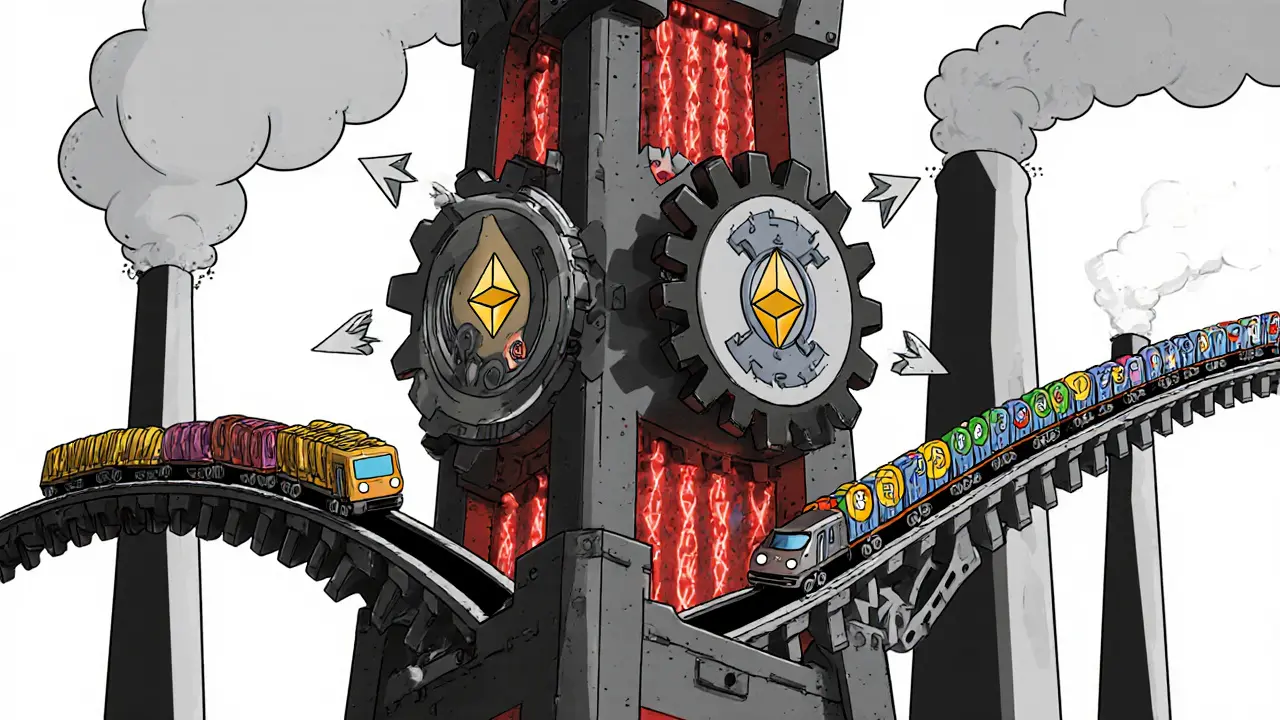
Sidechains connect to main blockchains through two-way pegs and bridges, enabling faster, cheaper transactions without compromising main chain security. Learn how Polygon, Ethereum, and others make this work - and where the risks lie.
read more