Serum DEX: What It Was, Why It Died, and What Replaced It
When Serum DEX, a high-speed decentralized exchange built on Solana that enabled near-instant trades with low fees. Also known as Serum, it was one of the most talked-about DeFi projects in 2021, backed by FTX and designed to compete with Uniswap and dYdX. Unlike other DEXs that relied on slow Ethereum gas fees, Serum used Solana’s blockchain to process trades in milliseconds. It wasn’t just another crypto project—it was built for real trading volume, not just speculation.
Serum DEX wasn’t just a platform; it was a full ecosystem. It included a native token, SRM, the governance and fee discount token for the Serum network, which gave holders discounts on trading fees and voting power. It also had a decentralized order book that allowed users to place limit orders without needing a middleman—a feature most DEXs still don’t offer today. Traders loved it because they could swap tokens, earn yield, and even create their own markets—all without signing up for KYC. But behind the speed and innovation, there were cracks. The platform was tightly tied to FTX, and when FTX collapsed in late 2022, Serum lost its funding, its team, and its credibility overnight. No warning. No transition. Just silence.
Today, Serum DEX is a ghost. Its website redirects to a placeholder. Its token, SRM, trades at a fraction of its peak value. The order book is empty. The liquidity pools are drained. But its legacy lives on. Many of the features Serum pioneered—on-chain order books, cross-chain bridges, and low-cost trading—are now standard in newer DEXs like Raydium, a Solana-based DEX that absorbed much of Serum’s user base and tech after its shutdown, and Orca, a user-friendly Solana DEX that focuses on simplicity and liquidity provision. These platforms didn’t just copy Serum—they learned from its mistakes. They built independence from centralized sponsors. They kept their teams active. They listened to users.
If you’re looking for a fast, cheap DEX on Solana today, you don’t need Serum. You need something that’s still alive. The tools are there. The tech is better. And the lessons from Serum’s fall are clear: speed alone doesn’t save a project. Trust, transparency, and independence do. Below, you’ll find real stories from traders who used Serum, deep dives into why it failed, and honest reviews of the platforms that took its place.
Posted by
HELEN Nguyen
9 Comments
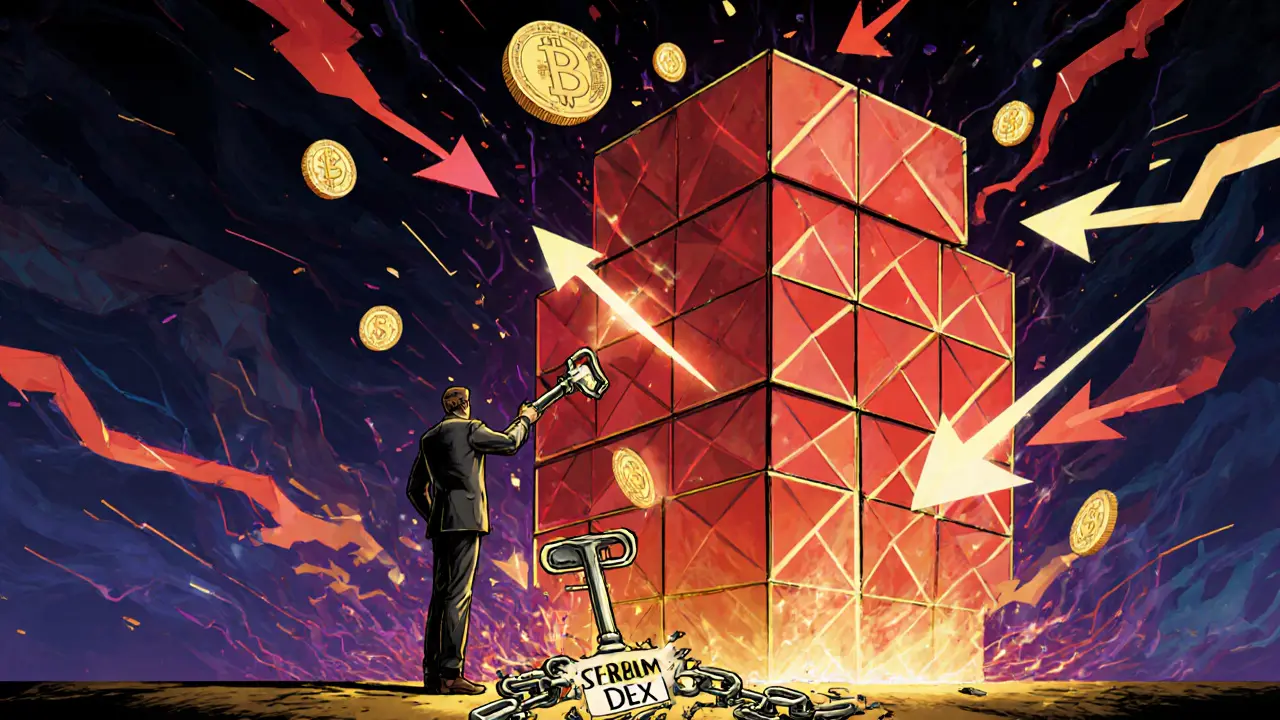
Serum DEX was a groundbreaking Solana-based decentralized exchange with order book trading and near-zero fees. After FTX's collapse, it was forked by the community. Here's how it works today, who should use it, and whether it's still viable.
read more