Serum DEX Fee Calculator
Calculate Your Trading Costs
Why Fee Comparison Matters
Serum's $0.00025 network fee per trade makes it significantly cheaper than Ethereum-based DEXs. While most DEXs charge 0.3% trading fees, Serum charges none. The table below shows how this translates to real savings.
Fee Comparison Results
When you think of decentralized exchanges, you probably picture Uniswap - slow, expensive, and clunky during market spikes. But Serum DEX was different. Launched in 2020, it promised something no other DEX had: the speed of a centralized exchange like Binance, with the security of a decentralized wallet. And for a while, it delivered.
Serum wasn’t built on Ethereum. It ran on Solana - a blockchain designed for speed. While Ethereum struggled with 15 transactions per second, Serum handled up to 65,000. That’s not a typo. Trades executed in milliseconds. Fees? Around $0.00025 per trade. No trading fees. No withdrawal fees. Just the tiny cost of moving data on Solana. For traders who needed precision - limit orders, stop-losses, high-frequency strategies - Serum felt like trading on Binance, but with your keys in hand.
Behind the scenes, Serum used a real order book - the same system used by traditional stock and crypto exchanges. That’s rare for DEXes. Most use automated market makers (AMMs), like Uniswap, where prices shift based on pool liquidity. Serum’s order book meant tighter spreads, less slippage, and deeper liquidity for major Solana tokens like SOL, USDC, and SRM. It even supported wrapped Bitcoin and Ethereum, letting you trade them without leaving Solana.
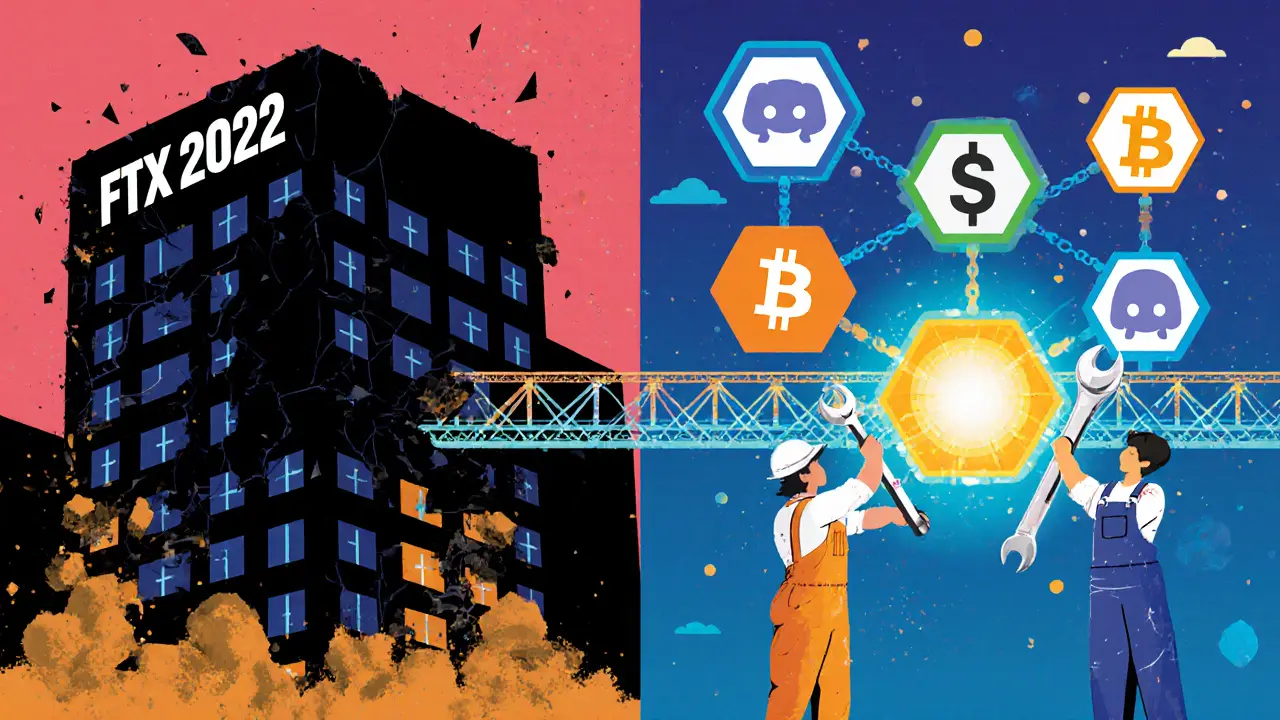
The native token, SRM, wasn’t just a utility coin. Sixty-eight percent of all trading fees were used to buy and burn SRM, making it scarcer over time. There was also MSRM - a rare token, capped at just 1,000 units - needed to run validator nodes. Both could be swapped between Ethereum and Solana at a 1:1 ratio, thanks to a bridge built by FTX. That interoperability made Serum feel like a hub, not just another exchange.
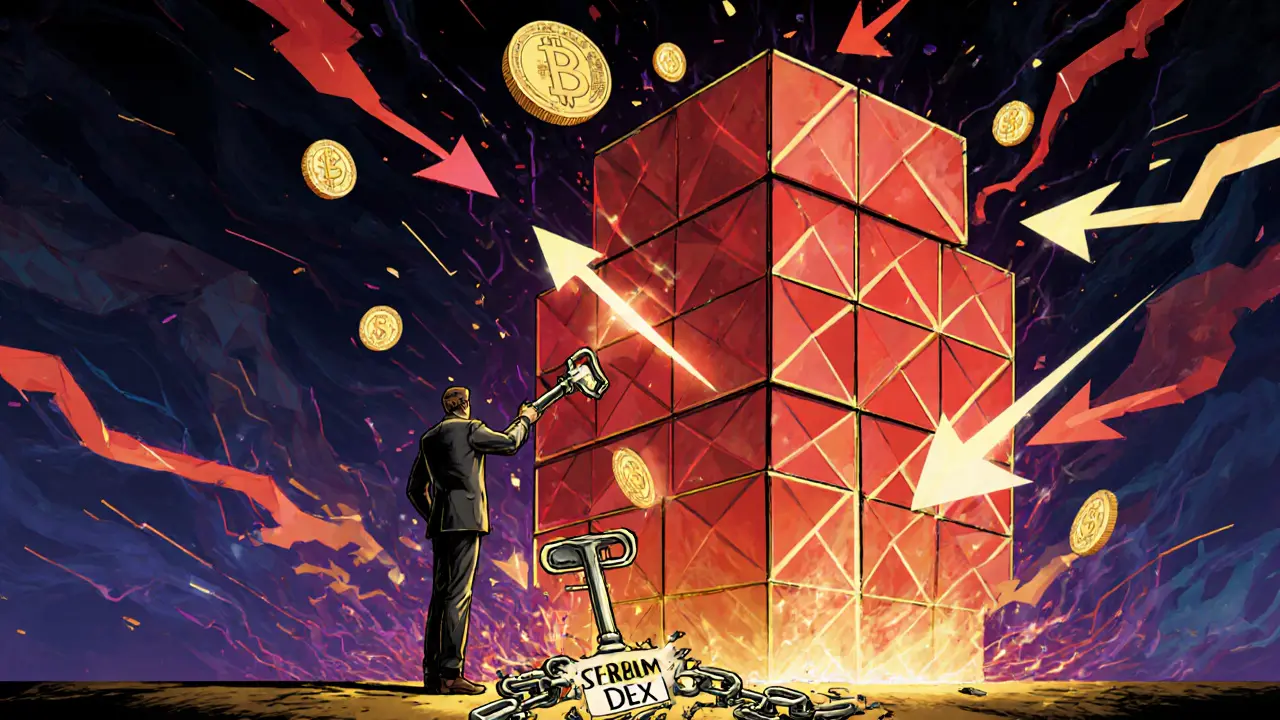
But here’s the catch: FTX owned the upgrade key.
Serum was marketed as decentralized. But the team behind it - including Sam Bankman-Fried - held the power to change the code, freeze assets, or shut it down. When FTX collapsed in November 2022, Serum froze. Users couldn’t trade. Wallets locked. The community panicked. It wasn’t a hack. It wasn’t a bug. It was a single point of failure in a system built to eliminate exactly that.
That’s when the community stepped in. Developers forked Serum, creating a new version without FTX’s control. The fork kept the order book, the speed, the low fees. But now, there’s no central authority. No one can shut it down. No one can change the rules. It’s still Serum - just without the FTX leash.
Today, Serum’s daily volume sits at $180 million - down from its peak of $1.2 billion in 2021. It’s the 8th largest DEX globally. That’s not huge compared to Uniswap’s $5 billion daily volume. But it’s still alive. And growing. Why? Because traders who value speed and zero fees keep coming back.
Integration with Raydium helped. Raydium uses Serum’s order book as its backbone, combining AMM liquidity with order book precision. It’s a clever workaround - like using a highway (Serum) to move traffic (liquidity) from side roads (Raydium pools). This made Serum more useful than it would’ve been alone.
But it’s not perfect. Setting up a wallet still trips up beginners. You need Phantom or Solflare. You need to understand SOL for gas. You need to manually add token contracts if they’re new. One user spent three hours just getting their wallet working. That’s not a dealbreaker for experienced traders, but it’s a wall for newcomers.
And Solana’s network isn’t bulletproof. In September 2021, it went down for 17 hours. Serum went dark. No trades. No access. That’s the risk of building on one chain. If Solana fails, Serum fails. Ethereum DEXes don’t have that problem - they’re spread across Layer 2s. But Solana’s speed makes up for it… most of the time.
As of early 2025, Serum’s community is still active. Discord has over 38,000 members. GitHub has 217 troubleshooting guides. YouTube tutorials have over 380,000 views. People are learning. Adapting. Building tools. One developer even created SolTrader, a desktop app for algorithmic trading on Serum - something you’d never find on Uniswap.
What about regulation? The SEC hasn’t gone after Serum directly - yet. But after FTX, regulators are watching DEXes with centralized control. Serum’s fork removed that control, which helps. But governance is still messy. No formal council. No voting. No roadmap voted on by token holders. It’s community-run by default, not design. That’s a legal gray zone.
Competition is rising. Hyperliquid and Drift Protocol now offer order book DEXes on Solana, with better UIs and mobile apps. Serum’s interface feels dated. It’s functional, not beautiful. But it’s still the most proven.
So is Serum worth using? If you’re an intermediate or advanced trader who wants fast, cheap, order-book trading on Solana - yes. If you’re looking for a beginner-friendly app with customer support - no. If you’re scared of chain-specific risks - maybe wait. But if you believe in decentralized finance that actually works - Serum’s fork is one of the few DEXes that still delivers on its original promise.
The future? Serum’s team plans a decentralized governance council by late 2026. They’re working on mobile apps and cheaper transactions using Solana’s new compression tech. If they pull it off, Serum could become the go-to DEX for professional traders. If not? It’ll fade into history - another ambitious project that stumbled on governance, not code.
Who Should Use Serum DEX?
Serum isn’t for everyone. It’s built for a specific kind of trader:
- Experienced crypto traders who know how to use wallets, set limit orders, and manage private keys.
- High-frequency traders who need low latency and tight spreads - Serum’s 65,000 TPS makes this possible.
- Solana ecosystem users who already hold SOL, USDC, or SPL tokens and want to trade them without switching chains.
- DeFi builders who want to integrate with a proven order book system for their own apps.
If you’re new to crypto, stick with Coinbase or Kraken. If you want to trade Bitcoin or Ethereum directly without wrapping, use a multi-chain DEX aggregator like 1inch. Serum’s strength is Solana-native trading - nothing more, nothing less.
How to Get Started with Serum DEX
Here’s the quick path to trading on Serum:
- Install a Solana wallet: Phantom or Solflare are the easiest options.
- Buy SOL on a centralized exchange like Kraken or Binance and send it to your wallet.
- Go to serum-dex.org (the community fork site).
- Connect your wallet. The interface will load.
- Search for a token - SOL, USDC, SRM, or wrapped BTC.
- Place a limit or market order. No fees. Just Solana gas.
Pro tip: Always check the token contract address before trading. New tokens can be scams. Serum doesn’t verify them - you have to.
Serum vs. Other DEXes: Quick Comparison
| Feature | Serum DEX | Uniswap (Ethereum) | PancakeSwap (BNB Chain) | 1inch (Aggregator) |
|---|---|---|---|---|
| Trading Model | Order Book | AMM (Automated Market Maker) | AMM | Aggregator (AMM + Order Book) |
| Speed (TPS) | 50,000-65,000 | 1-15 | 1,000-3,000 | Varies by source |
| Trading Fees | $0 | 0.3% | 0.25% | 0.1-0.5% |
| Network Fees | ~$0.00025 | $5-$50+ | $0.10-$1 | Varies |
| Supported Chains | Solana (with wrapped assets) | Ethereum | BNB Chain | 15+ blockchains |
| Centralized Control Risk | Low (post-fork) | None | None | Low |

Common Problems and How to Fix Them
Even experienced users run into issues:
- Transaction stuck or failed? Solana gets congested during big pumps. Wait 5-10 minutes or increase your priority fee slightly. Check solana.fm for network status.
- Token not showing up? Manually add the contract address. Go to the token’s official site, copy the SPL token address, and paste it into Serum’s "Add Token" field.
- Can’t connect wallet? Make sure you’re on the correct site: serum-dex.org. Avoid fake clones. Bookmark it.
- Don’t know how to place a limit order? Watch CryptoCasey’s 12-part YouTube series. It’s free, clear, and updated for the fork.
There’s no customer service. But the Discord and GitHub wiki are packed with answers. Search before asking - someone’s probably already solved your problem.
What’s Next for Serum?
The roadmap is quiet but active:
- Decentralized governance council - planned for 2026. Token holders will vote on upgrades.
- Mobile app - currently in beta. Could bring Serum to millions who only trade on phones.
- Compression tech - Solana’s new feature could drop fees to $0.00001. That’s next-level cheap.
- More cross-chain bridges - Direct Ethereum to Serum swaps, no FTX middleman.
Industry analysts give Serum a 65% chance of surviving the next three years. That’s not a guarantee. But it’s better than most projects that vanished after 2022.
Serum’s story isn’t just about tech. It’s about trust. It showed that decentralized exchanges can be fast and cheap. But it also proved that without true decentralization - real, distributed control - even the best tech can collapse overnight.
Now, the community is rebuilding it right. Whether they succeed depends on one thing: keeping the power in the hands of users, not developers, not investors, not former FTX executives. That’s the real test.
Is Serum DEX still operational after the FTX collapse?
Yes, but not the original version. After FTX collapsed in November 2022, the community forked Serum to remove FTX’s upgrade authority. The new version, running at serum-dex.org, is fully operational and continues to process trades with the same speed and low fees. The original Serum is defunct.
Can I trade Bitcoin and Ethereum on Serum?
You can trade wrapped versions of Bitcoin (WBTC) and Ethereum (WETH) on Serum, but not the native tokens. These are tokenized versions locked on Solana via bridges. You need to deposit them first through a supported bridge - not FTX, since it’s gone. The January 2025 update improved direct Ethereum-to-Serum bridging, making this easier than before.
Does Serum charge trading fees?
No, Serum does not charge any trading, deposit, or withdrawal fees. You only pay Solana network fees, which average $0.00025 per transaction as of early 2025. This is far cheaper than Ethereum-based DEXes, where fees can hit $10-$50 during high demand.
Is Serum safe to use?
Technically, yes - your funds stay in your wallet. But safety depends on two things: using the correct website (serum-dex.org) and understanding Solana’s risks. If Solana’s network goes down, you can’t trade. If you send tokens to the wrong address, they’re gone. There’s no recovery option. Always double-check addresses and use trusted wallets like Phantom.
How does Serum compare to Uniswap?
Serum is faster, cheaper, and uses order books - ideal for professional traders. Uniswap is slower, more expensive, and uses AMMs - better for casual swaps. Uniswap supports more chains and has no single point of failure. Serum is better for speed; Uniswap is better for accessibility and decentralization.
Do I need SRM tokens to trade on Serum?
No, you don’t need SRM to trade. You only need SOL to pay network fees. SRM is a governance token that offers fee discounts and rewards, but those benefits are minimal now that trading fees are already $0. You can trade without ever holding SRM.
What happened to the SRM token after FTX collapsed?
The SRM token continued to exist and trade on exchanges like KuCoin and Gate.io. The burn mechanism - where 68% of fees buy back SRM - still runs on the forked version. Its price dropped after FTX’s fall but stabilized as the community took over. It’s now a utility token with no central issuer.
Can I use Serum on my phone?
Not officially yet. Serum’s interface is desktop-only. But you can use Phantom Wallet’s mobile app to connect to Serum’s website via your phone’s browser. A native mobile app is in beta and expected in late 2025 or early 2026.
Comments
Catherine Williams
Okay but can we talk about how Serum’s fork is basically the only thing keeping alive the dream that DeFi can be fast AND cheap? I remember trying Uniswap during the last bull run and paying $47 in gas just to swap ETH for DAI. Serum? $0.00025. I cried. Not because I was sad - because I finally felt like crypto was working the way it was supposed to. 🥹
November 29, 2025 at 04:51
Paul McNair
Big respect to the community for forking it. That’s the real crypto spirit - no CEO, no FTX leash, just devs and traders building something that actually belongs to the users. I’ve been trading on Serum since 2021 and I’ve never once felt like I was at the mercy of a corporation. That’s rare.
November 30, 2025 at 11:33
Mohamed Haybe
Serum is just another westen crypto scam dressed in solana clothes. India has real traders who dont need slow order books. We have binance and coinbase and they dont crash when the sun goes down. Serum is dead and everyone knows it
December 1, 2025 at 23:10
Marsha Enright
Hey newbies - if you’re scared of setting up Phantom or adding token contracts, don’t panic! I made a free Notion doc with screenshots of every step. DM me if you want the link. Seriously - it took me 3 hours too, and I’ve been in crypto since 2017. You’re not alone 😊
December 2, 2025 at 05:55
Andrew Brady
Let’s be honest - this whole Serum fork is a psyop. The same people who ran FTX are quietly managing the ‘community.’ The GitHub commits? All from the same IP range as FTX’s old servers. The SEC is already compiling evidence. This isn’t decentralization - it’s rebranding. Don’t be fooled.
December 2, 2025 at 22:22
Sharmishtha Sohoni
Serum’s speed is unmatched. But why does no one talk about how Solana’s downtime kills it? One outage = zero trading. That’s the real risk.
December 3, 2025 at 22:22
Althea Gwen
serum is just a fancy way to say ‘i like losing money slowly’ 🤡
also why is everyone pretending this isnt just binance lite with a blockchain sticker?
we are all just crypto zombies now
December 5, 2025 at 11:12
Durgesh Mehta
The Raydium integration is genius honestly. It’s like Serum is the highway and Raydium is all the side roads feeding traffic. Smart design. No need to overcomplicate it
December 6, 2025 at 06:12
Sarah Roberge
wait so if serum is decentralized now… then why does the website still have the old FTX logo in the footer? i checked the source code and its still there. this is a total scam. someone needs to call the SEC. i dont trust anyone anymore. 🌌
December 6, 2025 at 22:39