NFT values dropped: Why prices crashed and what’s left to know
When NFT values dropped, digital collectibles that once sold for millions lost most of their worth overnight. Also known as non-fungible tokens, they were sold as unique digital assets tied to art, music, or virtual land—but the hype didn’t last. The market peaked in 2021, then collapsed. Some NFTs that sold for $100,000 are now worth less than $10. Why? Because most were never meant to be held long-term. They were bought for speculation, not utility. And when the money stopped flowing in, the prices followed.
What’s left? A few real projects still have value because they offer something beyond a JPEG. NFT trading, the act of buying and selling digital assets on marketplaces like OpenSea, still happens—but only for tokens with actual use cases. Think gaming items you can actually use in a game, or music NFTs that give you royalties. Meanwhile, NFT scams, fake collections and phishing links pretending to be real drops, are more common than ever. People still lose money daily to fake airdrops, rug pulls, and fake Discord admins. The lesson? If it doesn’t do something useful, it’s probably just a digital poster.
The NFT market crash didn’t kill the idea—it just cleaned out the fluff. Real ownership, real utility, and real communities still matter. But the days of flipping a cartoon ape for a profit are over. Now, you need to ask: What does this NFT actually give me? Can I use it? Does it earn me something? Or is it just a number on a screen? The posts below show you exactly what happened to projects that promised big returns—and which ones still have a pulse. You’ll see real examples of NFTs that lost 99% of their value, how scams tricked people into giving up their crypto, and which platforms still offer real opportunities. No fluff. Just what’s left after the crash.
Posted by
HELEN Nguyen
6 Comments
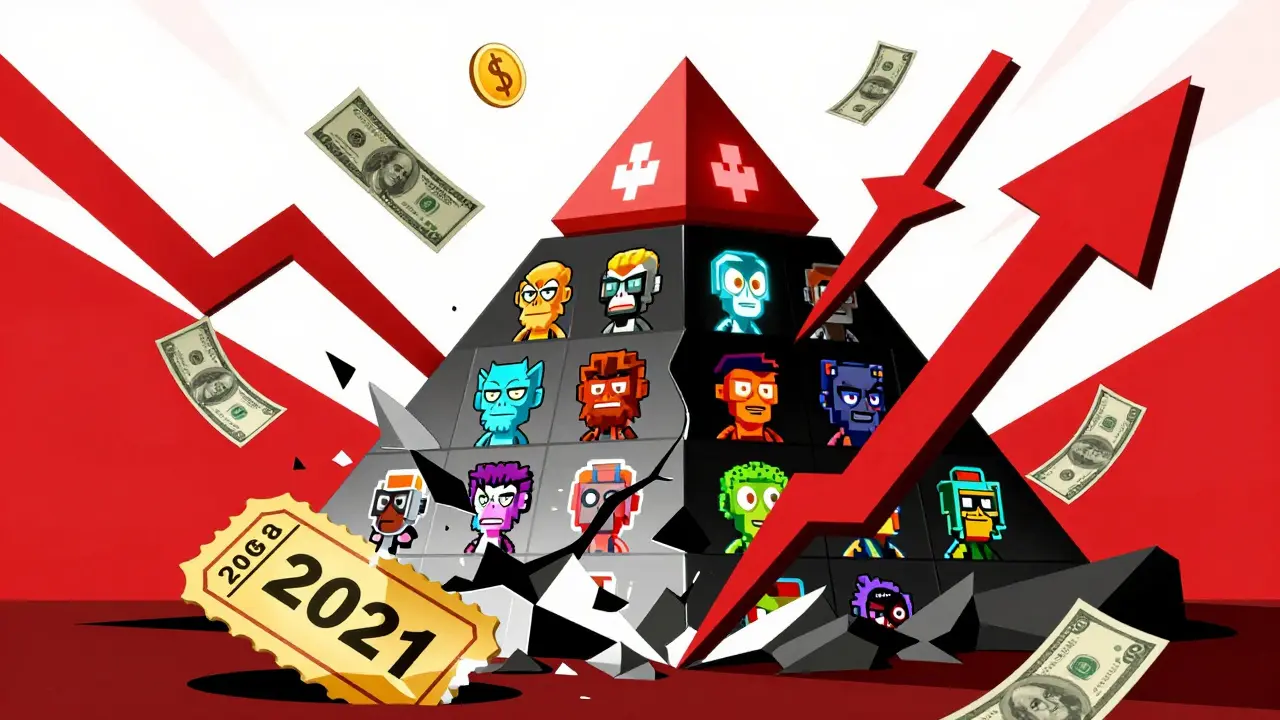
The NFT market crash of 2022 wiped out over two-thirds of its value in months. Inflation, gas fees, wash trading, and lack of utility caused the collapse-not a failure of technology, but of speculation.
read more