NFT Value Loss Calculator
The NFT market lost over 66% of its value in just months. Enter your original NFT investment to see how much value it could have lost during the 2022 crash based on real market conditions.
Enter your investment value to see potential losses.
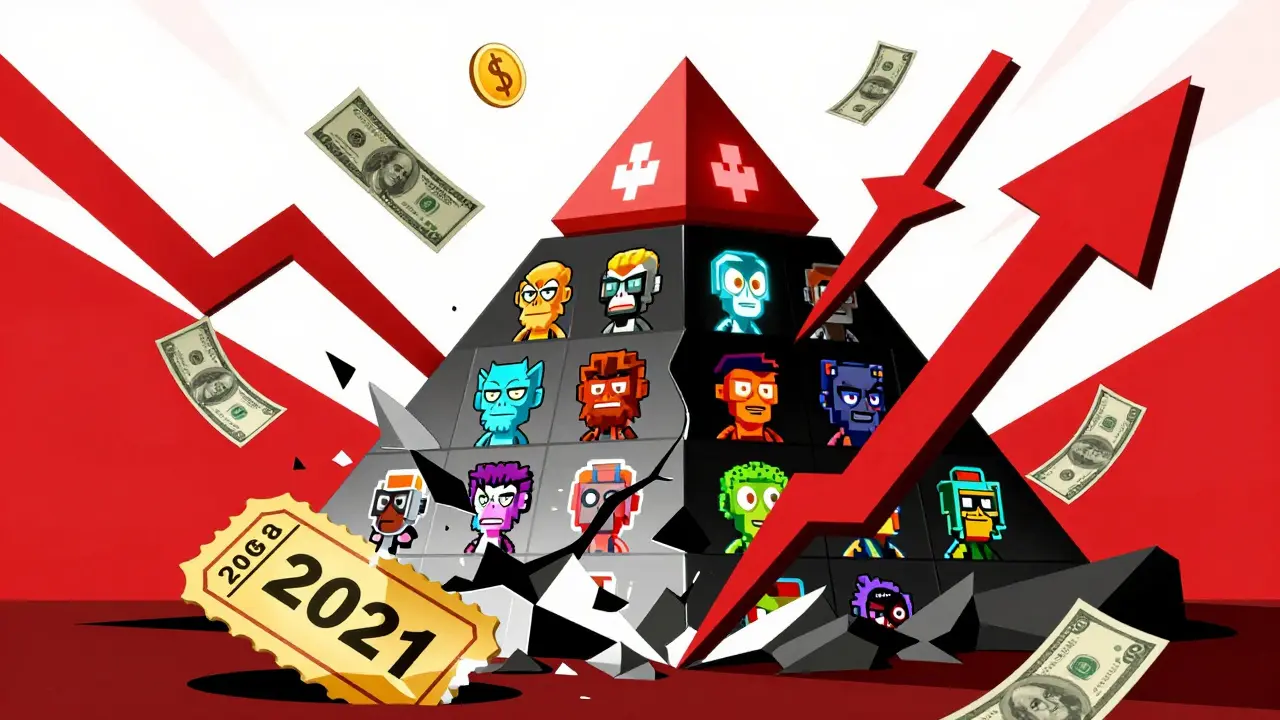
Back in 2021, NFTs were everywhere. You couldn’t scroll through Twitter or watch NBA highlights without seeing someone flaunt a $500,000 ape or a pixelated punk worth millions. People were buying digital art like it was the next real estate boom. Then, in just a few months, it all fell apart. By mid-2022, the NFT market had lost more than two-thirds of its value. What happened? It wasn’t just one thing. It was a perfect storm of greed, inflation, bad tech, and reality hitting hard.
The Bubble Was Never About Art
The NFT boom didn’t start because people suddenly loved digital drawings. It started because people thought they could flip them for ten times what they paid. The $69 million sale of Beeple’s artwork at Christie’s wasn’t about the art-it was a signal. It told the world: NFT is the new gold. Suddenly, celebrities, brands, and everyday folks jumped in. NBA Top Shot sold digital highlight clips like trading cards. Gucci and Dolce & Gabbana released NFT fashion. CryptoPunks and Bored Apes became status symbols. But here’s the truth: most buyers never cared about the image. They cared about the price chart.The Numbers Tell the Real Story
By November 2021, the NFT market hit $3 billion in monthly trading volume. That was insane. But by June 2022, sales had collapsed to under $1 billion. Daily sales dropped 92% from their peak. That’s not a correction-it’s a wipeout. The number of sellers fell by 36%. Buyers dropped by 25%. And the biggest sign of panic? People stopped selling. The average time someone held an NFT jumped 55%. They weren’t holding because they believed in the future. They were holding because they couldn’t sell at any price.Why Did It Crash? Five Big Reasons
- Inflation hit hard. In April 2022, U.S. inflation hit 8.3%. By June, it was 9.1%. People were paying more for gas, groceries, rent. Their savings shrank. NFTs? They were the first thing to go. Why spend money on a JPEG when your rent’s due?
- The stock market crashed too. The S&P 500 lost 23% of its value from the end of 2021 to June 2022. Investors who had put money into crypto and NFTs started pulling back. Risky bets got dumped first. NFTs were the riskiest.
- Wash trading fooled everyone. A lot of the sales you saw weren’t real. People were buying and selling their own NFTs to make it look like demand was high. That trick worked until it didn’t. When real buyers showed up, they saw the market was fake.
- Gas fees killed small trades. Most NFTs ran on Ethereum. Every time you bought or sold, you paid a fee-sometimes $50, $100, even more. If your NFT was worth $200, and the fee was $80, you lost money just trying to sell. That made low-value NFTs impossible to trade.
- No regulation, no trust. Governments started asking: Are NFTs securities? Are they taxable? Who’s responsible? No one knew. Banks and big funds backed off because they couldn’t risk getting fined or sued. That dried up institutional money fast.
Who Got Hurt the Most?
Artists who built their whole income on NFTs were hit hardest. Some were making $10,000 a month selling digital art in early 2022. By August, they hadn’t sold a single piece in months. Collectors who bought at the peak lost 80-95% of their portfolio value. One Reddit user posted a screenshot of his Bored Ape collection-worth $2 million in January-now worth $120,000. He couldn’t even give it away. Platforms like OpenSea saw primary sales dry up. Almost 80% of all activity was resale. No new buyers. Just people trying to escape.It Wasn’t Just the Economy
There were other problems too. Environmental concerns scared off younger buyers who cared about climate change. Ethereum’s energy use was a hot topic. And let’s not forget: most NFTs had no real use. They weren’t tickets, weren’t access passes, weren’t game items. They were just pictures. When the hype died, there was nothing left to hold onto.
What’s Left After the Crash?
The NFT market didn’t die. It shrank. And it changed. Projects that added real utility survived. Some NFTs now act as tickets to concerts or members-only clubs. Others give access to Discord servers, real-world events, or gaming assets. Gaming companies are still experimenting with NFTs as in-game items you can truly own. But the wild, get-rich-quick days? Those are gone. The market is quieter now. Smaller. More focused. And honestly? Healthier.What This Teaches Us
The NFT crash wasn’t about the technology failing. It was about people treating a new tool like a casino. When money flows in fast because of hype, it flows out faster when reality sets in. The same thing happened with tulips in the 1600s. With dot-com stocks in 2000. With Bitcoin in 2017. This wasn’t unique. It was predictable.The lesson? Don’t invest in something just because it’s trending. Look for utility. Look for real demand. And never put money into something you don’t understand-especially if your only reason is "someone else made money doing it."
The NFT market may never reach $3 billion in a single month again. But that’s not a bad thing. Maybe now, the people who really believe in digital ownership will build something that lasts.
Comments
Heath OBrien
NFTs were just digital glitter for people who thought they were rich. Now they're stuck with ape JPEGs worth less than their coffee. 🤡
December 9, 2025 at 07:46
Taylor Farano
Oh wow. The market crashed because people realized they paid $400k for a cartoon monkey. Shocking. Next you'll tell me water is wet and gravity still works. 🤦♂️
December 9, 2025 at 18:21
Toni Marucco
The collapse of the NFT speculative bubble reveals a profound truth about human economic behavior: we are not rational actors, but pattern-seeking creatures who mistake momentum for meaning. The infrastructure of blockchain remains robust, but the cultural edifice built atop it-rooted in performative wealth and digital vanity-was always a house of cards. What we witnessed was not the failure of technology, but the exposure of a societal pathology disguised as innovation. The real tragedy is not the lost capital, but the lost opportunity to build something genuinely transformative.
December 11, 2025 at 06:30
Kathryn Flanagan
I just want to say to all the artists who poured their hearts into NFTs and got crushed-your work still matters. The market didn’t see your soul, but I do. And I know you didn’t do this for the money, you did it because you had to create. That’s beautiful. And you’re not alone. There are people out here who still believe in art, even if the hype machine forgot. Keep going. We’re still listening.
December 12, 2025 at 14:46
amar zeid
The real question is not why it crashed, but why we expected it to last. We built castles in the air and called them assets. When the wind blew, we blamed the weather. But the wind was always there. We just chose not to see it. Maybe now, with quieter minds and clearer eyes, we can build something that doesn’t need hype to breathe.
December 13, 2025 at 03:22
Alex Warren
The NFT crash was inevitable because value was never assigned to utility but to narrative. When the narrative collapsed the value evaporated. That’s not a bug it’s a feature of speculative markets. The technology wasn’t the problem the psychology was.
December 14, 2025 at 00:05