NFT Bubble Burst: What Happened and What’s Left Behind
When the NFT bubble burst, a rapid collapse in speculative demand for non-fungible tokens that erased over $20 billion in market value between 2022 and 2023, most people assumed digital art was dead. But the crash didn’t kill NFTs—it cleaned them out. What remained weren’t just JPEGs with hype prices. They were real tools for creators, verifiable ownership systems, and community-driven projects that actually delivered utility. The NFT bubble burst wasn’t the end. It was the reset.
The crash exposed how many NFTs were just glorified JPEGs with no backing, no team, and no purpose. Projects like MurAll PAINT, a token once worth thousands that later dropped to pennies after its community faded and others tied to empty promises showed what happens when speculation replaces substance. Meanwhile, platforms like OpenSea, the dominant NFT marketplace that survived the crash by adapting to lower volumes and stricter verification became more cautious, pushing out scams and focusing on verified creators. The NFT bubble burst didn’t destroy the technology—it killed the grifters.
Today, the survivors are the ones building something real: artists using NFTs to get paid directly, game developers giving players true ownership of in-game items, and collectors who care about provenance, not just flipping. The blockchain assets, digital items with unique, tamper-proof ownership records stored on public ledgers still matter—just not the way they did in 2021. You don’t need to buy a $100,000 monkey picture anymore. You just need to know which NFTs actually give you something: access, royalties, voting rights, or usable digital goods. The NFT bubble burst taught us that value isn’t in the hype. It’s in the use.
What you’ll find below are real stories from the wreckage: coins that vanished, airdrops that were fake, exchanges that disappeared, and the few NFT projects that kept going despite the chaos. No fluff. No promises. Just what happened, who got burned, and who’s still building.
Posted by
HELEN Nguyen
6 Comments
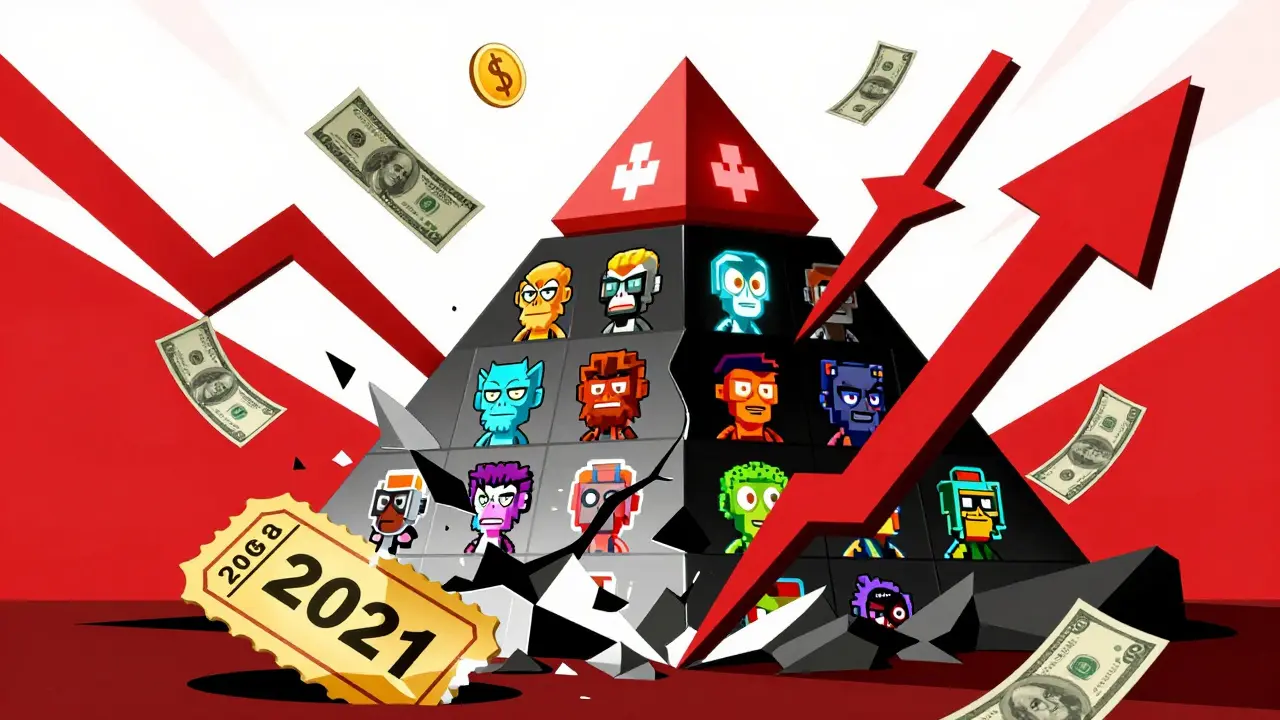
The NFT market crash of 2022 wiped out over two-thirds of its value in months. Inflation, gas fees, wash trading, and lack of utility caused the collapse-not a failure of technology, but of speculation.
read more