MiCAR Germany: What It Means for Crypto Users and Exchanges
When you hear MiCAR Germany, the German implementation of the EU’s Markets in Crypto-Assets Regulation, you’re not just hearing a new rule—you’re hearing the end of the wild west for crypto in Europe. MiCAR isn’t a suggestion. It’s a legal requirement that kicks in fully in 2025, and Germany is one of the first countries to fully enforce it. This isn’t about banning crypto. It’s about bringing it into the light. If you trade, hold, or run a platform that touches crypto in Germany, MiCAR changes everything.
MiCAR framework, the EU-wide rulebook for digital assets covers everything from stablecoins to exchange licenses. It forces platforms to prove they’re secure, transparent, and accountable. No more shady operations hiding behind offshore addresses. In Germany, crypto exchanges must now get official approval from BaFin, the financial regulator. If they don’t, they can’t legally operate. That’s why you’re seeing old platforms disappear and new ones pop up with clear terms, audits, and real customer support. The same goes for stablecoins like USDT and USDC—they now need to prove they’re fully backed and audited monthly. If they fail, they’re banned from the EU market.
What does this mean for you? If you’re a regular trader in Germany, you’ll see more KYC checks, clearer fee structures, and fewer random tokens on exchanges. That’s not a bad thing—it’s protection. MiCAR also gives you rights: if a platform fails, you have legal recourse. But it’s not all sunshine. Smaller projects and decentralized apps might struggle to comply. Some may vanish. Others will move elsewhere. And if you’re using a DEX without KYC, you’re walking a tighter line—MiCAR doesn’t yet fully regulate decentralized platforms, but that’s coming. The EU is watching.
Germany’s approach is strict, but fair. It’s not about stopping innovation—it’s about making sure innovation doesn’t leave people broke. You’ll find posts below that dig into real cases: how German exchanges are adapting, what penalties await violators, and why some crypto projects are quietly leaving the country. You’ll also see how MiCAR compares to rules in Australia, Nigeria, and the UAE. This isn’t just about Germany. It’s about the future of crypto in Europe—and what it means for your wallet.
Posted by
HELEN Nguyen
7 Comments
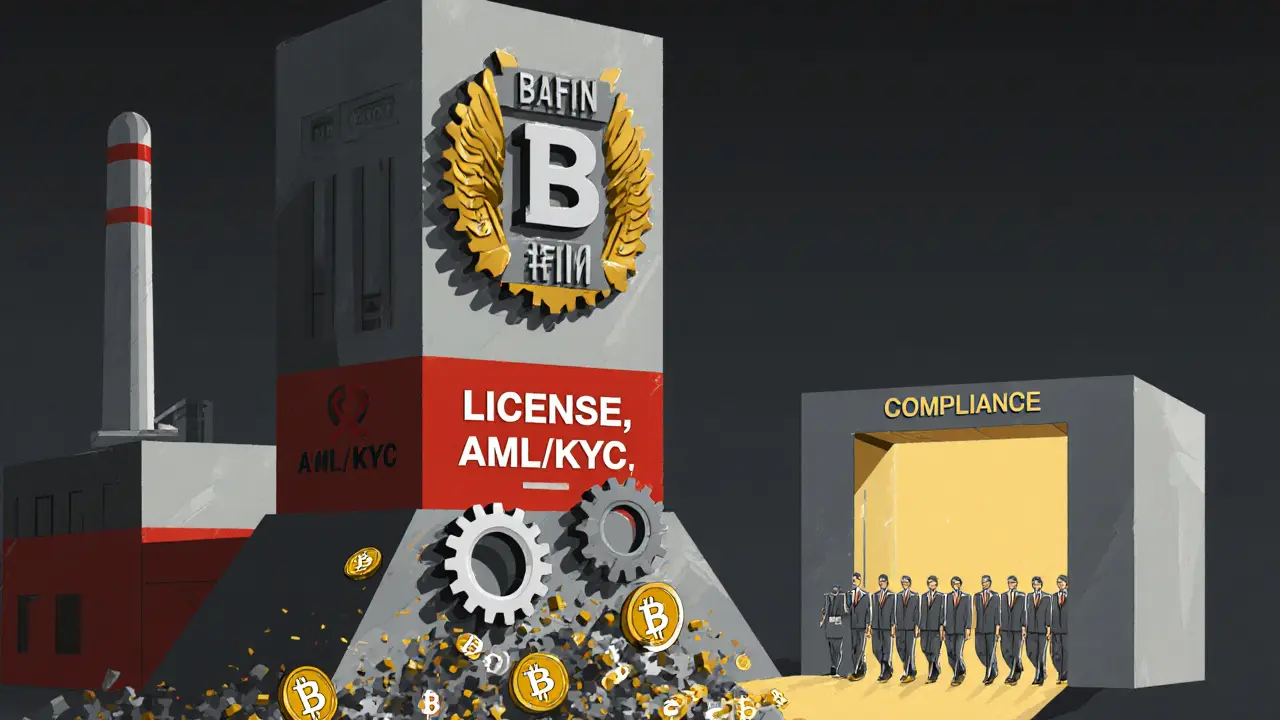
Germany's BaFin enforces strict crypto regulations under MiCAR. Learn what licenses you need, how to comply with AML rules, and what happened in 2025 when unlicensed firms were shut down.
read more