Digital Yuan China: What It Is, How It Works, and Why It Matters
When you hear digital yuan China, the official digital version of China’s national currency, issued and controlled by the People's Bank of China. Also known as e-CNY, it’s not a cryptocurrency — it’s a fiat digital currency backed by the full power of the Chinese state. Unlike Bitcoin or Ethereum, the digital yuan doesn’t run on a public blockchain. It’s a centralized system designed to replace cash, track spending, and give the government direct control over money flow — something no other major economy has tried at this scale.
The People's Bank of China, the central bank that created and manages the digital yuan started testing the digital yuan in 2020 and rolled it out to over 260 million people by 2024. It’s used for everything: paying for groceries, booking trains, even giving out government welfare. Merchants in cities like Beijing and Shanghai now accept it through simple QR codes. No bank account needed. No credit check. Just a government-approved app on your phone. And unlike Western digital payments, this isn’t just a tech upgrade — it’s a surveillance tool. Every transaction is recorded, timed, and tagged. The state knows where your money goes, when, and how much.
This isn’t just about convenience. The digital currency, a broader category that includes the digital yuan and similar projects worldwide is China’s answer to the dollar’s global dominance. By pushing the digital yuan abroad — through Belt and Road partnerships, cross-border trade deals, and pilot programs in places like Thailand and the UAE — China wants to reduce reliance on SWIFT and the U.S. financial system. Other countries are watching closely. If it works, the digital yuan could become the first real alternative to the dollar in international trade.
And here’s the catch: while the digital yuan is designed to be user-friendly, it’s not open to the world. You can’t buy it on exchanges. You can’t mine it. You can’t hold it in a wallet you control. You need a Chinese ID, a local bank link, and approval from the state to even get started. It’s not about decentralization. It’s about control. That’s why it scares some and excites others.
Below, you’ll find real-world guides, legal breakdowns, and market insights on how the digital yuan China is shaping crypto policy, influencing global finance, and changing how people think about money. Some posts show how it affects crypto adoption in Asia. Others explain how it’s being used to bypass sanctions. None of them are theoretical. All of them are grounded in what’s actually happening — right now.
Posted by
HELEN Nguyen
5 Comments
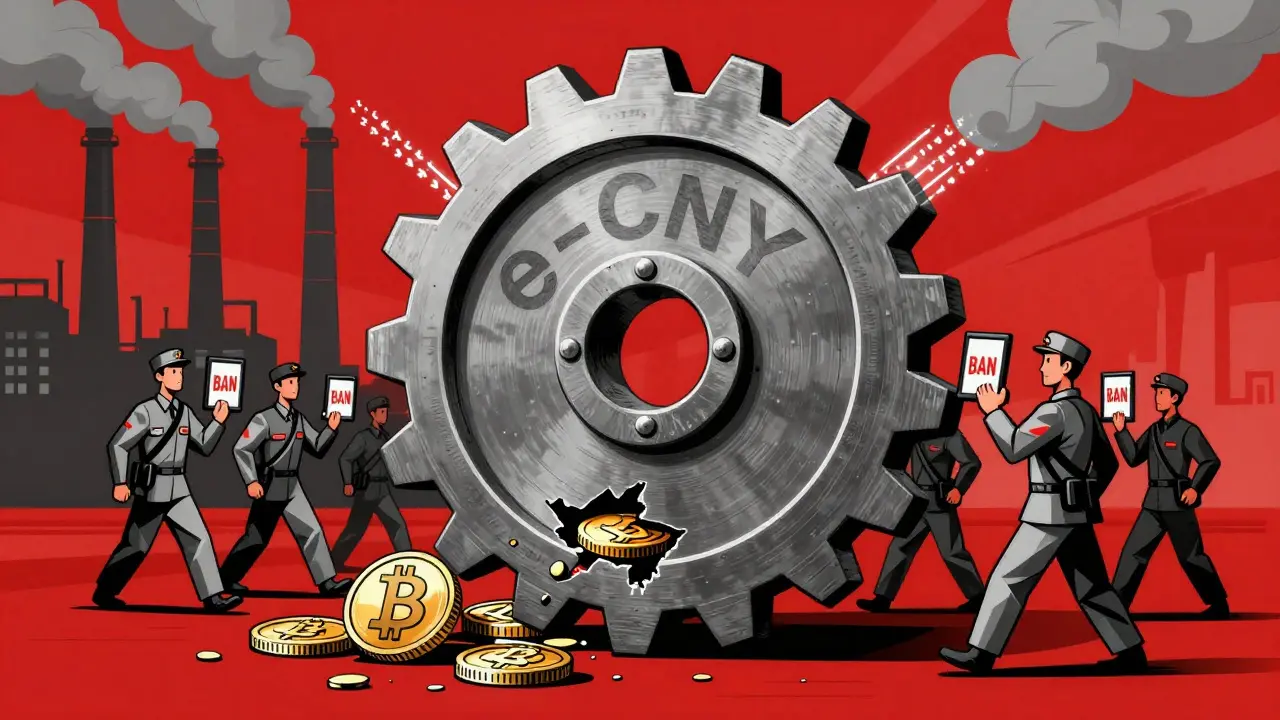
China has completely banned cryptocurrency trading, mining, and ownership as of June 2025. The law enforces strict penalties, promotes the digital yuan, and makes no exceptions-even for foreigners. Here's what you need to know.
read more