DEX Access: How to Use Decentralized Exchanges Safely and Effectively
When you use DEX access, a way to trade cryptocurrencies directly on a blockchain without a middleman. Also known as decentralized trading, it gives you full control over your funds—but only if you know what you're doing. Unlike centralized exchanges like Binance or Coinbase, DEXs don’t hold your crypto. You sign trades yourself using your wallet. That means no one can freeze your account or steal your coins through a hack… unless you make a mistake.
Not all DEXs are built the same. Some, like Serum DEX, a fast, order-book-based platform on Solana, were designed for professional traders with low fees and high speed. Others, like Saturn Network, a decentralized exchange that shut down without warning, promised trustless trading but vanished overnight. The difference? One had strong community support and clear code; the other didn’t. If a DEX has no active developers, no audit reports, or zero user volume, it’s a red flag. You’re not just risking your money—you’re risking your private keys.
DEX access isn’t just about swapping tokens. It’s about understanding blockchain bridges, the connections that let assets move between different blockchains. Many scams happen because users send crypto through a broken bridge or a fake token contract. You need to know what a liquidity pool is, how slippage works, and why you should never approve unlimited token spending. Real users lost millions because they clicked "Approve" without reading the fine print. That’s not a bug—it’s a trap.
Some of the posts below show how DEX access plays out in the real world: one community kept Serum alive after FTX collapsed, another DEX died quietly with no explanation, and a few fake platforms pretended to be DEXs just to steal wallets. You’ll see what happens when a token has no users, when a project abandons its code, and how even the most promising tools can vanish overnight. This isn’t theory. These are real cases. If you’re using a DEX today, you need to know what to look for—and what to avoid. Below, you’ll find honest reviews, breakdowns of failed platforms, and clear warnings about what not to do. No fluff. No hype. Just what actually matters when you’re trading on-chain.
Posted by
HELEN Nguyen
5 Comments
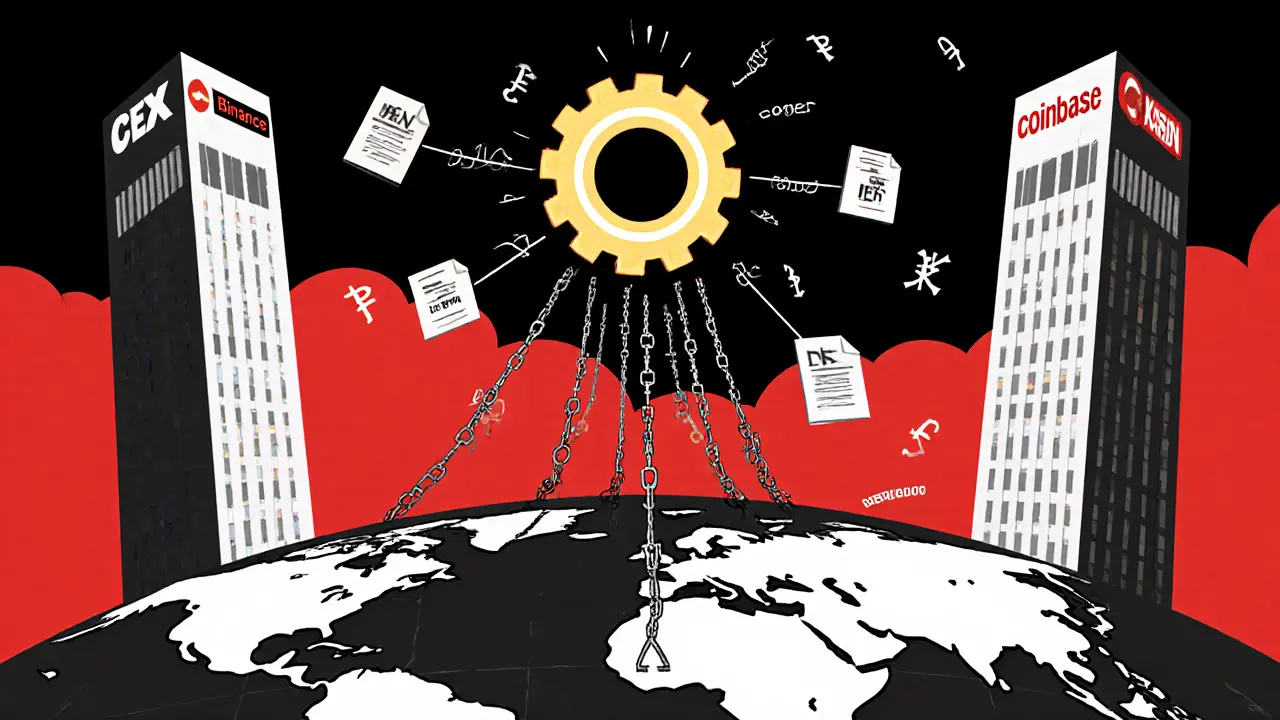
CEXs block users by country due to regulations, while DEXs let you trade anonymously-but that’s changing. Learn how geography shapes your crypto access, from KYC rules to emerging DEX restrictions.
read more