Decentralized Exchange Rules: What You Need to Know About DEX Trading, Risks, and Regulations
When you trade on a decentralized exchange, a crypto trading platform that lets users swap tokens directly without a middleman. Also known as DEX, it runs on smart contracts and gives you full control of your funds. But that freedom comes with rules—rules that aren’t always written down, but are enforced by code, regulators, and community trust. Unlike centralized exchanges like Binance or Coinbase, DEXs don’t have a CEO to call when something goes wrong. If you mess up a transaction, if a smart contract gets hacked, or if a token turns out to be a scam, there’s no customer service team to refund you. That’s why understanding decentralized exchange rules isn’t optional—it’s survival.
These rules come from three places: the blockchain protocol itself, global regulators, and real-world behavior. For example, Serum DEX, a fast, low-fee Solana-based platform that once led DEX innovation, kept trading alive even after its parent company FTX collapsed—because the code kept running. But Saturn Network, a DEX that vanished overnight with no warning, showed how fragile trust can be when there’s no accountability. Then there’s regulation: AUSTRAC, Australia’s financial watchdog that now requires all crypto platforms to report user transactions, and BaFin, Germany’s crypto regulator that shut down unlicensed DEXs in 2025, are forcing DEXs to adapt or disappear. Even if a DEX claims to be "trustless," regulators still treat it like a business—if it handles money, it must follow AML rules.
And then there’s the user side. Many people think DEXs are completely anonymous, but that’s not true. If you connect your wallet to a DEX and trade over $10,000 in a year, you might need to file an FBAR with the U.S. government. If you’re in Nigeria, you need a license just to operate a DEX. In Tunisia, traders use VPNs to bypass bans, risking arrest just to swap USDT. These aren’t edge cases—they’re everyday realities. The rules aren’t just about code or compliance forms. They’re about who’s watching, who’s liable, and what happens when things go sideways.
What you’ll find below are real stories of DEXs that worked, DEXs that failed, and DEXs that never should’ve existed. You’ll see how traders got burned by unregulated platforms, how regulators cracked down, and how some projects survived by following the rules—even when no one was watching. This isn’t theory. These are the lessons from the front lines of decentralized trading. Learn from them before your next swap.
Posted by
HELEN Nguyen
5 Comments
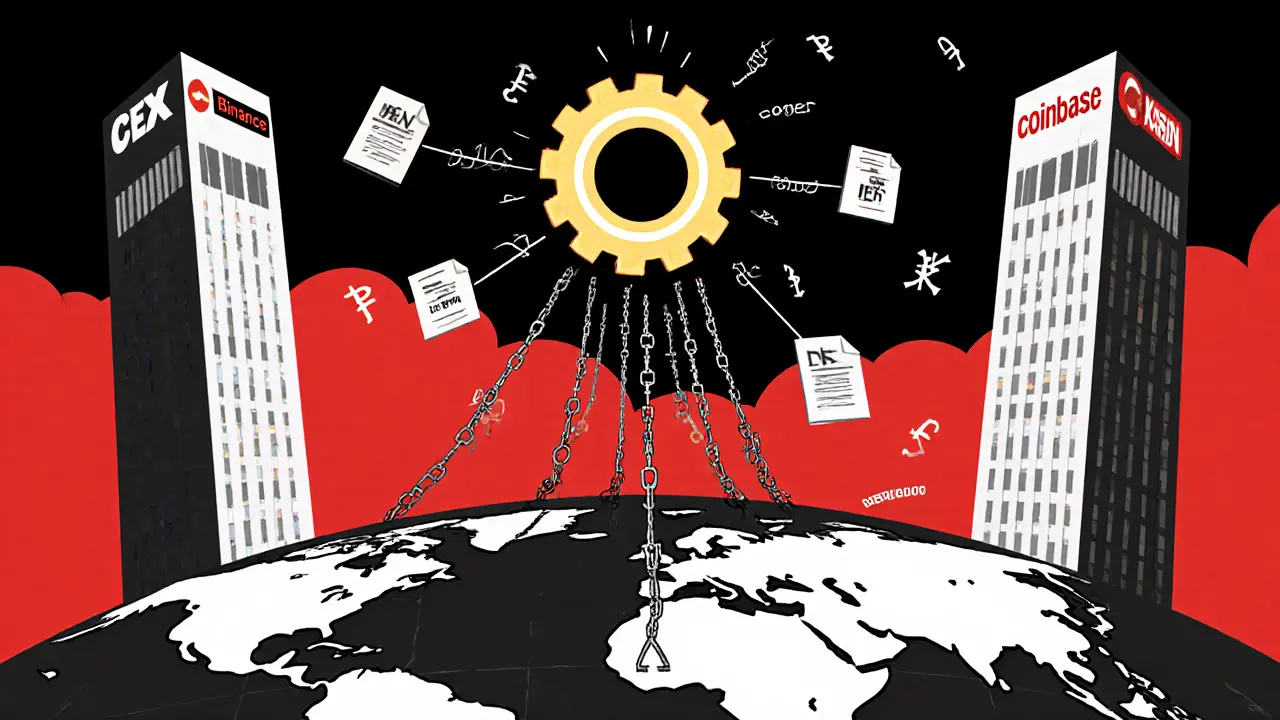
CEXs block users by country due to regulations, while DEXs let you trade anonymously-but that’s changing. Learn how geography shapes your crypto access, from KYC rules to emerging DEX restrictions.
read more