Cryptocurrency Ban China: What Happened and How It Changed Global Crypto
When cryptocurrency ban China, a sweeping government move in 2021 that outlawed all crypto trading, mining, and financial services tied to digital assets. Also known as China’s crypto crackdown, it wasn’t just a policy shift—it was a seismic event that sent shockwaves through every corner of the crypto world. Before the ban, China controlled over 70% of Bitcoin mining and was home to the largest crypto exchanges. Then, overnight, mining rigs were shut down, exchanges like Huobi and OKX fled the country, and traders had to go underground. The goal? To protect financial stability and push the digital yuan, China’s state-controlled central bank digital currency (CBDC). Also known as e-CNY, it’s designed for full government oversight, unlike decentralized crypto.
But the ban didn’t kill crypto—it moved it. Miners didn’t disappear; they relocated to Kazakhstan, the U.S., and even Iran, where electricity was cheaper and rules looser. Traders didn’t stop using Bitcoin—they switched to peer-to-peer platforms and VPNs, turning China into one of the largest underground crypto markets in the world. Meanwhile, the crypto mining China, a once-dominant industry that used cheap coal power and state-owned hardware. Also known as Bitcoin mining in China, it was the backbone of global hash rate became a cautionary tale for other governments considering similar moves. Countries like Nigeria and Pakistan saw crypto adoption rise precisely because their citizens lost faith in traditional banking—proof that banning crypto often backfires when people need financial freedom.
The China crypto regulations, a rigid framework that treats crypto as a speculative risk, not a financial asset. Also known as China’s crypto legal stance, it’s still in full force today mean you can’t legally buy Bitcoin on a Chinese exchange, and banks are forbidden from processing crypto payments. But here’s the twist: Chinese citizens still hold an estimated 20 million Bitcoin wallets. They don’t need permission to own crypto—they just need a way around the firewall. And that’s exactly what the posts below reveal: how people adapt, how exchanges got shut down, and how the digital yuan is now the real competitor—not Bitcoin, but the state’s version of it.
What you’ll find here aren’t just news snippets—they’re real stories from the frontlines. From miners who lost everything to traders using USDT to bypass capital controls, from the collapse of local exchanges to how China’s ban made global regulators nervous. This isn’t about politics. It’s about what happens when a nation tries to control money—and how people fight back with code, wallets, and peer-to-peer networks.
Posted by
HELEN Nguyen
5 Comments
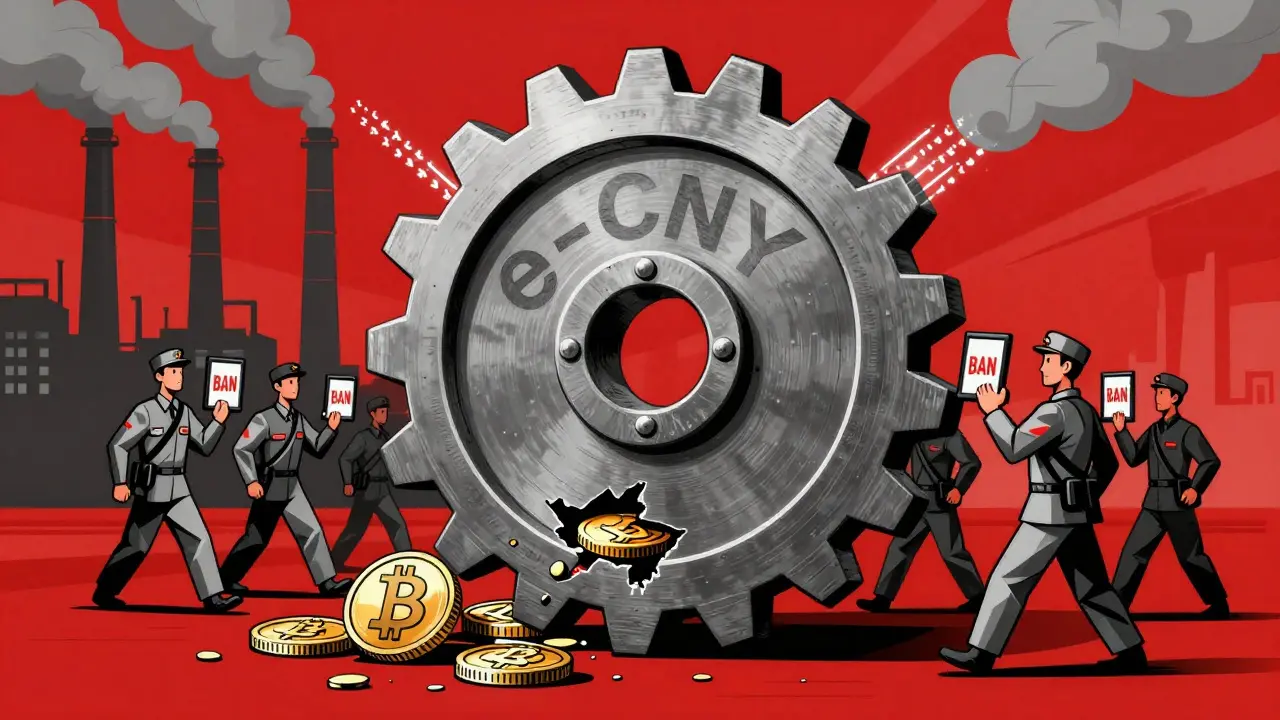
China has completely banned cryptocurrency trading, mining, and ownership as of June 2025. The law enforces strict penalties, promotes the digital yuan, and makes no exceptions-even for foreigners. Here's what you need to know.
read more