Cryptocurrency Arbitrage: How Traders Profit from Price Gaps Across Exchanges
When you buy Bitcoin on one exchange for $60,000 and sell it minutes later on another for $60,200, that’s cryptocurrency arbitrage, a trading strategy that exploits price differences of the same asset across markets. Also known as crypto arbitrage, it’s not magic—it’s math. But in crypto, those math opportunities pop up because markets aren’t connected like stock exchanges. One exchange in Nigeria might be trading ETH at $3,100 while a U.S. platform lists it at $3,150. That $50 gap? That’s your chance.
But here’s the catch: those gaps don’t last long. High-frequency bots snap them up in milliseconds. So today, manual arbitrage is mostly dead unless you’re fast, well-funded, and know which exchanges have slow order books or low liquidity. That’s why most successful arbitrage traders now focus on crypto exchange price differences, the real-world gaps between platforms like Binance, KuCoin, and regional exchanges in places like Turkey or South Korea. These markets often lag because of local regulations, withdrawal delays, or limited fiat on-ramps. You’ll find bigger spreads on smaller exchanges, especially those with low trading volume or strict KYC rules. And that’s where the real opportunities hide—not on Coinbase or Kraken, but on platforms like MEXC, Gate.io, or even peer-to-peer markets in Tunisia or Pakistan.
It’s not just about buying low and selling high. You also need to account for fees, withdrawal times, and network congestion. Sending ETH from Binance to KuCoin might cost $10 in gas and take 15 minutes. If the price moves $5 in that window, your profit vanishes. That’s why serious arbitrageurs use arbitrage trading crypto, automated systems that monitor dozens of exchanges and execute trades in under a second. They track not just Bitcoin and Ethereum, but stablecoins like USDT and USDC too—because even a 0.5% difference in USDT prices across platforms can add up fast when you’re trading millions.
And then there’s the risk. Exchanges freeze withdrawals. Regulatory crackdowns shut down platforms overnight. That’s what happened with RightBTC and Saturn Network—both once popular for arbitrage, now gone. The same thing could happen to any exchange you’re using. That’s why the best arbitrage traders don’t rely on one platform. They spread across five or six, always keeping an eye on crypto market inefficiencies, the structural flaws in how crypto markets operate—like delayed price updates, mismatched liquidity, or regional demand spikes. These aren’t bugs. They’re features of a decentralized, fragmented system.
What you’ll find below aren’t theory pieces. These are real stories: how traders made money from Nigeria’s USDT premiums, why Pakistan’s crypto adoption created hidden arbitrage lanes, and how the UAE’s tax-free environment changed the game for cross-border traders. You’ll see what went wrong with failed exchanges, how airdrops accidentally created price gaps, and why some crypto tokens—like UvToken or Pontoon—were never meant to be traded at all. This isn’t about getting rich quick. It’s about understanding where the cracks are in the system, and how to move through them before they close.
Posted by
HELEN Nguyen
9 Comments
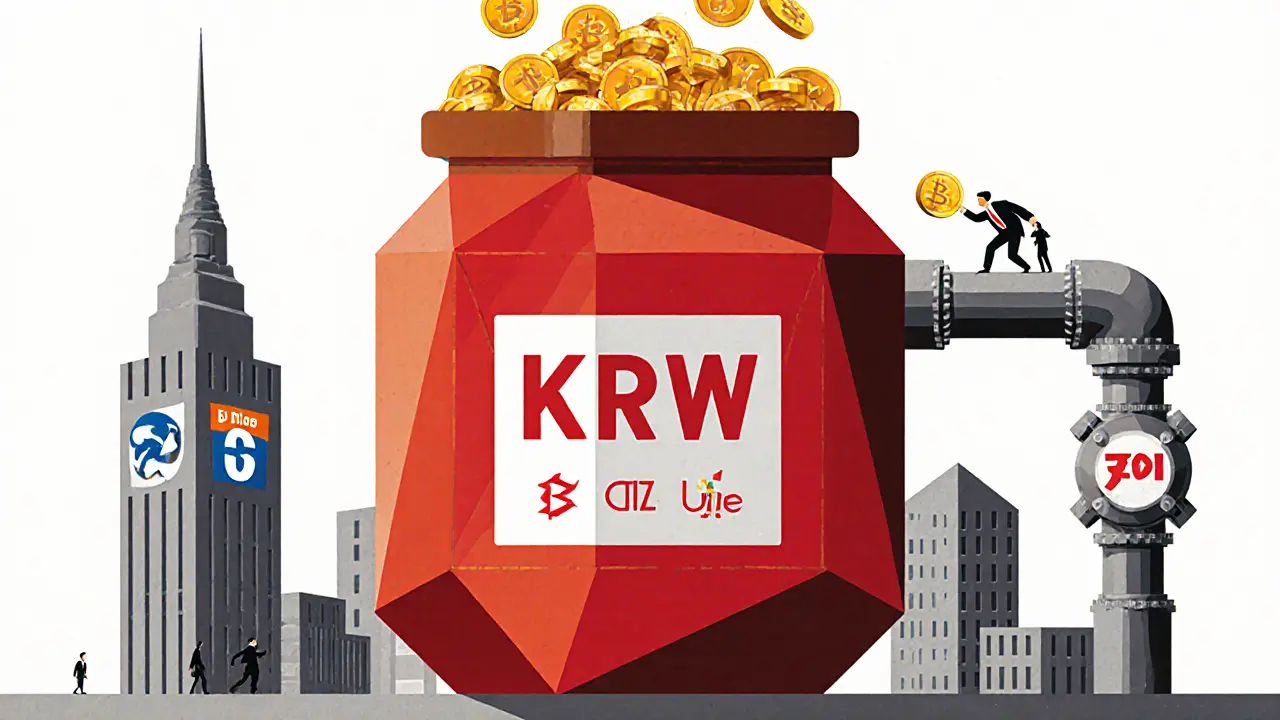
The kimchi premium explains why Bitcoin costs more in South Korea than anywhere else-due to high local demand, strict capital controls, and regulations that block foreign traders. It's not a glitch, it's a market reality.
read more