Kimchi Premium Calculator
Calculate the Kimchi Premium
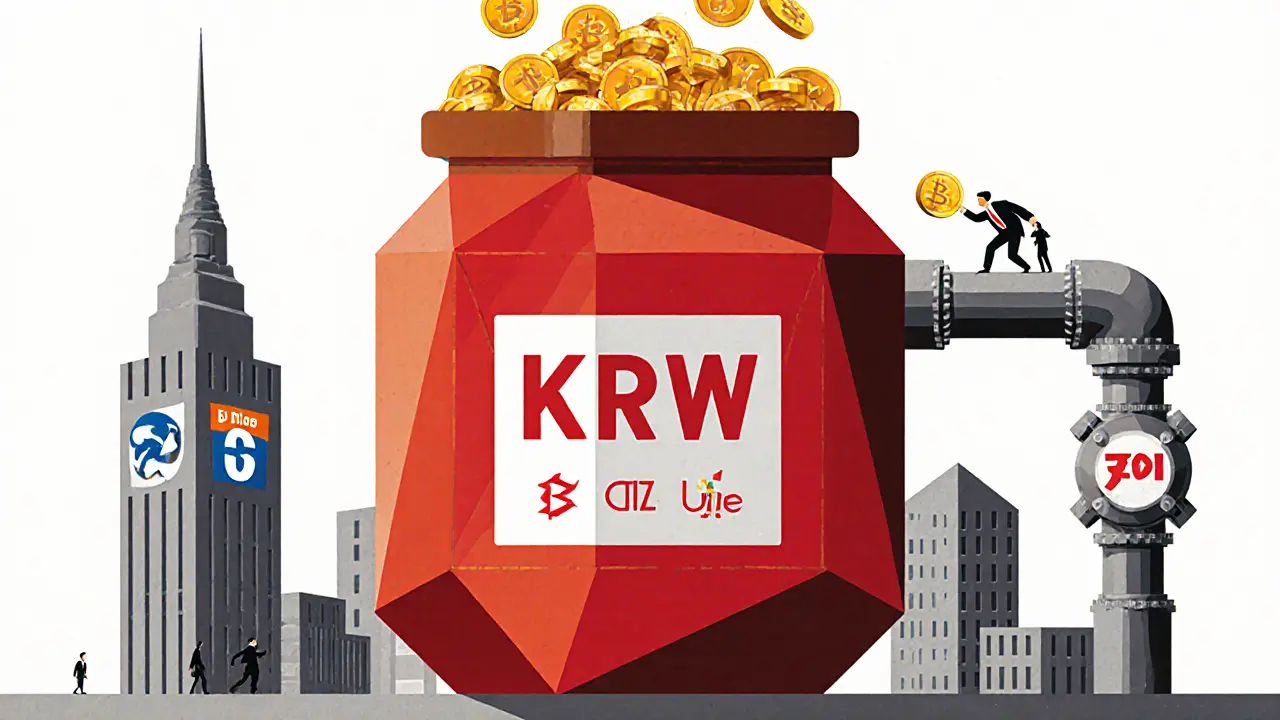
The kimchi premium is the price difference between Bitcoin on South Korean exchanges and global exchanges.
Enter the current global Bitcoin price and premium percentage to see what Bitcoin would cost in South Korea.
Estimated South Korean Price
Have you ever wondered why Bitcoin costs $2,000 more in South Korea than it does on Binance or Coinbase? It’s not a glitch. It’s not a scam. It’s the kimchi premium-a persistent, real-world anomaly that turns the idea of a global crypto market on its head.
What Is the Kimchi Premium?
The kimchi premium is the price difference between Bitcoin and other cryptocurrencies on South Korean exchanges compared to global ones. If Bitcoin is trading at $45,000 on Coinbase but $47,000 on UpBit, that’s a 4.4% premium. In 2018, it hit 80%. That means someone in Seoul could buy Bitcoin for $18,000 while someone in New York paid $10,000 for the same coin. It’s called kimchi because, like the fermented cabbage dish, it’s uniquely Korean-and a little pungent. The name stuck after traders noticed the gap and realized it wasn’t going away. This isn’t just a curiosity. It’s a market signal. When the premium spikes, it means South Korean demand is exploding. When it shrinks, it means capital controls are working-or traders have given up.Why Does the Kimchi Premium Exist?
Three big reasons keep this price gap alive: demand, borders, and rules. First, South Koreans love crypto. Not just a little. In 2025, over 10 million South Koreans-nearly 20% of the population-own cryptocurrency. That’s more than in Germany or Japan combined. They trade on mobile apps like UpBit and Bithumb like it’s stock trading. When Bitcoin surges globally, Koreans rush in. When a new altcoin lists on UpBit, prices jump 30% in hours. It’s not speculation-it’s cultural. Second, money can’t move freely. South Korea has strict capital controls. If you want to send $50,000 out of the country to buy Bitcoin cheaper abroad, you need paperwork, approval, and weeks of waiting. International transfers take 3-7 business days. By the time your money arrives, the premium is gone. Even if you have the cash, you can’t act fast enough to profit. Third, the government won’t let outsiders in. To trade on UpBit or Bithumb, you need a Korean ID, a local bank account, and proof of residency. Foreigners can’t open accounts. No exceptions. That means U.S. hedge funds, European arbitrage bots, and even crypto billionaires can’t touch the market. The premium isn’t just a gap-it’s a wall.How Do Traders Use the Kimchi Premium?
Most traders can’t exploit it. But some still try. Local traders don’t need to. They buy high and sell high. The premium is just part of doing business. But international traders? They watch it like a stock ticker. When the premium jumps above 10%, they start looking for loopholes. One method: use peer-to-peer platforms like Paxful or LocalBitcoins to buy Bitcoin with Korean won. Then sell it overseas. But even that’s risky. Korean banks flag these transactions as suspicious. Accounts get frozen. Withdrawals get blocked. Another: work with Korean-based crypto service providers who have local accounts. But these are rare, expensive, and often operate in gray areas. The government cracked down hard in 2023, shutting down dozens of offshore arbitrage firms that tried to move money through shell companies. The truth? The kimchi premium is designed to be unprofitable for outsiders. It’s not a bug-it’s a feature of Korea’s regulatory model.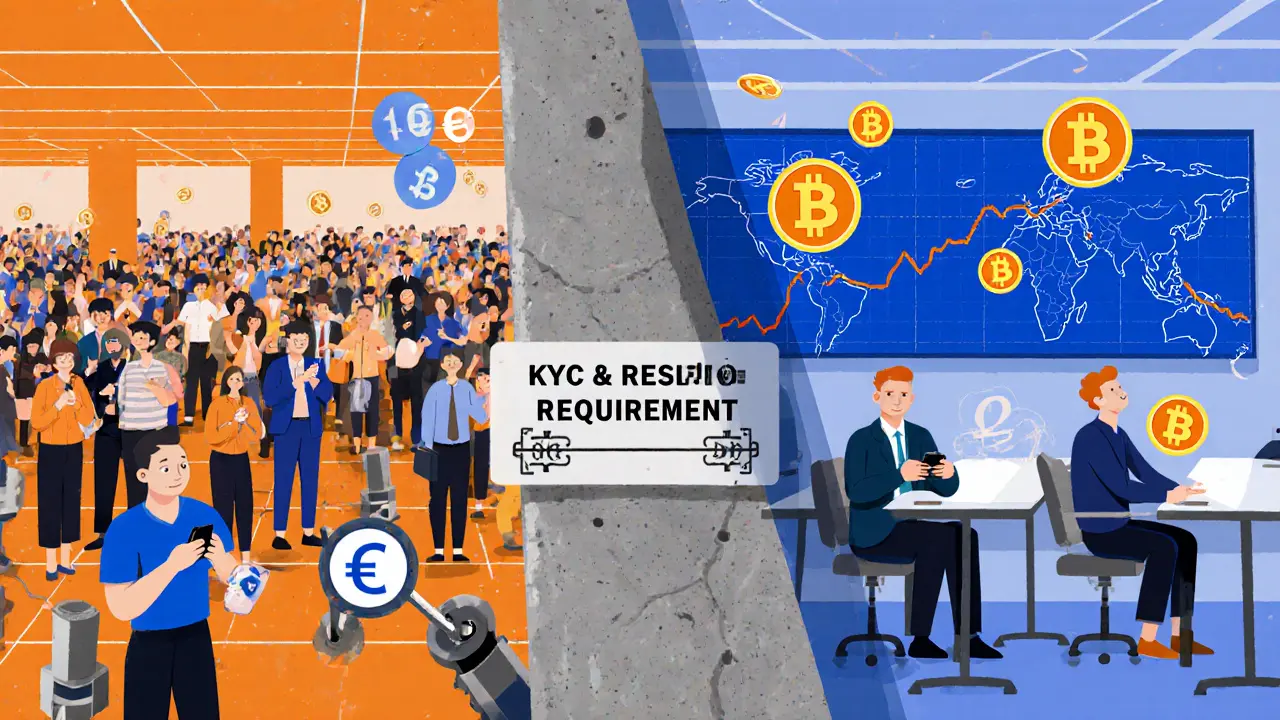
Regulation Is the Real Barrier
South Korea doesn’t ban crypto. It just controls it tightly. In 2021, the government required all exchanges to follow strict KYC rules. No anonymous trading. No offshore wallets. All transactions must go through verified bank accounts. In 2022, they banned crypto derivatives trading on local platforms. In 2024, they started requiring daily transaction reports for accounts over 5 million KRW ($3,600). These rules aren’t meant to stop crypto. They’re meant to stop money laundering and speculative bubbles. And they work. Korea’s crypto market is one of the most regulated in the world. But here’s the catch: regulation created the premium. By limiting capital flow and excluding foreign traders, the government made the market isolated. And isolated markets don’t follow global prices. They follow local emotion.What Happens When the Premium Disappears?
It doesn’t disappear-it shifts. In late 2023, the premium dropped to near zero for three months. Why? Because Bitcoin’s global price crashed. Korean traders panicked and sold. Demand fell. The gap closed. But then, in early 2024, a new crypto ETF was approved in Korea. Within a week, the premium jumped back to 6%. Why? Because people believed more institutional money was coming. The premium is a mood ring for the Korean crypto market. When it rises, optimism is high. When it falls, fear or regulation is in control. Analysts use it to predict government action. If the premium stays above 10% for more than two weeks, regulators often issue warnings. If it hits 15%, they might freeze new account openings or delay listing new tokens.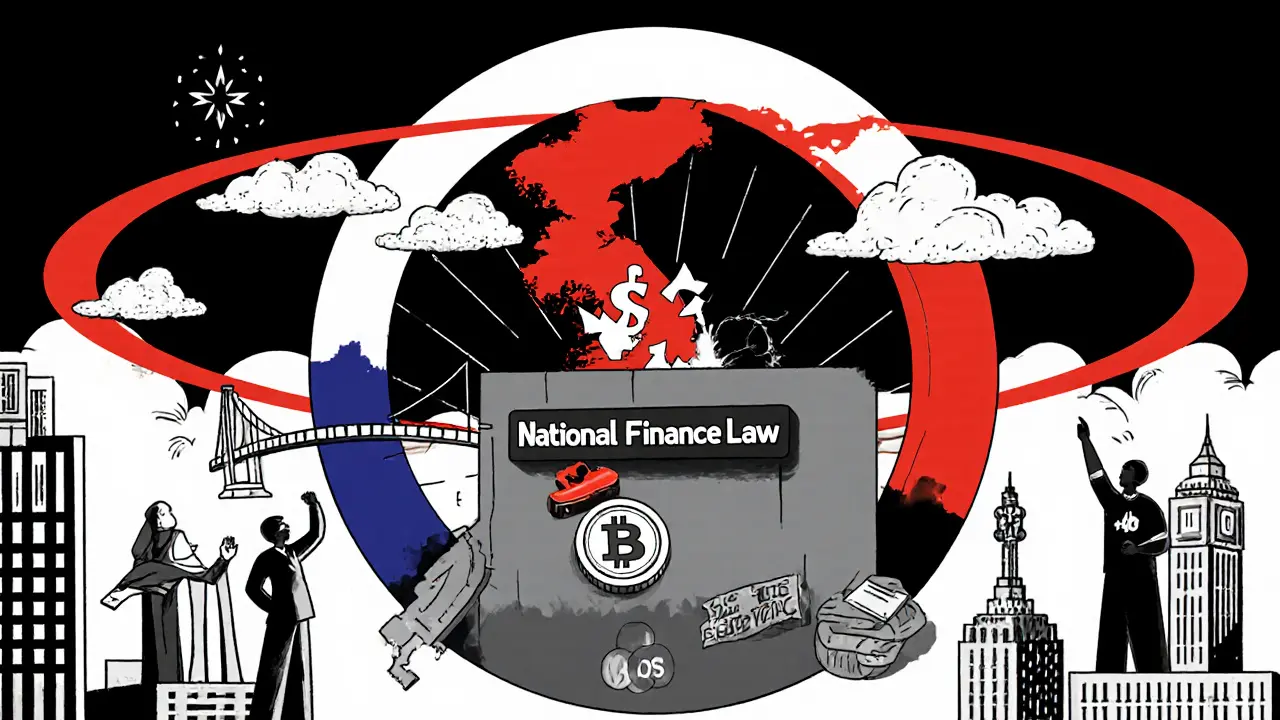
Is the Kimchi Premium Going Away?
Not anytime soon. Global crypto adoption is growing. But Korea’s rules aren’t changing. Capital controls are still in place. Foreign access is still blocked. Local demand is still strong. Even as Bitcoin ETFs roll out in the U.S. and Europe, Korea remains a closed loop. Institutional investors can’t get in. Retail traders won’t leave. The system is self-sustaining. Some say the premium will vanish as DeFi and cross-chain bridges make arbitrage easier. But that ignores the human factor. You can’t bypass a Korean bank account with a smart contract. You can’t send money out of Korea without government approval. Blockchain doesn’t override national finance laws.What This Means for You
If you’re a trader: don’t waste time trying to arbitrage Korea. The odds are stacked against you. Instead, use the kimchi premium as a signal. When it spikes, it means global sentiment is strong and Korean demand is surging. That often precedes global price moves. If you’re an investor: understand that Korea isn’t just another market. It’s a separate ecosystem with its own rules. What happens in Seoul doesn’t always reflect what’s happening in New York or London. If you’re curious: the kimchi premium proves that crypto isn’t truly global. It’s shaped by borders, laws, and culture. Even in a decentralized world, people still live under national systems.How to Track the Kimchi Premium Today
You don’t need to be in Korea to see it. Websites like CoinMarketCap and Kraken show real-time price differences between Korean exchanges and global ones. Look for the “KRW” pair on UpBit or Bithumb and compare it to the USD pair on Binance. Most crypto analytics dashboards now include a kimchi premium tracker. It’s updated hourly. If you’re watching Bitcoin and see the Korean price suddenly jump 5% while global prices stay flat-that’s the premium kicking in. You can also follow Korean crypto news. If a major exchange announces a new listing, the premium will spike within minutes. If the Financial Services Commission issues a warning, it will drop. It’s not just data. It’s a live indicator of how regulation, culture, and money interact in the digital age.Why is Bitcoin more expensive in South Korea?
Bitcoin is more expensive in South Korea because of high local demand, strict capital controls that prevent money from flowing out easily, and regulations that block foreign traders from participating. This creates a supply-demand imbalance that keeps prices higher than global markets.
Can I make money by buying Bitcoin in the U.S. and selling it in Korea?
Theoretically, yes-but practically, no. To sell in Korea, you need a Korean bank account and ID. Transferring money out of Korea takes days, and regulators flag large transfers. By the time you move funds, the price gap closes. Most attempts fail due to delays and account freezes.
Is the kimchi premium legal in South Korea?
Yes, the premium itself is legal. It’s not illegal for prices to differ. But the government actively tries to reduce it by enforcing capital controls and restricting arbitrage. Traders who try to exploit it face legal and banking hurdles, not criminal charges.
Which Korean exchanges have the highest kimchi premium?
UpBit and Bithumb are the two largest exchanges in South Korea and show the most consistent premiums. They handle over 80% of all Korean crypto trading. Smaller exchanges like Korbit and Coinone also show premiums, but they’re less liquid and less reliable as indicators.
Has the kimchi premium ever disappeared completely?
Yes, briefly. In late 2023, the premium dropped to under 1% for over two months during a global crypto downturn. Korean traders sold off assets, reducing demand. But it returned quickly when Bitcoin rebounded and new listings sparked renewed interest.
How does the kimchi premium affect global crypto prices?
It doesn’t directly move global prices, but it’s a leading indicator. When the premium spikes, it often signals strong demand in Korea, which tends to precede global price rallies. Institutional traders monitor it to anticipate market sentiment shifts.
Are other countries seeing similar premiums?
Rarely. Some small premiums appear in countries with capital controls like Nigeria or Turkey, but none are as large or consistent as Korea’s. South Korea’s combination of high retail demand, strict banking rules, and tech-savvy population makes its premium unique.
Comments
Catherine Williams
Wow, so Bitcoin's just a luxury good in Korea now? Like designer kimchi. I mean, if you can't even send money out without paperwork, no wonder people are hoarding it like gold bars in a bunker. This isn't crypto-it's a national mood ring with extra steps.
November 28, 2025 at 23:51
Paul McNair
Actually, this is a perfect example of how crypto isn’t global at all-it’s local. The fact that Korea’s rules create this bubble shows how deeply culture and regulation shape even decentralized tech. You can’t code your way out of a bank’s compliance department. This isn’t a flaw. It’s reality.
November 30, 2025 at 14:47
Mohamed Haybe
USA thinks crypto is freedom but Korea proves it's control. They ban foreigners but let 20M people gamble with their salaries. This is not market. This is state sponsored casino with better UI. No one cares about blockchain here. Only price up. Down. Up. Down. Like slot machine with more emojis
December 2, 2025 at 07:52
Marsha Enright
Love how this breaks down the real barriers-not tech, but banking and bureaucracy. If you're new to crypto, don't try to arbitrage Korea. Just watch the premium like a weather report. When it spikes? That's when the real signal starts. And hey, if you're Korean-congrats, you're basically running your own crypto economy 😊
December 3, 2025 at 18:39
Andrew Brady
Let’s be clear-this isn’t just regulation. It’s economic warfare. The Korean government is using crypto as a tool to trap capital inside the country while pretending to embrace innovation. Meanwhile, Western institutions are being deliberately locked out. This isn’t market inefficiency-it’s a geopolitical play. And someone’s got to be paying for it.
December 4, 2025 at 13:59
Sharmishtha Sohoni
So the premium is a proxy for public sentiment?
December 4, 2025 at 18:51
Althea Gwen
Kimchi premium?? More like Kimchi chaos. 😅 Why does everyone think crypto is free? It's just Wall Street with better memes and worse lawyers. Korea’s just the only country honest enough to say ‘nope, you can’t play.’ Meanwhile, the US is just letting hedge funds front-run everyone and calling it ‘market efficiency.’
December 5, 2025 at 05:16
Durgesh Mehta
This makes sense. People in Korea trade crypto like it's a sport. And the rules stop outsiders from jumping in. So the price stays high. Simple. No need to overcomplicate. Just culture and rules. That's it
December 5, 2025 at 14:51
Sarah Roberge
Wait so if the premium drops, does that mean Koreans are losing faith… or just… tired? Like, emotionally exhausted from the rollercoaster? I mean, if you’ve been watching your portfolio swing 40% in a week for 5 years, you start to feel like a lab rat. And maybe… you just stop caring. The premium isn’t a market signal-it’s a cry for help. 🥲
December 5, 2025 at 20:19