Cryptocurrency AML: How Regulations Shape Trading, Exchanges, and Compliance
When you trade crypto, you’re not just moving digital assets—you’re navigating a web of cryptocurrency AML, anti-money laundering rules designed to stop criminals from using digital currencies to hide illegal funds. Also known as crypto compliance, these rules now apply to nearly every exchange, wallet provider, and token issuer worldwide. It’s not optional. If you’re using a platform that asks for your ID, tracks your transactions, or limits withdrawals, that’s cryptocurrency AML in action.
These rules didn’t appear out of nowhere. They’re driven by global agencies like AUSTRAC, Australia’s financial intelligence unit that now requires all crypto businesses to register and report suspicious activity by March 2026, and BaFin, Germany’s financial regulator enforcing strict AML rules under MiCAR, shutting down unlicensed platforms in 2025. These aren’t just paperwork requirements—they’re survival conditions for any crypto business. Exchanges that ignore them get shut down. Traders who ignore them risk frozen accounts or legal trouble.
And it’s not just about big platforms. Even if you’re using a decentralized exchange or sending crypto across borders, you’re still part of this system. The Travel Rule—a global AML standard—now forces exchanges to share sender and receiver info for transfers over $1,000. That means anonymity is fading fast. Countries like Nigeria and Tunisia still have underground crypto markets, but even there, pressure is building. The same AML rules that forced Saturn Network and Xevenue to vanish are now shaping how every new project launches.
What you’ll find below isn’t a list of abstract policies. It’s real-world examples: how Australia’s rules changed the game for exchanges, why Germany cracked down hard, how Nigerian regulators now demand licenses, and what happens when a platform ignores compliance. You’ll see how AML isn’t just about stopping crime—it’s reshaping who can trade, where, and under what conditions. Whether you’re holding crypto for the long term or running a business, these rules affect you. Skip the theory. Here’s what actually matters right now.
Posted by
HELEN Nguyen
9 Comments
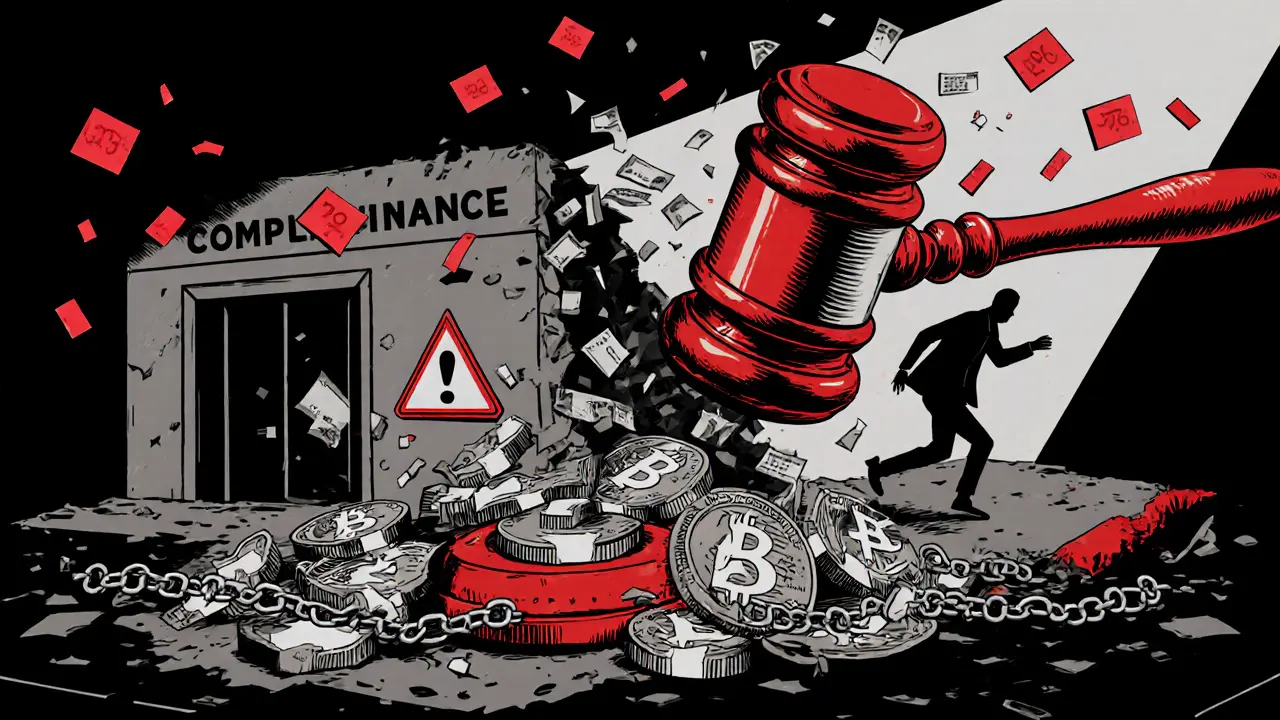
AML penalties in 2025 are record-breaking, with crypto firms, banks, and even casinos facing fines up to $500 million. Learn how violations trigger jail time, executive liability, and what it takes to avoid disaster.
read more