AML Penalty Calculator
Calculate Your AML Penalty Risk
Estimate potential fines based on transaction volume, violation type, and duration. Based on 2025 regulatory standards.
Enter total annual transaction volume (e.g., $50 million)
How long the violation was active (in months)
Estimated Penalty Range
Important: These are estimates based on 2025 regulations. Actual penalties depend on jurisdiction, severity, and cooperation with regulators.
When you hear about a crypto exchange getting hit with a $500 million fine, it’s easy to think it’s just another big company paying a tax. But that’s not what’s happening. These penalties aren’t just numbers on a balance sheet-they’re the result of broken systems, ignored warnings, and people who thought they could outsmart regulators. In 2025, the cost of ignoring anti-money laundering (AML) rules has never been higher. And it’s not just banks getting punished anymore. Crypto platforms, payment processors, even casinos are being held to the same standards-and the consequences are brutal.
What Happens When You Break AML Rules?
Anti-money laundering laws aren’t suggestions. They’re legal requirements designed to stop criminals from hiding dirty money through financial systems. If you run a business that handles money-whether it’s Bitcoin, dollars, or euros-you’re expected to know who your customers are, monitor their transactions, and report anything suspicious. Fail to do that, and you open yourself up to three types of penalties: criminal, civil, and administrative. In the U.S., criminal AML violations under the Bank Secrecy Act can land you in jail for up to five years. If the violation is part of a larger pattern involving over $100,000 in a year, that jumps to ten years. Fines can hit $500,000. But that’s just the start. If the money laundering is tied to drug trafficking, terrorism, or sanctions evasion, federal prosecutors can push for up to 20 years in prison and fines that double the amount of money involved. Civil penalties are just as scary. Regulators can fine you $5,000 to $1 million per violation-and that’s per day the violation continues. For a company with a broken system that’s been ignored for months? That could mean millions in daily fines until you fix it. And if your company’s assets are over $100 million, regulators can go after 1% of your total assets for each violation. That’s not a slap on the wrist-it’s a potential wipeout.Real Cases, Real Costs: Who Got Hit in 2025?
The biggest AML fine of 2025 went to OKX, a major cryptocurrency exchange. The U.S. Treasury fined them $500 million for failing to monitor transactions tied to sanctioned entities and allowing users to bypass identity checks. This wasn’t a one-time mistake. Regulators said the platform had been warned repeatedly over three years-and did nothing. UAE Exchange House got slapped with $54.5 million by the Central Bank of the UAE-the largest fine in the country’s history. Why? Weak risk controls, no proper checks on where money was coming from, and no real monitoring of high-risk customers. The regulator said the company treated compliance like an afterthought. Block Inc. (formerly Square) paid $40 million for gaps in its transaction monitoring system. Robinhood got $29.75 million for failing to file timely suspicious activity reports. Credit Suisse was fined $4.5 million for letting high-risk clients move money without proper due diligence. Even smaller players aren’t safe. In Singapore, nine financial institutions were fined a total of S$27.45 million ($20.5 million) after a $3 billion money laundering case exposed systemic failures. Four individuals were banned from the industry for 3 to 6 years. In the U.S., Deutsche Bank paid $186 million-not for one mistake, but for ignoring the same problems for over a decade. And it’s not just crypto. The Nevada Gaming Control Board fined a casino $5.5 million for letting employees help international patrons move money for betting. The bank that processed those transactions? Also fined.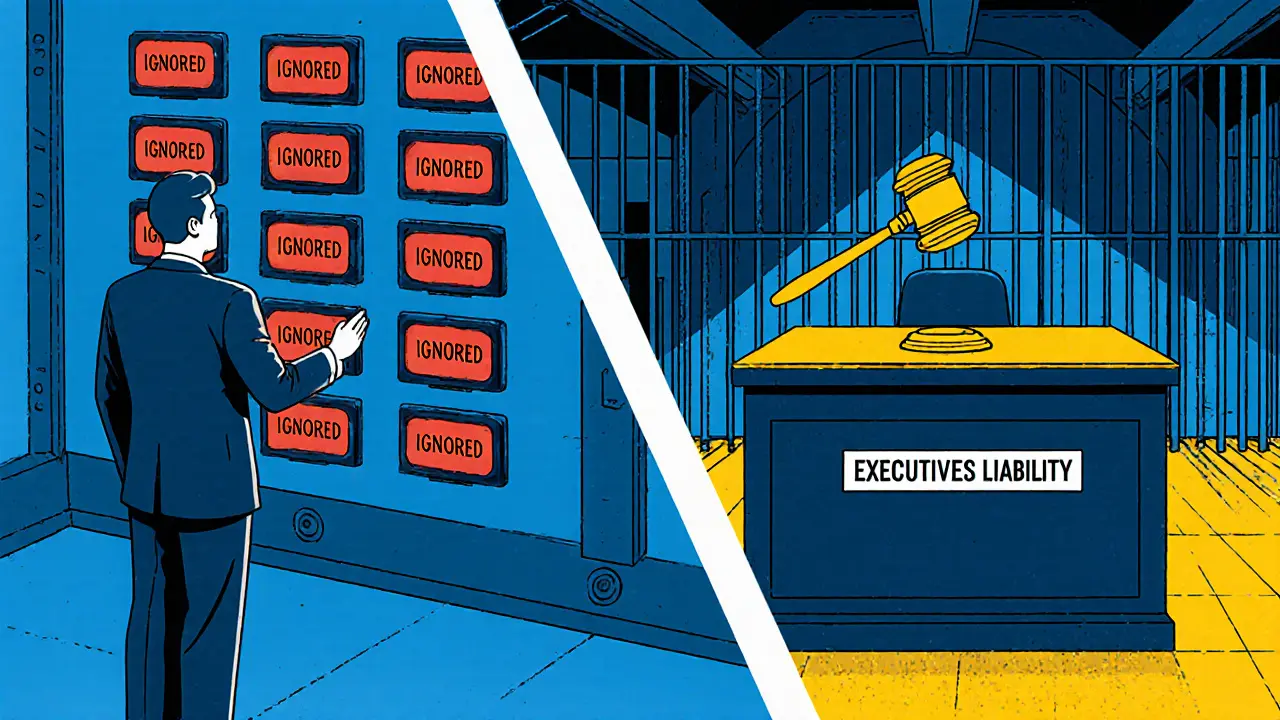
Why Are Penalties So Much Higher Now?
The rules changed in 2023 with the 6th EU Anti-Money Laundering Directive (6AMLD). For the first time, companies themselves can be criminally prosecuted-not just their employees. Minimum prison sentences for money laundering rose from one year to four. Fines can now reach €5 million per violation in the EU. The U.S. Department of Justice shifted its focus too. They’re no longer just going after the bad actors-they’re going after the companies that helped them. That means if your platform lets sanctioned Russians move crypto, or lets Nigerian scammers cash out, you’re seen as an enabler. And regulators are now targeting executives directly. The Office of the Comptroller of the Currency has started naming individuals in enforcement actions, making it clear: if you’re in charge and you ignored red flags, you’re personally at risk. The Financial Industry Regulatory Authority (FINRA) fined a brokerage $650,000 in October 2025-their second major AML penalty that year. The message? Even mid-sized firms aren’t off the hook.What Are the Most Common Mistakes That Trigger Penalties?
Most companies don’t get fined because they’re trying to launder money. They get fined because they’re sloppy. Here are the top three reasons regulators come knocking:- No real risk assessment-Companies say they do them, but they’re just templates copied from a website. If you don’t understand your customers’ behavior, you can’t spot the bad ones.
- Outdated customer data-If you don’t update ID documents, addresses, or source-of-funds info, you’re flying blind. Commerzbank got fined €1.45 million for this.
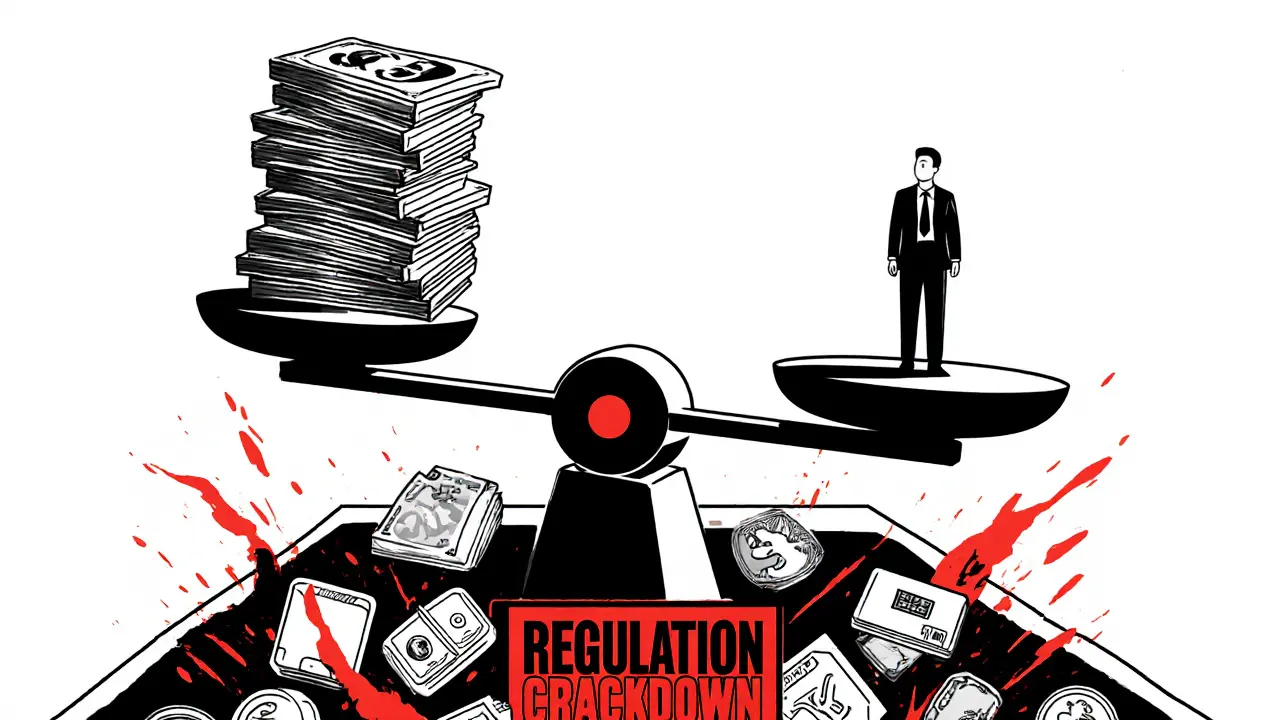
- Ignoring alerts-If your system flags a transaction as suspicious and your team just clicks ‘dismiss’ because it’s ‘too much work,’ that’s a violation. Wise paid $4.2 million because they ignored over 1,000 alerts over two years.
How to Avoid Getting Crushed by AML Penalties
The good news? Most penalties are preventable. Here’s what works:- Train your team like it’s life-or-death-AML isn’t just for compliance officers. Everyone who touches money needs to know what a red flag looks like.
- Use automated monitoring, not spreadsheets-Manual reviews don’t scale. You need tools that can track patterns across thousands of transactions in real time.
- Test your system like a hacker-Hire an outside auditor every six months. If they can find gaps, so can regulators.
- Document everything-If you can’t prove you tried to comply, you’re guilty. Keep records of training, alerts reviewed, decisions made.
- Don’t ignore warnings-If a regulator sends you a letter, fix it. Don’t wait for the fine.
What’s Next for AML Enforcement?
In 2025, regulators are working together like never before. The European Central Bank and the new Anti-Money Laundering Authority signed a deal to share data and avoid duplication. The U.S. Treasury is pushing for faster reporting and stricter due diligence on crypto wallets. The biggest challenge? Growth. Many crypto startups grow so fast they forget to build compliance into their system from day one. That’s a recipe for disaster. Regulators now expect new companies to have AML systems in place before they even launch. The message is clear: if you’re handling money, you’re part of the financial system. And the system is watching.Can individuals be held personally responsible for AML violations?
Yes. Regulators in the U.S., EU, and Singapore are increasingly targeting executives and compliance officers directly. If you’re in charge and ignored red flags, you can face personal fines, criminal charges, and industry bans. The OCC and MAS have both issued prohibition orders against individuals for failing to enforce AML controls.
Do crypto exchanges have different AML rules than banks?
No. Under the 2020 Money Laundering Act, crypto businesses are now classified as money service businesses (MSBs) and must follow the same rules as banks: know your customer (KYC), monitor transactions, file SARs, and report suspicious activity. The only difference? Many crypto firms still treat it as optional. Regulators are catching up fast.
What’s the smallest AML penalty recorded in 2025?
The smallest penalty in 2025 was £16,052.80 against a small U.K. firm, Fairbrother & Darlow, for failing to have any AML policies in place for nearly six years. They didn’t launder money-they just didn’t bother to implement basic controls. The regulator said the fine was meant to send a message: even tiny businesses aren’t exempt.
How long do AML investigations usually take?
Most investigations take 12 to 24 months. Regulators don’t rush-they build cases over time, gathering transaction records, emails, and internal memos. Companies that try to hide data or destroy records often face harsher penalties. The best defense? Cooperation and transparency.
Can a company recover from a major AML fine?
Yes, but it’s hard. Companies like Bitstamp and Kraken paid multi-million dollar fines and rebuilt their compliance teams from scratch. They hired former regulators, upgraded their tech, and made compliance a board-level priority. Recovery isn’t just about paying the fine-it’s about proving you’ve changed. That takes years.
Are AML penalties tax-deductible?
No. Under U.S. tax law (Section 162(f)), fines and penalties paid to the government for violating laws are not deductible. That means if you pay a $500 million AML fine, you can’t reduce your taxes by that amount. The full cost hits your bottom line.
Comments
Nancy Sunshine
Let me tell you something-this isn’t just about compliance. It’s about survival. Companies that treat AML like a checkbox are already dead. They just haven’t realized it yet. The fines? They’re the polite version of a funeral notice. Real companies don’t wait for regulators to scream-they build systems so tight, even ghosts can’t slip through. And if you’re running a crypto startup thinking you’re too small to matter? You’re not. The $16k fine on that tiny UK firm? That’s the warning shot. Next one’s a cannonball.
November 28, 2025 at 20:59
Ann Ellsworth
Ugh. Another ‘compliance is sexy’ blog post. Let’s be real-no one cares about SARs unless they’re getting audited. The real issue? Regulators are weaponizing ambiguity. ‘Suspicious activity’ isn’t defined. It’s whatever some mid-level bureaucrat had for breakfast. And now they’re throwing execs in jail for not reading tea leaves? The 6AMLD didn’t fix anything-it just gave bureaucrats a new toy to crush innovation under the guise of ‘security.’
November 29, 2025 at 22:53
Christy Whitaker
They always say ‘it’s not about the money’-but it is. It’s always about the money. And the people who lose? The ones who didn’t even know they were part of the system. I work in a small fintech. We had to fire two people last year because their ‘casual’ crypto transfers flagged as ‘high risk.’ One was a single mom sending money to her sister. They didn’t even get a warning. Just frozen accounts and silence. So yeah-penalties are brutal. But so is the system that lets this happen.
November 30, 2025 at 22:12
Ziv Kruger
There’s a deeper truth here. We’ve outsourced morality to algorithms. We let machines decide what’s ‘suspicious’ and then punish humans for the machine’s ignorance. A grandmother sending $500 to her grandson in Nigeria? Suspicious. A hedge fund moving $50 million through shell companies in the Caymans? Just ‘business.’ The system doesn’t care about intent. It only cares about patterns. And patterns don’t know the difference between a saint and a thief.
December 1, 2025 at 22:12
Ankit Varshney
India’s financial regulators are watching this closely. We’ve seen how crypto platforms here got slammed after the 2023 crackdown. The lesson? Don’t wait for the fine. Build compliance into your DNA from day one. Even if you’re a two-person team. The cost of ignoring it isn’t just money-it’s your license to operate. And once that’s gone, you’re done.
December 2, 2025 at 21:48
Heather Hartman
It’s not about fear. It’s about responsibility. Every time someone skips a KYC check, they’re not just risking a fine-they’re enabling real harm. Human trafficking. Drug cartels. War funding. That’s not abstract. That’s someone’s child. Someone’s home. Someone’s life. Compliance isn’t a burden. It’s a shield-for your company, yes, but also for the people you’re supposed to protect.
December 3, 2025 at 09:41
Paul McNair
Look, I’ve worked at banks, crypto firms, even a gaming platform. The pattern’s the same: leadership ignores compliance until the regulator shows up with a subpoena. Then suddenly, everyone’s an expert. The problem isn’t the rules-it’s the culture. If your CEO doesn’t talk about AML in town halls, if your engineers don’t get trained, if your CFO thinks it’s ‘a cost center’-you’re already lost. The fines are just the invoice for that neglect.
December 4, 2025 at 19:36
Catherine Williams
One sentence: If you think you’re too small to be targeted, you’re already the target.
December 5, 2025 at 17:39
Alan Brandon Rivera León
I get why people hate AML. It’s clunky. It’s slow. It feels like bureaucracy. But here’s what no one talks about-the people who get hurt when it fails. The Syrian refugee whose savings get stolen because a crypto exchange didn’t verify IDs. The elderly woman in Ohio whose life savings vanish because a payment processor ignored a red flag. We’re not talking about Wall Street greed here. We’re talking about real people. The penalties aren’t punishment. They’re the system trying to scream, ‘Wake up!’ And if you’re still sleeping? You’re part of the problem.
December 7, 2025 at 06:50