Crypto Trading China: Rules, Workarounds, and What’s Really Allowed
When you hear Crypto Trading China, the official stance of the Chinese government on cryptocurrency transactions and exchanges. Also known as China cryptocurrency policy, it crypto ban China, it’s not about whether people trade—it’s about how they do it without getting caught. In 2021, China shut down all domestic crypto exchanges, banned mining operations, and blocked access to platforms like Binance and OKX. But that didn’t stop trading. It just pushed it underground.
People in China still buy and sell Bitcoin, USDT, and other coins—just not on regulated platforms. They use peer-to-peer (P2P) apps like LocalBitcoins or Paxful, meet in person with cash, or trade through encrypted messaging apps. Banks don’t allow crypto deposits, so traders rely on third-party payment processors or even fake business accounts to move money. Some use VPNs to access foreign exchanges, but that’s risky. The government monitors internet traffic closely, and fines for violating crypto rules can hit tens of thousands of yuan. Worse, if you’re caught running a P2P operation at scale, you could face criminal charges for illegal fund transfer or money laundering.
What’s interesting is that P2P crypto China, the decentralized, person-to-person trading networks that bypass official channels in China isn’t just a loophole—it’s a survival tactic. With inflation rising and the yuan losing value, many Chinese citizens see crypto as a way to protect their savings. Stablecoins like USDT are especially popular because they’re tied to the U.S. dollar. Even though the government calls it illegal, millions still use it. And unlike in countries like Nigeria or Pakistan, where crypto adoption is driven by remittances, in China it’s mostly about avoiding capital controls and preserving wealth.
China crypto regulations, the strict legal framework enforced by the People’s Bank of China and other agencies to control digital asset activity are among the toughest in the world. But enforcement isn’t perfect. Rural areas see less scrutiny than cities like Beijing or Shanghai. Some traders operate under the radar for years. Others get caught during crackdowns tied to larger financial crimes. The real story isn’t about a ban—it’s about adaptation. People found ways to trade without banks, without exchanges, and without government approval.
What you’ll find in the posts below aren’t guides on how to trade crypto legally in China—because there isn’t one. Instead, you’ll see real cases: how traders avoid detection, what happened to those who got caught, why USDT dominates the market, and how local P2P networks stay alive despite the pressure. These aren’t theoretical discussions. These are stories from people living inside the system, not outside it.
Posted by
HELEN Nguyen
5 Comments
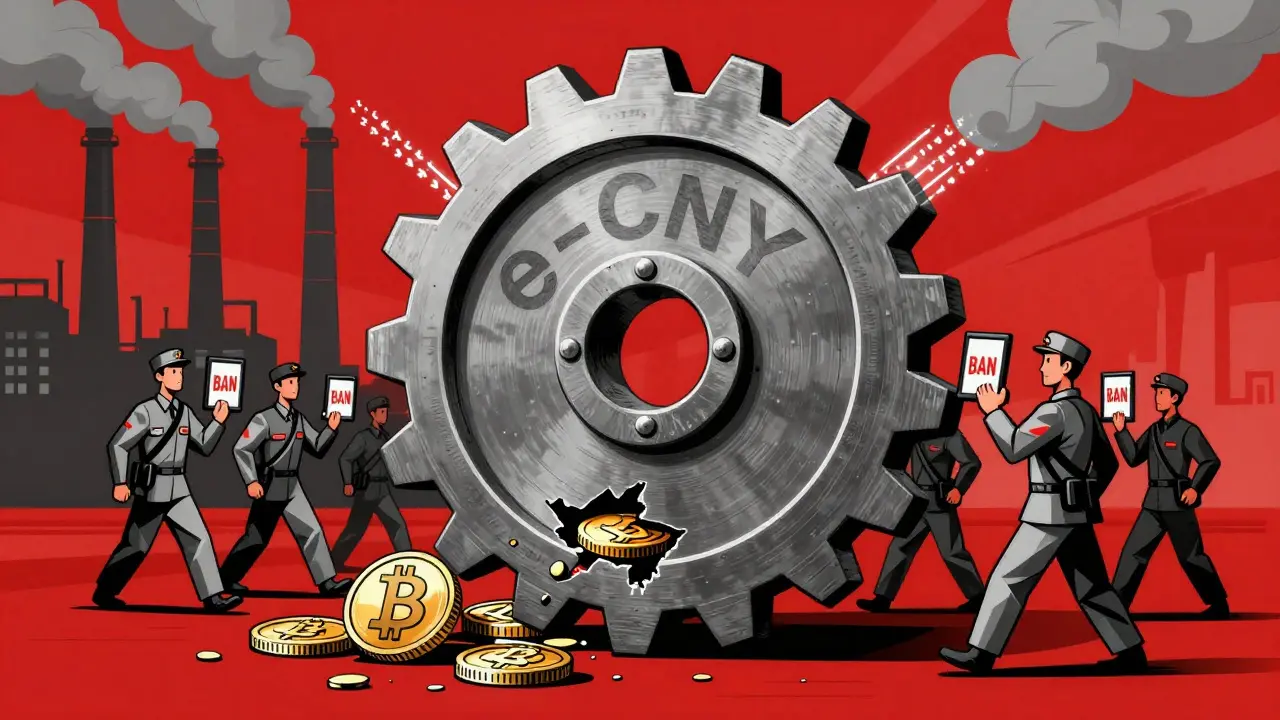
China has completely banned cryptocurrency trading, mining, and ownership as of June 2025. The law enforces strict penalties, promotes the digital yuan, and makes no exceptions-even for foreigners. Here's what you need to know.
read more