China Crypto Legality: What's Allowed, Banned, and How It Affects You
When it comes to China crypto legality, the Chinese government’s stance on cryptocurrency is one of the strictest in the world. Also known as crypto restrictions in China, this policy isn’t about regulating crypto—it’s about eliminating private digital currencies from the financial system. Unlike countries that tax or license crypto, China outright banned exchanges, mining, and peer-to-peer trading. The central bank, the People's Bank of China (PBOC), the nation’s monetary authority that controls the digital yuan and enforces crypto bans. Also known as PBOC, it declared all crypto transactions illegal in 2021 and has doubled down since.
Here’s the twist: while Bitcoin, Ethereum, and other coins are banned, the digital yuan, China’s state-controlled central bank digital currency (CBDC). Also known as e-CNY, it’s the only digital money Chinese citizens can legally use for payments, savings, and transfers. The government isn’t against digital money—it just wants total control. That’s why crypto mining got shut down: it uses too much power, drains the grid, and gives people financial freedom outside the state’s reach. Mining farms across Sichuan and Inner Mongolia were wiped out in 2021. Today, anyone caught running a mining rig risks heavy fines or jail time.
Trading crypto on Binance or Coinbase? Illegal. Using a VPN to access a foreign exchange? Still illegal. Even sending crypto to a friend via WeChat or Alipay can trigger a financial audit. But here’s what you won’t hear on state news: millions of Chinese still hold crypto. They use over-the-counter (OTC) traders, cash deals, and offshore wallets. Some buy USDT through friends who work at border markets in Hong Kong. Others use decentralized bridges and peer-to-peer apps disguised as gaming platforms. It’s risky, but for people in cities like Shanghai and Shenzhen, crypto is still a hedge against inflation and capital controls.
The crackdown isn’t just about control—it’s about protecting the digital yuan. If people start using Bitcoin instead of e-CNY, the government loses its ability to track spending, freeze accounts, or enforce social credit penalties. That’s why even holding crypto in a private wallet is treated like a security threat. No one gets arrested for owning it—but if you trade it, transfer it, or promote it, you’re playing with fire.
What you’ll find in these posts are real stories from people caught in the middle: traders who lost funds to fake OTC platforms, miners who moved to Kazakhstan, and investors who switched to the digital yuan out of necessity. You’ll also see how Chinese firms still use blockchain for supply chains and government records—just not with public coins. This isn’t a guide to getting rich in China. It’s a guide to surviving it.
Posted by
HELEN Nguyen
5 Comments
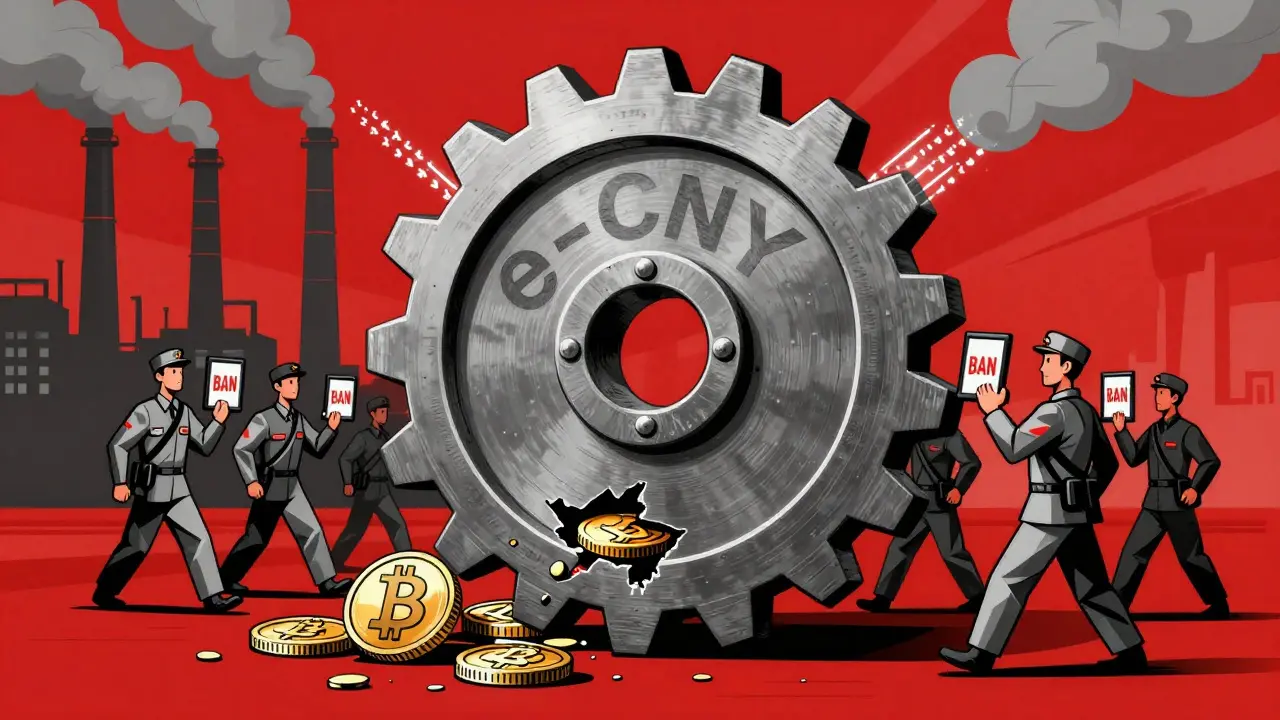
China has completely banned cryptocurrency trading, mining, and ownership as of June 2025. The law enforces strict penalties, promotes the digital yuan, and makes no exceptions-even for foreigners. Here's what you need to know.
read more