AUSTRAC Crypto Regulations: What You Need to Know in 2025
When you trade or hold crypto in Australia, you’re under the watch of AUSTRAC, Australia’s financial intelligence unit responsible for tracking money laundering and terrorism financing. Also known as the Australian Transaction Reports and Analysis Centre, it’s the same agency that monitors bank transfers, cash movements, and now—your crypto activity. If you’re using an exchange, running a business, or even just sending large amounts of Bitcoin or stablecoins, AUSTRAC wants to know about it.
Since 2018, all crypto exchanges operating in Australia must be registered with AUSTRAC and follow strict AML, anti-money laundering rules that require identity checks, transaction logging, and suspicious activity reports. By 2025, these rules hit harder: exchanges must verify users with government ID, track wallet addresses linked to accounts, and report any transfer over $10,000 AUD. Even peer-to-peer traders using platforms like LocalBitcoins or Paxful aren’t safe—AUSTRAC now tracks on-chain data and can subpoena exchange records to trace you.
It’s not just exchanges. If you’re running a crypto business—like a mining operation, staking service, or DeFi platform—you need to register as a DCE, digital currency exchange, and submit regular compliance reports. Fines for skipping this? Up to $21 million AUD for companies. Individuals can face jail time if they’re found deliberately hiding transactions. Real cases? In 2024, an Australian crypto trader was fined $300,000 for not reporting over $2 million in Bitcoin trades over three years.
What about regular users? If you’re just buying Bitcoin on CoinSpot or selling ETH on Binance AU and never move over $10,000 in a single transaction, you’re probably fine. But if you’re sending crypto to overseas wallets, converting to stablecoins to avoid reporting, or using mixers—you’re walking a tightrope. AUSTRAC works with international agencies like the FATF and the U.S. FinCEN. What happens in the U.S. or Singapore can come back to you in Australia.
And here’s the catch: AUSTRAC doesn’t just care about illegal activity. They care about transparency. Even if you’re not laundering money, failing to report a large transaction looks suspicious. That’s why experts say: if you’re doing anything above $10,000 AUD in crypto, keep records. Save your transaction IDs, exchange statements, and wallet addresses. You might not need them now—but if AUSTRAC comes knocking, you’ll wish you did.
What you’ll find below are real cases, breakdowns of compliance failures, and guides on how to navigate Australia’s crypto rules without getting caught in the net. From exchange registration checks to how to report your own trades, these posts give you the facts—not the fluff.
Posted by
HELEN Nguyen
10 Comments

Australia's crypto regulations, enforced by AUSTRAC, require all digital asset businesses to register and implement strict AML/CTF rules by March 2026. Learn what services are covered, the true cost of compliance, and how to avoid shutdown.
read morePosted by
HELEN Nguyen
5 Comments
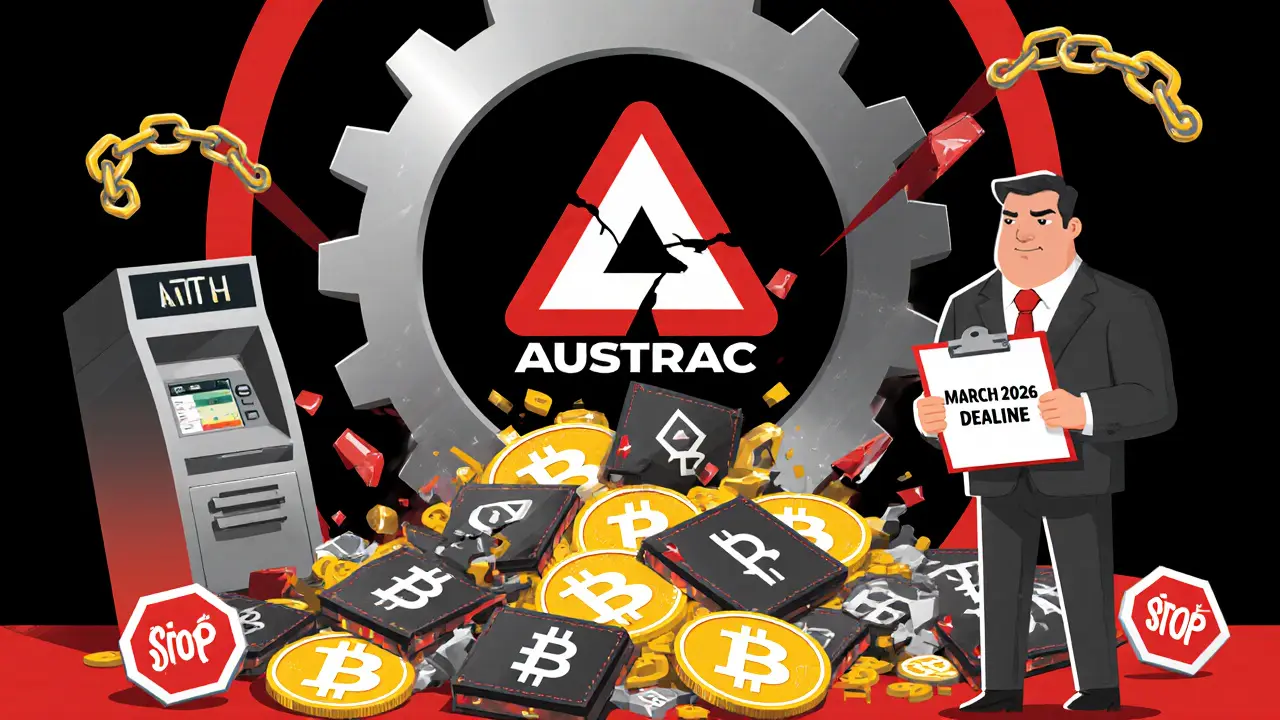
Australia's crypto regulations now require all exchanges, wallets, and token issuers to register with AUSTRAC and comply with strict AML rules by March 2026. Learn what services are covered, the Travel Rule, costs, and how to stay compliant.
read more