Anti-Money Laundering Fines: How Crypto Rules Are Changing Global Compliance
When you hear anti-money laundering fines, penalties imposed on businesses that fail to prevent illegal funds from moving through their systems, think of massive cash payouts—millions, sometimes billions—forced on companies that didn’t check who was using their platform. These aren’t just bureaucratic warnings. They’re life-or-death for crypto exchanges, wallet providers, and even DeFi projects trying to operate legally. In 2025, failing AML checks isn’t a slap on the wrist—it’s a business killer.
Look at AUSTRAC, Australia’s financial intelligence unit that enforces strict anti-money laundering rules for digital asset businesses. By March 2026, every crypto exchange, custodial wallet, and token issuer in Australia must register with them or face shutdown. Same goes for BaFin, Germany’s financial regulator that enforces MiCAR rules and has already shut down unlicensed crypto firms in 2025. These aren’t isolated cases. From Nigeria’s SEC to the UAE’s evolving tax and reporting laws, governments are tying compliance directly to survival. If you run a platform, you need KYC, transaction monitoring, and suspicious activity reports—or you’ll get fined, frozen, or banned.
And it’s not just about big exchanges. Even decentralized platforms are feeling the heat. Airdrops, peer-to-peer trading, and privacy coins are now under scrutiny. The anti-money laundering fines aren’t just targeting shady actors—they’re forcing everyone to prove they’re clean. That’s why posts here cover everything from Nigeria’s licensing rules to Tunisia’s underground trading, and why Australia’s Travel Rule is now a global blueprint. You’ll find real examples of who got fined, why they failed, and how others adapted. No theory. No fluff. Just what’s happening on the ground—and what you need to do before the next penalty lands.
Posted by
HELEN Nguyen
9 Comments
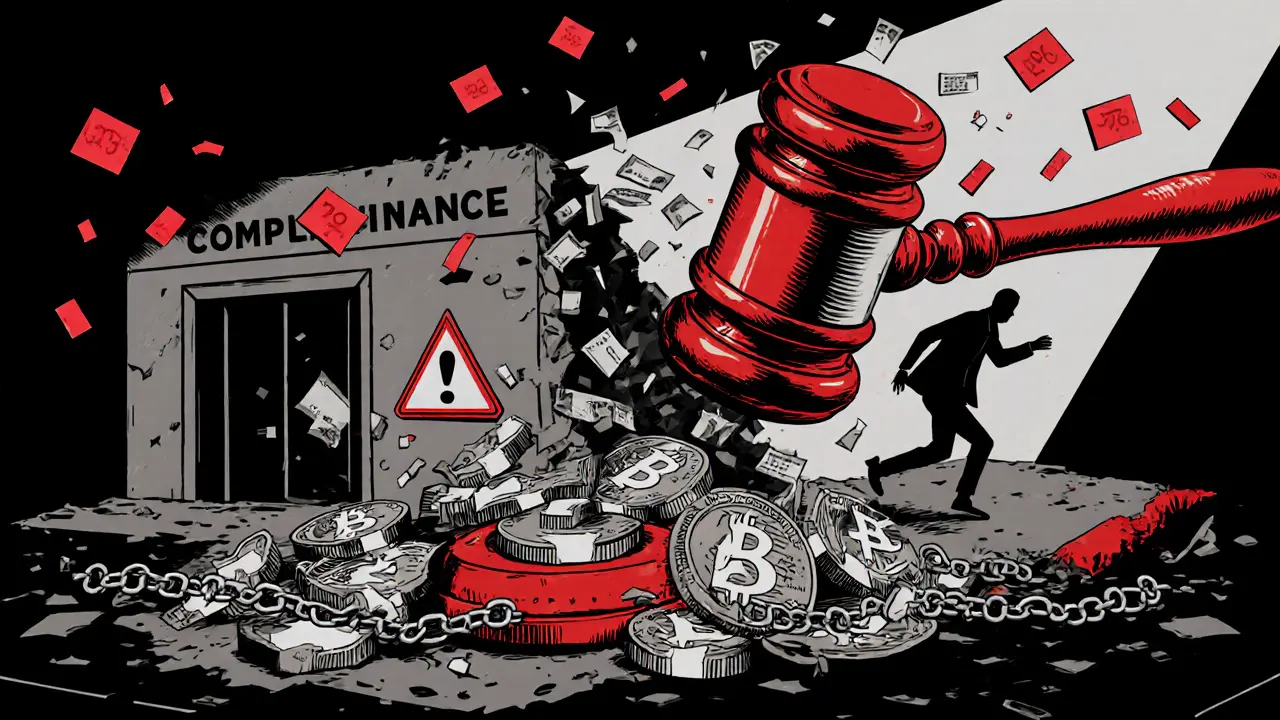
AML penalties in 2025 are record-breaking, with crypto firms, banks, and even casinos facing fines up to $500 million. Learn how violations trigger jail time, executive liability, and what it takes to avoid disaster.
read more