AML Penalties: What Happens When Crypto Fails Compliance
When a crypto business ignores AML penalties, financial rules designed to stop money laundering and terrorist funding. Also known as anti-money laundering enforcement, these penalties aren’t just fines—they can shut down exchanges, freeze assets, and send people to prison. The crypto world isn’t a lawless zone. If you’re running a platform, wallet, or even trading at scale, you’re under the same rules as banks. And regulators are watching.
Take AUSTRAC, Australia’s financial intelligence unit that enforces crypto AML rules. By March 2026, every exchange, wallet provider, and token issuer must register or face immediate shutdown. No exceptions. In Germany, BaFin, the federal financial supervisor that cracked down on unlicensed firms in 2025 didn’t just issue warnings—they shut down 17 platforms in one year. And in the U.S., failing to file FinCEN Form 114, the mandatory report for crypto accounts over $10,000 held overseas can cost you $10,000 per violation—even if you didn’t know you had to file.
These aren’t theoretical risks. They’re real, active, and growing. Nigeria’s SEC now demands licenses for every exchange. Tunisia’s traders risk arrest for using Bitcoin. Iran’s military-run mining farms are tied to sanctions violations. The pattern is clear: if you’re handling crypto at scale, you’re part of the financial system now. There’s no hiding behind "it’s decentralized." Regulators don’t care about the tech—they care about the money moving through it.
What you’ll find below are real cases of what happens when people ignore these rules. Some lost everything. Others got lucky and escaped. But every story has one thing in common: they all started with someone thinking, "This won’t happen to me." It already did.
Posted by
HELEN Nguyen
9 Comments
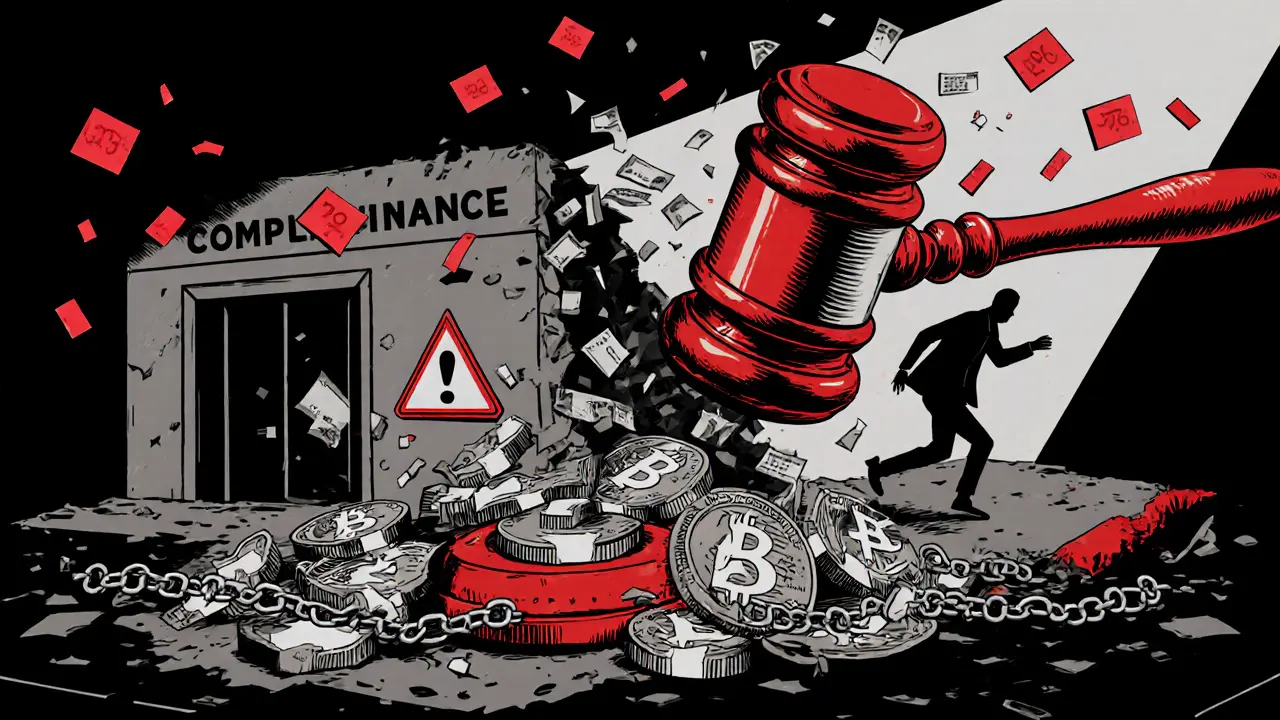
AML penalties in 2025 are record-breaking, with crypto firms, banks, and even casinos facing fines up to $500 million. Learn how violations trigger jail time, executive liability, and what it takes to avoid disaster.
read more