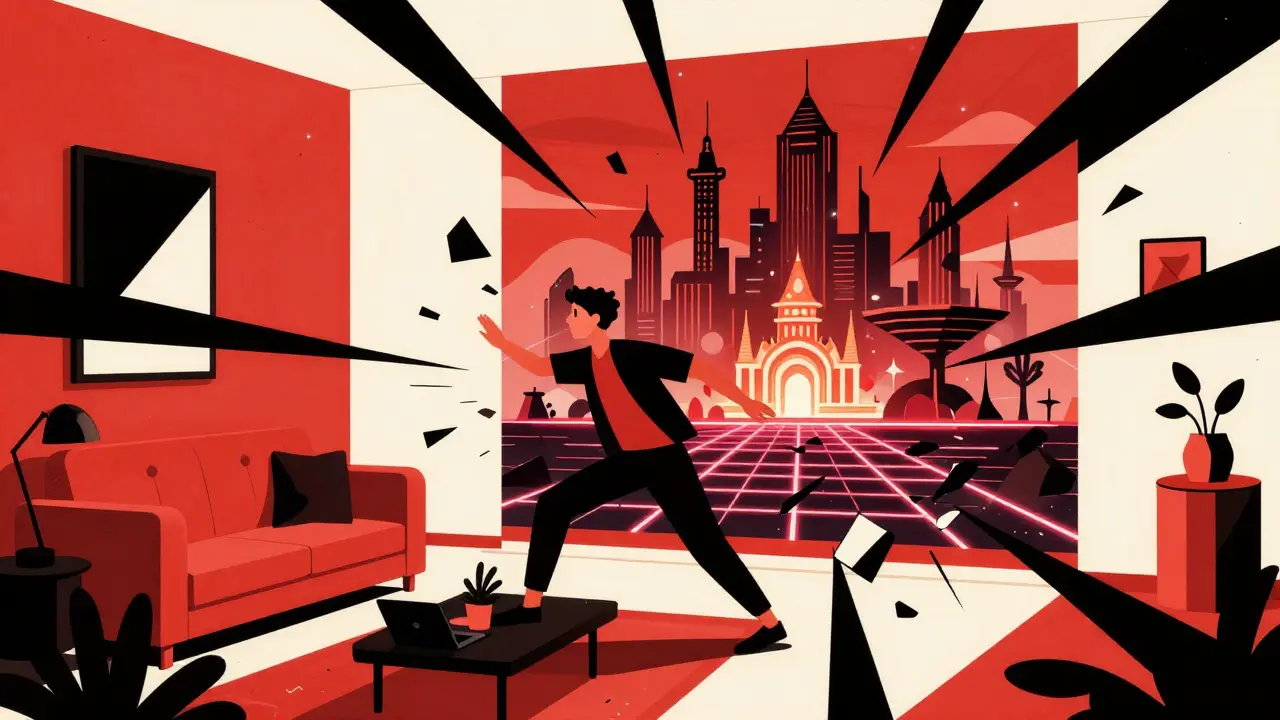
Imagine stepping inside your favorite video game, not as someone holding a controller, but as a living part of the environment. You can feel the texture of a virtual wall, hear a concert happening three blocks away in a digital city, and actually own the land your character stands on. This isn't a scene from a sci-fi movie; it's the shift toward metaverse gaming is a convergence of virtual and real-world realities that transforms how people interact, compete, and exist within digital environments. It moves us away from staring at flat screens and toward "true presence," where the line between your living room and a digital kingdom completely disappears.
The Tech Making Virtual Worlds Feel Real
To get that feeling of actually being "there," the metaverse relies on a mix of heavy-duty hardware and clever software. It's not just about a better graphics card; it's about how our bodies interact with the code. We're seeing a move toward VR headsets and haptic feedback suits that let you feel a recoil from a digital weapon or the wind on your skin. When you combine these with AR glasses, the digital world starts bleeding into your actual physical space.
Behind the scenes, powerful development engines and 3D modeling tools do the heavy lifting. But the real game-changer is cloud gaming. By processing the heavy data on remote servers, you don't need a $3,000 PC to enter a high-fidelity world. You can jump into a massive social hub from a budget smartphone or a smart TV, making these experiences accessible to everyone, not just the tech elite.
From Simple Games to Persistent Social Spaces
We've come a long way from the days of pixelated characters and text-based adventures. Today, gaming is less about beating a level and more about living a second life. Platforms like Roblox and Fortnite have already shown us the blueprint. These aren't just games; they are social squares. People go there to attend live concerts, build houses, and just hang out with friends. It's a persistent world, meaning the city keeps evolving even when you log off.
This evolution changes the very definition of a "gamer." It's no longer just about high scores or competitive rankings. It's about identity. Your avatar is a digital extension of yourself, capable of expressing emotions and individuality through customizable gear and gestures. The shift is from an episodic hobby to a continuous social existence.
| Feature | Traditional Gaming | Metaverse Gaming |
|---|---|---|
| Perspective | Screen-oriented (2D/3D window) | Immersive (360-degree presence) |
| Ownership | Items owned by the developer | User-owned via Blockchain/NFTs |
| Social Goal | Mission-based interaction | Persistent social networking |
| Economy | Closed loop (in-game currency) | Open economy (real-world value) |

How Blockchain Changes the Rules of Ownership
The biggest frustration in old-school gaming was that you spent hundreds of hours earning a rare sword, but if the studio shut down the servers, your item vanished. Blockchain solves this by introducing decentralization. Instead of a company owning everything, the players own their assets through NFTs (Non-Fungible Tokens). These digital certificates prove that you-and only you-own that specific piece of virtual land or that legendary skin.
This has given birth to the Play-to-Earn (P2E) model. In these ecosystems, gaming is actually a job for some. By completing tasks or winning battles, players earn cryptocurrency or rare assets that can be sold for real money on open markets. It transforms the act of playing from a cost (buying a game) into a potential income stream, effectively tokenizing digital effort.
New Career Paths in the Virtual Frontier
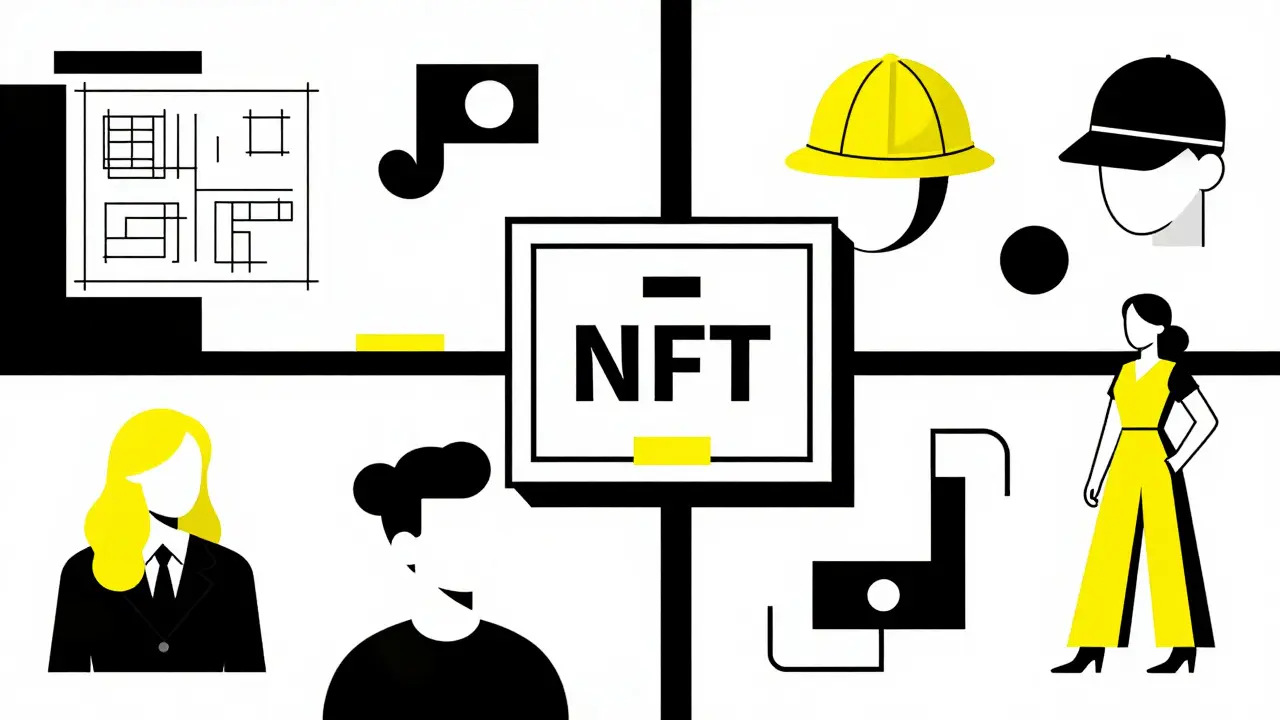
As these worlds grow, they need more than just programmers. We're seeing an explosion of new job titles. Companies like Microsoft are pouring billions into projects like Microsoft Mesh, which blends the physical and digital. This creates a demand for AI engineers who can make NPCs (non-player characters) feel human, and AR/VR designers who understand how to build spaces that don't make users feel motion-sick.
It's not just tech roles, either. We need virtual architects to design cities, digital fashion designers to create wearable NFT clothing, and even virtual economists to keep the in-game markets from crashing. The metaverse is basically building a new economy from scratch, and the job opportunities are as vast as the digital landscapes themselves.
The Roadblocks We Still Need to Clear
It's not all sunshine and neon lights, though. There are some serious hurdles. Privacy is a huge concern; when a headset can track your eye movements and a suit can monitor your heart rate, who owns that data? Then there's the "barrier to entry." While cloud gaming helps, the best experiences still require expensive hardware that many people can't afford.
Infrastructure is another bottleneck. To have thousands of people in one virtual space without lag, we need internet speeds and server capacities that we're only just starting to achieve. We're in the "dial-up" phase of the metaverse. The promise is there, but the plumbing needs to catch up to the vision.
What exactly makes a game part of the "metaverse"?
A game becomes part of the metaverse when it is persistent, social, and interconnected. Unlike a standard game that resets or ends, a metaverse environment continues to exist and evolve even when you aren't logged in. It also typically allows for user-generated content and an economy where assets have value beyond the game itself.
Do I need a VR headset to experience metaverse gaming?
No, you don't. While VR provides the most immersive experience, many metaverse platforms like Decentraland or Roblox are accessible via standard PCs, consoles, and smartphones. The goal of the metaverse is cross-platform accessibility, allowing users to jump between different devices seamlessly.
How do NFTs actually work in gaming?
NFTs act as digital deeds of ownership. When a game item is an NFT, it is recorded on a blockchain, meaning the item exists independently of the game's central database. This allows players to sell, trade, or even move their assets between different compatible games without needing permission from the developer.
Is Play-to-Earn (P2E) sustainable?
It's a debated topic. Early P2E models relied heavily on new players joining to pay out older players. However, the industry is moving toward "Play-and-Earn," where the primary focus is on fun and gameplay, and the financial rewards are a secondary bonus rather than the only reason to play.
Will the metaverse replace traditional gaming?
Likely not replace, but absorb. Traditional single-player stories and competitive esports will still exist, but they will likely be integrated into the metaverse. Instead of launching a separate app, you might travel to a specific "game world" within a larger virtual hub.
Comments
Nishant Goyal
Solid breakdown of where we're heading.
April 14, 2026 at 21:34
Vicky Duffala
The idea of a digital extension of ourselves is honestly wild when you think about it. It's not just about the gear you wear, but how we're redefining human connection across borders. Imagine a world where your physical location doesn't dictate your social circle or your career opportunities at all. We could be seeing a total shift in how we perceive identity and existence itself. It's like we're finally breaking the biological tether to our physical bodies and expanding our consciousness into a shared, malleable space. I love the energy of this transition! 🚀
April 15, 2026 at 07:28
Prachi Bhadarge
Oh sure, because we all know exactly how "decentralized" these things actually are when the dev team decides to change the API. Blockchain is just a fancy word for a different kind of database that's slower and more expensive to run. But hey, at least we get to own a JPEG of a sword while the servers are still up, right?
April 16, 2026 at 15:50
Robert Preston
While the potential for ownership is there, the industry needs to set some very hard boundaries regarding data privacy. We can't just hand over biometric data like heart rates and eye movements to corporations without ironclad legal protections in place. It's an exciting frontier, but we have to be assertive about our digital rights now, or we'll be fighting a losing battle in ten years. The tech is impressive, but the ethics are still in the beta phase.
April 16, 2026 at 16:16
Kevin Lư
I don't know man, this all sounds like a way to get people to spend more money on stuff that doesn't even exist. Why would I want a digital house when I can't even afford a real one? Seems like a bit of a scam to me, but whatever, I'll probably still try it if the graphics are cool enough.
April 16, 2026 at 20:16
Trudy Morse
It's basically Plato's Cave but with better resolution. We're just swapping one shadow for another.
April 18, 2026 at 07:10
Adam Mann
I really think we should be optimistic about how this opens doors for people who might not have the physical mobility to travel or explore the world in the traditional sense. Imagine a student in a small village being able to attend a lecture in a virtual university that looks and feels exactly like the real thing, collaborating with peers from every single continent in real-time. It's about democratization of experience, really. Even if the hardware is pricey now, history shows that tech always gets cheaper and more accessible over time, and once the infrastructure catches up, we'll look back at the "flat screen" era as a very limiting time in human history. We're just at the start of a very beautiful journey toward a more inclusive global community where the only limit is our own imagination and the speed of our internet connection!
April 18, 2026 at 14:12
Andrew Southgate
The cloud gaming aspect is definitely the linchpin here because without it, the metaverse just becomes a walled garden for the rich. If you look at the current trajectory of ARM chips and 5G integration, the latency issues we're seeing now will be practically non-existent within a few years. We're talking about a shift where the local hardware becomes a simple gateway, and the actual "world" is rendered in massive, distributed data centers. This is what will actually allow the persistence the post mentions to work on a global scale, allowing millions of concurrent users to interact in the same space without the world lagging into oblivion. It's a massive engineering challenge, but the progress in edge computing is making this a very real possibility for the average consumer quite soon. I've seen some of the early prototypes for haptic integration and the way they're handling spatial audio is just mind-blowing if you've never tried it.
April 19, 2026 at 23:05
Sean Douglas
The sheer audacity of claiming a virtual sword is a "stable asset" is absolutely peak comedy! I am practically weeping at the delusion of the P2E crowd. They're treating these digital trinkets as if they were gold bars during the gold rush, yet they ignore the catastrophic volatility of the markets they're playing in. It's a flamboyant circus of greed and neon lights, and I, for one, find the inevitable crash to be the most entertaining part of the whole saga. Truly a Shakespearean tragedy played out in a low-poly environment with a few poorly rendered NPCs as witnesses. The irony is just delicious!
April 21, 2026 at 13:53
Evan Iacoboni
What happens to the assets if the blockchain itself undergoes a hard fork or the specific token standard becomes obsolete? People talk about ownership, but if the software that renders the NFT disappears, you're just owning a string of characters on a ledger that no one can actually "see" as a sword or a house anymore.
April 23, 2026 at 09:23