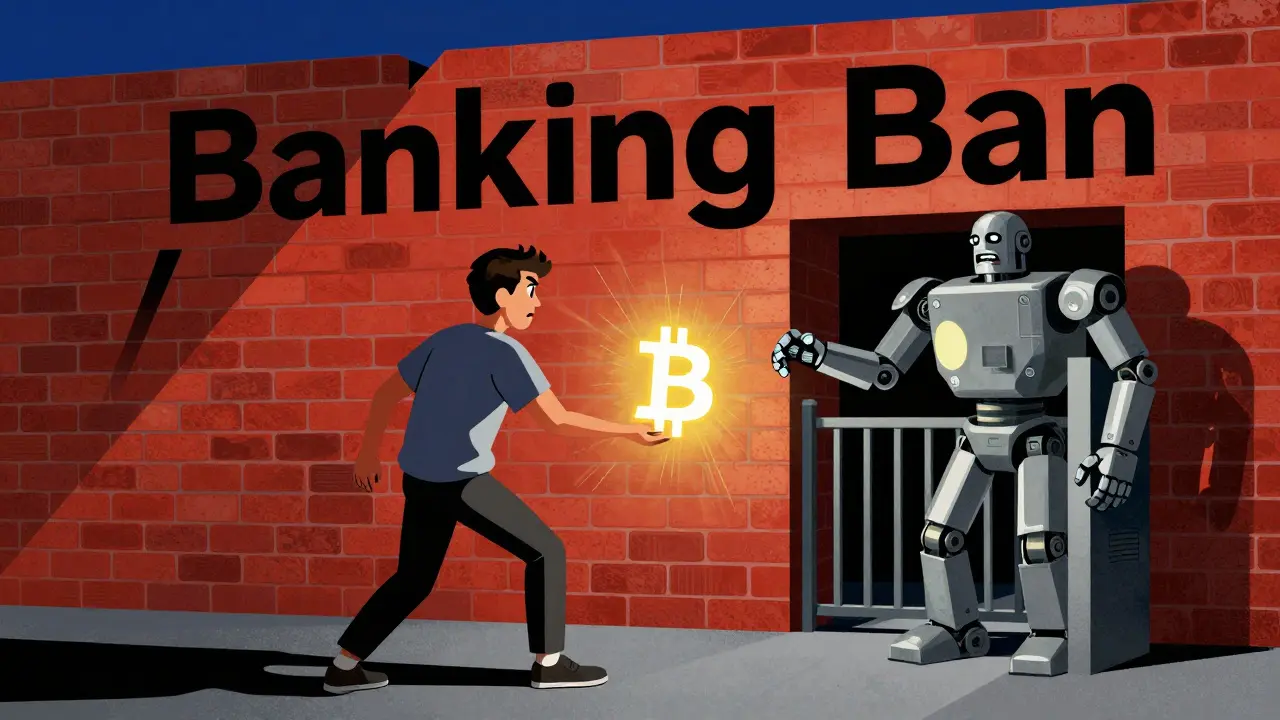
Trying to move cryptocurrency into or out of a bank account in Ecuador feels like hitting a brick wall. You click transfer, wait for the confirmation, and then get a notification that your transaction was blocked. For the estimated 385,000 people in Ecuador using digital assets, this isn't just an inconvenience; it's a daily reality. The Ecuador banking ban on crypto transactions is a strict regulatory framework prohibiting financial institutions from processing digital asset transfers creates a complex environment where owning crypto is legal, but moving it through traditional banks is not.
This guide breaks down exactly how these rules work, why they exist, and what you can actually do if you need to access your funds without triggering an account freeze.
The Legal Reality: Ownership vs. Banking
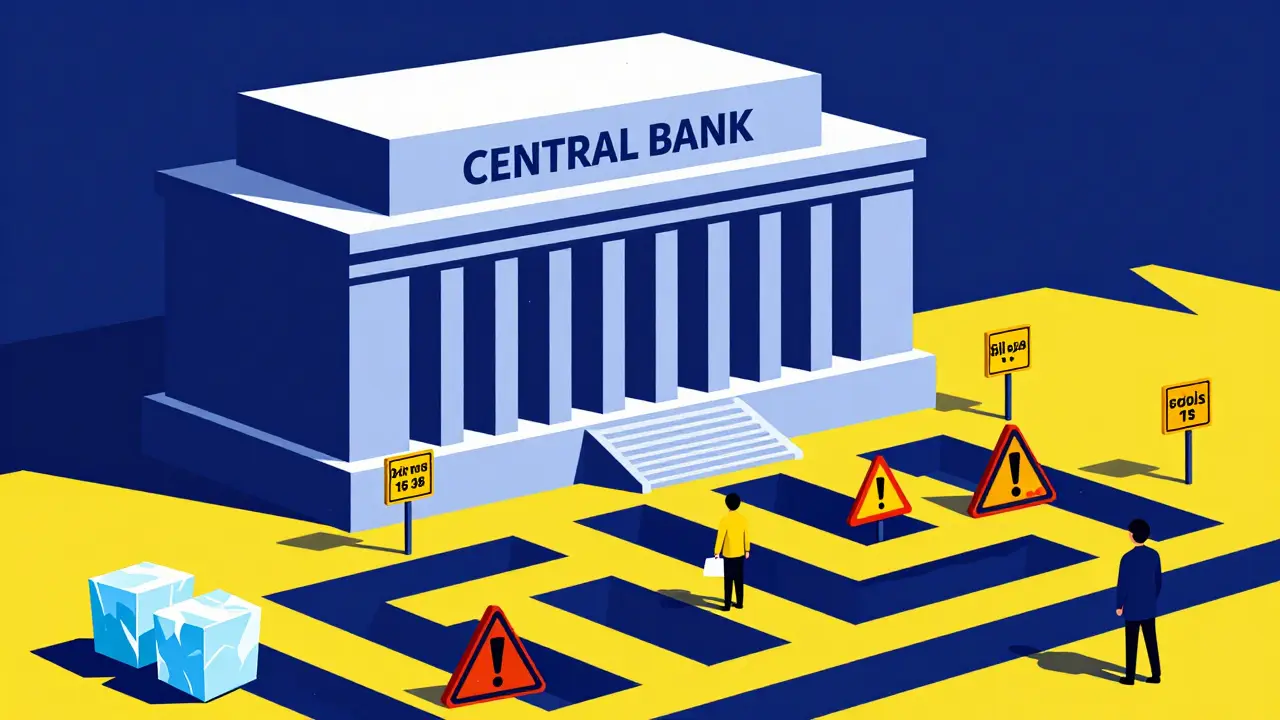
There is a common misconception that cryptocurrency is illegal in Ecuador. It is not. You can buy, sell, and hold Bitcoin or Ethereum in your private wallet. The law does not criminalize private ownership. However, the Central Bank of Ecuador (BCE) is the monetary authority responsible for maintaining dollarization stability and regulating financial institutions has drawn a hard line around the banking sector.
The restriction stems from Article 94 of the Monetary Code, which declares the US dollar as the sole legal tender following the country’s dollarization in 2000. This was reinforced by Junta de Política y Regulación Monetaria y Financiera (JPRM) Resolution 001-22 in January 2022 and Resolution 002-23 in March 2023. These resolutions explicitly exclude cryptocurrencies from authorized payment methods.
Rolando Emilio Chica Cordero, the BCE President, has stated publicly that while the central bank cannot ban individuals from trading crypto, it has the power to prohibit regulated entities-like banks-from facilitating those trades. This creates a paradoxical situation: you are allowed to have the money, but you cannot use the standard financial infrastructure to move it.
How Banks Enforce the Ban
Banks in Ecuador do not just ignore crypto transactions; they actively hunt for them. The Superintendency of Banks (SB) requires all financial institutions to deploy specific Transaction Monitoring Systems (TMS). By January 1, 2025, banks were required to implement TMS Version 3.1, which flags 47 specific transaction patterns associated with high-risk crypto activity.
If you try to send money to a known exchange platform like Binance, OKX, or Mercado Bitcoin, the system flags it immediately. Banco Pichincha, which holds 38% of the market share, automatically flags transactions exceeding $200 to these platforms. According to community reports from mid-2025, first-time violations often result in account freezes lasting between 3 and 14 days. Repeat offenders face stricter penalties, including potential account closure.
The enforcement is rigorous. In 2024 alone, 12 financial institutions received formal sanctions totaling $1.2 million for failing to block crypto-related transactions properly. This shows that the regulators are serious about keeping the banking system clean of digital assets.
| Entity | Role | Key Action | Penalty/Sanction |
|---|---|---|---|
| Superintendency of Banks (SB) | Enforcer | Maintains registry of unauthorized providers; mandates TMS 3.1 | Fines up to $1.2 million for non-compliant banks |
| Internal Revenue Service (SRI) | Tax Authority | Taxes crypto gains at progressive rates | Up to 35% tax for individuals on source income |
| Monetary Code (Article 144) | Legal Framework | Prohibits crypto as payment for goods/services | Fines up to $50,000 per violation |
Taxation: The Hidden Cost
Avoiding the banking ban is only half the battle. You also have to deal with taxes. The Internal Revenue Service (SRI) treats cryptocurrency gains as taxable income. Under SRI Circular 007-2024, issued in February 2024, individuals pay progressive tax rates on crypto gains up to 35%. Corporations face a flat rate of 25% on Ecuador-source income.
This means that even if you successfully move your funds via peer-to-peer (P2P) channels, you are still legally obligated to declare those earnings. Failure to do so can lead to audits and significant back-taxes. The SRI has been increasingly sophisticated in tracking unreported digital asset income, often cross-referencing data from offshore exchanges.

Workarounds Used by Ecuadorian Users
Since direct bank transfers are off the table, users have developed creative ways to bridge the gap between fiat and crypto. A 2024 study by Pontificia Universidad Católica del Ecuador found that 78% of surveyed users rely on informal channels to convert crypto to cash. Here are the most common methods:
- Peer-to-Peer (P2P) Platforms: Many users rely on local merchants or other individuals to facilitate trades. On platforms like Binance P2P, users find local buyers who accept bank transfers or cash deposits in exchange for crypto. This accounts for a significant portion of volume but carries security risks.
- Stablecoins as Intermediaries: About 39% of users convert their volatile crypto holdings into USD-pegged stablecoins like USDT before attempting any transfer. Sometimes, these transfers are mislabeled as regular USD transfers to bypass filters, though this carries a high risk of chargebacks and frozen funds.
- Cross-Border Services: Services like Wise are used by some users because they do not explicitly prohibit crypto-derived funds in their terms of service, provided the funds appear as fiat upon entry. However, fees average 4.8%, significantly higher than the 1.2% seen in more permissive jurisdictions.
- Gift Card Exchanges: Approximately 22% of over-the-counter (OTC) volume involves exchanging crypto for gift cards, which are then redeemed or sold for cash. This method is slow and incurs steep discounts.
The average Ecuadorian crypto user spends 8.7 hours monthly managing these complexities, compared to just 2.1 hours in neighboring Colombia. This time cost is a significant burden for everyday users.
The Future: Bill 6538 and Regulatory Shifts
The landscape might change soon. In May 2025, National Assembly member Shirley Rivera introduced Bill 6538. This proposal aims to create a formal licensing framework for cryptocurrency exchanges. Key requirements include:
- Minimum capital of $500,000 for licensed exchanges.
- Mandatory proof-of-reserves audits.
- Real-time transaction monitoring integration with the Financial Analysis Unit (UAF).
However, analysts at Andean Financial Review project at least 18 months before this bill could be enacted, given its referral to three separate congressional committees. Until then, the status quo remains.
Another factor to watch is the BCE’s exploration of a Central Bank Digital Currency (CBDC). Announced in the March 2025 Innovation Report, prototype testing is scheduled for Q4 2025. If successful, this could either complement private crypto usage or further restrict it by offering a state-controlled alternative. Dr. Carlos de la Torre, a Central Bank Advisor, argues that the current restrictive approach protects confidence in the US dollar, citing Argentina’s challenges as a cautionary tale.
Risks and Pitfalls to Avoid
Navigating this gray area comes with real dangers. Here is what you need to watch out for:
- Account Freezes: As mentioned, Banco Pichincha and other major banks will freeze your account if they detect suspicious activity. Ensure you never send funds directly to known exchange domains.
- Scams in P2P Markets: With 63% of transactions occurring through unregulated OTC desks, fraud is rampant. Always use escrow services when possible and verify counterparty reputations thoroughly.
- Tax Liabilities: Ignoring SRI requirements can lead to severe penalties. Keep detailed records of all transactions, including dates, amounts, and counterparties.
- Chargeback Risks: Using stablecoins labeled as fiat can result in chargebacks if the recipient disputes the transaction. This happened in 147 reported cases in Q2 2025, totaling $382,000 in frozen funds.
Support infrastructure is limited. Only three law firms in Ecuador specialize in cryptocurrency matters, and the national Financial Ombudsman’s Office takes an average of 63 days to resolve crypto-related complaints. You are largely on your own if things go wrong.
Conclusion: Navigating the Gray Area
The Ecuador banking ban on crypto transactions is a rigid barrier designed to protect the nation’s dollarized economy. While it stifles innovation and increases costs for users, it is unlikely to disappear overnight. For now, success depends on patience, diligence, and a willingness to use decentralized tools. Stick to P2P networks, understand the tax implications, and avoid tempting the automated filters of major banks. Stay informed about Bill 6538 and the CBDC developments, as these could reshape the landscape in the coming years.
Is cryptocurrency illegal in Ecuador?
No, owning and trading cryptocurrency privately is not illegal in Ecuador. However, using banks to process crypto transactions is prohibited under JPRM Resolutions 001-22 and 002-23.
Which banks block crypto transactions in Ecuador?
All regulated financial institutions, including major banks like Banco Pichincha, are required to block transactions to known crypto exchanges. They use mandatory Transaction Monitoring Systems (TMS 3.1) to flag these activities.
What happens if my bank account is frozen due to crypto?
First-time violations typically result in account freezes lasting 3 to 14 days. Repeat offenses may lead to permanent account closure and potential reporting to the Superintendency of Banks.
How much tax do I pay on crypto gains in Ecuador?
Individuals pay progressive tax rates on crypto gains up to 35%. Corporations pay a flat rate of 25% on Ecuador-source income, according to SRI Circular 007-2024.
Will Bill 6538 legalize crypto exchanges?
Bill 6538 proposes a licensing framework for exchanges, requiring $500,000 minimum capital and strict compliance measures. However, analysts expect enactment to take at least 18 months after its introduction in May 2025.
Comments
Kiran CS
It is truly a spectacle of modern absurdity that one must engage in such elaborate subterfuge merely to exercise basic financial autonomy. The notion that a sovereign state can declare digital assets 'illegal' for banking purposes while simultaneously allowing private ownership is a paradox worthy of philosophical dissection, yet here we are, reduced to the status of underground currency smugglers. One cannot help but marvel at the sheer pretension of regulatory bodies who believe they can halt technological progress with mere bureaucratic resolutions. It is quite amusing, really, how these institutions cling to their obsolete frameworks as if they were sacred texts rather than outdated administrative guidelines. The average citizen is forced to become an amateur cryptographer and legal scholar just to move funds from point A to point B without triggering some automated sentinel. This is not regulation; it is harassment disguised as policy.
May 6, 2026 at 10:23
Bijan Das
too much work
May 8, 2026 at 05:46
Ashley Rodriguez
i feel like this situation is so stressful for everyone involved because nobody wants to deal with frozen accounts or sudden bans on their hard earned money and it seems like the system is designed to make life difficult for ordinary people who just want to save or invest in something new
i think it would be nice if there was more communication between the banks and the users so that people understand why certain transactions are blocked and maybe there could be a way to appeal those decisions without losing everything
it really makes me sad when i read about how much time people spend trying to figure out these workarounds instead of focusing on their families or jobs because that is what matters most in life and no amount of crypto gains should cost you your peace of mind or your dignity
May 8, 2026 at 06:36
Bridget Coogle
thanks for sharing this detailed guide
it helps to know that others are navigating these challenges too
stay safe out there
May 9, 2026 at 17:39
Zara Zaman
This is exactly why our own financial systems remain robust and secure by adhering to strict regulations that protect the integrity of the national currency. Allowing unregulated digital assets to flow freely through banking channels invites chaos and undermines the trust citizens place in their government's monetary policy. Other nations may experiment with these volatile instruments, but stability requires discipline and control over financial infrastructure. We should not look to emulate countries that prioritize speculative technology over economic security. The measures taken in Ecuador serve as a cautionary tale for any nation considering loosening its grip on traditional banking protocols.
May 10, 2026 at 07:53