
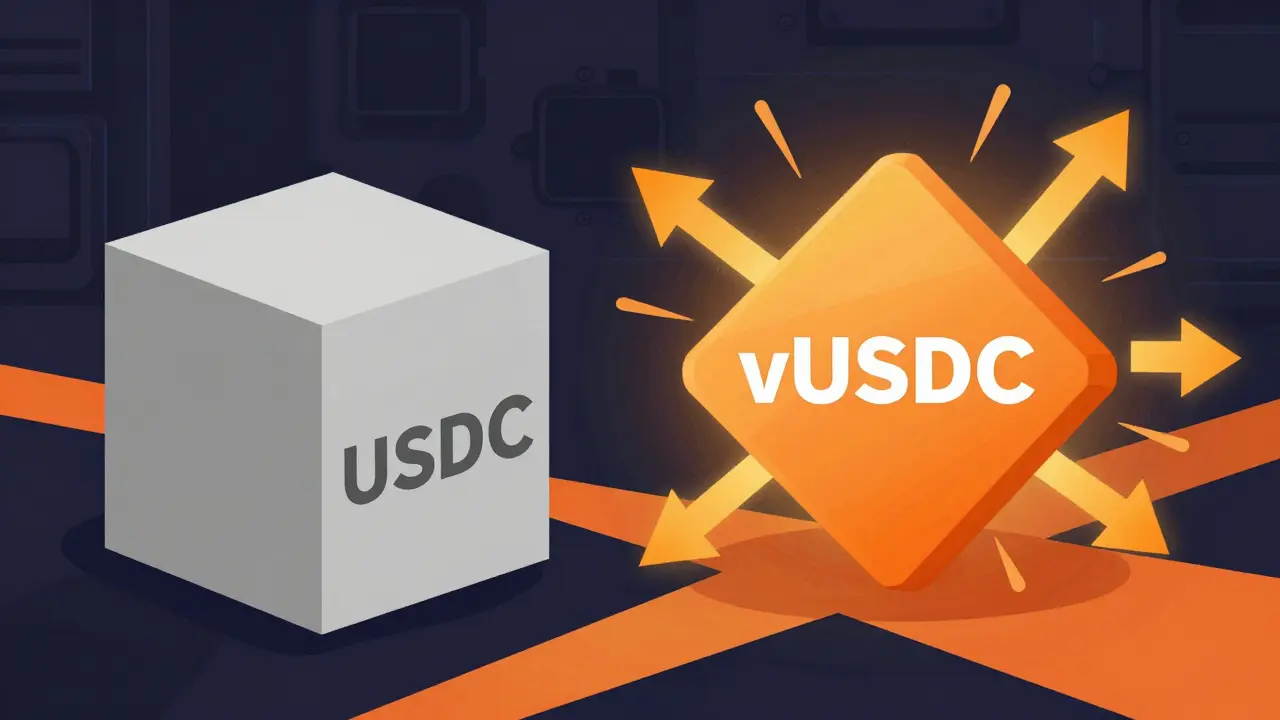
When you see a token labeled "USDC" in the world of decentralized finance, your brain probably defaults to thinking about the familiar, fully collateralized stablecoin issued by Circle. But Venus USDC, often referred to as vUSDC, is something entirely different. It is not the standard USDC you know from Ethereum or Solana. Instead, it is a synthetic representation of USDC that lives within the Venus Protocol ecosystem on the BNB Smart Chain.
If you are navigating the complex landscape of DeFi yield farming and liquidity provision, understanding what vUSDC actually is-and how it behaves differently from regular USDC-is critical. Misunderstanding this distinction can lead to unexpected risks or missed opportunities in your portfolio. Let’s break down exactly what this token is, why it exists, and what you need to watch out for in the current market.
The Core Concept: What Exactly Is vUSDC?
To understand vUSDC, we first need to look at its parent platform. Venus Protocol is a decentralized algorithmic money market built on the BNB Smart Chain (BSC). Think of it as a peer-to-peer lending platform where users deposit crypto assets to earn interest or borrow against them. In traditional banking, you deposit dollars and get an account balance. In Venus, when you deposit assets like USDT, BNB, or actual USDC, the protocol issues a corresponding "vToken" to your wallet.
vUSDC is that specific receipt. When you supply USDC to the Venus Protocol, you receive vUSDC in return. This token represents your ownership stake in the pooled USDC reserves. As other borrowers take out loans using USDC as collateral and pay interest, that interest accrues directly to the holders of vUSDC. Your balance of vUSDC increases over time, reflecting the yield you are earning.
This mechanism is central to the DeFi lending model. Unlike holding USDC in a cold wallet where it sits idle, holding vUSDC means your capital is actively working within the Venus ecosystem. However, because it is a derivative token tied to the protocol's health and smart contract logic, it carries different risk profiles than the underlying asset.
How the Peg Works: Stability vs. Volatility
Here is where things get tricky for newcomers. Standard USDC maintains a strict 1:1 peg with the US Dollar through direct fiat collateralization held by regulated entities. vUSDC, however, does not have that same direct backing. Its value is derived from the total value of the USDC deposited in the Venus pool, plus the accumulated interest.
In theory, if you hold 100 vUSDC, you should be able to redeem it for slightly more than $100 worth of real USDC, thanks to the accrued interest. The price of vUSDC fluctuates based on supply and demand dynamics within the Venus market. If borrowing demand for USDC is high, the interest rate rises, and the value of vUSDC appreciates relative to the base unit. Conversely, if no one is borrowing, the growth slows.
However, recent market data paints a confusing picture. As of May 2026, various aggregators report significant discrepancies in the pricing of vUSDC. Some sources list it trading near $0.025, while others show wider deviations. This volatility suggests that vUSDC may not always trade at a clean premium to its underlying value on secondary markets. For traders looking to swap vUSDC for other tokens quickly, slippage and spread costs can eat into profits. Always check the current exchange rate on reputable platforms before executing large trades.
Technical Infrastructure: Built on BNB Smart Chain
vUSDC operates exclusively on the BNB Smart Chain (formerly Binance Smart Chain), utilizing the BEP20 token standard. This choice of blockchain is strategic. BSC offers significantly lower transaction fees and faster block times compared to Ethereum Mainnet. For DeFi users who want to compound yields frequently without paying $20 per gas fee, this efficiency is a major advantage.
The contract address for vUSDC is publicly verifiable on block explorers like BscScan. For instance, the primary contract often cited is 0xecA88125a5ADbe82614ffC12D0DB554E2e2867C8. Before interacting with any token, always verify this address against official sources like the Venus Protocol dashboard or trusted aggregators. Scammers frequently create fake tokens with similar names to trap unsuspecting users.
Because it is a BEP20 token, you can store vUSDC in any wallet that supports BSC networks. Popular options include MetaMask, Trust Wallet, and Atomic Wallet. Atomic Wallet, for example, supports over 15 million users and provides seamless integration for managing vUSDC alongside other assets. Using a non-custodial wallet ensures you maintain full control over your private keys, which is essential for security in DeFi.
Earning Yield: Lending vs. Staking
One of the main reasons people interact with vUSDC is to generate passive income. It is crucial to distinguish between two common terms here: lending and staking. In the context of Venus Protocol, you are primarily engaging in crypto lending.
- Lending: You deposit USDC into the Venus pool and receive vUSDC. Borrowers pay interest to use that liquidity. Your vUSDC balance grows as interest accrues. This is a credit-based mechanism.
- Staking: Typically involves locking tokens to secure a Proof-of-Stake network or governance rights. vUSDC itself is not eligible for staking in the traditional sense. You cannot stake vUSDC to validate blocks on BSC.
However, you can often stake the XVS token (the governance token of Venus) to earn additional rewards, which may include portions of the protocol's fees. Some advanced strategies involve providing liquidity pairs involving vUSDC on decentralized exchanges like PancakeSwap to earn trading fees on top of the lending yield. These strategies offer higher potential returns but introduce impermanent loss and smart contract risk.
Market Dynamics and Risks in 2026
The cryptocurrency market has matured significantly since the early days of DeFi. By May 2026, the stablecoin landscape is dominated by giants like Tether (USDT) and Circle's USDC, which boast market capitalizations in the tens of billions. In comparison, vUSDC occupies a much smaller niche. Reports indicate a market cap ranging between $65 million and $86 million, depending on the data source.
This modest size brings both opportunities and risks. On one hand, smaller pools can sometimes offer higher annual percentage rates (APRs) due to higher borrowing demand relative to supply. On the other hand, lower liquidity means larger trades can impact the price more dramatically. Additionally, the discrepancy in reported prices across platforms like CoinMarketCap and Coinbase highlights the fragmentation of data in the altcoin space. Always cross-reference multiple sources.
Security is paramount. While Venus Protocol has undergone audits, no smart contract is immune to vulnerabilities. The history of DeFi is littered with exploits where protocols were drained due to coding errors or oracle failures. Diversifying your exposure and never allocating more than you can afford to lose is the golden rule. Furthermore, regulatory scrutiny on algorithmic stablecoins and lending platforms continues to evolve globally. Stay informed about legal developments in your jurisdiction.
| Feature | Standard USDC | Venus USDC (vUSDC) |
|---|---|---|
| Underlying Asset | Fiat currency & short-term US Treasuries | Pooled USDC deposits within Venus Protocol |
| Blockchain | Ethereum, Solana, Avalanche, etc. | BNB Smart Chain (BSC) |
| Primary Purpose | Store of value, payments, trading pair | Earn yield via lending, collateral for borrowing |
| Yield Generation | No inherent yield (unless lent out separately) | Accrues interest automatically as balance increases |
| Risk Profile | Regulatory risk, issuer risk | Smart contract risk, protocol insolvency risk, liquidation risk |
| Price Stability | Strict 1:1 USD peg | Variable, dependent on pool performance and market demand |
Practical Steps: How to Use vUSDC Safely
If you decide to engage with vUSDC, follow these steps to minimize friction and risk:
- Set Up a Compatible Wallet: Ensure your MetaMask or Trust Wallet is configured for the BNB Smart Chain. Add the BSC network details if they aren't pre-loaded.
- Acquire BNB: You will need native BNB tokens to pay for gas fees when interacting with the Venus Protocol. Buy BNB on a centralized exchange and transfer it to your wallet.
- Connect to Venus: Visit the official Venus Protocol interface. Connect your wallet securely. Double-check the URL to avoid phishing sites.
- Supply USDC: Navigate to the USDC market. Approve the spending of your USDC, then supply the desired amount. You will receive vUSDC in return.
- Monitor Health Factor: If you plan to borrow against your vUSDC, keep a close eye on your health factor. A drop below 1.0 triggers automatic liquidation of your collateral.
- Revoke Permissions: After completing transactions, consider revoking unlimited approval permissions for smart contracts to enhance security.
Is vUSDC the same as USDC?
No, they are fundamentally different. USDC is a fiat-backed stablecoin issued by Circle. vUSDC is a synthetic token representing your share of a USDC lending pool on the Venus Protocol. While USDC aims for a static $1.00 value, vUSDC's value fluctuates based on interest accrual and market dynamics.
Can I withdraw my funds from Venus Protocol anytime?
Generally, yes. You can redeem your vUSDC for the underlying USDC plus accrued interest at any time, provided the protocol is functioning normally and there are no emergency shutdowns or technical outages. However, during periods of extreme market stress, withdrawal limits or delays may occur.
Why is the price of vUSDC showing as less than $1 on some exchanges?
This indicates a discount or depegging event. It could result from low liquidity, panic selling, or concerns about the solvency of the Venus Protocol. If vUSDC trades below its intrinsic value (redeemable USDC + interest), arbitrageurs usually step in to buy low and redeem for profit, restoring the peg. Persistent discounts signal significant risk.
What happens if the Venus Protocol gets hacked?
In the unfortunate event of a successful exploit, users could lose their entire principal. Unlike bank deposits insured by government agencies, DeFi assets have no such protection. This is why diversification and only investing disposable capital are critical safety measures.
Do I need to pay taxes on the interest earned from vUSDC?
In most jurisdictions, including the United States, interest earned from DeFi lending is considered taxable income. You may need to report the accrued value of your vUSDC holdings annually. Consult with a qualified tax professional familiar with cryptocurrency regulations for advice specific to your situation.
Comments
Ellie Riddell
it is fascinating how people still treat these synthetic receipts like actual currency without reading the fine print about smart contract risk
May 15, 2026 at 01:05
John Gonzalez Bentham
honestly this article is just basic stuff that anyone who has been in defi for more than a week should already know but i guess not everyone here is as smart as me lol
May 17, 2026 at 00:44
Sudarshan Anbazhagan
the distinction between standard USDC and vUSDC is often overlooked by the uninitiated masses who blindly follow yield farming trends without understanding the underlying mechanics of the Venus Protocol ecosystem which essentially creates a derivative asset class that carries inherent risks related to protocol solvency and smart contract vulnerabilities rather than the fiat backing one might expect from traditional stablecoins issued by regulated entities such as Circle or Paxos
it is imperative that investors recognize that holding vUSDC does not equate to holding USD nor does it provide the same level of security or regulatory oversight that comes with direct ownership of the underlying asset instead one is merely holding a receipt that represents a claim on a pool of funds within a decentralized lending platform which introduces a layer of complexity and potential failure points that are absent in simpler holdings
furthermore the volatility observed in secondary market pricing for vUSDC serves as a stark reminder of the liquidity constraints and market fragmentation that plague many DeFi protocols especially during periods of high stress or low borrowing demand where the spread between the intrinsic value and the market price can widen significantly leading to substantial losses for those attempting to exit their positions quickly
therefore it is my firm belief that only those with a thorough understanding of blockchain technology and financial engineering should engage with such instruments while the rest should stick to more traditional and less risky investment vehicles that do not require constant monitoring of health factors and oracle feeds
May 18, 2026 at 02:07
Sarah C
i appreciate this breakdown because it helps clarify things for beginners like me who are trying to learn about DeFi safely thanks for sharing this info
May 19, 2026 at 06:45
Sharada Vakkund
let us all remember that education is key when navigating these complex financial systems so please keep asking questions and supporting each other in learning more about how these protocols work
we can grow together if we share knowledge openly and respectfully
May 20, 2026 at 16:47
Matt Davis
this is absolute garbage advice for anyone who values their capital over getting rug pulled by a buggy smart contract
May 21, 2026 at 13:12
Kimberly Herbstritt
actually i think vUSDC is pretty cool because it allows you to earn interest passively without having to move your principal around constantly which saves on gas fees and time
May 22, 2026 at 13:40
Destiny Kilby
i have been following this space for years and i always feel anxious when i see new users jumping into leveraged positions without understanding the liquidation risks involved
please be careful out there
May 24, 2026 at 04:50
Bradley Geldenhuys
look man the world is changing fast and if you dont adapt to these new technologies you will get left behind so just dive in and trust the process even if it seems scary at first
we are all in this together and the future belongs to those who embrace innovation
May 24, 2026 at 10:04
Mike S
another day another soul getting rekt by their own ignorance wow
May 25, 2026 at 20:43