
You’ve probably heard of Bitcoin and Ethereum. You know they’re slow, expensive, and sometimes hard to scale. But what if there was a blockchain built specifically for businesses that need speed without sacrificing trust? That’s where Taraxa comes in. It’s not just another meme coin or speculative asset. Taraxa is a Layer-1 blockchain platform designed to verify real-world business transactions, particularly those informal "handshake deals" that lack paper trails.
If you are asking "what is Taraxa," you are likely looking at its native token, TARA, which powers this network. Unlike chains focused purely on finance, Taraxa targets the messy middle ground of global commerce: supply chains, IoT data verification, and small-to-medium enterprise audits. With a total supply fixed at 10.90 billion tokens and a price hovering around $0.0006 as of late 2025, it sits in a unique niche. It’s technically impressive, but is it investable? Let’s break down how it works, why it matters, and whether it has staying power.
The Core Problem Taraxa Solves
Most blockchains try to replace banks. Taraxa tries to replace the clipboard. Think about a handshake deal between two suppliers. No contract, no bank transfer record, just trust. If things go wrong, who do you call? Traditional blockchains like Ethereum can record transactions, but they are often too slow or costly for high-volume, low-value everyday business interactions.
Taraxa aims to create a public ledger for these informal transactions. The goal is simple: make trust verifiable without bureaucracy. By using a blockDAG (Directed Acyclic Graph) architecture, the network processes multiple blocks simultaneously rather than one after another. This structure allows for true finality in under 3.7 seconds. For a business manager needing to confirm a shipment delivery instantly, waiting minutes for Ethereum confirmation is useless. Taraxa offers immediate certainty.
How the Technology Actually Works
Let’s strip away the jargon. Most people hear "blockchain" and think of a single line of blocks, like beads on a string. Each new bead must wait for the previous one to be approved. This creates bottlenecks. Taraxa uses a graph structure instead. Imagine a tree where many branches grow at once. Multiple blocks are produced and validated in parallel. This eliminates the throughput-security tradeoff that plagues older networks.
Here are the key technical specs that define the platform:
- Throughput: Over 5,000 transactions per second (TPS). Compare this to Ethereum’s 15-30 TPS. Even Solana’s theoretical 65,000 TPS often drops significantly under load. Taraxa maintains consistency here.
- Consensus Mechanism: Proof-of-Stake (PoS). Validators secure the network by staking TARA tokens. This is energy-efficient compared to Proof-of-Work.
- EVM Compatibility: This is huge for developers. If you have an app built for Ethereum, you can likely port it to Taraxa with minimal changes. No need to learn a new coding language like Rust or Move.
- Speculative Execution: The network pre-executes transactions before they are finalized. This reduces latency because the system doesn’t wait for full consensus to start processing logic.
Another standout feature is hardware accessibility. Running a validator node on Ethereum requires serious computing power and a hefty stake (32 ETH). On Taraxa, you can run a validator on a Raspberry Pi-class device with just 4GB of RAM. The minimum stake is only 2,500 TARA. At current prices, that’s roughly $1.56. This lowers the barrier to entry for decentralization, allowing more regular users to participate in securing the network.
Taraxa vs. The Competition
To understand if Taraxa is worth your attention, you need to see how it stacks up against the giants. It’s not trying to beat Bitcoin on store-of-value. It’s competing for enterprise mindshare against other Layer-1s and Layer-2 solutions.
| Feature | Taraxa (TARA) | Ethereum (ETH) | Solana (SOL) |
|---|---|---|---|
| Architecture | BlockDAG | Linear Chain + L2s | Proof-of-History + PoS |
| Transactions Per Second | >5,000 | 15-30 (L1) | Theoretical 65k (Actual varies) |
| Finality Time | <3.7 seconds | Minutes (L1) | <1 second |
| Average Fee | Fractions of a cent | $1.50 - $15.00+ | $0.001 - $0.01 |
| Primary Use Case | Enterprise Auditing, Supply Chain | DeFi, NFTs, General Purpose | High-Speed DeFi, Gaming |
| Validator Hardware | Raspberry Pi / Low Cost | High Spec Server | High Spec Server |
The table highlights Taraxa’s sweet spot: cheap, fast, and easy to access. However, it lacks the massive ecosystem of Ethereum. While Ethereum has thousands of active dApps and billions in Total Value Locked (TVL), Taraxa has dozens. If you are a developer looking for liquidity, Ethereum wins. If you are a business needing cheap audit trails, Taraxa makes more sense.

The TARA Token Economics
The TARA token is the fuel of the network. It isn’t just a speculative asset; it has specific utility functions. Understanding these helps you gauge its long-term value.
First, TARA pays for gas fees. Because the network is efficient, these fees are negligible-often less than a tenth of a cent. This encourages high-frequency micro-transactions, which is critical for IoT and supply chain applications where millions of tiny data points need recording.
Second, TARA is used for staking. Users lock up their tokens to become validators or delegate to them. In return, they earn rewards. Recent data suggests staking yields average around 12.7% APY. This is attractive, but keep in mind that inflation rates and token unlocks can impact the real yield. With a fixed supply of 10.90 billion, there is no infinite minting, which protects against dilution over time.
Third, governance. Holding TARA gives you a voice in protocol upgrades. As the network matures, voting on technical improvements will become more critical. Currently, the community is small, so each vote carries significant weight.
Real-World Adoption and Challenges
Technology means nothing without users. So, who is actually using Taraxa? The project focuses heavily on B2B partnerships rather than retail hype. They claim implementations in supply chain management and informal transaction auditing. There are three verified case studies documented on their site, though these are currently small-scale pilots.
User feedback paints a mixed picture. Developers praise the ease of migration from Ethereum. One user noted that deploying a dApp took only two hours with minimal code changes. Transaction costs dropped dramatically from $2.50 on Ethereum to $0.0003 on Taraxa. That’s a compelling economic argument for any startup burning cash on gas fees.
However, there are pain points. Liquidity remains a challenge. Because TARA trades on fewer major exchanges compared to top-tier coins, buying and selling large amounts can move the price. Wallet support is also limited compared to Ethereum’s vast array of options. Documentation for complex enterprise integrations has been criticized as insufficient, with some developers reporting difficulties finding clear guides for advanced features.
Market metrics reflect this early-stage status. As of November 2025, TARA ranks around #1456 by market cap, with a valuation of approximately $3.53 million. Daily trading volume averages around $148,000. This low liquidity means volatility is high. A small buy order can spike the price; a small sell order can crash it. For institutional investors, this is a red flag. For speculators, it’s an opportunity.
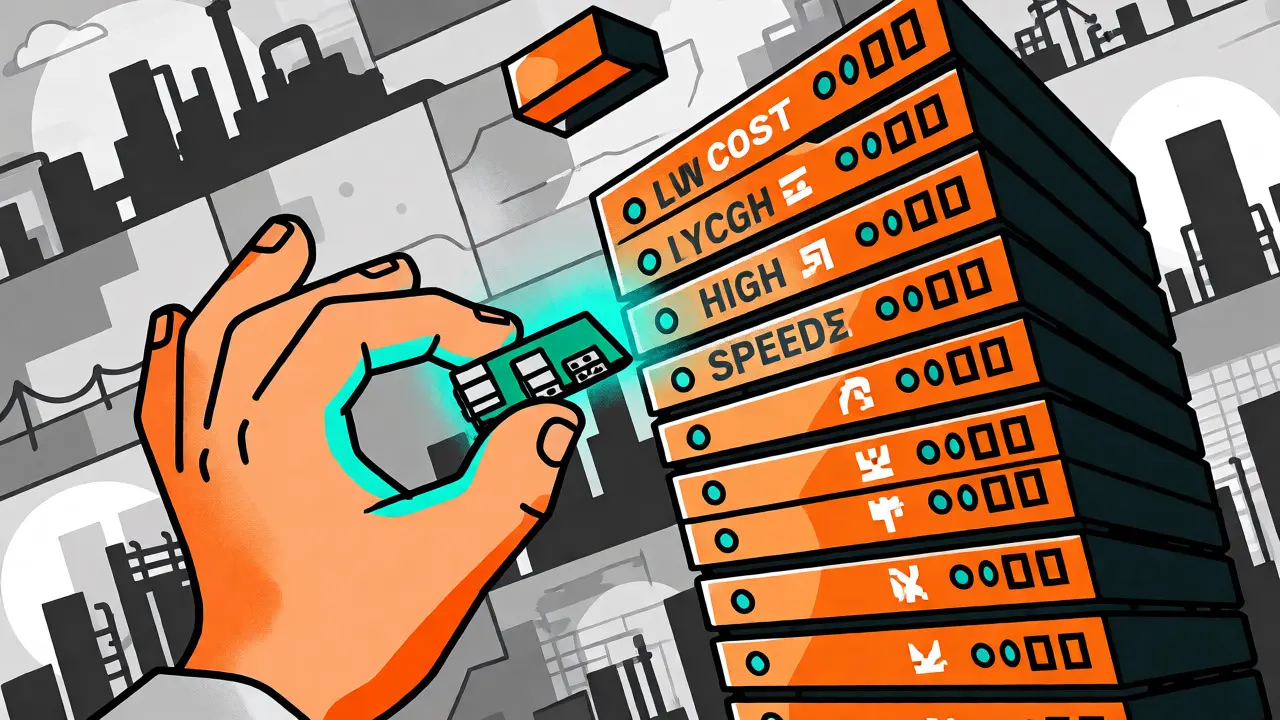
Should You Invest in TARA?
This depends entirely on your risk tolerance and investment horizon. Taraxa is not a blue-chip crypto like Bitcoin or Ethereum. It is a venture-style bet on a specific technological solution: blockDAG for enterprise auditing.
The Bull Case: If Taraxa secures two or three major enterprise contracts by 2026, analysts from Delphi Digital suggest a potential 5x price increase. The technology works. It solves a real problem. The EVM compatibility removes friction for adoption. If the narrative shifts towards "real-world assets" and "enterprise blockchain," Taraxa is well-positioned to benefit.
The Bear Case: The competition is fierce. Polygon, Avalanche, and Solana all offer similar speed and cost benefits with much larger ecosystems. Taraxa faces an uphill battle to capture developer mindshare. With only 12 active contributors to core repositories in recent months compared to Ethereum’s 3,000+, development velocity is slow. Without significant marketing or partnership announcements, the project risks stagnation.
My advice? Treat TARA as a high-risk satellite holding. Do not allocate your entire portfolio to it. Watch for signs of genuine enterprise adoption-not just press releases, but actual usage metrics. Look for increasing daily transaction counts from non-speculative wallets. If the network starts processing millions of real-world audit logs, the fundamentals will catch up to the price.
Getting Started with Taraxa
If you want to test the waters, getting involved is relatively straightforward. Since it’s EVM-compatible, you can use MetaMask. Just add the Taraxa Mainnet RPC details to your wallet.
- Buy TARA: Check exchanges like Gate.io or Bitget. Be mindful of withdrawal fees and network congestion on the exchange side.
- Set Up Wallet: Add the Taraxa network to MetaMask. Network ID is typically distinct from Ethereum’s mainnet.
- Stake or Send: Try sending a small amount of TARA to yourself to test the speed and fee structure. Or, delegate your tokens to a validator to earn that ~12% APY.
- Explore DApps: Visit the official Taraxa explorer to see live transactions. Look for patterns-are there bots, or are there real business interactions?
Remember, the community is small. Join their Telegram or Discord groups. Ask questions. Response times can average 18 hours, so patience is required. But engaging directly with the team can give you insights that aren’t available in public reports.
Is Taraxa a good investment for beginners?
Generally, no. Taraxa is a micro-cap cryptocurrency with low liquidity and high volatility. Beginners should stick to established assets like Bitcoin or Ethereum until they understand the risks associated with smaller projects. TARA is better suited for experienced traders who can monitor news and technical developments closely.
Can I mine TARA coins?
No, Taraxa does not use mining. It uses a Proof-of-Stake consensus mechanism. Instead of mining, you validate transactions by staking TARA tokens. You earn rewards for securing the network, similar to earning interest in a savings account.
What makes Taraxa different from Ethereum?
While both are smart contract platforms, Taraxa uses a blockDAG architecture for higher throughput and lower fees. Ethereum uses a linear chain and relies on Layer-2 solutions for scaling. Taraxa is optimized for enterprise auditing and high-volume micro-transactions, whereas Ethereum serves as a general-purpose financial layer with a much larger ecosystem.
Where can I buy TARA tokens?
TARA is listed on several centralized exchanges, including Gate.io, Bitget, and MEXC. Availability may vary by region due to regulatory restrictions. Always check the latest listing status before attempting to purchase, as delistings can occur for low-volume assets.
Does Taraxa have a future in DeFi?
Taraxa has DeFi capabilities due to EVM compatibility, but it is not currently a leader in decentralized finance. Its primary focus is enterprise utility and supply chain verification. DeFi growth on Taraxa depends on attracting liquidity providers and developers, which is challenging given the dominance of Ethereum, BNB Chain, and Solana in that sector.