
You search for "Spike crypto," and suddenly you're staring at three different tokens with the same name. One lives on Solana, another on Ethereum, and a third claims to be on Supra-chain. Which one is the real deal? If you are looking for the Spike (SPIKE) associated with Matt Furie-the creator of Pepe the Frog-you need to look specifically at the Solana network. As of November 2026, this specific token has captured attention not because of groundbreaking technology, but because of a provocative cultural narrative: it claims to represent Furie's very first drawing, predating his famous creations.
But here is the catch. In the world of low-cap memecoins, identity is fragile. A ticker symbol like "SPIKE" is free real estate, meaning anyone can mint a token with that name. This article cuts through the noise to explain exactly what the primary Solana-based SPIKE token is, how it functions technically, why its market data looks so volatile, and-crucially-what risks you face before buying. We will treat this as a speculative asset analysis, not a financial recommendation.
The Origin Story: Is It Really Matt Furie?
The core marketing pitch for the Solana-based SPIKE token rests on a single claim: the character depicted in the token’s branding was drawn by Matt Furie in 1984, when he was just five years old. The project asserts that this character, often referred to simply as "Spike," came before Pepe, Brett, Andy, and Landwolf. For collectors and fans of internet culture, this origin story provides a layer of legitimacy that most random dog-themed coins lack.
However, we must distinguish between narrative and legal reality. Does Matt Furie personally own this token? Did he launch it? Current evidence suggests no. The token appears to be a community-driven or developer-led initiative leveraging Furie’s artistic legacy rather than an official corporate issuance from the artist himself. The project’s social media channels actively promote the "predates Pepe" angle, but there is no verified whitepaper signed by Furie’s legal team confirming ownership or endorsement. When you buy SPIKE, you are betting on the community’s belief in this story, not necessarily on a direct partnership with the artist.
This distinction matters because it affects longevity. Official endorsements tend to provide stability; fan-made tributes can fade quickly if the hype cycle moves on. Always verify the contract address before assuming any connection to the artist.
Technical Basics: What Kind of Token Is It?
Technically, SPIKE is not a blockchain protocol. It does not have its own ledger, validators, or consensus mechanism. Instead, it is a Standard Program Library (SPL) token built on the Solana blockchain. Think of it like an app running inside a smartphone operating system. Solana is the OS; SPIKE is just one of millions of apps installed on it.
Because it runs on Solana, SPIKE inherits the network’s technical characteristics. Transactions are fast and cheap compared to Ethereum. The base fee for a transaction on Solana is approximately 5,000 lamports per signature (a fraction of a cent), plus an optional prioritization fee during congestion. Half of the base fee is burned, helping maintain network scarcity, while the other half goes to validators. These fees are paid in SOL, not SPIKE. You cannot pay gas fees with your meme coin holdings; you always need SOL in your wallet to move SPIKE around.
Solana SPL Token is a standard token format on the Solana blockchain that allows developers to create fungible assets without building their own infrastructure. Unlike native coins like Bitcoin or Ethereum, SPL tokens rely entirely on Solana’s security and speed.
The specific contract address for the primary Solana SPIKE token is widely cited as BFiGUxnidogqcZAPVPDZRCfhx3nXnFLYqpQUaUGpump. Note the suffix "pump." This indicates the token was likely launched via Pump.fun, a popular platform for launching memecoins on Solana. Tokens launched here often start with low liquidity and high volatility, relying on organic community growth rather than venture capital backing.
Market Data and Liquidity Risks
If you look at market aggregators like CoinGecko or CoinMarketCap, you might see conflicting numbers. This happens because multiple tokens share the "SPIKE" ticker. One version might show a market cap of $57,000, while another shows $250,000. They are different assets. To avoid buying the wrong one, you must match the contract address.
For the main Solana SPIKE, recent data indicates a circulating supply of roughly 958 million out of a maximum 1 billion. The price hovers around fractions of a cent, resulting in a micro-cap valuation. With such a small market cap, even modest buy or sell orders can cause massive price swings. A $1,000 trade might move the price by 5-10%, whereas the same trade on Bitcoin would barely register.
Liquidity is another critical factor. Some pairs report pooled liquidity in the range of $13,000 to $20,000. While automated tools might display "Audit: No issues," this usually refers to basic smart contract checks (e.g., no hidden mint functions). It does not guarantee that the liquidity pool is locked or that insiders won’t dump their holdings. Thin liquidity means you might struggle to exit a large position without crashing the price yourself.
| Attribute | SPIKE (Solana) | Dogecoin (DOGE) | Pepe (PEPE) |
|---|---|---|---|
| Blockchain | Solana | Own Blockchain | Ethereum |
| Primary Narrative | Matt Furie's 1984 Character | Internet Joke / Shiba Inu | Pepe the Frog Meme |
| Utility | Speculative / Community | Tipping / Payment | Speculative / Ecosystem |
| Holder Concentration | High (~52% top 10) | Low / Distributed | Medium / Whale-heavy |
| Transaction Cost | Very Low (SOL fees) | Low | Variable (Gas fees) |
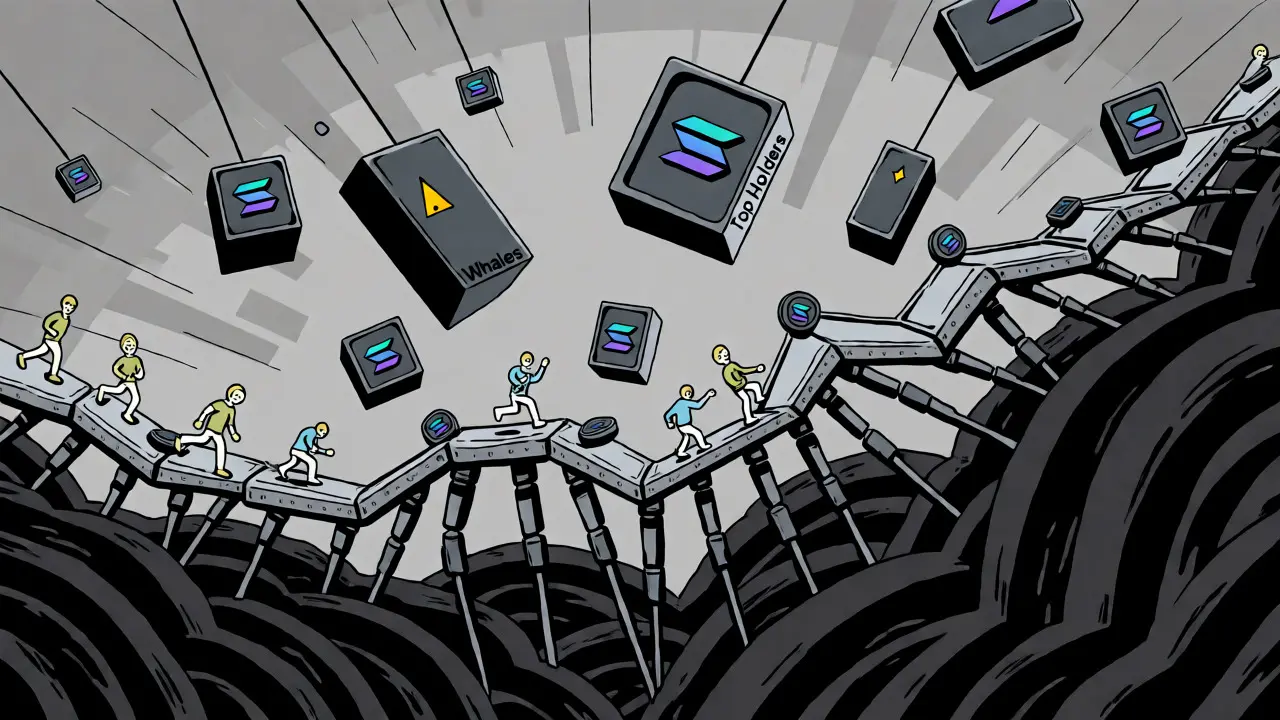
The Holder Concentration Problem
One of the biggest red flags for new investors in micro-cap tokens is holder concentration. Data from token trackers shows that the top 10 wallets control approximately 52.26% of the SPIKE supply. In traditional finance, this level of concentration would raise eyebrows regarding market manipulation. In crypto, it’s common but risky.
Who holds these coins? Often, early buyers, bot snipers, or the development team hold significant portions. If these wallets decide to sell simultaneously, the price can collapse instantly. There is currently no public proof that these top holders are locked in vesting contracts. Without lock-ups, "diamond hands" can turn into paper hands overnight. Always check if the top holders are labeled as "contract" (which might be exchanges or staking pools) or individual addresses.
How to Buy and Verify SPIKE Safely
Buying SPIKE isn’t as simple as clicking "Buy" on Coinbase. Because it is a decentralized exchange (DEX) token, you need to navigate the Solana ecosystem manually. Here is the step-by-step process to minimize errors:
- Get a Solana Wallet: Download Phantom or Solflare. These are browser extensions or mobile apps that manage your private keys.
- Fund with SOL: Buy Solana (SOL) on a centralized exchange like Coinbase or Binance, then withdraw it to your Phantom wallet. You need SOL for trading and fees.
- Verify the Contract Address: Copy the exact mint address:
BFiGUxnidogqcZAPVPDZRCfhx3nXnFLYqpQUaUGpump. Do not trust search results alone; paste this into your DEX interface. - Connect to a DEX: Use Jupiter Aggregator or Raydium. Paste the contract address to ensure you are swapping SOL for the correct SPIKE token.
- Set Slippage: Due to low liquidity, set slippage tolerance higher than default (e.g., 1-3%) to ensure the transaction completes. Be aware that high slippage means you might get fewer tokens than quoted.
- Confirm Transaction: Review the details in your wallet. Check the estimated fee and the amount of SPIKE you will receive.
A crucial tip: Start with a tiny amount. Test the entire flow with $10 worth of SOL. If the transaction fails, you still lose the network fee. Once confirmed, you can scale up. Never send funds directly to a wallet address unless you are certain it is a personal wallet; sending tokens to a smart contract address directly can result in permanent loss.
Risks and Regulatory Context
The U.S. Securities and Exchange Commission (SEC) recently clarified its stance on memecoins. In a May 2025 staff statement, they defined these assets as crypto inspired by memes or trends, where value is driven primarily by speculation and demand rather than utility. The SEC notes that many such tokens lack verifiable utility, transparent governance, or anti-money laundering (AML) adherence.
While the SEC hasn’t accused SPIKE of fraud, it falls squarely into this high-risk category. The risk profile includes:
- Identity Confusion: Buying the Ethereum SPIKE instead of the Solana one.
- Phishing: Fake websites mimicking spikemattfurie.com.
- Rug Pulls: Developers removing liquidity, making the token unsellable.
- Zero Utility: No current roadmap proves long-term use cases beyond trading.
Investor.gov warns that presales and social media hype can inflate prices artificially. If you see aggressive marketing promising "guaranteed returns" or "next Bitcoin," proceed with extreme caution. Memecoins are entertainment assets first, investments second.
Final Verdict: Who Should Buy SPIKE?
Is SPIKE a good investment? That depends on your definition of "good." If you seek steady growth and fundamental value, look elsewhere. SPIKE is a lottery ticket wrapped in a cultural narrative. It appeals to those who believe in the power of the Matt Furie brand and want to bet on a niche community forming around a pre-Pepe character.
It is suitable for risk-tolerant traders who understand that 100% of their capital could disappear. It is unsuitable for conservative savers or those who require clear utility and revenue models. Keep your position size small relative to your total portfolio, and never invest money you cannot afford to lose completely.
Is Spike (SPIKE) officially endorsed by Matt Furie?
There is no definitive public record proving Matt Furie personally created, owns, or legally endorses the Solana-based SPIKE token. The project leverages his artistic history and claims the character predates Pepe, but this remains a community narrative rather than a verified corporate partnership. Treat the connection as thematic inspiration, not official licensing.
Which blockchain is the main Spike (SPIKE) token on?
The most prominent and discussed SPIKE token associated with the Matt Furie narrative is on the Solana blockchain. Its contract address typically ends in "pump," indicating a launch via Pump.fun. Other tokens named SPIKE exist on Ethereum and Supra-chain, but they are separate entities with different values and communities.
Why is holder concentration important for SPIKE?
Data shows the top 10 wallets hold over 50% of the SPIKE supply. High concentration means a few large holders can significantly impact the price. If these whales sell simultaneously, the price can crash rapidly. Buyers should monitor these wallets for unusual activity, as it signals potential selling pressure.
Can I buy SPIKE on Coinbase?
As of late 2026, SPIKE is primarily traded on decentralized exchanges (DEXs) like Raydium or Jupiter within the Solana ecosystem. It may appear on smaller centralized exchanges like LBank, but major platforms like Coinbase do not typically list micro-cap memecoins immediately. You will likely need to swap SOL for SPIKE using a Web3 wallet.
What happens if I send SPIKE to the wrong address?
Crypto transactions are irreversible. If you send SPIKE to an incorrect address, the funds are lost forever. Always double-check the recipient address, especially when dealing with small amounts or new wallets. Sending to a smart contract address without interacting with it properly can also result in loss.