
Shentu Security Risk Estimator
Calculate your potential risk reduction and reimbursement coverage when using Shentu-secured DeFi protocols. Based on Shentu's formal verification and ShentuShield reimbursement system.
Security Protection Analysis
ShentuShield Coverage: $0.00 (Based on your exposure and 21-day protection window)
How this works: Shentu's formal verification reduces vulnerability risks by 70%. ShentuShield provides up to 92% reimbursement for losses from security flaws. Your protection window affects coverage duration.
Shentu (CTK) isn't another crypto coin trying to be faster or cheaper. It was built to fix something most blockchains ignore: security. If you’ve ever lost crypto to a hacked smart contract or a buggy DeFi protocol, Shentu’s entire reason for existing makes sense. Launched in 2020 as CertiK Chain and rebranded to Shentu Chain in 2021, it’s not just another blockchain. It’s a security-first infrastructure designed to stop exploits before they happen.
How Shentu Works: Security Built Into the Code
Most blockchains rely on testing and audits to find bugs. Shentu uses something far more rigorous: formal verification. That’s the same math-heavy technique aerospace engineers use to guarantee jet engines won’t fail mid-flight. Instead of hoping a smart contract works after a few tests, Shentu proves it mathematically. According to Dr. Ronghui Gu, co-founder of CertiK Foundation and a professor at Columbia University, this cuts vulnerabilities by around 70% compared to traditional methods. The platform runs on the Cosmos SDK and uses a Delegated Proof-of-Stake (DPoS) system. That means it’s energy-efficient-no mining needed. You stake CTK tokens to help secure the network and earn rewards. Validators need at least 10,000 CTK to join the consensus group, which keeps the network decentralized but not flooded with low-stake participants. Three core tools make Shentu stand out:- Security Oracle: A decentralized network that checks every transaction in real time for known attack patterns.
- ShentuShield: A reimbursement pool that pays out if your assets are lost due to a security flaw on a Shentu-integrated project. The payout window is 21 days, renewable, and claims have been processed successfully for users.
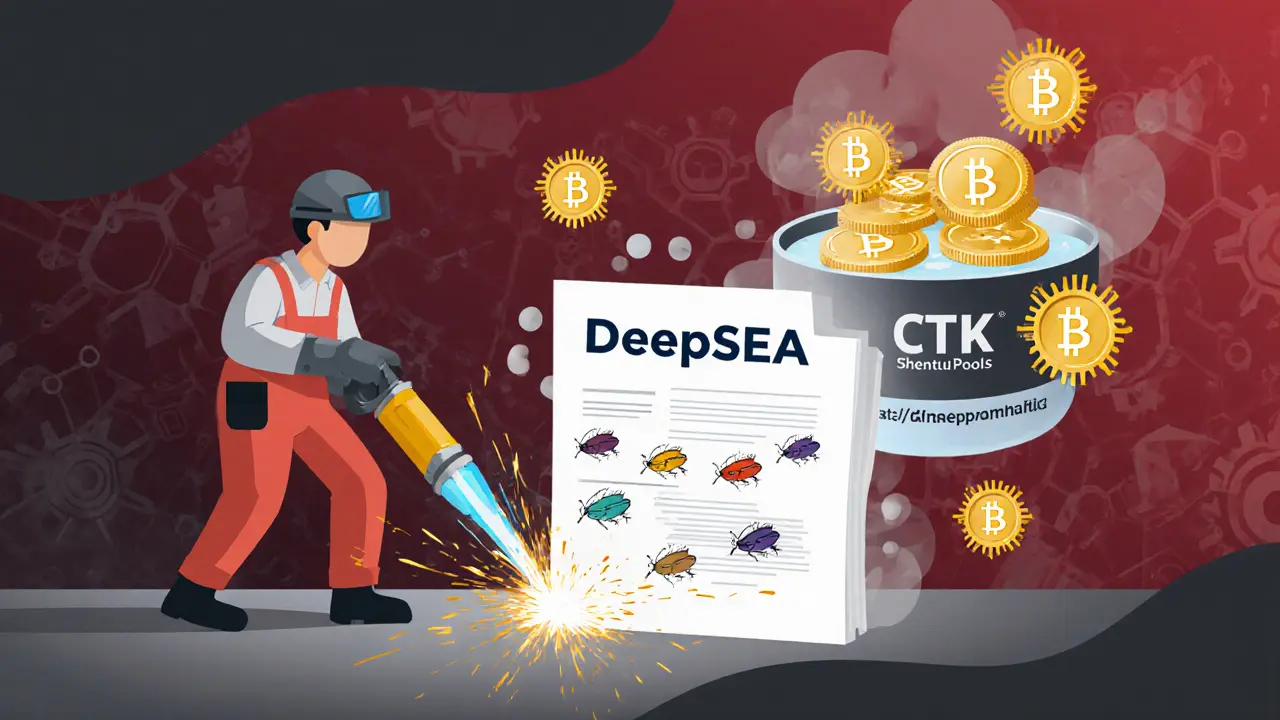
- DeepSEA: A programming language built specifically for writing secure smart contracts. If you code in DeepSEA, your contract is mathematically proven to avoid common errors like reentrancy or overflow bugs.
What Is CTK Used For?
The CTK token isn’t just a speculative asset. It has five real functions inside the Shentu ecosystem:- Gas: You pay CTK to run smart contracts on the chain.
- Staking: Holders lock up CTK to become validators or delegate to them, earning block rewards.
- Security Oracle rewards: Operators who run the real-time security checks get paid in CTK.
- ShentuShield collateral: The reimbursement pool is backed by staked CTK, ensuring funds are available when claims are made.
- Governance: Token holders vote on upgrades, fee changes, and new features.
Who Uses Shentu? Real-World Partnerships
Shentu doesn’t operate in a vacuum. It’s already integrated with some of the biggest names in crypto:- Binance Coin: Uses Shentu’s security tools for its own DeFi products.
- Polygon: Leverages Shentu’s verification tech to audit smart contracts on its network.
- Aave and yEarn Finance: Both have used Shentu’s formal verification to secure their lending protocols.
- Crypto.com and Hyundai: Partnered for enterprise blockchain security applications.
How Shentu Compares to Other Security Projects
There are other security-focused platforms like Quantstamp and Certora. But they mostly offer audit services after the code is written. Shentu builds security in from day one.| Feature | Shentu (CTK) | Quantstamp / Certora | General Blockchains (Ethereum, Solana) |
|---|---|---|---|
| Security Method | Formal verification + real-time on-chain monitoring | Post-deployment audits | Testing and manual audits |
| Reimbursement System | Yes (ShentuShield) | No | No |
| Secure Coding Language | DeepSEA (built-in) | No | No |
| Throughput | ~10,000 TPS | N/A | Up to 65,000 TPS (Solana) |
| Best For | High-risk DeFi, enterprise apps | One-time audits | General use, speed, scalability |
Real User Experiences
User feedback is mixed but leans positive. On Reddit, users reported successful ShentuShield claims after smart contract failures. One user recovered 92% of lost funds after a DeFi exploit, with the process taking 14 days and clear updates along the way. But it’s not perfect. Some users on Trustpilot complained the 21-day protection window is too short, especially for long-term investments. Others said the interface feels clunky and isn’t beginner-friendly. If you’re not comfortable with crypto wallets or staking, Shentu’s tools can feel overwhelming. CoinMarketCap gives it a 3.8/5 rating based on over 120 reviews. The most common praise? “I finally feel safe using DeFi.” The most common complaint? “It’s too complicated.”
Comments
Althea Gwen
ShentuShield is literally the only reason I’m not screaming into the void every time a DeFi project rug pulls 😭 I got reimbursed $4k after a reentrancy hack. Not perfect, but better than nothing. 🙏
November 29, 2025 at 18:34
Durgesh Mehta
deepsea looks cool but i dont trust math proofs alone real code has edge cases no one thinks of
November 29, 2025 at 22:11
Sarah Roberge
ok but like… if you need a whole new programming language to write secure code… isn’t that just admitting that solidity was a terrible idea to begin with?? 🤔 like we’re building a castle on quicksand and now we’re making a special brick that doesn’t dissolve?? why not just… rebuild the foundation??
December 1, 2025 at 01:48
Jess Bothun-Berg
10,000 TPS? That’s cute. Solana does 65k and still gets hacked-so what’s the point? This is just over-engineered snake oil for people who can’t handle risk. And don’t get me started on that ‘ShentuShield’-it’s a liability waiting to collapse when the next big exploit hits. 💸
December 1, 2025 at 23:36
Steve Savage
I like how Shentu isn’t trying to be the fastest-it’s trying to be the most reliable. That’s rare in crypto. Most projects are racing to be the TikTok of blockchain. Shentu’s out here building a library. You don’t need to use it, but if you’re managing serious funds? You’ll be glad it exists. Slow and safe beats fast and broken every time.
December 2, 2025 at 12:39
Joe B.
Let’s be real-this whole thing is just CertiK’s way of monetizing their audit brand under a new blockchain name. Formal verification? Cool. But it’s not like they’re the only ones doing it. The fact that they’re using DPoS and staking CTK as collateral for reimbursement is just a clever way to create artificial demand for their token. And don’t even get me started on the partnerships-Binance uses their tools? Yeah, because they’re paying them. That’s not adoption, that’s a vendor contract. The market cap is laughable. $38M? That’s a rounding error compared to what Ethereum lost in one exploit last year. This isn’t the future-it’s a niche service trying to dress itself up as a protocol.
December 2, 2025 at 21:47
Rod Filoteo
they’re using formal verification? sure. but who’s verifying the verifiers? what if the math is rigged? what if the deepsea compiler has a backdoor? and why does hyundai need this? are they secretly storing nuclear launch codes on the blockchain? i’m not buying it. this smells like a government-backed stealth project to track crypto users. plus-3.8/5 rating? that’s not trust. that’s a warning.
December 3, 2025 at 14:53
Layla Hu
I tried staking CTK once. The wallet interface froze. Had to reset everything. Took me three days to get back in. I didn’t file a claim. I just walked away.
December 5, 2025 at 08:32
Nora Colombie
Why is America letting a crypto project from some Columbia professor dictate how we secure our finances? We have real engineers here. We don’t need math proofs from academia to tell us how to code. This is just another Silicon Valley fantasy wrapped in buzzwords. If you want security, use a hardware wallet and don’t touch DeFi. Period.
December 6, 2025 at 03:05
Christy Whitaker
They say ShentuShield pays out… but have you seen the fine print? You have to prove the exploit happened on a Shentu-integrated project AND you have to have staked CTK for at least 90 days. Most people don’t even know that. And the claims process? They ghost you for weeks. I lost $12k. Got a ‘we’re reviewing’ email. Never heard back. This isn’t safety-it’s a trap with a pretty logo.
December 6, 2025 at 04:04