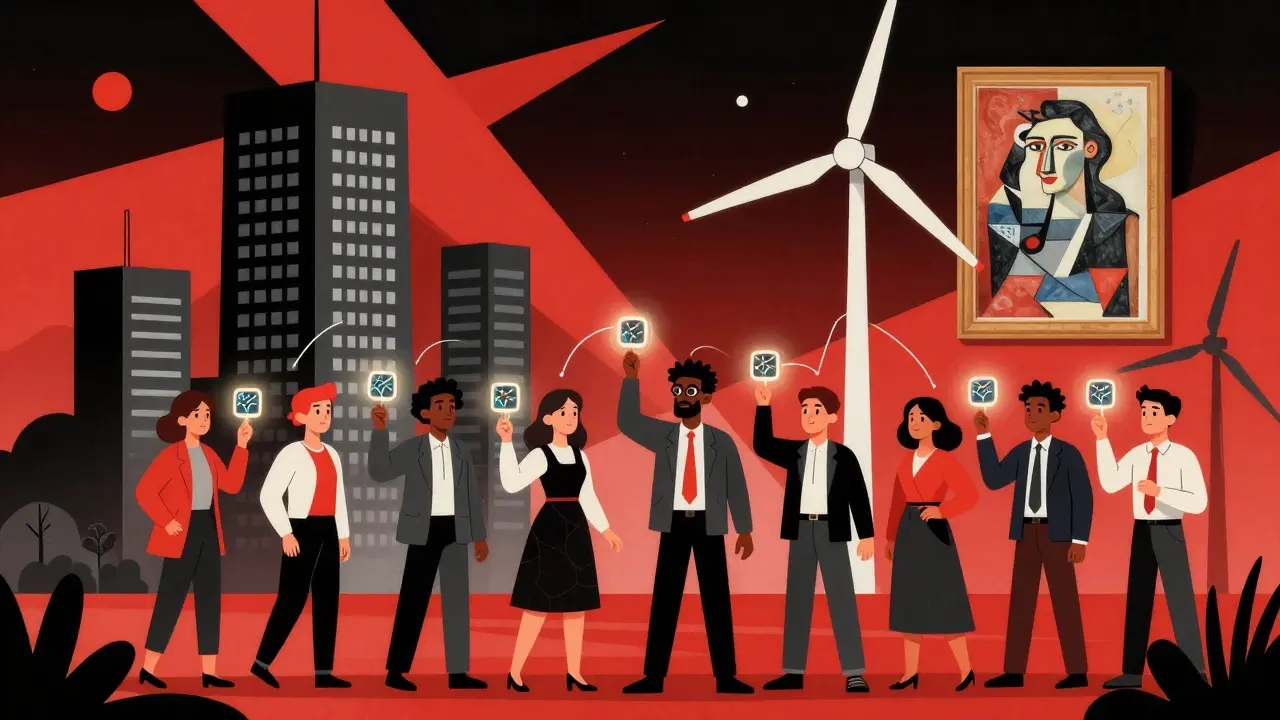
Imagine owning a piece of a skyscraper in New York, a barrel of oil from the North Sea, or even a rare Picasso painting - not as a billionaire, but with just $50. That’s what real world asset tokenization makes possible. It’s not science fiction. It’s happening right now, on blockchains, and it’s changing how money, ownership, and investment work.
What Exactly Is Real World Asset Tokenization?
Real world asset tokenization (or RWA tokenization) is the process of turning something physical or traditional - like a house, a piece of art, or a wind farm - into a digital token on a blockchain. Think of it like cutting a cake into tiny slices and giving each slice a unique digital ID. Each slice, or token, represents a share of ownership in the original asset.
Before tokenization, if you wanted to invest in commercial real estate, you needed hundreds of thousands of dollars. You’d deal with lawyers, banks, paperwork, and waiting months just to close a deal. Now, with tokenization, you can buy a fraction of a building in minutes, using a crypto wallet. The token you hold is backed by real value - not speculation.
What Kinds of Assets Can Be Tokenized?
Almost anything with value can be turned into a token. Here are some real examples already in use:
- Real estate: Apartments, warehouses, shopping centers - even farmland in Iowa.
- Commodities: Gold bars, crude oil, soybeans, and copper.
- Art and collectibles: Paintings, vintage cars, rare watches, and digital art.
- Financial instruments: Bonds, stocks, and even private company shares.
- Infrastructure: Solar farms, wind turbines, cell towers, and bridges.
- Intellectual property: Music royalties, patents, and movie rights.
- Luxury goods: Fine wine, designer handbags, and limited-edition sneakers.
The list keeps growing. The key is that the asset has to be legally owned, clearly valued, and have a stable demand. You can’t tokenize a random coffee mug - but you can tokenize the coffee farm that grows the beans.
How Does It Work? The Simple Steps
Tokenization isn’t magic. It’s a process with clear steps:
- Choose the asset: Decide what you’re tokenizing - say, a 10-unit apartment building worth $5 million.
- Legal structure: Set up a legal entity (like a trust or LLC) that owns the asset. This keeps everything above board.
- Token design: Create digital tokens. If you split the building into 500,000 tokens, each one equals $10 of value. These are usually fungible tokens (like ERC-20), meaning they’re interchangeable.
- Smart contract: Write code that automatically handles ownership, transfers, and payouts. For example, if rent comes in, the contract distributes it to token holders.
- Off-chain data: Use secure oracles (trusted data feeds) to update token values based on real-world events - like property tax payments or rental income.
- List on a platform: Put the tokens on a regulated exchange or marketplace where people can buy and sell them.
Once live, these tokens can be traded 24/7, unlike traditional assets that only move during business hours on weekdays.
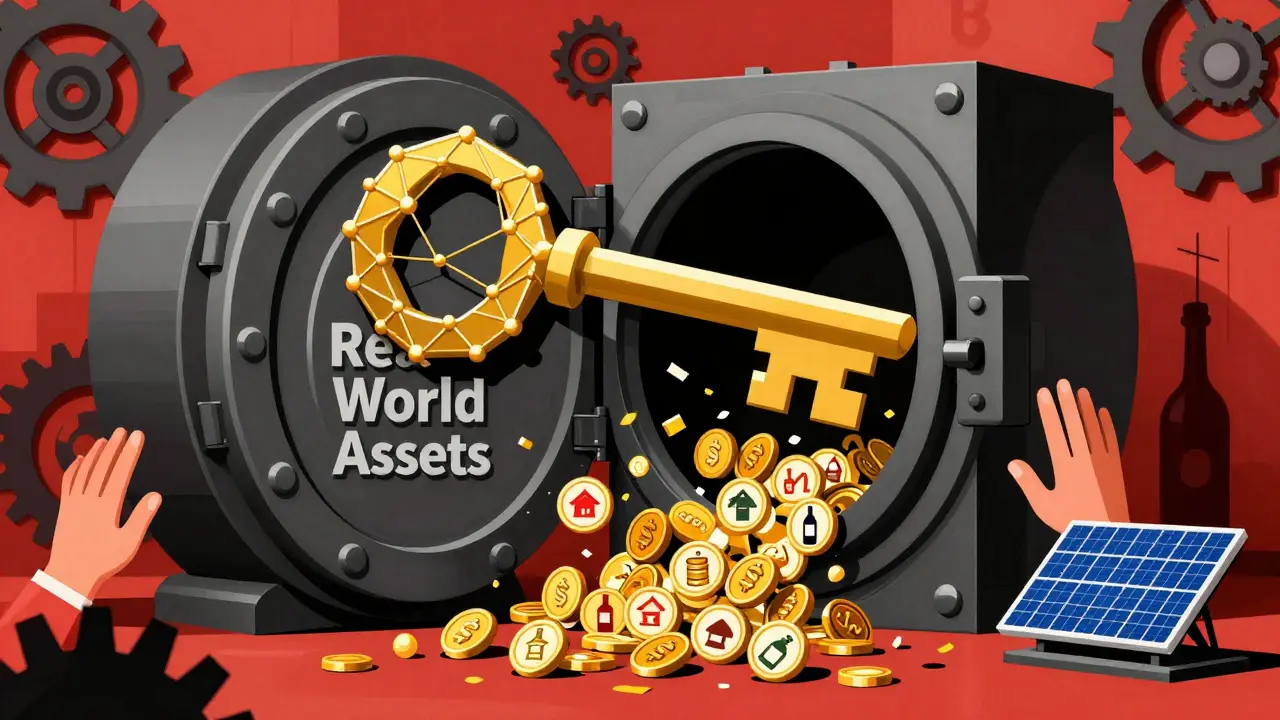
Two Main Ways to Tokenize: Direct vs. SPV
Not all tokenization is the same. There are two main approaches:
1. Tokenized Special Purpose Vehicle (SPV)
This is the most common method. Instead of tokenizing the asset directly, you put it inside a legal entity - like a company or trust - and then tokenize that entity. Investors don’t own the building; they own shares in the company that owns the building.
Why use this? Because it’s easier to comply with securities laws. Regulators understand companies and trusts. It’s like wrapping a complicated asset in a familiar box.
2. Direct Asset Tokenization
This means the token itself represents direct ownership of the asset - no middleman. A token is your deed. A token is your oil contract.
This sounds ideal, but it’s rare. Why? Because laws in most countries don’t yet recognize blockchain tokens as legal proof of ownership. Plus, if the asset is unique (like a painting), you need non-fungible tokens (NFTs), which are harder to trade and manage.
Most institutions stick with SPVs. They’re safer, clearer, and more likely to get approved by regulators.
Why Is This a Big Deal? The Real Benefits
Tokenization isn’t just a tech upgrade - it’s a financial revolution. Here’s what changes:
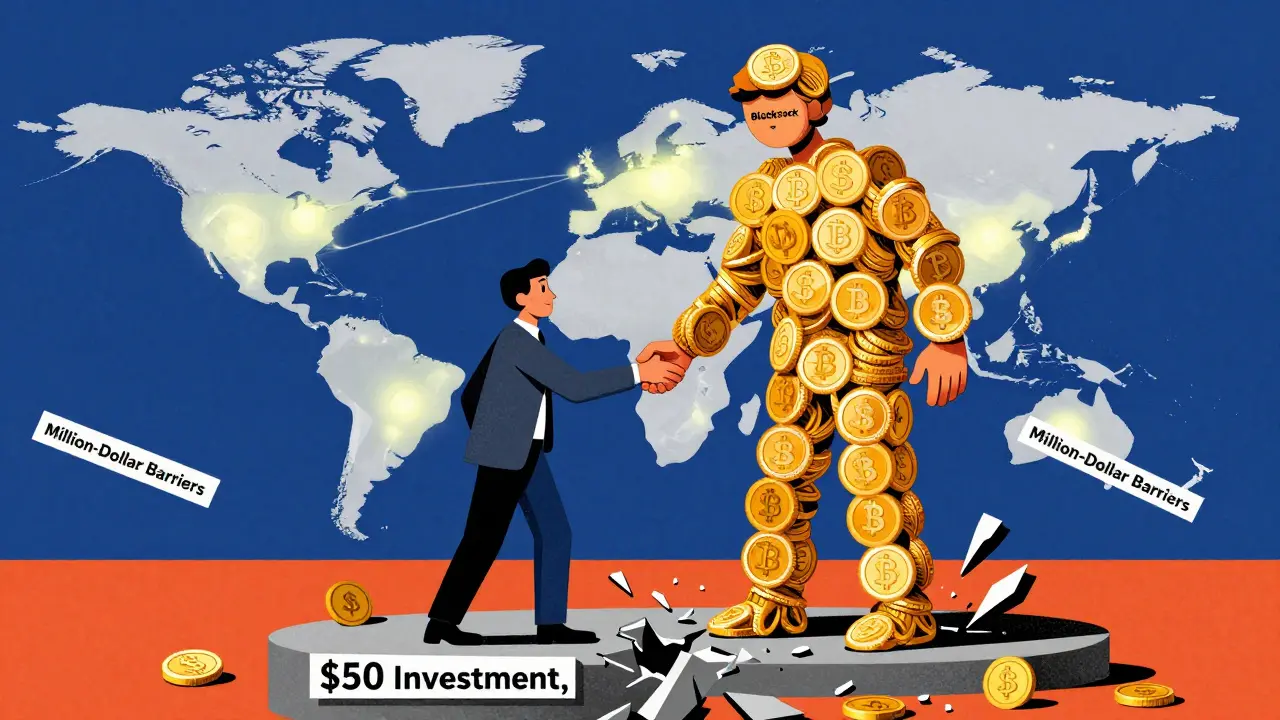
- Breaks down barriers: You don’t need $1 million to invest in luxury real estate anymore. $50 gets you in.
- 24/7 trading: No more waiting for markets to open. Tokens trade anytime, anywhere.
- Global access: A farmer in Kenya can invest in a solar farm in Texas. A student in Brazil can own part of a vineyard in France.
- Transparency: Every transaction is recorded on the blockchain. No hidden fees. No secret deals.
- Lower costs: No brokers, no clearinghouses, no paper filings. Everything happens automatically via smart contracts.
- Higher liquidity: Illiquid assets - like a 100-year-old castle - suddenly become sellable because they’re broken into small, tradeable pieces.
For the first time, everyday people can access the same investment opportunities that were once only for hedge funds and billionaires.
Challenges and Risks
It’s not all smooth sailing. There are real problems:
- Regulation is messy: The U.S., EU, and Singapore have different rules. One country might approve tokenized bonds. Another might shut it down.
- Oracles are a weak link: If the data feed saying “this building’s rent went up” is wrong, the token price crashes. That’s why trusted data providers like Chainlink are critical.
- Smart contract bugs: A single coding error can freeze funds or leak ownership. Audits are non-negotiable.
- People don’t get it: Most investors still trust banks and brokers. Convincing them to use a crypto wallet takes education - and time.
- Market volatility: Even if the asset is stable, the crypto market around it can swing wildly. That can scare off cautious investors.
These aren’t deal-breakers - they’re growing pains. The industry is solving them fast.
Who’s Doing This Right Now?
Big names are jumping in:
- BlackRock and Fidelity are testing tokenized bond funds.
- Switzerland has clear rules for security tokens and allows banks to issue them.
- Singapore is a global hub - they’ve approved tokenized real estate funds with full legal backing.
- California and Wyoming in the U.S. passed laws recognizing blockchain-based asset ownership.
- Brickken, Securitize, and Tokeny are platforms helping companies tokenize assets legally.
These aren’t startups. These are institutions with trillions in assets moving into blockchain.
The Future: What Happens Next?
Experts estimate that over $100 trillion in real-world assets - everything from buildings to patents - could be tokenized in the next decade. That’s not a guess. It’s based on the total value of illiquid assets globally.
Here’s what’s coming:
- More regulation: Clear rules will make institutions feel safe.
- Better oracles: Real-time, tamper-proof data from trusted sources.
- Integration with banks: You’ll be able to buy tokenized assets through your Chase or Bank of America app.
- Tokenized pensions: Retirement funds might start holding tokenized infrastructure projects.
- Global markets: No more borders. A token issued in Germany can be bought by someone in Nigeria.
This isn’t about replacing banks. It’s about making them better. Tokenization gives traditional finance more speed, transparency, and access - without throwing out the system.
Final Thought: It’s Not About Crypto. It’s About Ownership.
Real world asset tokenization isn’t just a blockchain trend. It’s a shift in how we think about ownership. For centuries, wealth was locked in physical things - land, gold, buildings - that only the rich could touch. Tokenization breaks that lock.
Now, anyone with an internet connection can own a piece of the economy. That’s not just innovation. That’s inclusion.
Comments
Ekaterina Sergeevna
Oh wow, another 'blockchain will solve everything' manifesto. Let me guess - you also think NFTs are the future of art and that DeFi will replace the Federal Reserve. Cute. The reality is that 98% of these 'tokenized assets' are just glorified promissory notes wrapped in smart contracts and marketed to retail schmucks who think they're getting in on the next Bitcoin. And don't even get me started on oracles. You really think Chainlink is some untouchable god of truth? Please. I’ve seen more reliable data from a weather app on a Windows 95 machine.
February 13, 2026 at 09:04
Desiree Foo
I appreciate the optimism, but let’s not pretend this is financial inclusion. This is financial exploitation dressed up as empowerment. You’re telling people they can own a slice of a building for $50 - but have you seen the fees? The compliance overhead? The tax nightmare? And what happens when the SPV gets sued or the underlying asset is seized? The token holder has zero legal recourse. This isn’t democratization - it’s predatory capitalism with a blockchain logo on it. We need real regulation, not tech bros pretending they’re Robin Hood.
February 14, 2026 at 01:36
krista muzer
ok so i just read this whole thing and honestly?? i’m kinda blown away?? like i never thought about how a wind farm in iowa could be split into tiny pieces and bought by someone in niger?? that’s wild?? and the part about royalties?? imagine owning a piece of your favorite song’s streaming revenue?? i mean, i know there are risks and like, oracles are sketchy and smart contracts can glitch?? but like… what if we just… tried?? what if we stopped being so scared of change?? maybe it’s messy but isn’t that how every revolution starts?? 🤔✨
February 15, 2026 at 00:20
blake blackner
bro this is actually fire 🚀 i just bought my first tokenized solar farm share last week for $75 and got my first payout yesterday - $1.20 lol but still!! it’s real!! and the app is so smooth, like i didn’t even need to talk to a human. also the blockchain ledger shows every cent that’s ever been paid out. no shady brokers. no hidden fees. just pure transparency. also i’m gonna get my mom to invest in tokenized wine now bc she’s obsessed with chateau mouton and i’m like ‘mom, you can own 0.003% of it now’ 🍷😎
February 16, 2026 at 11:49
Andrea Atzori
This is nothing short of transformative. Imagine a future where a farmer in Kenya can invest in renewable energy infrastructure in Australia, or a single mother in Manila can earn passive income from tokenized farmland in Uruguay. This isn’t speculative - it’s structural. The infrastructure is maturing, the legal frameworks are evolving, and the demand for fractional, liquid, globally accessible assets is exploding. We are witnessing the birth of a new financial architecture - one that doesn’t gatekeep wealth, but democratizes it. The skeptics will fade. The builders will endure.
February 18, 2026 at 10:15
Kaz Selbie
Let’s cut the bullshit. You’re not ‘tokenizing assets’ - you’re creating regulatory arbitrage playgrounds. BlackRock and Fidelity aren’t here to help you. They’re here to offload illiquid junk onto retail investors who don’t know the difference between a security token and a meme coin. And don’t even get me started on the ‘$50 investment’ fantasy. The minimums are hidden in the fine print - you need a custodial wallet, KYC, and a lawyer to even understand the prospectus. This isn’t inclusion. It’s a pyramid scheme with a whitepaper.
February 19, 2026 at 11:07
Robbi Hess
I’m sorry, but this is the most overhyped, buzzword-filled garbage I’ve read all year. ‘Tokenization changes ownership’? No. It changes the color of the spreadsheet. The underlying asset still needs a deed, a tax ID, insurance, and a maintenance crew. None of that is on the blockchain. You’re just slapping a QR code on a building and calling it revolutionary. And the ‘$100 trillion’ estimate? That’s like saying ‘in 10 years, everyone will own a jetpack.’ Cute. Not real.
February 21, 2026 at 05:28
Keturah Hudson
I’ve seen this play out in different cultures - from Nigeria to Indonesia to the Andes - where communities are using blockchain to reclaim land rights and heritage assets. Tokenization isn’t just about finance. It’s about cultural reclamation. A Maori tribe in New Zealand just tokenized a sacred grove to fund its preservation - not to sell it, but to steward it. This isn’t Wall Street. It’s a quiet revolution. The real power isn’t in the tokens - it’s in who gets to decide what gets valued.
February 23, 2026 at 00:54