You’ve probably heard that blockchains are transparent. That’s their selling point. But what if you need privacy? What if your data-your health records, your trading strategy, or your AI model-is too sensitive to be broadcasted on a public ledger for everyone to see?
This is the exact problem Phala Network aims to solve. It isn’t just another cryptocurrency; it’s a decentralized cloud computing platform built on top of blockchain technology. Think of it as a secure, private server room that no single company owns, where your data stays encrypted even while it’s being processed.
The Core Problem: Transparency vs. Privacy
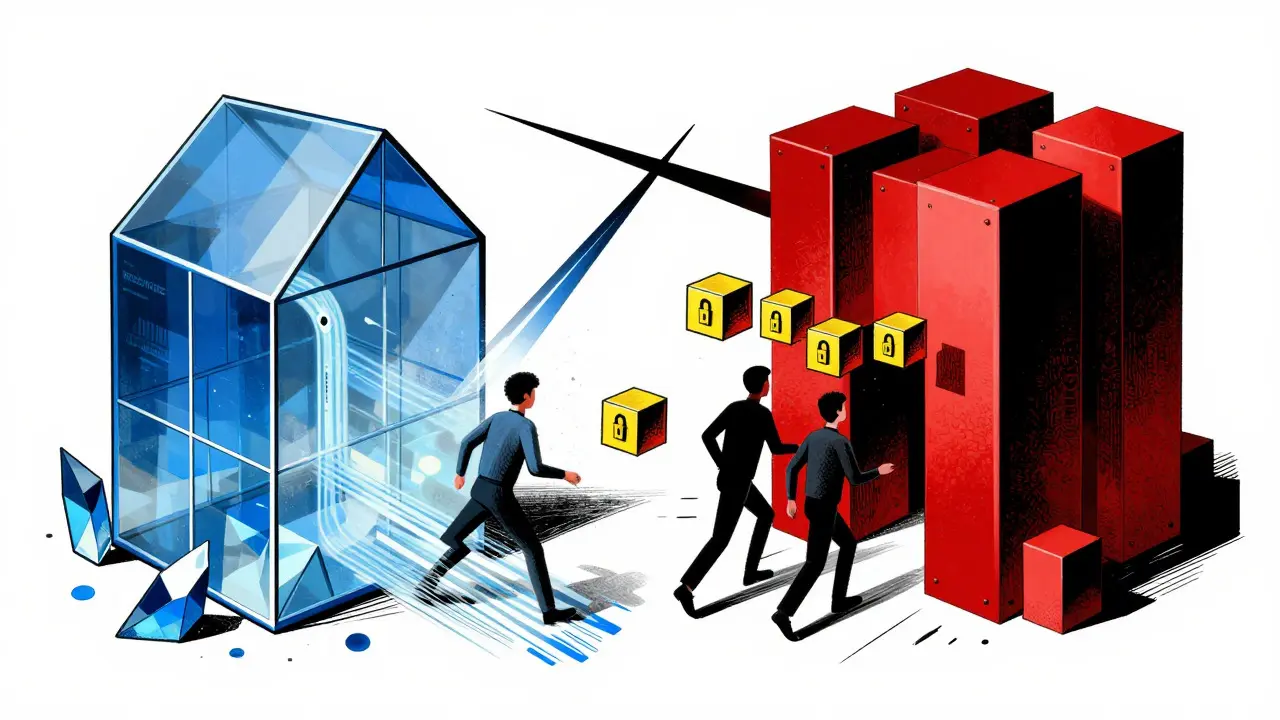
Most smart contracts on Ethereum or Solana are like glass houses. Anyone can look inside and see exactly what’s happening. This works great for things like verifying ownership of an NFT or checking if a transaction went through. But it fails miserably for complex tasks.
Imagine you want to build a decentralized finance (DeFi) bot that trades automatically based on your personal risk profile. If that logic runs on-chain, competitors can copy your strategy instantly. Or imagine a healthcare app that analyzes patient data using AI. You can’t put raw medical records on a public blockchain because of privacy laws like HIPAA.
Traditional solutions rely on centralized clouds like AWS or Google Cloud. They promise security, but you have to trust them not to peek at your data. Phala Network combines the trustlessness of blockchain with the privacy of hardware security. It allows computation to happen off-chain in a way that is verifiable by the blockchain but invisible to outsiders.
How Does Phala Network Work? The Role of TEE
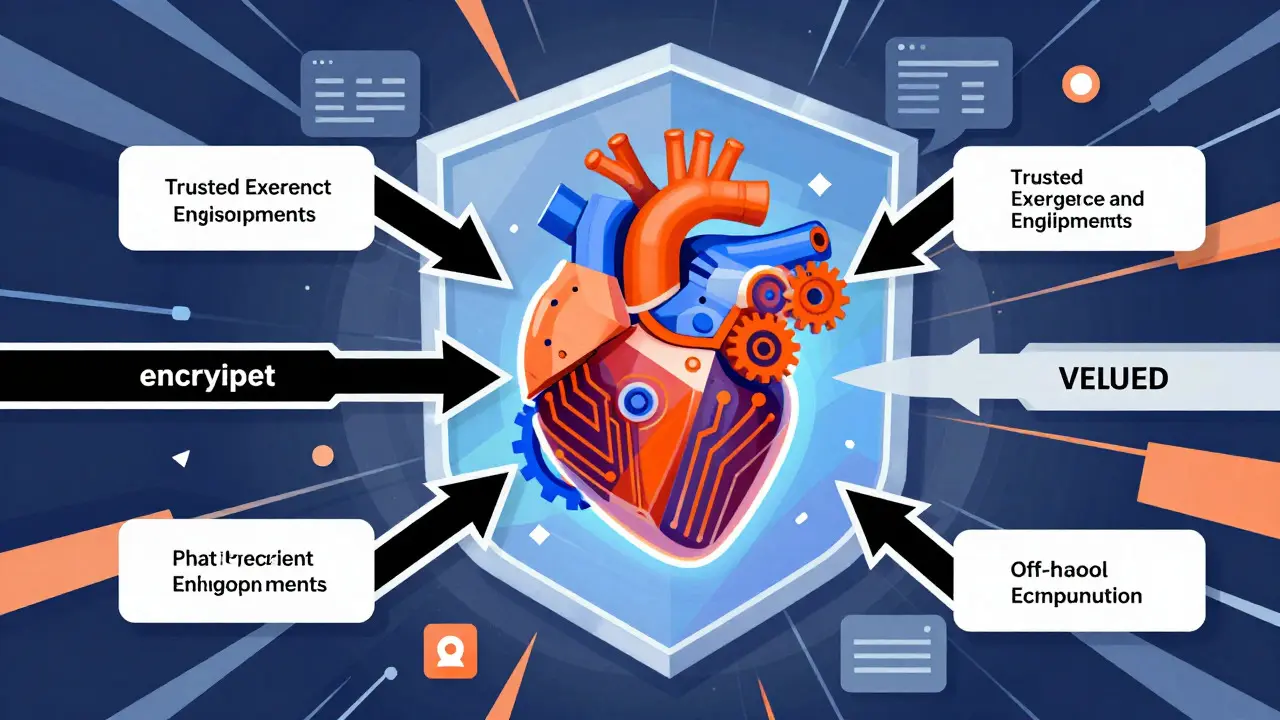
To understand Phala, you need to understand one key concept: Trusted Execution Environments (TEE). A TEE is a secure area within a main processor. It ensures that code and data loaded inside it are protected with respect to confidentiality and integrity.
Here is how Phala uses this:
- Off-Chain Computation: Instead of running heavy calculations on the expensive blockchain, Phala sends the task to worker nodes. These nodes have special hardware enclaves (TEEs).
- Encrypted Processing: The data enters the enclave encrypted. It is only decrypted inside the secure hardware. Even the owner of the computer running the node cannot see the data.
- On-Chain Verification: Once the calculation is done, the result is sent back to the blockchain. The blockchain verifies that the computation was performed correctly without ever seeing the underlying data.
This architecture creates a hybrid system. The blockchain handles consensus and governance, while the TEE-enabled workers handle the heavy lifting of processing data securely. This makes complex computations affordable and private.
Phat Contracts: The Game Changer
If you follow crypto development, you know that smart contracts are limited. They are slow, expensive, and isolated from the real world. They can’t easily connect to external APIs (like weather data or stock prices) without relying on centralized oracles.
Enter Phat Contracts. These are Phala’s answer to traditional smart contracts. A Phat Contract is a piece of code that runs off-chain in a secure enclave but is triggered and verified on-chain.
Why does this matter? Because Phat Contracts can do things regular smart contracts can’t:
- Connect to Any API: They can fetch live data from Twitter, Amazon, or any web service securely.
- Cross-Chain Interaction: They can read data from Ethereum, Polkadot, Binance Smart Chain, and others simultaneously.
- Complex Logic: They can run heavy algorithms, machine learning models, or database queries without clogging up the blockchain.
For developers, this means you can build sophisticated applications-like automated trading bots or AI-driven recommendation engines-that are fully decentralized yet powerful enough to compete with Web2 apps.
Who Are the Founders and What Is the Backing?
Credibility matters in crypto. Phala Network was founded by Marvin Tong, a former product manager at tech giants Tencent and Didi, and Hang Yin, who is well-known in the crypto space as the creator of Bitcoin Gold. Their background suggests a strong focus on both user experience and technical infrastructure.
The project operates as a parachain on Polkadot, which gives it access to Polkadot’s shared security and cross-chain messaging capabilities. However, it doesn’t stay siloed. Through bridges, Phala connects with Ethereum, BNB Chain, and Arbitrum, making it a truly interoperable layer for the entire Web3 ecosystem.
Use Cases: Beyond Hype
Let’s get concrete. How do you actually use Phala Network?
| Application Area | Problem Solved | How Phala Helps |
|---|---|---|
| Confidential DeFi | Trading strategies are visible and copyable on-chain. | Runs trading logic in a TEE so only the user sees their strategy. |
| Decentralized AI | AI models require massive compute and sensitive training data. | Processes AI models off-chain securely; enables "AI Agents" that act autonomously. |
| Data Marketplaces | Sellers don’t want to reveal raw data before payment. | Buyers can query data inside a secure enclave without seeing the raw dataset. |
| Gaming & Metaverse | High-performance games lag on slow blockchains. | Handles game state logic off-chain while keeping assets secure on-chain. |
A specific example is a portfolio optimizer. In traditional DeFi, if you publish a script that rebalances your portfolio, everyone sees it. With Phala, the script runs in a secure enclave. It connects to your wallet, checks market conditions via APIs, and executes trades-all without exposing your financial habits to the public.
The PHA Token: Utility and Economics
The PHA token is the fuel that keeps this engine running. It has a maximum supply of 1 billion tokens. As of mid-2026, the circulating supply is approximately 672 million PHA.
So, what do you do with PHA?
- Paying for Compute: Developers pay PHA to run Phat Contracts. The more complex the computation, the higher the fee.
- Staking for Security: Node operators (workers) stake PHA to provide computing power. If they act maliciously, they can be slashed (lose their stake). Gatekeepers also stake PHA to manage cryptographic keys.
- Governance: Holders vote on protocol upgrades, treasury spending, and parameter changes.
- Rewards: Workers earn PHA for completing tasks successfully.
This creates a flywheel effect. As more developers use Phala for private computation, demand for PHA increases. This rewards the node operators who keep the network secure and scalable.
Phala World: Gamifying Participation
Blockchain communities often struggle with retention. To address this, Phala introduced Phala World. It’s a gamified layer that tracks your participation in the ecosystem.
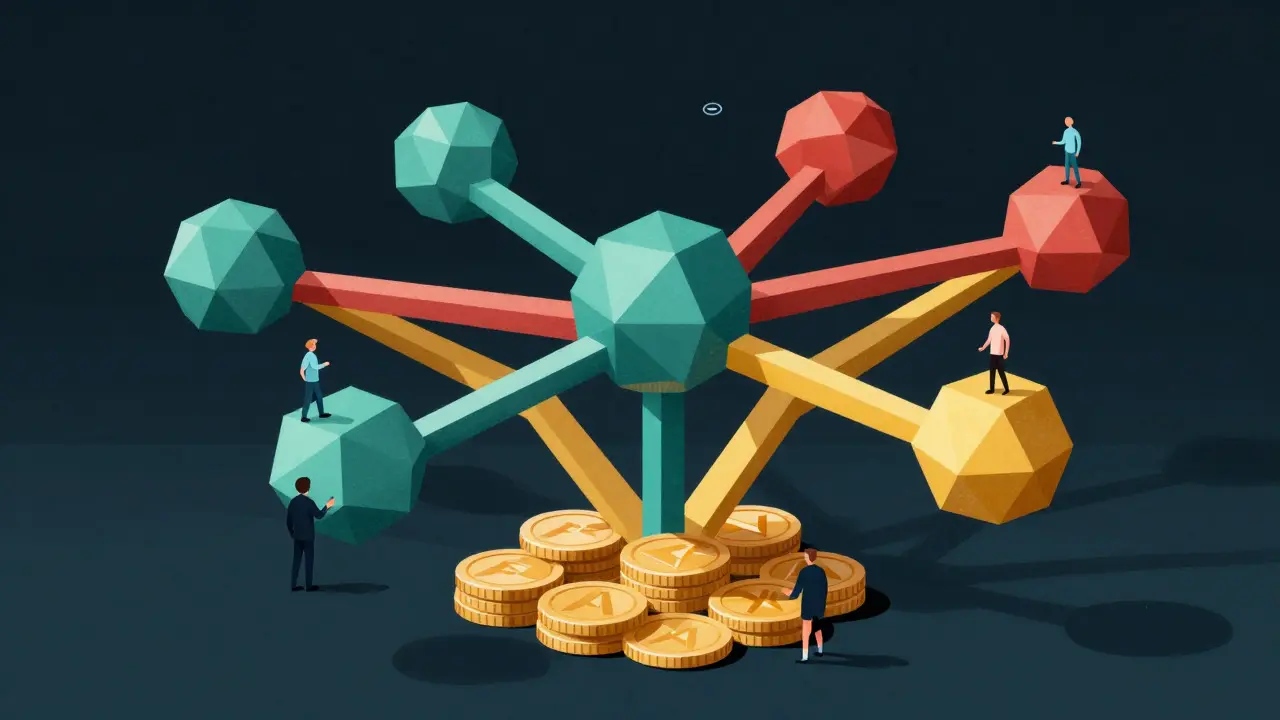
Whether you’re staking, voting, delegating, or engaging on social media, these actions are recorded on-chain and reflected in your Soul-Bound NFT (SBT). This NFT acts as a reputation score. Higher levels might unlock exclusive features, better rewards, or early access to new tools. It turns passive holding into active engagement.
Is Phala Network Safe?
No system is perfectly secure, but Phala employs multiple layers of defense. First, the TEE hardware provides physical isolation. Second, the blockchain consensus mechanism ensures that results are verified. Third, the staking mechanism economically disincentivizes bad actors.
However, users should remember that TEEs are relatively new in mainstream blockchain adoption. While audits are conducted regularly, relying on hardware security introduces a different risk profile compared to pure software-based blockchains. Always do your own research before locking up significant capital.
Conclusion: Why Phala Matters
Phala Network represents a shift from "blockchain as a database" to "blockchain as a secure computer." By solving the privacy-compute dilemma, it opens the door for enterprise-grade applications, confidential DeFi, and decentralized AI. For developers tired of gas fees and transparency leaks, Phat Contracts offer a compelling alternative. For investors, the PHA token offers exposure to the growing intersection of cloud computing and Web3.
What is the difference between Phala Network and traditional cloud services like AWS?
AWS is centralized; you must trust Amazon with your data. Phala is decentralized and uses Trusted Execution Environments (TEE) to ensure that even the node operators cannot see your data. Additionally, Phala integrates directly with blockchain smart contracts, allowing for trustless verification of results.
Can I use Phala Network if I am not a developer?
Yes. While developers build the applications, end-users interact with them through dApps. You might use a Phala-powered DeFi tool to trade privately or an AI agent to analyze data. You don't need to code to benefit from the privacy and security features.
Which blockchains is Phala compatible with?
Phala is natively a Polkadot parachain but supports cross-chain interoperability. It connects seamlessly with Ethereum, BNB Smart Chain, Arbitrum, Polygon, and other EVM-compatible chains through its bridge relayers and Phat Contracts.
What are Phat Contracts?
Phat Contracts are off-chain smart contracts that run in secure hardware enclaves. Unlike traditional smart contracts, they can access external APIs, perform complex computations, and maintain data privacy, all while being verified by the blockchain.
How do I earn PHA tokens?
You can earn PHA by staking it to support the network (as a worker or gatekeeper), by providing computational resources if you run a node, or by participating in the ecosystem's incentive programs and Phala World gamification activities.