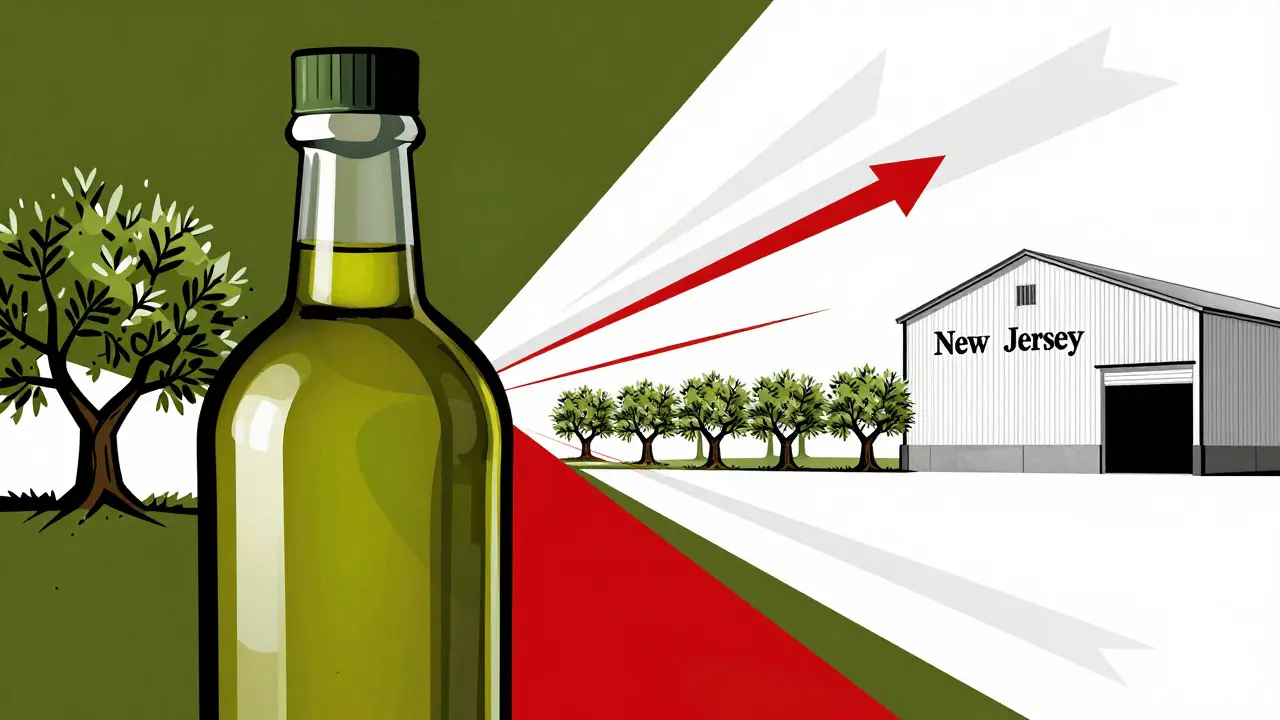
If you've been looking at the TRAC token, you're likely wondering if this is just another supply chain project or something bigger. The short answer is that it has evolved into a massive piece of infrastructure designed to stop AI hallucinations and misinformation by giving artificial intelligence a verifiable source of truth.
The Basics: What Exactly is OriginTrail?
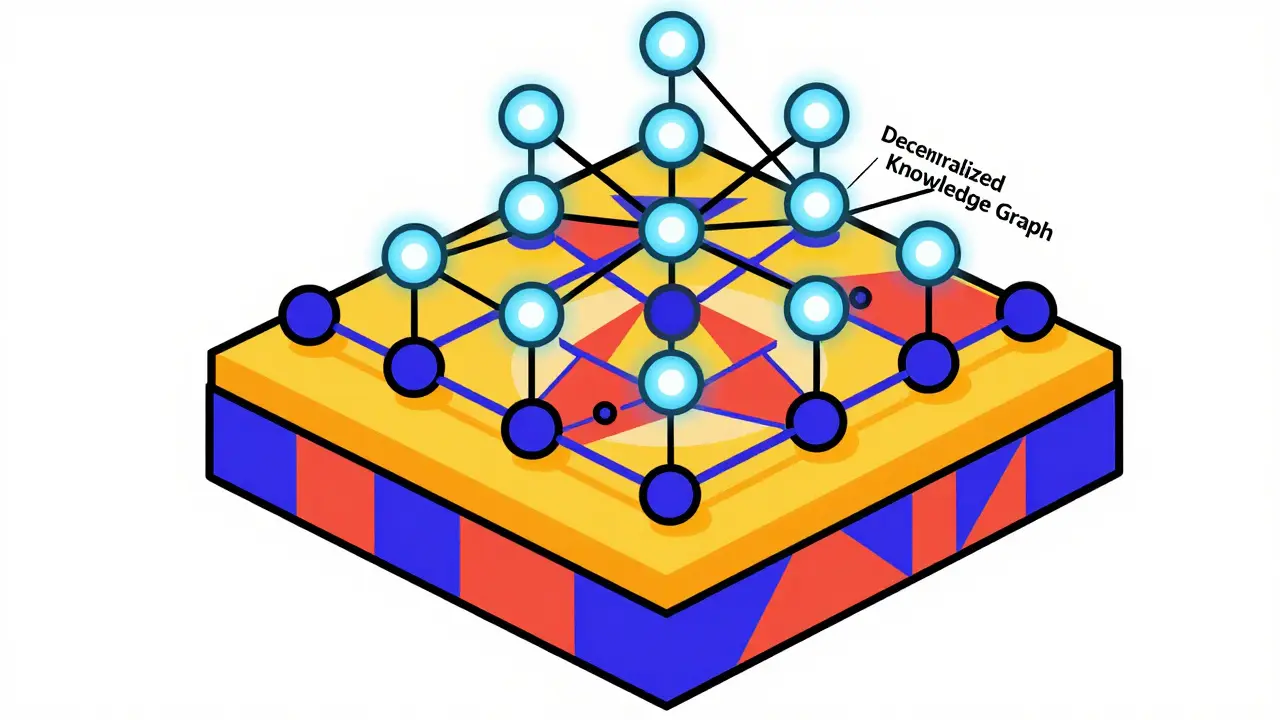
OriginTrail is a blockchain-based platform that uses a Decentralized Knowledge Graph (DKG) to manage data about real-world assets. Launched in 2018 by Trace Labs, it started as a way to fix the mess of supply chain logistics. But today, it's more about OriginTrail creating a trusted knowledge infrastructure for AI.
Think of the DKG as a more advanced version of the web. While a standard website is just a page of text, a Knowledge Graph connects pieces of information (entities) in a way that machines can actually understand. For example, instead of just seeing the word "Apple," the system knows if you mean the fruit or the tech company based on the surrounding data connections. This makes data searchable, trackable, and-most importantly-verifiable.
How the Technical Side Works: The Two-Layer Cake
OriginTrail doesn't try to do everything on a single blockchain because that would be too slow and expensive. Instead, it uses a clever two-layer architecture:
- Layer 1 (The Consensus Layer): This is the bedrock of trust. OriginTrail uses a mix of blockchains including Ethereum, Polygon, and Gnosis, along with its own Polkadot parachain. This layer handles the finality and security of the data.
- Layer 2 (The DKG Layer): This is where the heavy lifting happens. It's powered by the OriginTrail Decentralized Network (ODN), a group of permissionless nodes that process data off-chain. They organize and manipulate information and then send the results back to Layer 1.
By splitting the work this way, OriginTrail can handle the massive amount of data required for global supply chains without crashing the blockchain or charging users a fortune in gas fees. It essentially creates a Web3 version of a URL system, where "Knowledge Assets" can be discovered and verified across the globe.
The TRAC Token: More Than Just a Price Ticker
The TRAC token isn't just a speculative asset; it's the fuel that keeps the network running. Without TRAC, the nodes wouldn't have a reason to store your data, and you wouldn't have a way to publish it.
Here is exactly how TRAC is used in the ecosystem:
- Publishing Fees: When a company wants to put a "Knowledge Asset" (like a batch of medicine or a luxury handbag's provenance) on the DKG, they pay fees in TRAC.
- Staking and Collateral: Node operators stake TRAC to prove they are committed to the network. The more they stake, the higher their chance of being selected to maintain specific assets and earn rewards.
- Incentives: Nodes that accurately store and manipulate data are rewarded with TRAC, ensuring the network stays honest and efficient.
| Attribute | Value / Detail |
|---|---|
| Total Supply | 500,000,000 TRAC |
| Circulating Supply | ~499,998,299 TRAC |
| Current Price (Approx) | $0.2804 |
| All-Time High | $3.87 |
| Primary Networks | Ethereum, Polygon, Gnosis, Polkadot |
Real-World Impact: From Walmart to AI
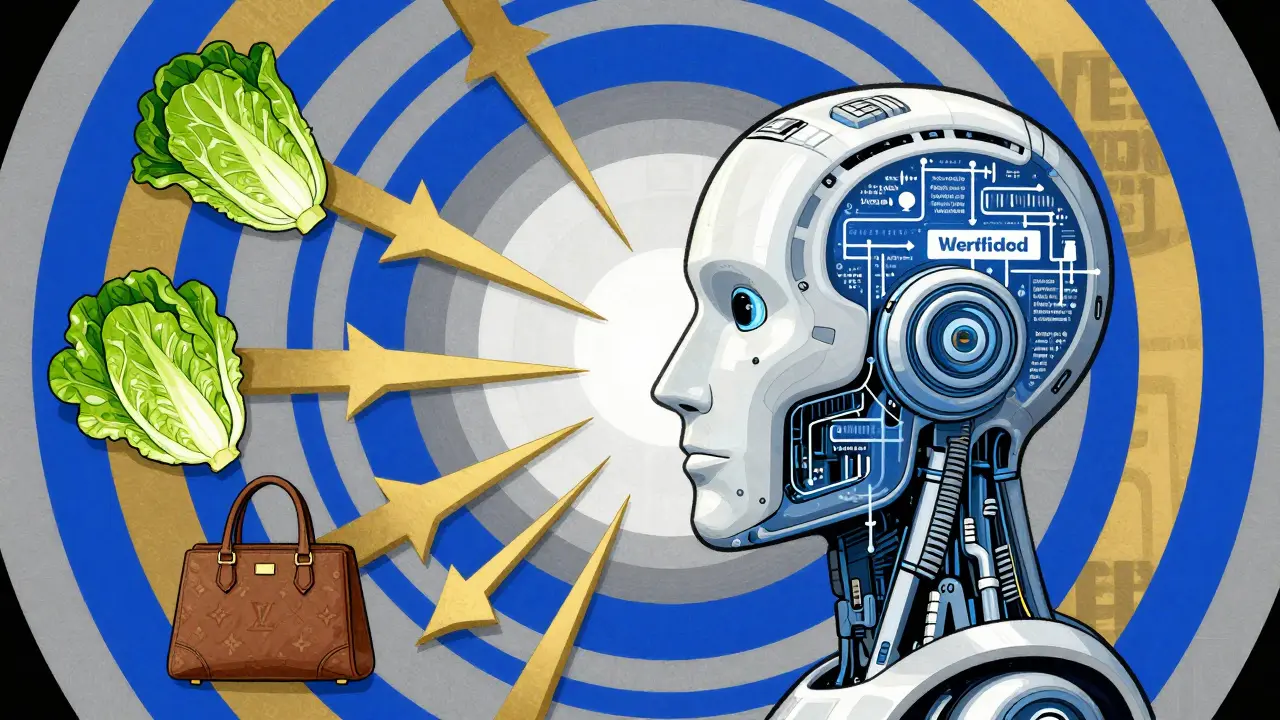
It's easy to get lost in the tech jargon, but the real-world application is where OriginTrail actually shines. One of their biggest wins was receiving the Walmart Food Safety Innovation Spark Award. Why? Because if there is an outbreak of E. coli in romaine lettuce, it currently takes days or weeks to find the source farm. With OriginTrail, that search takes seconds.
But they aren't just doing lettuce anymore. The project has pivoted toward "Real-World Assets" (RWA) and AI. As we move into an era where AI generates everything, we need a way to prove a piece of data actually came from a real-world source. OriginTrail's infrastructure allows an AI to check the DKG and say, "Yes, this specific piece of information is verified and comes from this trusted origin," effectively killing the AI hallucination problem.
This is further supported by the Trace Alliance, a non-profit with over 150 members. It's not just a club; it's a partnership hub where global companies share how to actually implement this tech in the real world.
Is TRAC a Good Investment? Looking at the Risks
If you're looking at the charts, you'll see that TRAC has been a rollercoaster. It's dropped significantly from its all-time high, and the current market sentiment is quite bearish (the Fear & Greed Index is sitting at a low 17). However, the fundamental utility is there.
The risk is that OriginTrail is competing in a crowded space. While they have a unique angle with the DKG, they need massive enterprise adoption to truly scale. The transition to "NeuroWeb" via the Polkadot parachain is a big bet on their ability to handle global-scale AI data. If they succeed in becoming the "Truth Layer" for AI, the current price might look like a bargain. If they remain a niche supply chain tool, the growth may stay flat.
Summary for Quick Decision Making
Whether you are a developer, a business owner, or a crypto trader, here is the bottom line on OriginTrail:
- For the Tech-Curious: It's a hybrid of blockchain and graph databases, solving the "garbage in, garbage out" problem for AI.
- For the Business Owner: It's a tool for absolute transparency in supply chains and asset ownership.
- For the Investor: It is a high-risk, high-reward play on the intersection of AI and Big Data infrastructure.
How is OriginTrail different from a regular blockchain?
A regular blockchain is like a list of transactions. OriginTrail adds a Decentralized Knowledge Graph (DKG) on top, which is more like a web of interconnected facts. This allows it to store complex relationships between real-world objects and verify them, rather than just recording that "A sent X to B."
What happens if the TRAC token price drops?
The price of the token is separate from the utility of the network. However, since TRAC is used for staking and rewards, a very low price might make it less attractive for new node operators to join the network, which could theoretically slow down the network's growth.
Can I use OriginTrail for things other than supply chains?
Yes. While it started with logistics, it now handles any Real-World Asset (RWA). This includes verifying the authenticity of luxury goods, managing digital twins of physical assets, and providing a "source of truth" for AI models to prevent them from making things up.
What is the Trace Alliance?
The Trace Alliance is a non-profit organization with over 150 global members. It acts as a bridge between the technical development of OriginTrail and the practical needs of large enterprises, ensuring the tech actually works for real businesses.
Is TRAC an Ethereum token?
It started as an ERC-20 token on Ethereum, but it has since expanded. It is now multi-chain, meaning it exists on Polygon, Gnosis, and its own dedicated Polkadot parachain to ensure faster speeds and lower costs.
Comments
Lauren Abrams
The part about AI hallucinations is actually pretty interesting. It makes sense that a verifiable source of truth would be needed as these models get bigger.
April 10, 2026 at 06:52
jennelle williams
cool to see tech helping people trust what they buy
April 11, 2026 at 15:48
Samson Selleck
The architectural dichotomy between the consensus layer and the DKG layer is a pedestrian attempt to mitigate the trilemma. While the author posits that this "brain" for the internet solves hallucinations, they fail to address the ontological bottleneck of data ingestion. If the initial oracle input is compromised, the entire knowledge graph becomes a monument to systemic failure. Furthermore, the tokenomics are fundamentally decoupled from the actual utility if the enterprise adoption remains purely theoretical. This is a textbook example of over-engineered infrastructure chasing a narrative rather than solving a primitive need. The reliance on multiple chains only adds unnecessary complexity to the interoperability matrix, likely creating friction for any real-world institutional integration. It is an amusingly optimistic take on the scalability of decentralized truth.
April 12, 2026 at 11:58
Will Dixon
i think it's a cool way to help folks understand how stuff is made. just hope they keep it simple so regular people can use it too
April 13, 2026 at 17:56
Alan Seiden
Typical American obsession with over-complicating simple logistics. We do not need a "brain for the internet" to know where oil comes from; we simply need honest traders and a bit of common sense. This entire project reeks of venture capital desperation and a pathetic attempt to inject blockchain into sectors where it provides absolutely no tangible benefit. It is a waste of electricity and a waste of time.
April 14, 2026 at 06:26
Rima Dinar
I truly believe that the potential for this technology to transform global trade is immense, and if we can just encourage more developers to dive into the DKG aspect, we might see a shift in how every single person interacts with the products they purchase daily, which would lead to a more ethical world where sustainability is not just a marketing term but a verified fact that anyone can check on their phone regardless of where they are located in the world!
April 14, 2026 at 12:37