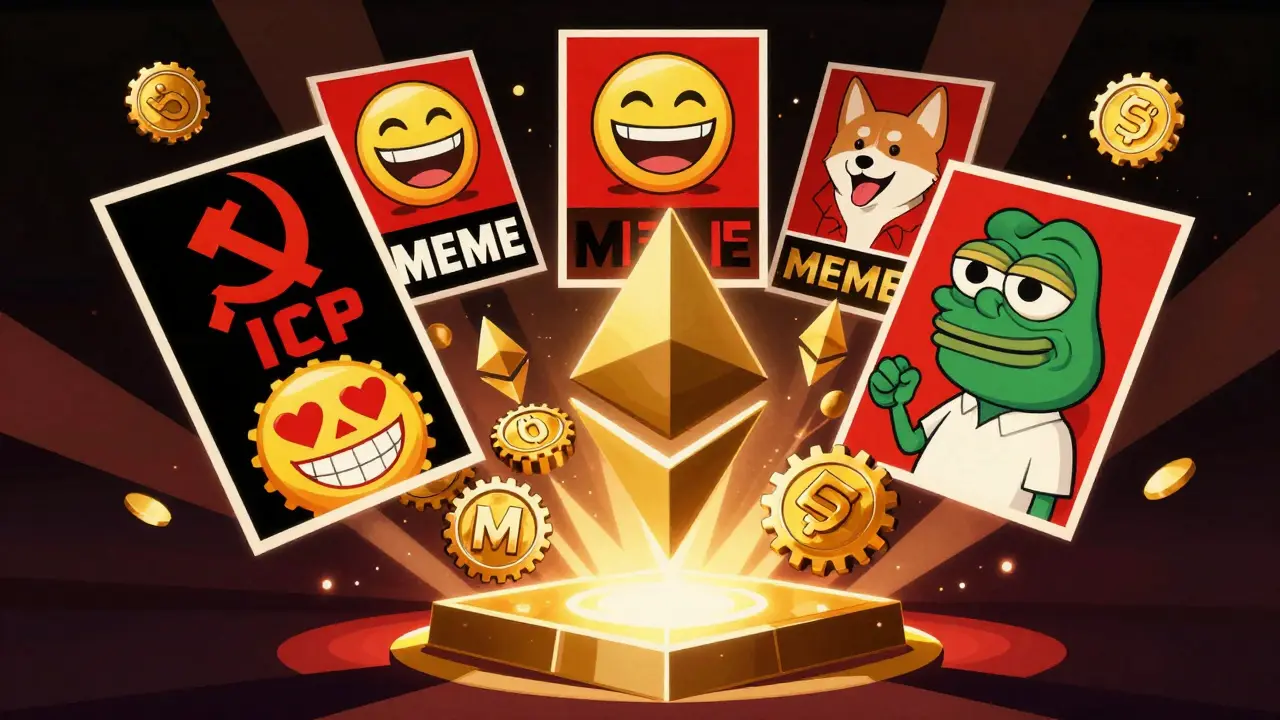
There’s no cryptocurrency called MEMES with the ticker MEMES. But there’s one that’s almost certainly what you’re looking for: MEME, the token behind Memeland - a Web3 platform built for meme creators, NFT collectors, and crypto fans who want more than just a joke coin.
Memecoin (MEME) Is Not Just Another Meme Coin
If you’ve heard of Dogecoin or Shiba Inu, you know how most meme coins work: they start as jokes, spike on hype, and crash when the crowd moves on. Memecoin (MEME) is different. It was created by the same team behind POAP - the Proof of Attendance Protocol - and launched in 2023 as the backbone of Memeland, a platform where people actually make, share, and trade memes as NFTs.
This isn’t a token that lives on its own blockchain. MEME runs on Ethereum as an ERC-20 token. That means it uses Ethereum’s security, but also inherits its fees. You need ETH to pay for gas when you buy, sell, or stake MEME. That’s a hurdle for new users, but it also means your transactions are backed by one of the most trusted networks in crypto.
What Can You Do With MEME Tokens?
Unlike Dogecoin, which mostly sits in wallets waiting for a price bump, MEME has real uses inside Memeland:
- Stake to farm NFTs - Lock up your MEME tokens and earn rare digital artwork. Some users have turned 50,000 MEME into three unique NFTs, then sold them for 0.5 ETH each.
- Buy and sell memes as NFTs - The Memeland marketplace lets creators list their meme art. Buyers pay in MEME. No middlemen. No platform fees.
- Vote on platform changes - Holders can propose and vote on upgrades, new features, or even how the treasury is spent. It’s decentralized governance, not just speculation.
- Use in apps like 999 and Heymeme - These are tools built into the ecosystem for creating memes and sharing them socially. MEME is the currency that powers them.
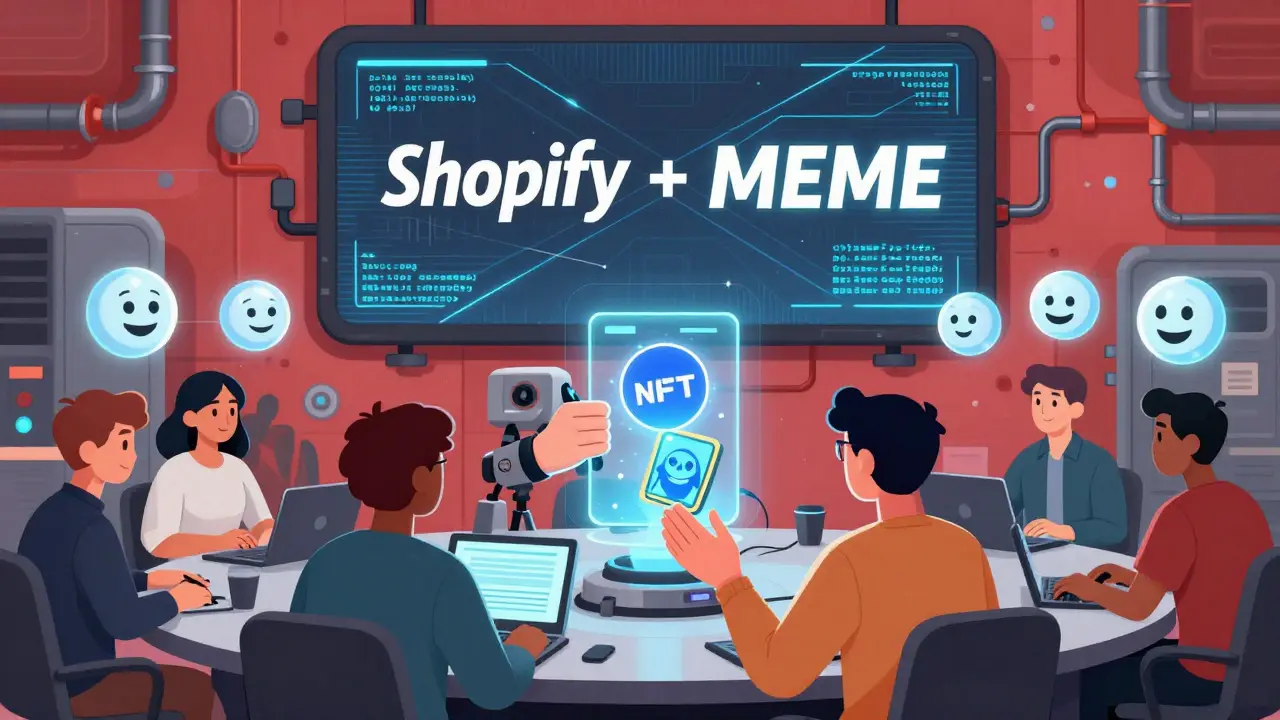
As of early 2025, over 12 merchants accepted MEME for payments. That number is growing. In February 2025, Memeland announced a partnership with Shopify to let online stores accept MEME directly through a plugin. That’s a big step toward real-world use.
Market Data: Price, Supply, and Ranking
Here’s what the numbers look like as of February 2025:
| Attribute | Value |
|---|---|
| Current Price | $0.001982 |
| Market Cap | $104 million |
| Circulating Supply | 52.5 billion MEME |
| Max Supply | 100 billion MEME |
| 24-Hour Volume | $108 million |
| Exchange Ranking | #510 (CoinGecko) |
| Price Change (30-Day) | +14% |
| Daily Volatility | 4.1% |
Compare that to Dogecoin, which has a $20 billion market cap, or newer meme coins like Dogwifhat ($92 million) or Smog ($78 million). MEME sits in the middle - not the biggest, but not a flash-in-the-pan either.
Why MEME Has Survived When Others Crashed
Most meme coins die within months. In 2024, dozens collapsed after their hype faded. But MEME held steady. Why?
First, it burned over 47.5 billion tokens from its original supply - reducing inflation and giving holders a reason to believe the token has long-term scarcity. Second, it’s tied to actual products: meme creation tools, social apps, and an NFT marketplace. People aren’t just buying MEME because it’s funny - they’re using it.
Even the U.S. Securities and Exchange Commission (SEC) took note. In its February 2025 memo, the SEC said tokens with “demonstrable utility within a functioning ecosystem” shouldn’t be treated like collectibles. That puts MEME in a safer legal gray zone than most meme coins.
The Downsides: Gas Fees, Liquidity, and Ownership Concentration
But MEME isn’t perfect.
High gas fees - Every transaction on Ethereum costs money. MEME trades can run $1.20 to $4.50 per swap. On Solana-based coins like Bonk, the same trade costs $0.00025. That’s a major barrier for small investors.
Shallow liquidity - The 24-hour trading volume is only about 1% of its market cap. That means large sells can crash the price fast. One big wallet dumping 500 million MEME could drop the price 20% in minutes.
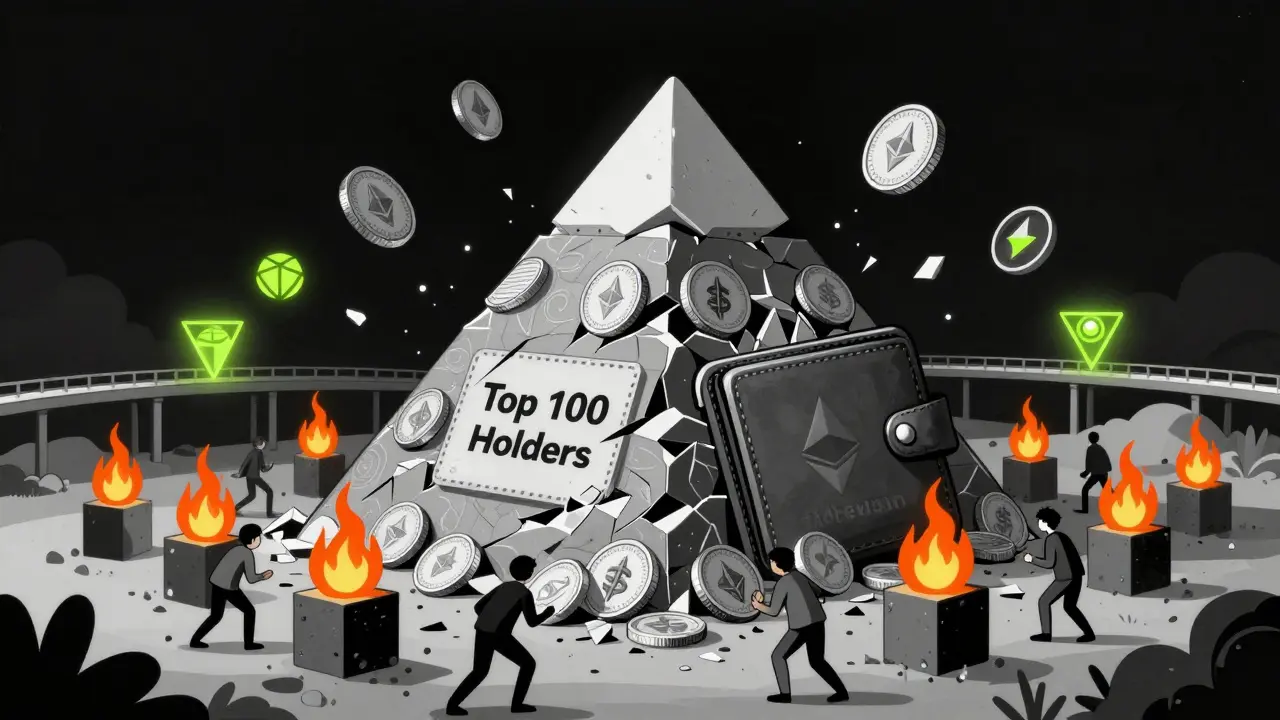
Centralized ownership - The top 100 wallets hold 58.7% of all MEME tokens. That’s a huge risk. If those holders decide to sell at once, the price could collapse. It’s happened before with other tokens.
And user feedback is mixed. On Reddit, some call it the “only meme coin that actually works.” On Trustpilot, others complain about losing tokens due to incorrect gas settings or wallet glitches.
What’s Next for Memecoin?
Memeland’s roadmap is aggressive:
- Q2 2025: Cross-chain launch - MEME will go live on Polygon and zkSync. This will slash gas fees to near-zero.
- Shopify integration - Online stores can now accept MEME as payment. This could drive real adoption.
- Bi-weekly updates - The team pushes new features every two weeks, including a recent 37% gas reduction in February 2025.
Analysts are split. Delphi Digital predicts 15-20% annual growth for utility meme coins like MEME through 2027. JPMorgan says there’s a 70% chance MEME becomes worthless in five years if it doesn’t break out of Web3 circles.
Should You Buy MEME?
Ask yourself:
- Are you into meme culture? - If you love making or collecting internet memes, MEME gives you a way to own and trade them.
- Do you want utility, not just speculation? - If you’re tired of coins that do nothing but pump and dump, MEME’s staking and governance features offer real engagement.
- Can you handle the risks? - High fees, low liquidity, and concentrated ownership mean this isn’t for beginners or risk-averse investors.
If you’re curious, start small. Buy a few thousand MEME. Try staking 5,000 tokens for 30 days. See if you earn an NFT you actually like. That’s the best way to understand if MEME is more than just a ticker symbol.
It’s not Bitcoin. It’s not Ethereum. But in the wild world of meme coins, MEME is one of the few trying to build something lasting - not just a trend, but a community.
Is there a cryptocurrency called MEMES?
No, there is no official cryptocurrency with the ticker MEMES. The token you’re likely thinking of is MEME, the native token of Memeland. It’s often misremembered as MEMES due to its meme-related branding, but the correct ticker is MEME.
What is Memecoin (MEME) used for?
MEME is used within the Memeland ecosystem to stake for NFTs, buy and sell meme art, vote on platform updates, and pay for services in apps like 999 and Heymeme. It’s not just a speculative asset - it’s a functional currency inside a working platform.
Is MEME built on Ethereum?
Yes, MEME is an ERC-20 token built on the Ethereum blockchain. This gives it security and compatibility with wallets like MetaMask and Trust Wallet, but also means users must pay Ethereum gas fees to use it.
Can I buy MEME on Coinbase or Binance?
Yes, MEME is listed on major exchanges including Coinbase, Binance, and Kraken. You can trade it for ETH, USDT, or other major cryptocurrencies. Always check the correct ticker - it’s MEME, not MEMES.
Why is MEME’s price so low?
MEME’s low price is due to its massive supply - 52.5 billion tokens in circulation. Unlike Bitcoin, which has a small supply, meme coins often have huge supplies to make prices feel accessible. The market cap ($104 million) is what matters more than the price per token.
Is MEME a good investment?
MEME is not a traditional investment. It’s a utility token tied to a niche ecosystem. It has real use cases, which sets it apart from most meme coins, but it also carries high risk due to low liquidity, high volatility, and concentrated ownership. Only invest what you can afford to lose, and focus on using it within Memeland, not just hoping for a price spike.
How do I get started with MEME?
First, get a Web3 wallet like MetaMask. Buy some ETH, then swap it for MEME on an exchange like Uniswap or Coinbase. Once you have MEME, visit Memeland’s website to stake tokens, explore the NFT marketplace, or try the meme creation tools. Start small - even 10,000 MEME is enough to test the ecosystem.
What’s the difference between MEME and Dogecoin?
Dogecoin is a standalone blockchain with no real utility beyond tipping and meme culture. MEME runs on Ethereum and powers a functional ecosystem with staking, NFTs, governance, and apps. Dogecoin is a joke with a market cap. MEME is a tool with a community.
Comments
Andy Reynolds
Man, I’ve seen so many meme coins come and go - Dogecoin, Shiba, even that one with the frog - but MEME actually feels like it’s got legs. Not just because it’s got a slick NFT marketplace, but because people are *using* it. I staked 20k MEME last month and got a dumb cat NFT that my dog barked at for three days. Worth it.
And the Shopify thing? That’s huge. Imagine buying a hoodie with MEME instead of crypto jargon. Real people, real memes, real commerce. This ain’t just gambling - it’s culture.
January 1, 2026 at 22:28
Alex Strachan
So… you’re telling me this isn’t just a dog with sunglasses and a 50 billion supply? 😅
Also, gas fees on Ethereum are still a slap in the face. I paid $3.80 to buy 10k MEME. That’s like buying a coffee… and then paying $2.50 for the spoon.
But hey - if I can turn 50k MEME into a 0.5 ETH NFT? Maybe I’ll forgive the fees. Maybe.
January 3, 2026 at 00:00
Rick Hengehold
Stop pretending this is an investment. It’s a community experiment with high fees and a few whales holding 60% of supply. If you’re not staking or using the apps, you’re just gambling. Don’t fool yourself.
January 4, 2026 at 01:01
Ian Koerich Maciel
Thank you for clarifying the MEME vs. MEMES confusion - I’ve seen so many people search for the wrong ticker and end up on sketchy exchanges. As someone who’s lost tokens to incorrect gas settings, I appreciate the warning.
That said, the ERC-20 structure is a double-edged sword: security vs. cost. I’ve been holding MEME since last summer, and while the price hasn’t exploded, the ecosystem has grown - the 999 app alone has become my daily meme generator. It’s not about returns anymore. It’s about participation.
The SEC memo is a quiet win too. When regulators start acknowledging utility over speculation, that’s when the real shift happens. This isn’t just another coin - it’s a platform trying to build something that lasts. I’m not rich from it, but I’m engaged. And that’s rare in crypto.
Also, the burn of 47.5B tokens? That’s not marketing. That’s commitment. Most teams just dump supply and vanish. This team is fixing the foundation.
Still - if you’re new, start with 5k MEME. Stake it. See what NFT you get. If you laugh at it? You’re already winning.
January 4, 2026 at 16:43
Monty Burn
What is value if not shared belief? MEME doesn’t have intrinsic worth - it has shared ritual. People laugh, they trade, they stake, they vote - and in that loop, meaning emerges. The blockchain just records it. The meme is the movement.
Gas fees? They’re the price of belonging to a network that still believes in decentralization. If you want free trades, go to Solana. But you won’t find a community that turns memes into governance here.
It’s not a coin. It’s a collective hallucination with smart contracts.
January 6, 2026 at 10:46
Ryan Husain
I’ve been watching MEME’s evolution for over a year. The transition from pure meme to functional ecosystem is one of the most compelling narratives in crypto right now. The fact that they’re cross-chaining to Polygon and zkSync in Q2 is a massive step - it solves the biggest pain point for new users: cost.
The concentration of supply is concerning, yes - but the governance model gives holders real power. If the top wallets start dumping, the community can vote to adjust rewards, lock liquidity, or even fork the token. That’s not typical for meme coins.
And the Shopify integration? That’s not hype. That’s infrastructure. If small businesses start accepting MEME for merch, stickers, or digital art - we’re looking at organic adoption, not pump-and-dump.
It’s not for everyone. But for those who get it - it’s one of the few meme coins that actually feels like the future.
January 6, 2026 at 21:11
Johnny Delirious
Stop overthinking it. MEME isn’t here to make you rich. It’s here to make you laugh, create, and belong. Buy 10k. Stake it. Get a dumb NFT. Share it. Repeat. That’s the whole point. The rest is noise.
January 7, 2026 at 06:09