
Imagine sending money across borders for less than a penny. No hidden fees, no three-day wait times, and no need to know complex wallet addresses-just a phone number. That is the promise of Celo Euro (CEUR or cEUR), a cryptocurrency designed to track the value of the Euro while making digital finance accessible to anyone with a smartphone.
If you have been following crypto, you likely know about USDT or USDC. But what is this newer player pegged to the European currency? And why does it matter if you aren't even in Europe? This guide breaks down exactly what Celo Euro is, how it stays stable, and whether it is worth adding to your portfolio or payment toolkit in 2026.
The Basics: What Exactly Is Celo Euro?
Celo Euro is a decentralized stablecoin pegged to the Euro. Unlike Bitcoin, which swings wildly in price, CEUR aims to stay as close to €1.00 as possible. It lives on the Celo blockchain, a network originally built as an independent proof-of-stake chain but now operating as an Ethereum Layer-2 focused on scalability and low transaction costs.
Launched in June 2021 via a community governance proposal, CEUR was created to solve a specific problem: volatility. Most cryptocurrencies are too unstable for everyday purchases. You wouldn't want to buy coffee with an asset that could lose 20% of its value before you finish drinking it. CEUR provides that stability.
It is part of a family of assets managed by the Mento Protocol, which also issues Celo Dollar (cUSD) and Celo Real (cREAL). The goal is simple: create on-chain foreign exchange rails that allow people to hold, send, and spend local currencies digitally.
How Does CEUR Stay Pegged to the Euro?
This is the million-dollar question (or rather, the one-Euro question). How does a piece of code maintain its value against a government-backed currency without a central bank printing physical notes?
CEUR uses a hybrid model combining collateral reserves and algorithmic mechanisms:
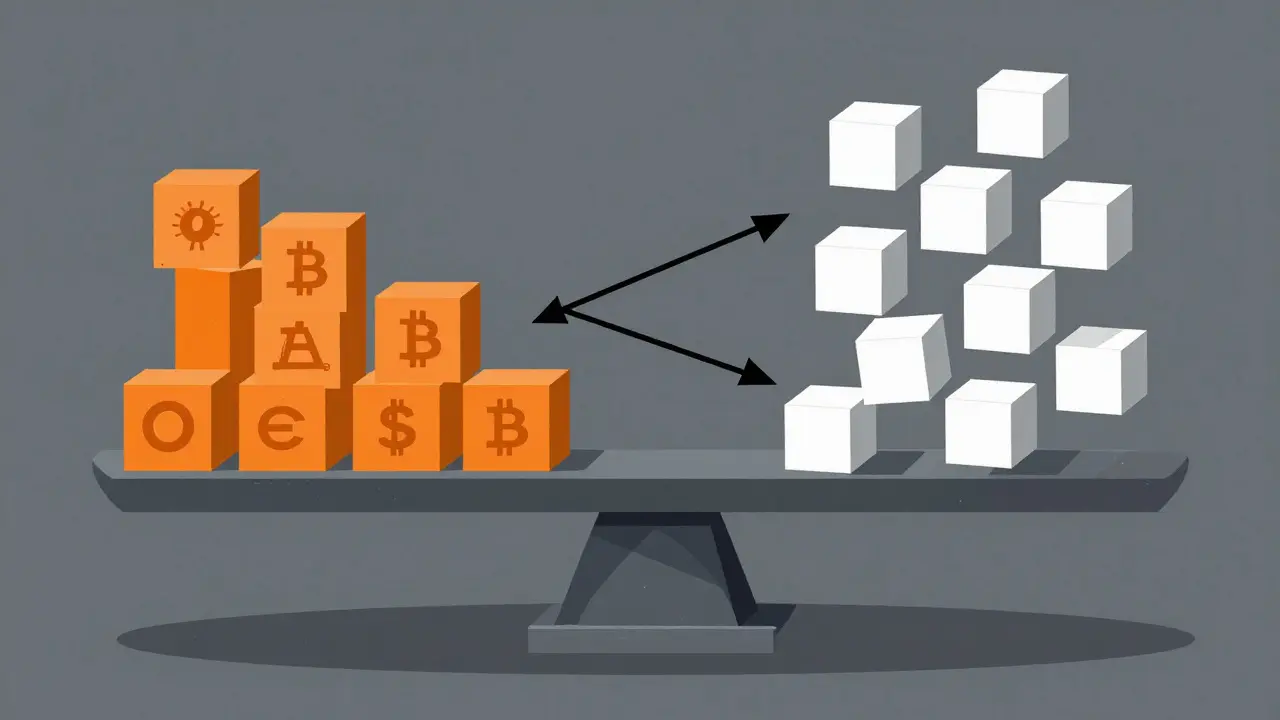
- Overcollateralization: The system is backed by a reserve of major cryptocurrencies, including Bitcoin (BTC), Ether (ETH), and the native Celo token (CELO). As of recent data, the reserve value is maintained at roughly 393% of the outstanding CEUR supply. This means for every €1 worth of CEUR in circulation, there is nearly €4 worth of crypto assets backing it.
- Mento Asset Exchange: This automated market maker (AMM) allows users to swap between different stable assets (like trading CEUR for cUSD) instantly on-chain. If the price of CEUR drifts above €1, arbitrageurs can mint new CEUR from the reserve and sell it for profit, driving the price back down. If it drops below €1, they can buy cheap CEUR and redeem it for the underlying reserve assets, pushing the price back up.
- Governance: The protocol is decentralized. Holders of the CELO token vote on key parameters, ensuring no single company controls the money supply.
This design makes CEUR "community-approved" rather than centrally issued. It relies on economic incentives to keep the peg tight, similar to how traditional forex markets work, but entirely transparent on the blockchain.
CEUR vs. CELO: Don't Mix Them Up
New users often confuse Celo Euro (CEUR) with the native Celo token (CELO). They are two completely different tools within the same ecosystem.
| Feature | Celo Euro (CEUR/cEUR) | Celo Token (CELO) |
|---|---|---|
| Purpose | Medium of exchange / Store of value | Governance / Gas fees / Collateral |
| Price Stability | Pegged to €1.00 | Volatile (market-driven) |
| Supply | Elastic (minted/burned based on demand) | Fixed (600 million total supply) |
| Use Case | Payments, remittances, savings | Voting, staking, paying transaction fees |
Think of it like this: CELO is the fuel that runs the car (the blockchain), while CEUR is the cash in your pocket that you use to buy groceries. You hold CELO to participate in the network's growth and security, but you use CEUR when you actually want to transfer value without worrying about price crashes.
Why Use Celo Euro? The Mobile-First Advantage
You might ask, "Why not just use PayPal or Venmo?" The answer lies in accessibility and cost.
Celo was built from the ground up for mobile devices. In many parts of the world, people do not have bank accounts, but they do have smartphones. Celo allows users to sign up using just their phone number. You don't need to memorize long alphanumeric wallet addresses. To send someone money, you simply enter their phone number, just like texting.
Consider the fees. Traditional remittance services can charge several Euros per transfer, plus hidden exchange rate markups. Sending CEUR on the Celo network typically costs less than $0.01 USD in gas fees. For a migrant worker sending money home to family in Africa or Eastern Europe, saving even a few Euros per transaction adds up significantly over a year.
Additionally, because it is decentralized, your funds are not held by a bank that can freeze them arbitrarily. As long as you control your private keys (or trust your non-custodial wallet provider), your money is yours.
Market Reality: Liquidity and Adoption in 2026
While the technology is promising, we must look at the hard numbers. As of mid-2026, Celo Euro occupies a niche position in the broader crypto landscape.
- Market Cap: Approximately $2.03 million USD. This is tiny compared to giants like Tether (USDT) or even other stablecoins.
- Ranking: It ranks around #1541 on major trackers like CoinMarketCap.
- Liquidity: Daily trading volume fluctuates between $76k and $2.5 million depending on the period. Most liquidity is concentrated on decentralized exchanges like Uniswap.
This small size is both a weakness and a strength. The downside is limited liquidity; if you try to move millions of dollars in CEUR at once, you might experience slippage (getting a worse price due to thin order books). It is also less widely recognized by institutional investors compared to USDC.
However, the ecosystem is growing. The Mento Protocol reports hundreds of millions of transactions across its stablecoin suite. Major wallets like Opera Browser have integrated CEUR directly, allowing millions of users to access it seamlessly. Furthermore, Celo is evolving into an Ethereum Layer-2, which should improve speed and reduce costs further, potentially attracting more developers and users.

Risks and Limitations to Consider
No financial instrument is risk-free. Here is what you need to watch out for with CEUR:
- Peg Deviations: While the mechanism is robust, during extreme market stress, the price can temporarily deviate from €1.00. The overcollateralization helps mitigate this, but it is not impossible.
- Smart Contract Risk: Like all DeFi projects, CEUR relies on code. If there is a bug in the Mento Protocol or the Celo blockchain, funds could theoretically be lost. Audits are regular, but zero risk does not exist in software.
- Regulatory Uncertainty: The EU is tightening regulations on stablecoins (MiCA framework). While decentralized protocols aim to comply, the legal status of community-governed tokens remains a gray area in some jurisdictions.
- Adoption Hurdles: Merchants need to accept CEUR for it to be truly useful. Currently, peer-to-peer transfers and cross-border remittances are the primary use cases, not buying coffee at your local shop.
The Future: From cEUR to EURm
Celo is constantly iterating. Recent updates mention a transition toward new native stablecoin formats with the suffix "m" (e.g., EURm). This isn't necessarily a replacement that kills CEUR, but rather an evolution of the contract structure to better support multi-currency swaps and deeper integration with Ethereum Layer-2 scaling solutions.
The vision remains clear: a global financial system where anyone with a mobile phone can participate in the economy, regardless of their location or banking status. Celo Euro is a critical piece of that puzzle, providing the stability needed for daily commerce in a volatile digital world.
Is Celo Euro (CEUR) safe to use?
CEUR is considered relatively safe due to its overcollateralized reserve (backed by BTC, ETH, and CELO) and decentralized governance. However, like all cryptocurrencies, it carries smart contract risks and regulatory uncertainties. Always store your assets in a secure wallet and only invest what you can afford to lose.
Where can I buy Celo Euro?
You can acquire CEUR on centralized exchanges like KuCoin, Coinbase, and Bitget. Alternatively, you can swap other cryptocurrencies for CEUR on decentralized platforms like Uniswap or directly through the Mento Asset Exchange on the Celo network.
What is the difference between CEUR and USDC?
USDC is a centralized stablecoin issued by Circle, backed by cash and short-term US Treasuries. CEUR is a decentralized stablecoin issued by the Mento Protocol on the Celo blockchain, backed by a diversified crypto reserve. CEUR focuses heavily on mobile-first accessibility and phone-number-based transactions, whereas USDC is widely accepted across all major crypto platforms.
Does CEUR earn interest?
Holding CEUR in a standard wallet does not automatically generate interest. However, you can earn yield by supplying CEUR to lending protocols built on the Celo network, such as Ubeswap or Moola Market, where your assets are lent out to borrowers.
Will Celo Euro replace the physical Euro?
No. CEUR is a digital representation of the Euro's value on the blockchain. It complements traditional fiat by enabling faster, cheaper cross-border transfers and financial inclusion for the unbanked. It operates alongside the physical Euro, not as a direct replacement for national currency issuance.
Comments
Jessie Smith
Look, most of yall are missing the forest for the trees here. The real innovation isnt the stablecoin itself, its the abstraction layer that allows phone numbers to replace hex strings. Its a philosophical shift in how we view identity on chain. Most crypto bros think theyre geniuses because they know how to bridge assets, but they dont understand the sociological implications of removing friction from remittances. It’s about dignity, not just gas fees. And honestly? The way this is written feels like it was generated by someone who has never actually tried to send money to their cousin in Lagos without getting eaten alive by Western Union. We need more discourse on the actual UX rather than just speculating on market cap.
July 5, 2026 at 09:39
Drew M
This is absolutely game changing! 🚀🔥 I’ve been waiting for something that actually makes sense for everyday people, not just degens sitting in front of six monitors screaming at charts. The fact that you can use your phone number is huge for adoption. Imagine explaining crypto to your grandma with this instead of private keys and seed phrases! 😂💸 Celo really did their homework here. Who else is staking CELO right now? Let’s gooo! 💪🌍
July 6, 2026 at 12:40
Deep Rahman
I have been thinking about this for a very long time and I feel like the concept of stability in a digital currency is somewhat of an illusion when you consider the volatility of the underlying collateral which includes things like Bitcoin and Ether which are themselves extremely volatile assets so while the mechanism attempts to keep the peg through arbitrage and overcollateralization one must ask if the system is truly decentralized or if it is merely dependent on the continued liquidity of other speculative instruments which brings us back to the question of whether any algorithmic or hybrid stablecoin can survive a black swan event where all major crypto assets drop simultaneously causing a death spiral scenario that would wipe out the reserve value faster than the governance protocol could react to save it.
July 6, 2026 at 17:18
Melissa Beckwith
Actually, if you look closely at the Mento Protocol documentation, which most casual observers fail to do because they lack the attention span for technical whitepapers, you will notice that the redemption mechanism is designed specifically to prevent the kind of death spiral you are describing, although it is worth noting that the reliance on centralized exchanges for off-ramping the underlying BTC and ETH introduces a centralization risk that contradicts the ethos of decentralization, and furthermore, the governance model relies on CELO holders who are often incentivized to vote for parameters that maximize short-term yield rather than long-term stability, creating a principal-agent problem that is rarely discussed in these superficial comment sections, and let us not forget the regulatory headwinds from MiCA which could effectively strangle the liquidity required for the AMM to function efficiently during periods of high stress.
July 8, 2026 at 08:48
Josephine Finlayson
I think we should all try to remain open-minded about the potential benefits here; after all, every new technology faces skepticism in its early stages! It is wonderful to see discussions around financial inclusion, as this could genuinely help many unbanked individuals worldwide. Perhaps we can focus on the positive steps being taken towards accessibility? :) Let us support innovation while remaining cautious!
July 8, 2026 at 20:19
Tuan Nguyen
The entire premise of 'mobile-first' is a marketing gimmick designed to appeal to retail investors who cannot be bothered to learn basic blockchain fundamentals. The liquidity depth is pathetic, barely two million dollars in market cap, which means any significant sell order will cause massive slippage. This is not a payment network; it is a niche experiment for developers who want to play with Layer-2 scaling solutions without dealing with the mainnet congestion. Until the daily volume exceeds fifty million dollars consistently, this is irrelevant for serious cross-border transactions. Do not waste your time.
July 8, 2026 at 23:53
Hazel Fruitman
i mean its nice that they are trying to help people but lets be real most of these projects are just cash grabs by devs who want to dump their tokens on unsuspecting victims. the whole idea of trusting code to hold your money is scary af. what happens when there is a bug? your money is gone. poof. end of story. i dont trust anything that isnt backed by physical gold or land. crypto is a scam.
July 10, 2026 at 00:14