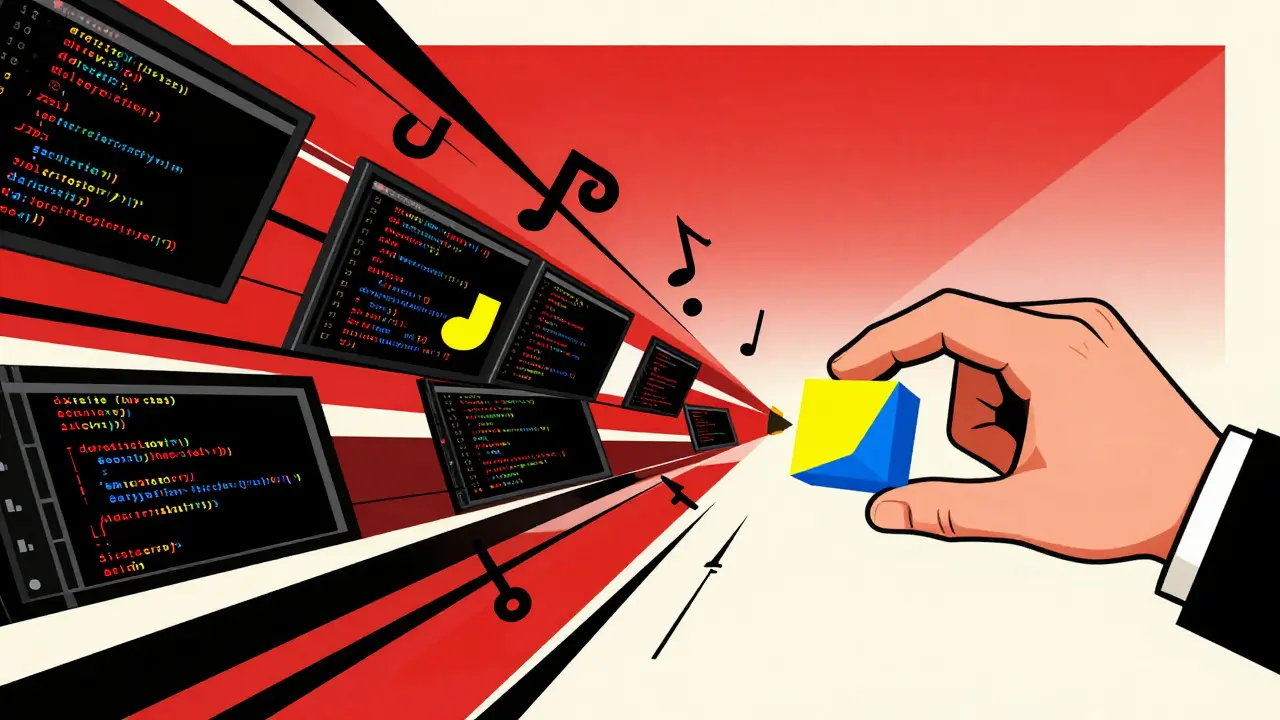
Imagine wanting to start an online store but having to write thousands of lines of code just to get a "Buy" button to work. That's exactly how blockchain development has felt for years. Most people with great ideas for decentralized apps (dApps) get stuck because they can't code in complex languages. Andromeda (ANDR) is a cryptocurrency and Layer-1 blockchain designed to turn the nightmare of Web3 coding into a simple drag-and-drop experience. By treating blockchain like an operating system, it aims to make launching a project as easy as setting up a profile on social media.
The core idea behind AndromedaOS
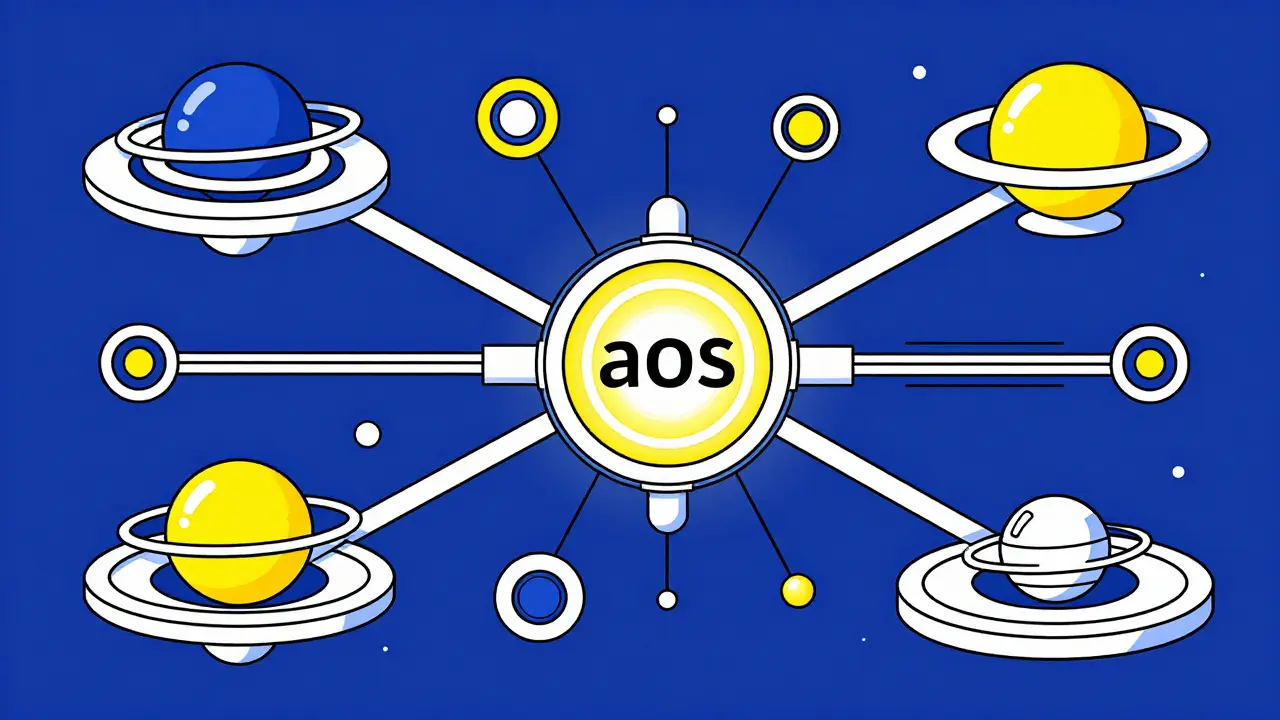
At the heart of this project is AndromedaOS (or aOS), which is a multi-chain operating system that simplifies how developers and non-techies build on the blockchain. Think of it as the "Shopify of Web3." Just as Shopify allowed regular business owners to sell products without being web developers, aOS lets users build decentralized applications and DAOs (Decentralized Autonomous Organizations) using visual tools instead of manual coding.
The goal here is speed. Normally, building a dApp takes months of rigorous development and testing. Andromeda claims it can shrink that timeline down to hours or even minutes. Because it's built within the Cosmos ecosystem, it doesn't just live on one chain. It's designed for interoperability, meaning a project created on Andromeda can work across multiple interconnected blockchains. This gives creators instant access to millions of users without needing to rebuild their app for every different network.
What exactly does the ANDR token do?
The ANDR token isn't just a coin you hold in a wallet; it's the fuel and the glue for the entire system. If aOS is the software, ANDR is the utility that keeps it running. It serves several distinct purposes:
- Network Security: ANDR is used for staking. Validators lock up their tokens to secure the Layer-1 blockchain, ensuring the network remains stable and trustworthy.
- Medium of Exchange: Within the aOS environment, ANDR is the primary currency used to pay for services and interact with the ecosystem.
- Operational Tool: It facilitates secure transactions across the multi-chain landscape, acting as the bridge that allows different parts of the system to communicate and trade.
Essentially, the Andromeda (ANDR) token removes the friction from the creative process. Developers can launch their work faster, and users can interact with new apps without needing to be experts in the underlying tech.
Market stats and the reality of ANDR pricing
Looking at ANDR's market performance is a bit like looking at a rollercoaster. The coin has shown extreme volatility since its launch in 2024. Depending on which tracker you use, the numbers can vary wildly, which is common for smaller-cap projects.
| Attribute | Value / Detail |
|---|---|
| Max Supply | 1 Billion ANDR |
| Circulating Supply | Approx. 190M to 265M (Source dependent) |
| Trading Pairs | Primarily ANDR/USDT |
| Exchanges | MEXC, Gate.io, Astrovault, Injective Exchange |
| Market Position | Small-cap (Ranked outside top 4000 on some trackers) |
It's worth noting that ANDR has experienced massive price swings. Some reports show it trading as low as $0.0002, while others have seen sudden spikes. This volatility suggests that while the technology is ambitious, the market is still trying to find a stable valuation for the token.
How Andromeda changes the Web3 game
Most blockchains are like a blank canvas-you have the tools, but you have to know exactly how to use them to paint something. Andromeda provides the "stencils" and "templates." By implementing a drag-and-drop philosophy, they are democratizing who gets to build the future of the internet.
Why does this matter? Because the biggest hurdle to Web3 adoption isn't a lack of ideas; it's a lack of developers. When you lower the barrier to entry, you get more diverse apps. Instead of just another finance tool or an NFT gallery, we might see niche community tools, localized governance systems, or creative experiments that a professional coding firm would never bother to build.
Furthermore, the connection to the Cosmos network means Andromeda isn't trying to compete with every other chain. Instead, it acts as a layer that makes all those chains easier to use. It's a strategic move that focuses on usability rather than just raw technical specs.

Potential pitfalls and things to watch
No project is without risk, and Andromeda is no different. The biggest challenge is adoption. A "drag-and-drop" tool is only useful if people actually use it to build things that people want. If the ecosystem doesn't grow a library of successful dApps, the utility of the ANDR token remains theoretical.
There's also the issue of data fragmentation. As seen in the pricing discrepancies across exchanges like Kraken and CoinGecko, the project is still in a phase where liquidity and reporting aren't perfectly aligned. For a regular person, this means you have to be extra careful with where you trade and how you track your assets.
Is Andromeda (ANDR) a new coin?
The AndromedaOS (aOS) ecosystem began rolling out its multi-chain operating system in 2023, but the native ANDR cryptocurrency was officially launched in 2024. It is still considered a relatively new and emerging project in the blockchain space.
Can I create a dApp without knowing how to code using Andromeda?
Yes, that is the primary goal of the project. Andromeda uses a drag-and-drop development philosophy designed to allow non-developers to build decentralized applications and DAOs without writing manual code.
Where can I buy ANDR tokens?
ANDR is traded on several cryptocurrency exchanges, including MEXC, Gate.io, Astrovault, and the Injective Exchange. The most common trading pair is ANDR/USDT.
What is the maximum supply of ANDR?
The total maximum supply of the ANDR token is 1 billion tokens.
How does Andromeda relate to the Cosmos ecosystem?
Andromeda is built on the Cosmos ecosystem, which allows it to be interoperable. This means apps created via AndromedaOS can be deployed across multiple interconnected blockchains within the Cosmos network.
What to do next
If you're a developer or an entrepreneur, the best move is to visit the official project site at andromedaprotocol.io to see if the aOS tools fit your vision. If you're a trader, keep a close eye on the volume and price across different exchanges, as the volatility is currently very high. For most people, the real value of Andromeda isn't in the current price of the coin, but in whether they can actually make it easier for the rest of us to use the blockchain.
Comments
Robert Smith
Sounds like a wild ride 🚀
May 1, 2026 at 21:15
Felix Eduardo Velasquez
The democratization of development is a recurring theme in tech, from Wix to Bubble, and now we are seeing it hit the blockchain layer. The real philosophical hurdle here isn't the tool itself but the shift in who holds the power to create. If the barrier to entry drops, we will likely see a flood of low-quality apps before we find the true gems. The interoperability within the Cosmos ecosystem is the most compelling part because it solves the fragmentation problem that plagues most L1s. We have to consider whether a visual interface can truly capture the complexity of smart contract security or if it just creates a false sense of safety for the untrained. Ultimately, the success of ANDR depends on whether the utility of aOS outweighs the inherent volatility of a small-cap token. It is an ambitious play to move from 'coding' to 'architecting' systems.
May 3, 2026 at 18:36
Emily A
The volatility mentioned is hardly a surprise given the market cap. Most people blindly follow these "Shopify of Web3" comparisons without realizing that the actual technical implementation of a drag-and-drop interface for smart contracts is incredibly prone to security loopholes. One cannot simply abstract away the risks of blockchain development with a few visual templates. It is naive to assume that a lack of coding knowledge will not lead to catastrophic errors in DAO governance or tokenomics. Precision in code is what ensures security, and replacing that with a simplified interface is a gamble at best.
May 4, 2026 at 10:30
Jan Conrad
I've looked into the Cosmos SDK and the way Andromeda integrates with it is actually quite clever. It's basically acting as a high-level abstraction layer. For those wondering about the price swings, that's typical for any project in its early launch phase, especially when liquidity is spread across a few smaller exchanges. I'm curious to see how their library of pre-built templates grows over the next few months because that's where the real value for a non-coder will be. If they can get a few high-profile aOS apps trending, the token utility should follow naturally.
May 5, 2026 at 12:12
Gabby Puche
Love the energy here! 🌟 It's so exciting to see tools that let everyone get in on the action regardless of their tech background. We just need to stay positive and keep learning as we go! ✨
May 5, 2026 at 16:11