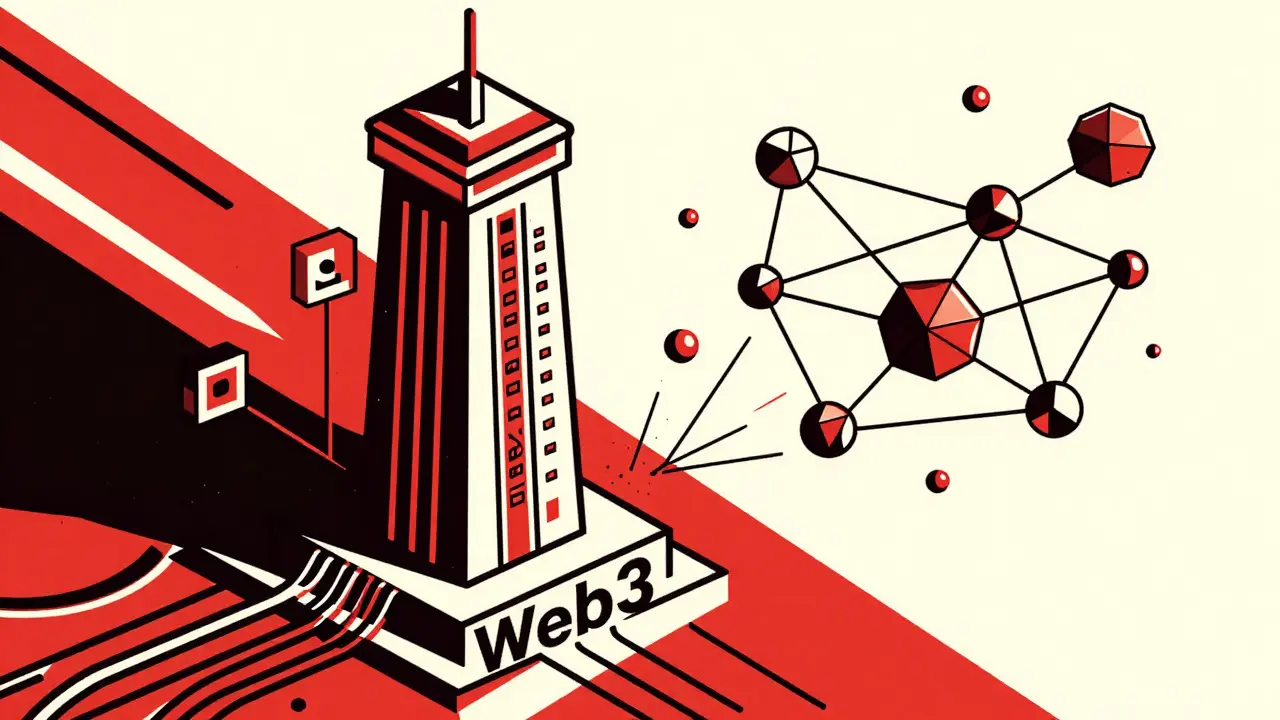
Imagine an internet where you actually own your data, your digital identity, and your assets, rather than renting them from a handful of tech giants. That's the core promise of Web3 applications is a generation of decentralized software built on blockchain infrastructure that removes intermediaries like banks or big-tech platforms. Also known as dApps or decentralized applications, these tools shift power from the center to the edges, allowing users to interact directly through peer-to-peer networks.
While the idea of "decentralization" sounds like technical jargon, it's actually quite simple: it means no single company has the "off" switch. Whether it's a financial tool, a game, or a social network, Web3 apps run on distributed ledgers. As of early 2026, these applications have moved far beyond simple cryptocurrency trading, with billions of dollars locked in protocols and millions of people using them for everything from lending money to buying digital art. However, moving from the old web (Web2) to this new world isn't always a smooth ride-it comes with a learning curve and some genuine frustrations.
Key Takeaways for Getting Started
- Ownership: You control your assets via private keys, not a corporate account.
- Infrastructure: Most apps rely on Ethereum or faster alternatives like Solana.
- Automation: Smart Contracts handle the rules of the app automatically without needing a middleman.
- Entry Barrier: You need a digital wallet (like MetaMask) and some "gas" (network fees) to make things happen.
How Web3 Applications Actually Work
To understand a Web3 app, you have to forget how a normal app works. Usually, when you use an app, your data lives on a company's server. In Web3, the "backend" is a blockchain. This means the data is mirrored across thousands of computers globally, making it nearly impossible to censor or shut down.
The magic happens through Smart Contracts, which are self-executing pieces of code that automatically trigger actions when certain conditions are met. For example, a smart contract could say, "If User A sends 1 ETH, then transfer the ownership of this digital painting to User A." No lawyer or escrow agent is needed; the code just does it. This allows for Web3 applications to operate in a trustless environment-you don't have to trust the person you're dealing with, only the code.
But where do the images and large files go? Blockchains are great for small bits of data (like balances), but terrible for hosting a high-res video. That's why most apps use the InterPlanetary File System (or IPFS), a decentralized storage protocol that lets users store and share files in a peer-to-peer manner. This ensures that the "front-end" of the app is just as decentralized as the "back-end."
Real-World Examples of Web3 in Action
The ecosystem is broad, but most successful apps fall into a few main categories. Here is how they are changing specific industries.
Decentralized Finance (DeFi)
This is the heavyweight of the Web3 world. DeFi is a system that recreates traditional financial instruments-like loans and insurance-on a blockchain. Instead of going to a bank to get a loan, you use an app like Aave or Compound. These platforms use algorithmic interest rates that adjust every few seconds based on supply and demand. For the unbanked-roughly 1.4 billion adults worldwide-this provides a way to access credit and savings without needing a government-issued ID or a credit score.
Digital Ownership and NFTs
We've all heard of NFTs (Non-Fungible Tokens), but they are more than just expensive JPEGs. They are certificates of ownership. Marketplaces like OpenSea and Blur allow creators to sell work directly to fans. The real value here is the "royalty" feature: a smart contract can ensure that every time a piece of art is resold, the original artist automatically gets a percentage of the sale. This is a total game-changer for creators who previously lost control of their work once it left the gallery.
Gaming and the "Play-to-Earn" Model
Web3 gaming introduces the idea that the items you find in a game actually belong to you. In traditional games, if the server shuts down, your legendary sword vanishes. In Web3 games like Axie Infinity, those items are tokens in your wallet. While this created a gold rush (and some subsequent crashes, like we saw with STEPN in 2024), the shift toward player-owned economies is still a major trend. The goal is to move toward "Play-and-Earn," where the fun comes first and the financial reward is a bonus, rather than the only reason to play.
Decentralized Browsing and Identity
The Brave browser is a great example of a "Web2.5" transition. It blocks intrusive ads and rewards you with Basic Attention Tokens (BAT) for viewing privacy-respecting ads. Instead of Google taking 100% of the ad revenue, the value is split between the advertiser, the browser, and you. This is a small but concrete example of how Web3 redistributes value back to the user.
| Feature | Web2 (Traditional) | Web3 (Decentralized) |
|---|---|---|
| Data Storage | Centralized Servers (AWS, Google) | Distributed Ledger / IPFS |
| Authentication | Email/Password (OAuth) | Cryptographic Wallet Address |
| Control | Platform Owner decides rules | Community / DAO Governance |
| Transactions | Processed by Banks/Payment Processors | Peer-to-Peer via Smart Contracts |
| User Reward | Data harvested for profit | Tokens/Ownership for participation |
The Friction Points: Why Isn't Everyone Using This?
If Web3 is so great, why are we still using Instagram and Chase Bank? Because the user experience (UX) currently has some major hurdles. If you've ever tried to set up a DeFi wallet, you know it's not as simple as clicking "Forgot Password." In Web3, if you lose your seed phrase (the secret recovery words), your money is gone forever. There is no customer support line to call to reset your account.
Then there are the fees. On Ethereum, "gas fees" (the cost to process a transaction) can be wildly unpredictable. You might pay $1 for a transaction one hour and $20 the next if the network is congested. While Layer 2 solutions like Optimism and Arbitrum have brought these costs down to a few cents, the average person still finds the concept of "bridging assets" between different networks confusing and intimidating.
There's also the "speculation trap." Many projects launch tokens to attract users, but when the token price drops, the users leave. This happened with several "move-to-earn" apps where the financial incentive was the only thing keeping people active. For Web3 to survive long-term, apps need to provide actual utility-something that is better because it's decentralized, not just because there's a token attached to it.
Setting Up Your First Web3 Interaction
If you want to move from reading to doing, you'll need a few tools. It's a bit like learning to drive; there are a few steps you have to get right to avoid mistakes.
- Install a Wallet: Download a browser extension like MetaMask or a mobile app like Phantom. This is your passport to the decentralized web.
- Secure Your Seed Phrase: Write down your recovery words on physical paper. Never save them in a screenshot or a cloud doc.
- Acquire Gas Tokens: You can't move money without paying the network. You'll need a small amount of the native token (like ETH for Ethereum or SOL for Solana) from an exchange.
- Connect to a dApp: Visit a site like Uniswap (for swapping tokens) or Aave (for lending). Instead of "Sign Up," you'll see "Connect Wallet."
- Review and Sign: Every action in a Web3 app requires a signature from your wallet. Always double-check the contract address before clicking "Confirm."
What the Future Looks Like
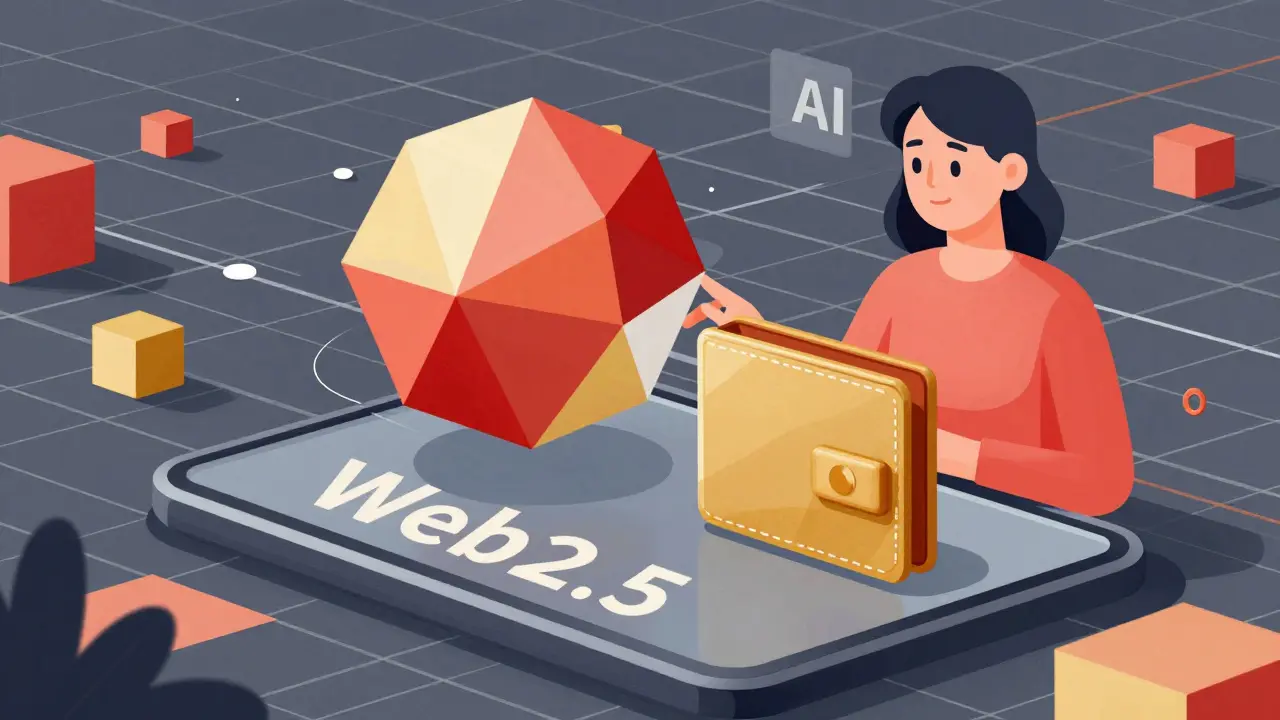
We are moving toward a "Web2.5" era. This is where companies take the ease of use from the old web and combine it with the ownership of the new web. For example, Shopify now allows merchants to sell NFTs directly through their stores. You don't need to be a crypto expert to buy a digital collectible if the checkout process looks like a regular online store.
The next big leap is the convergence of AI and Web3. Imagine an AI agent that owns its own wallet and can negotiate prices with other AI agents on your behalf, using smart contracts to execute the deal instantly. This removes the need for humans to manage the boring parts of digital commerce. As networks get faster-with Ethereum's recent upgrades cutting transaction times down to a few seconds-the lag that once made blockchain feel like 1990s dial-up is finally disappearing.
Do I need to buy cryptocurrency to use Web3 applications?
Not necessarily to browse, but yes to interact. Because these apps run on a blockchain, every action (like sending a message or swapping a token) requires a small payment called a gas fee. You'll need a tiny amount of the network's native token to cover these costs.
Is Web3 safer than Web2?
It depends on what you mean by "safe." Web3 is safer from a systemic level because there's no central server for hackers to crash or a company that can ban your account on a whim. However, it's more dangerous for the individual user; if you get phished or lose your private keys, there is no "recovery" process. The responsibility is entirely on you.
What is a DAO and how does it fit into Web3?
A DAO (Decentralized Autonomous Organization) is essentially a community-led entity with no central leader. Rules are written into smart contracts, and members vote on decisions using tokens. Many Web3 applications are governed by DAOs, meaning the users-not a CEO-decide which features to add or how to spend the treasury.
Which blockchain is the best for Web3 apps?
Ethereum is the most popular and secure, hosting the majority of DeFi and NFT projects. However, if you're looking for speed and low costs, Solana or Layer 2 solutions like Arbitrum and Optimism are often better choices. The "best" one depends on whether you prioritize extreme security or a fast, cheap user experience.
How do I know if a Web3 application is a scam?
Be wary of any app promising "guaranteed returns" or asking for your seed phrase. Legitimate apps will never ask for your private keys. Check the community on platforms like Reddit or X, and look for audited smart contracts (meaning a third-party security firm has checked the code for bugs).
Next Steps and Troubleshooting
If you're just starting, don't jump into a high-value transaction immediately. Start with a "burn wallet"-a separate wallet with only a small amount of funds-to test how bridging and swapping work. If a transaction seems stuck, check a blockchain explorer like Etherscan; usually, it's just a network delay rather than a lost payment.
For those who find the technical side overwhelming, look for "Web2.5" gateways. Start with the Brave browser or explore tokenized rewards on platforms you already use. Once you're comfortable with the idea of a digital wallet, you can move into the deeper waters of DeFi and governance.
Comments
Noel Mandotah
Oh wow, a guide that explains what a smart contract is. Groundbreaking. 🙄 Truly an elite discovery for the masses who can't use Google for five seconds.
April 26, 2026 at 21:36
Gabby Puche
This is such a helpful breakdown! 🌟 Love how you simplified the wallet part, it can be so scary for new people 💖✨ Keep it up!
April 27, 2026 at 02:43
Wayne Gillis
I totally get the vibe here! 🚀 By the way, do you live in a city or the suburbs? I bet you've got a crazy setup for your crypto mining! 💻🔥 Tell me everything about your home office!! 🌈😁
April 28, 2026 at 05:33
Livvy Cooper
It's all just a big scam to steal money from poor people anyway. The whole idea of owning a JPEG is just stupid and wrong. I don't see why anyone cares about this junk.
April 28, 2026 at 11:33
Arti Jain
India is leading the global adoption of these technologies. Our developers are far superior to those in the West. This guide is far too basic for a sophisticated mind.
April 29, 2026 at 03:36
Kathleen Warren
I really appreciate the warning about the seed phrase. A lot of people feel overwhelmed when they first start, so it's good to remind them to take it slow. It's okay to be a bit confused at first; we all are. Just remember to keep your recovery words safe on a real piece of paper. It's the only way to be sure. If you're feeling lost, just take a deep breath and try a small amount first. This is a journey for everyone and we should help each other get through it. It's important to be inclusive so no one feels left behind in the digital age. Let's just keep supporting each other as we learn this weird new web together. Most of us are just trying to figure it out as we go. Be kind to yourself while learning.
April 30, 2026 at 18:26
Barbara Jones
good point on the burn wallet!! i did that too and it saved me from a big mistke early on.’s a great way to learn with out losing too much money lol
May 1, 2026 at 10:48