Imagine paying for your morning coffee with Bitcoin in Hanoi. It sounds futuristic, but in Vietnam, that simple transaction could cost you between 150 million and 200 million VND. That is roughly $6,500 to $8,900 USD, a hefty price tag for skipping the bank transfer. This isn't just a rumor or a strict local rule; it is the direct result of a national regulatory framework established by the State Bank of Vietnam (SBV). If you are holding crypto assets in Vietnam or planning to use them for transactions, understanding this legal landscape is critical to avoiding unexpected financial penalties.
The Legal Basis: Why Paying with Crypto is Illegal
To understand the fine, you have to look at the specific laws behind it. The core regulation comes from Decree No. 96/2014/ND-CP, which outlines administrative sanctions in monetary and banking activities. Specifically, Clause 6 of Article 27 states that issuing, supplying, or using Bitcoin and similar virtual currencies as a means of payment is prohibited. This decree was reinforced by the SBV's announcement on October 28, 2017, which clarified that starting January 1, 2018, these acts would be subject to prosecution if they involved illegal means of payment.
It is crucial to distinguish between holding crypto and using it. Vietnam does not explicitly ban individuals from owning cryptocurrency. You can buy, sell, and hold Bitcoin or Ethereum in a personal wallet without immediate legal trouble. However, the moment you use that asset to settle a debt, pay for goods, or make a service fee, you cross the line into illegal territory. The legal definition of lawful payment instruments in Vietnam is strictly defined by Article 4.6 of Decree 101/2012/ND-CP (amended by Decree 80/2016/ND-CP). This article recognizes only checks, payment orders, collection orders, and bank cards as valid non-cash payment methods. Anything else, including stablecoins like USDT or major coins like BTC, falls outside this legal perimeter.
Who Enforces These Rules and How?
The State Bank of Vietnam (SBV) is the primary authority overseeing monetary policy and banking activities. They are responsible for defining what constitutes a legal payment method. While the SBV sets the rules, enforcement often involves coordination with other bodies, such as the General Department of Vietnam Customs and local police forces. In practice, the SBV has coordinated additional penal sanctions for violations involving cryptocurrencies, though specific prosecution numbers remain somewhat opaque.
Enforcement tends to target high-profile cases rather than individual consumers making small peer-to-peer transfers. For instance, in July 2017, a Vietnamese university announced plans to accept Bitcoin for tuition. The SBV immediately intervened, warning that this would violate existing regulations, forcing the institution to abandon the plan. This shows that businesses and institutions face the highest risk. If a merchant accepts crypto, they are directly liable for the 150-200 million VND fine. For individuals, the risk is lower but still present, especially if the transaction is large enough to trigger tax scrutiny or customs investigation.
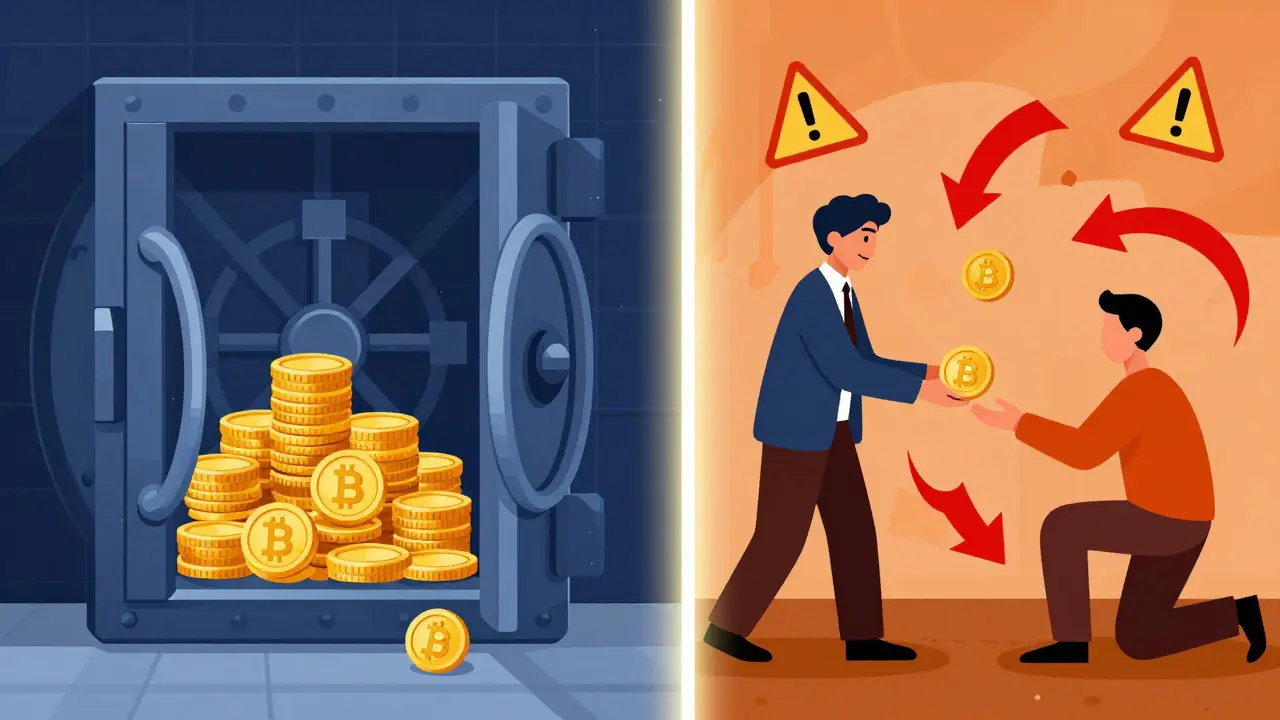
Why Did Vietnam Choose This Path?
You might wonder why a country ranked 8th globally in cryptocurrency adoption according to Chainalysis' 2021 Global Crypto Adoption Index would maintain such a strict ban on payments. The answer lies in monetary sovereignty. Le Truong Tung, president of FTP University, explained that accepting Bitcoin as payment makes the economy complex and difficult to control. It creates opportunities for tax evasion and illegal transfers. More importantly, it challenges the state's ability to issue currency. If people start using decentralized digital assets for daily spending, the central bank loses some leverage over monetary policy.
This approach contrasts sharply with neighbors like Singapore and Thailand. Singapore’s Monetary Authority created a licensing regime for digital payment token services, allowing regulated exchanges to operate. Thailand permitted cryptocurrency exchanges under strict licensing. Vietnam took a different route: support digital innovation, but only within frameworks where the central bank maintains oversight. Dr. Nguyen Xuan Thanh, former director of the Vietnam Program at Harvard University's Kennedy School, noted that this reflects traditional central banking concerns but may miss the technological potential of blockchain. The SBV prefers to channel digital payment growth through conventional electronic banking solutions, which have seen 35% annual growth since 2015.
Risks for Investors and Merchants
If you are an investor, your main risk is not the fine itself, but the lack of consumer protection. Since crypto isn't recognized as a legal tender or a standard financial instrument for payments, disputes are harder to resolve legally. However, if you are a business owner, the risk is direct and severe. Using crypto to pay suppliers or accept customer payments exposes your company to administrative fines. Here is a quick comparison of the risks:
| Factor | Individuals | Businesses/Merchants |
|---|---|---|
| Fine Amount | 150-200 million VND (if prosecuted) | 150-200 million VND + potential business license issues |
| Enforcement Likelihood | Low for P2P transfers; Higher for large transactions | High for public acceptance of crypto |
| Tax Implications | Unclear status; potential future taxation as asset | Must report income; crypto payments may complicate audit trails |
| Legal Recourse | Limited; contracts may be void | Limited; higher liability for non-compliance |
Note that while the fine is fixed, the actual cost to a business includes legal fees and reputational damage. The Ministry of Finance’s 2022 Draft Circular on Tax Management for Virtual Asset Transactions suggests a shift toward recognizing crypto as a taxable asset. This means that even if you aren't fined for payment, you might face tax questions on capital gains. The legal gray area remains, but the direction is clear: treat crypto as an investment asset, not a spending tool.

Current Regulatory Outlook
As of 2026, the core prohibition remains in place. The 2021 Draft Decree on Management of Virtual Assets maintained the ban on using crypto as payment while proposing a framework for treating them as assets. The SBV’s 2022 Monetary Policy Report reiterated that cryptocurrencies are not legal tender. However, pressure for modernization is growing. Dr. Tran Ngoc Ca, former Deputy Director of Vietnam's Academy of Finance, stated in 2023 that the fine structure has become increasingly difficult to implement as usage grows. This tension between enforcement capability and technological reality suggests that while the ban stays, the focus may shift from punishing payments to regulating the underlying asset market more comprehensively.
For now, the safest strategy is to keep your crypto in cold storage or reputable exchanges and use traditional bank transfers for all commercial transactions. The 150-200 million VND fine is a real threat, particularly for businesses, and the legal framework shows no signs of relaxing in the near term.
Frequently Asked Questions
Is it illegal to hold Bitcoin in Vietnam?
No, holding Bitcoin is not explicitly illegal. The ban applies specifically to using cryptocurrency as a means of payment. You can buy, sell, and store crypto, but using it to pay for goods or services triggers the 150-200 million VND fine.
What is the exact amount of the fine for using crypto payments?
The administrative fine ranges from 150 million to 200 million VND (approximately $6,500-$8,900 USD) for each violation, based on Decree No. 96/2014/ND-CP, Clause 6, Article 27.
Does the fine apply to stablecoins like USDT?
Yes. The law refers to "bitcoin and other similar virtual currencies." Stablecoins are considered virtual currencies under this broad definition, so using them for payment carries the same penalty risk.
Can I pay my employees in cryptocurrency?
Technically, yes, if both parties agree, but it is risky. If the employee treats it as salary, it becomes a payment method. To avoid legal complications, most companies pay salaries in VND via bank transfer and offer crypto bonuses separately as gifts or investments, though tax treatment should be verified with a local accountant.
Has the law changed recently in 2025 or 2026?
The core ban on crypto payments remains unchanged as of 2026. Recent drafts focus on taxing crypto assets and creating a framework for virtual asset management, but the prohibition on using crypto as a legal tender or payment instrument persists.