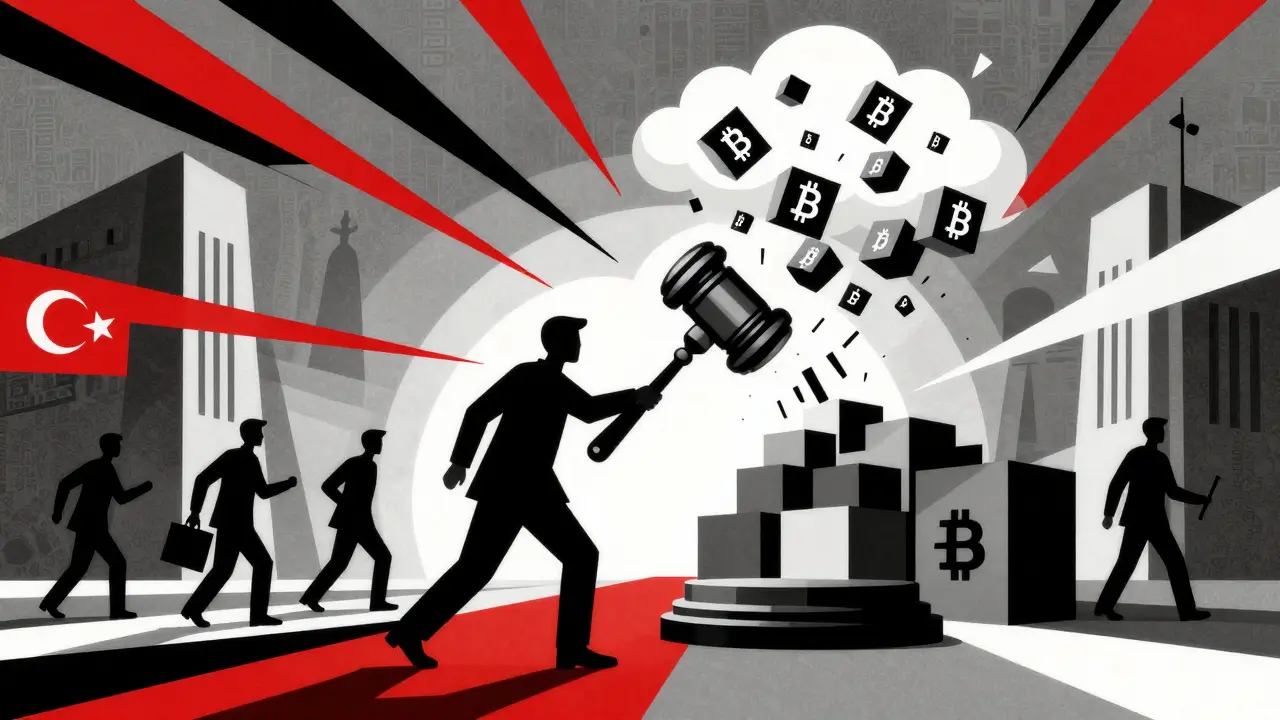
For years, if you lived in Turkey and traded Bitcoin, you operated in a gray zone. You could buy and sell, but you couldn't legally pay for your coffee with it. That ambiguity ended abruptly in mid-2024. With the passage of Law No. 7518, Turkey shifted from a laissez-faire attitude to one of the most structured-and restrictive-crypto regulatory frameworks in the world. By 2026, this isn't just theory; it is the daily reality for millions of Turkish citizens and the hundreds of companies trying to operate within its borders.
The core message from Ankara is clear: digital assets are legal financial instruments, but they cannot challenge the sovereignty of the Turkish lira. This dual approach allows trading under strict government oversight while maintaining a hard ban on using cryptocurrency as a medium of exchange. For traders, this means higher security standards and clearer rights. For businesses, it means navigating a complex web of licensing requirements, capital thresholds, and anti-money laundering (AML) protocols that rival or exceed those in the European Union.
The Foundation: Law No. 7518 and the End of Ambiguity
To understand where we stand in 2026, we have to look at the legislation that changed everything. Submitted to the Grand National Assembly in May 2024 and enacted in June, Law No. 7518 amended the Capital Markets Law to formally define terms like 'cryptoasset,' 'wallet,' and 'platform.' Before this, these concepts existed in a legal vacuum. Now, they are codified.
The law established the requirement for all Crypto Asset Service Providers (CASPs) to obtain operating licenses from the Turkish Capital Markets Board (CMB). This wasn't a suggestion; it was a mandate. The CMB became the single point of authority for crypto oversight, replacing a fragmented system of informal guidelines. This centralization mirrors the efficiency seen in other major markets but adds a layer of strictness specific to Turkey's economic goals.
| Requirement Type | Specific Criteria | Purpose |
|---|---|---|
| Minimum Capital (Exchanges) | TRY 150 million (~$4.1 million) | Ensure financial stability and solvency |
| Minimum Capital (Custodians) | TRY 500 million (~$13.7 million) | Protect user assets against insolvency |
| Licensing Authority | Turkish Capital Markets Board (CMB) | Centralized oversight and sanctioning power |
| Compliance Focus | AML/KYC, Technical Standards (TÜBİTAK) | Prevent money laundering and ensure tech security |
These capital requirements are not trivial. They act as a barrier to entry, effectively consolidating the market around well-funded operators. Small startups found themselves priced out, while established firms with deep pockets secured their dominance. This has led to a more stable, albeit less competitive, marketplace.
The Three Pillars of Oversight
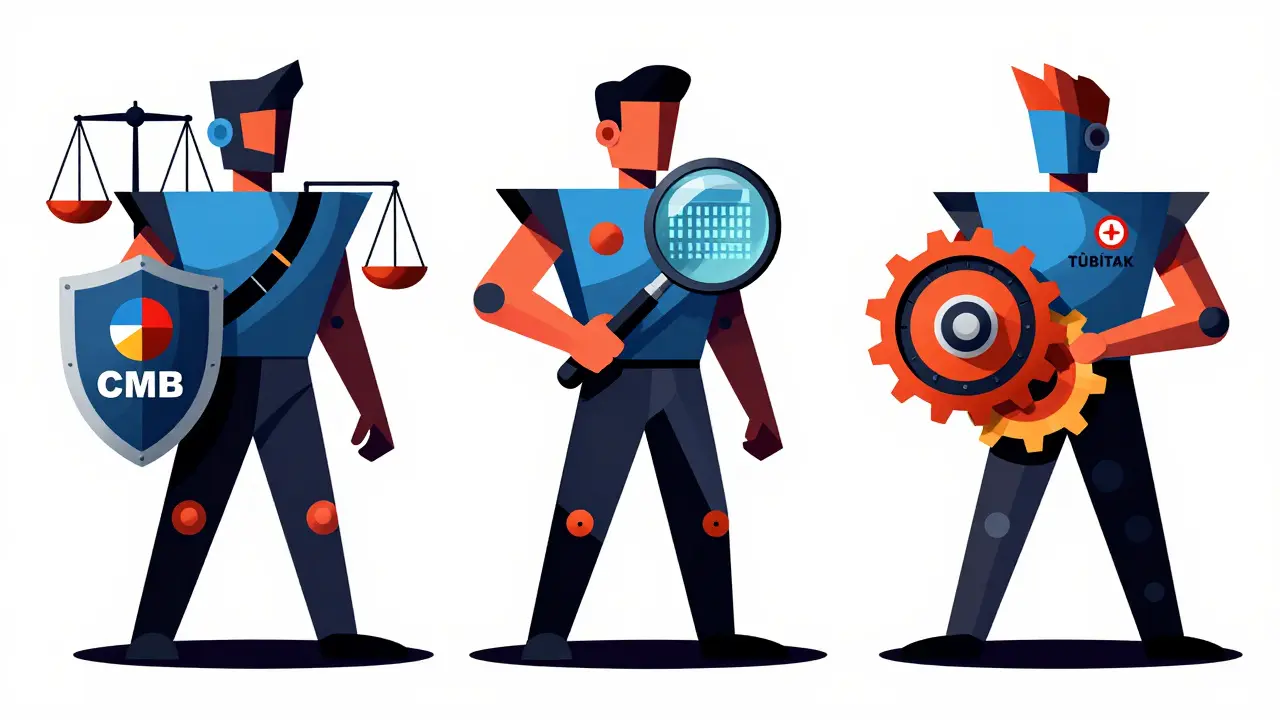
Turkey didn't just hand the keys to one agency. Instead, it created a tri-party regulatory structure designed to cover every angle of the industry. Understanding who does what is crucial for anyone operating in this space.
- The Capital Markets Board (CMB): As the primary regulator, the CMB sets the rules, issues licenses, and imposes sanctions. If you are an exchange, you answer to them. They monitor market integrity and ensure that licensed platforms adhere to operational standards.
- The Financial Crimes Investigation Board (MASAK): Think of MASAK as the police force of the crypto world. They enforce Anti-Money Laundering (AML) regulations. Their powers were significantly expanded in 2025, allowing them to freeze crypto accounts linked to suspicious activity without prior court approval in certain cases. This aggressive stance signals zero tolerance for illicit finance.
- TÜBİTAK (Scientific and Technological Research Council): While the CMB handles the business side and MASAK handles the crime side, TÜBİTAK handles the code. They focus on technical compliance and infrastructure standards. They ensure that the technology behind the exchanges meets rigorous security specifications, reducing the risk of hacks and systemic failures.
This division of labor creates comprehensive oversight. However, it also means that compliance is no longer just about checking boxes; it requires dedicated teams for legal, financial, and technical adherence. The learning curve for new entrants is steep, often taking 6 to 12 months to achieve full compliance.
The Payment Ban: Why You Can't Buy Bread with Bitcoin
Perhaps the most controversial aspect of Turkey's framework is the absolute prohibition on using cryptocurrencies for payments. This rule, initially introduced by the Central Bank of Turkey (TCMB) in April 2021, remains firmly in place. While you can trade, hold, and transfer crypto between wallets, you cannot use it to purchase goods or services.
Why such a hard line? The government views cryptocurrency as a threat to monetary sovereignty. In a country battling high inflation, allowing a parallel currency system undermines the value of the Turkish lira. By banning payments, the state ensures that all commercial transactions remain within the traditional banking system, subject to standard monetary policy controls.
For users, this restriction is frustrating. Many had hoped to use stablecoins for remittances or e-commerce to avoid currency devaluation. Industry advocates argue that this ban stifles innovation and ignores legitimate use cases. Yet, the government's stance is unwavering. Any attempt to circumvent this ban risks severe penalties, including account freezes and legal action.
Enforcement in Action: The 2025 Crackdown
Regulations mean little without enforcement. Throughout 2025, Turkey demonstrated its commitment to cleaning up the market. In July 2025, authorities blocked access to 46 unlicensed exchanges, including popular decentralized platforms like PancakeSwap. This move sent shockwaves through the community, cutting off easy access to DeFi services for many users.
The crackdown wasn't limited to foreign platforms. Domestic players faced intense scrutiny. In late July 2025, the founder of ICRYPEX, a major local exchange, was detained. Allegations suggested links between crypto funding and political dissent, highlighting how regulatory tools can sometimes be wielded for broader political control. This incident underscored a critical risk: in Turkey, crypto compliance is not just about financial rules; it intersects with national security and political stability.
These actions served as a warning. Unlicensed operations would not be tolerated. The blocking of DEXs also forced users onto centralized, licensed platforms, further consolidating the CMB's oversight capabilities. For the average trader, this meant migrating to regulated exchanges, accepting stricter KYC procedures, and losing some of the anonymity associated with decentralized finance.
Comparing Turkey to the World: MiCA, US, and China
How does Turkey's approach stack up against global standards? It sits in a unique middle ground. Compared to the United States' fragmented system, where multiple agencies (SEC, CFTC, IRS) overlap and conflict, Turkey offers clarity. There is one main regulator (CMB), making it easier for businesses to know exactly what is required.
When compared to the European Union's Markets in Crypto-Assets (MiCA) regulation, Turkey's framework is similar in structure but more restrictive in practice. MiCA allows for broader usage of stablecoins and payments, whereas Turkey bans payments entirely. Turkey's capital requirements are also higher than many EU member states, creating a tougher environment for small players.
On the other end of the spectrum, Turkey is far less severe than China, which implemented a complete ban on all crypto activities. Turkey still permits trading and ownership, recognizing the economic potential of the sector. It mirrors South Korea's licensed exchange model but adds stricter reporting obligations and a unique payment ban. This hybrid approach positions Turkey as a model for emerging markets seeking to balance innovation with financial stability.

What This Means for Traders and Businesses in 2026
If you are a trader in Turkey today, your experience is defined by security and bureaucracy. Licensed exchanges offer robust consumer protection, regular audits, and insured custody solutions. However, you must navigate extensive documentation requirements. Transactions exceeding 15,000 Turkish lira require strict identity verification and documented explanations. Delays in account verification are common, and confusion about compliance rules persists among retail users.
For businesses, the cost of doing business has skyrocketed. Compliance infrastructure, risk management teams, and price monitoring systems are mandatory. The consulting industry specializing in Turkish crypto compliance has boomed, with legal and technical advisory services commanding premium rates. Documentation is primarily available in Turkish, creating additional hurdles for international operators looking to enter the market.
Despite these challenges, the market continues to grow. Over 20% of the Turkish population owns digital assets, driven by inflation hedging and global adoption trends. As unlicensed alternatives face continued enforcement, licensed exchanges are capturing increasing market share. The result is a cleaner, safer, but more expensive ecosystem.
Future Outlook: Tightening the Screws
The regulatory journey is far from over. In 2026, the Turkish government is drafting additional legislation to expand MASAK's authority. Proposed measures include tighter restrictions on stablecoin transfers to prevent capital flight and enhanced reporting requirements with heavy penalties for non-compliance. These developments align with Financial Action Task Force (FATF) recommendations, signaling Turkey's desire to integrate fully into the global financial system.
The trajectory suggests that Turkey will maintain its dual approach: allowing regulated trading while preventing crypto from undermining traditional monetary policy. For investors and businesses, this means staying agile. Regulations will evolve, enforcement will intensify, and the cost of compliance will likely rise. Those who adapt quickly and prioritize transparency will thrive. Those who try to cut corners will find themselves blocked, fined, or worse.
Is it legal to own cryptocurrency in Turkey?
Yes, owning and trading cryptocurrency is legal in Turkey. However, using cryptocurrency to pay for goods and services is strictly prohibited. All trading must occur through licensed Crypto Asset Service Providers (CASPs) regulated by the Capital Markets Board (CMB).
What is Law No. 7518?
Law No. 7518 is the foundational legislation for crypto regulation in Turkey, enacted in June 2024. It defines key terms like 'cryptoasset' and 'wallet,' mandates licensing for all service providers, and establishes the Capital Markets Board as the primary regulatory authority.
Can I use decentralized exchanges (DEXs) in Turkey?
Access to many decentralized exchanges, such as PancakeSwap, was blocked by Turkish authorities in July 2025. Using unlicensed platforms carries significant legal and financial risks, including account freezes and potential penalties. Users are strongly advised to stick to licensed domestic exchanges.
What are the capital requirements for starting a crypto exchange in Turkey?
To operate as a crypto exchange, you need a minimum capital of TRY 150 million (approximately $4.1 million). Custody services require even more, at TRY 500 million (approximately $13.7 million). These funds must be maintained to ensure financial stability and protect user assets.
How does Turkey's crypto regulation compare to the EU's MiCA?
Turkey's framework is structurally similar to the EU's MiCA regulation, offering clear definitions and centralized oversight. However, Turkey is more restrictive, particularly regarding the ban on crypto payments and higher capital requirements. Unlike the EU, Turkey does not allow cryptocurrencies to function as a medium of exchange for everyday transactions.
What happens if I fail to comply with AML regulations?
Non-compliance with Anti-Money Laundering (AML) rules enforced by MASAK can lead to severe consequences. These include freezing of crypto and bank accounts, heavy fines, revocation of licenses, and potential criminal charges. MASAK has expanded powers to act swiftly without prior court approval in suspicious cases.