You are looking for a review of Trustdex, but here is the hard truth you need to hear right now: Trustdex is a defunct cryptocurrency exchange that has been offline since approximately 2019. If you are trying to log in, deposit funds, or trade on this platform in 2026, stop immediately. The website is non-operational, and the company has ceased all activities. There is no customer support, no trading engine, and no way to recover assets if you somehow still have an account from years ago. This review serves as a critical warning rather than a guide on how to use the service, because using it is impossible.
The Current Status of Trustdex: Permanently Closed
When we talk about Trustdex Crypto Exchange, we are talking about a digital ghost town. According to data from Cryptowisser, a platform dedicated to tracking exchange statuses, Trustdex was officially marked as "dead" in December 2022. However, the signs were there much earlier. The last documented activity on their social media channels, specifically Twitter, dates back to 2019. That means for over three years before being formally listed in the "Exchange Graveyard," the platform was already silent.
This silence is not a technical glitch. It is a complete cessation of operations. Unlike some exchanges that undergo maintenance or temporary outages during market volatility, Trustdex simply stopped existing as an active business entity. There were no official press releases explaining the closure. There were no statements from the founding team regarding bankruptcy, acquisition, or regulatory shutdown. For users who might have had funds there, this lack of communication is the most dangerous aspect. In the world of cryptocurrency finance, an exchange that disappears without a word usually implies insolvency or abandonment.
What Was Trustdex? A Look Back at Its Features
To understand why people might still search for this name, we need to look at what the platform offered when it was alive. Trustdex operated during the explosive growth phase of the crypto market, roughly between 2017 and 2019. At that time, it positioned itself not just as a place to buy and sell Bitcoin, but as a broader financial ecosystem.
The platform supported several key features that were standard for mid-tier exchanges of that era:
- Cryptocurrency Trading Pairs: Users could trade various digital assets against major currencies like Bitcoin and US Dollars.
- Lending and Savings Products: Trustdex offered interest-bearing accounts for idle crypto, allowing users to earn passive income on their holdings.
- Secured Transactions: They provided escrow-like services to protect buyers and sellers in peer-to-peer trades.
- Traditional Payment Integration: One of its selling points was the ability to deposit via wire transfers and credit cards, which lowered the barrier to entry for beginners.
While these features sound robust, they were common among hundreds of exchanges launching in the late 2010s. The presence of lending products actually adds a layer of risk. When an exchange offers savings or lending, it often lends out user funds to generate yield. If the underlying loans go bad or the management is poor, the exchange can become insolvent quickly. This structural risk likely contributed to its eventual collapse.
Fee Structure Analysis: Competitive or Costly?
Before its demise, Trustdex’s fee model was a topic of discussion among traders. They moved away from the complex maker-taker models used by giants like Binance or Coinbase Pro. Instead, they implemented a flat fee structure. Here is how it broke down:
| Fee Type | Trustdex Rate | Industry Context |
|---|---|---|
| Trading Fee | 0.25% flat rate | Average for global exchanges; high for Asian markets |
| Bitcoin Withdrawal | 0.0005 BTC | ~40% lower than the industry average of 0.0008 BTC |
| Deposit Fees | Varied by method | Credit card deposits often incurred processing fees |
The 0.25% trading fee was straightforward. You paid the same whether you were providing liquidity (maker) or taking it (taker). While simple, this rate was considered slightly elevated compared to competitors in Asia, where fees often dropped below 0.1%. However, their withdrawal fees for Bitcoin were genuinely competitive. Charging 0.0005 BTC for a withdrawal was significantly cheaper than the standard 0.0008 BTC charged by many rivals. This suggested that while they weren’t the cheapest place to trade, they tried to make moving your money out affordable-a feature that matters less now that the doors are closed.
Why Did Trustdex Fail? Risk Factors and Red Flags
We may never know the exact internal reasons for Trustdex’s shutdown, but we can analyze the external factors that likely led to its end. The period between 2017 and 2019 was a gold rush for crypto exchanges. Hundreds launched, promising easy profits and high yields. Many failed due to:
- Regulatory Pressure: Governments worldwide began cracking down on unlicensed exchanges. Without clear legal standing, platforms like Trustdex faced existential threats.
- Security Breaches: While there is no public record of a massive hack targeting Trustdex, the threat was constant. Smaller exchanges with limited security budgets were frequent targets.
- Competition from Giants: As Binance, Coinbase, and Kraken scaled up, they offered better liquidity, lower fees, and stronger security. Mid-sized exchanges struggled to retain users.
- Unsustainable Business Models: Offering high-interest savings products requires significant capital and risk management. If the market turned bearish, these liabilities could bankrupt the exchange.
The absence of any user testimonials or complaints after 2019 is telling. Usually, when an exchange fails, there is a flood of angry posts on Reddit, Twitter, and trustpilot sites. The silence suggests that either the user base was small, or the community dispersed so quickly that no organized effort to seek refunds remained. This "quiet failure" is a hallmark of many smaller crypto projects that run out of funding or lose leadership interest.
Safety First: How to Avoid Defunct Exchanges
Your search for a Trustdex review indicates you value transparency. To ensure you don’t fall victim to another dead platform, apply these checks to any exchange you consider in 2026:
- Check Recent Activity: Look at the exchange’s Twitter, Discord, and Telegram. Are they posting weekly updates? If the last post was months ago, walk away.
- Verify Regulatory Licenses: Does the exchange hold licenses in reputable jurisdictions (like the US, EU, UK, or Singapore)? Unregulated offshore entities are higher risk.
- Look for Proof of Reserves: Legitimate exchanges publish monthly audits showing they actually hold the user funds they claim to have. Trustdex never did this publicly.
- Read Independent Reviews: Don’t rely on the exchange’s own website. Check third-party trackers like CoinMarketCap, CoinGecko, or specialized review sites like Cryptowisser.
- Test Small Withdrawals: Before depositing large amounts, deposit a small sum and try to withdraw it. If the process is difficult or delayed, do not proceed.
Better Alternatives to Trustdex in 2026
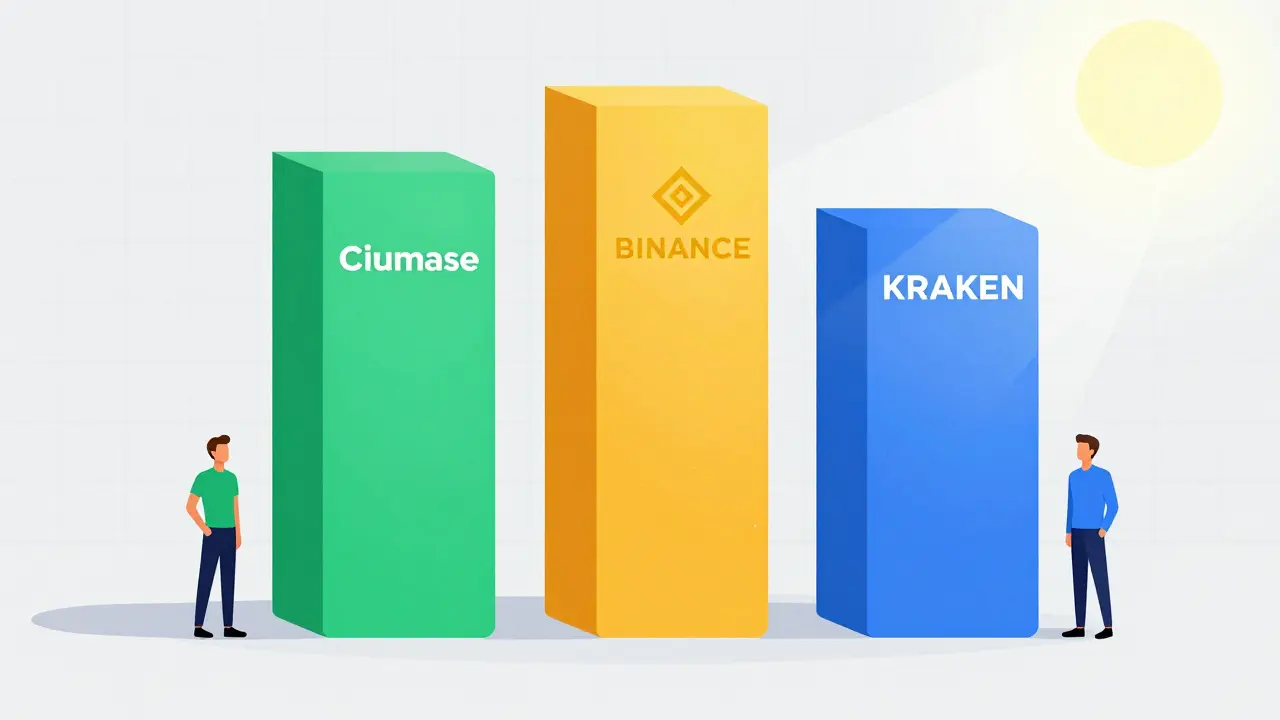
Since Trustdex is gone, you need a reliable replacement. The landscape has matured significantly since 2019. Today, you should prioritize platforms with proven track records, strong security, and regulatory compliance. Here are three top-tier alternatives that offer the features Trustdex once had, but with far greater safety:
1. Coinbase
Best for: Beginners and those wanting maximum security.
Coinbase is one of the largest regulated exchanges in the US. It offers easy fiat on-ramps (bank transfers, debit cards), a user-friendly interface, and insured custodial storage. While fees can be higher for instant buys, their reliability is unmatched. They also offer staking services similar to Trustdex’s old savings products.
2. Binance
Best for: Advanced traders and low fees.
If you missed Trustdex’s low withdrawal fees, Binance offers even lower trading fees (often starting at 0.1%). It supports hundreds of cryptocurrencies and has a robust ecosystem including lending, margin trading, and futures. Note that availability varies by country due to regulations.
3. Kraken
Best for: Security-conscious users and privacy.
Kraken has never been hacked and is known for its strict security protocols. It offers competitive fees, excellent customer support, and a wide range of trading pairs. It is a solid choice for users who want a professional-grade experience without the complexity of decentralized exchanges.
| Feature | Coinbase | Binance | Kraken |
|---|---|---|---|
| Regulation | High (US/EU) | Moderate (Global) | High (Global) |
| Trading Fees | Higher | Low | Competitive |
| User Experience | Beginner Friendly | Advanced | Intermediate |
| Savings/Lending | Yes (Staking) | Yes (Earn) | Yes (Staking) |
Conclusion: Move On from Trustdex
There is no path forward with Trustdex. It is a closed chapter in the history of cryptocurrency. Holding onto hope that it will reopen is financially dangerous. Your priority should be securing your current assets on reputable, active platforms. Use the alternatives listed above to continue your crypto journey safely. Always remember: in crypto, if an exchange is quiet, it is likely dead.
Is Trustdex safe to use in 2026?
No, Trustdex is not safe to use because it is completely defunct. The platform has been offline since approximately 2019, and its website is non-operational. Attempting to interact with it poses a security risk, such as phishing scams impersonating the brand.
Can I recover my funds from Trustdex?
It is highly unlikely. Since the exchange ceased operations without official communication or a bankruptcy proceeding, there is no mechanism for fund recovery. Users who held assets on Trustdex before 2019 have effectively lost access to them.
Why did Trustdex shut down?
The exact reason is unknown as the team issued no statement. However, common causes for such closures include regulatory pressure, insolvency from lending products, security breaches, or inability to compete with larger exchanges like Binance and Coinbase.
What is the best alternative to Trustdex?
For beginners, Coinbase is the best alternative due to its ease of use and regulation. For advanced traders seeking low fees, Binance is recommended. For those prioritizing security and privacy, Kraken is an excellent choice.
Did Trustdex have good fees?
When operational, Trustdex had a flat 0.25% trading fee, which was average globally but high for Asian markets. Their Bitcoin withdrawal fee of 0.0005 BTC was competitive, being 40% lower than the industry average at the time.
How can I tell if a crypto exchange is defunct?
Signs include a non-functional website, inactive social media accounts for over six months, lack of recent news or updates, and listings on "exchange graveyard" trackers like Cryptowisser. Always verify regulatory status and proof of reserves before depositing funds.
Comments
Steven Jacobowitz
Look, I know this is old news but the silence from these platforms is what kills me every time. You deposit your hard earned cash into a black box and then poof they just vanish without a trace or a single email update. It makes you wonder if any of these mid tier exchanges ever had actual proof of reserves or if it was all just smoke and mirrors from day one. The fact that Trustdex offered lending products really screams red flag because that means they were likely overleveraging user funds to generate yield which is a recipe for disaster when the market turns bearish. I always tell people to stick to the big regulated names like Coinbase or Kraken because at least there is some semblance of accountability there even if the fees are slightly higher. Trying to recover funds from a ghost town like this is literally impossible so stop hoping for a miracle and move on to a secure wallet instead.
June 9, 2026 at 12:44
JEVON HALL
yeah man i remember when trustdex was around back in the day lol. they seemed pretty decent with those low withdrawal fees for btc which was rare back then. most places charged an arm and a leg to move your coins out. but yeah its sad how many exchanges just died off during that crypto winter period. probably ran out of money or got scared by regulations. good thing we have better options now like binance or kraken. just dont leave your eggs in one basket tho 🥚💸
June 10, 2026 at 01:45
Erik Kirana
It is absolutely disgraceful that entities like this operated with such blatant disregard for user security and transparency 😡. The lack of regulatory oversight allowed them to siphon funds through dubious lending schemes while offering nothing but empty promises to their clientele. One must ask themselves why anyone would trust a platform that does not publish monthly audits or maintain active communication channels with its users. This is precisely why we need stricter financial regulations enforced by government bodies to protect innocent investors from these predatory operations. Do not fall for the nostalgia trap; these platforms were built on sand and they collapsed exactly as predicted by any competent financial analyst 📉🚫.
June 10, 2026 at 09:56
Dr Lynea LaVoy
I completely agree with the sentiment here about moving on to more secure alternatives. It is heartbreaking to think about the individuals who lost life savings because they trusted a platform that vanished overnight. For anyone still holding onto hope regarding Trustdex, please understand that without legal proceedings or bankruptcy filings, recovery is statistically zero. I recommend looking into self-custody solutions like hardware wallets to ensure you never face this vulnerability again. Education is our best defense against these types of digital ghosts. Let us support each other by sharing verified information about safe practices rather than dwelling on past losses 💪✨.
June 10, 2026 at 15:49
Matthew Malone
Another American dream crushed by unregulated offshore gambling dens 🇺🇸. It is pathetic that we allow these international scammers to operate within our borders without consequence. If they followed proper US banking laws and registered with the SEC none of this would happen. Instead we get silent failures and lost pensions. Support local regulated exchanges like Coinbase that actually pay taxes and follow the rules. Stop enabling this globalist crypto chaos.
June 12, 2026 at 06:04