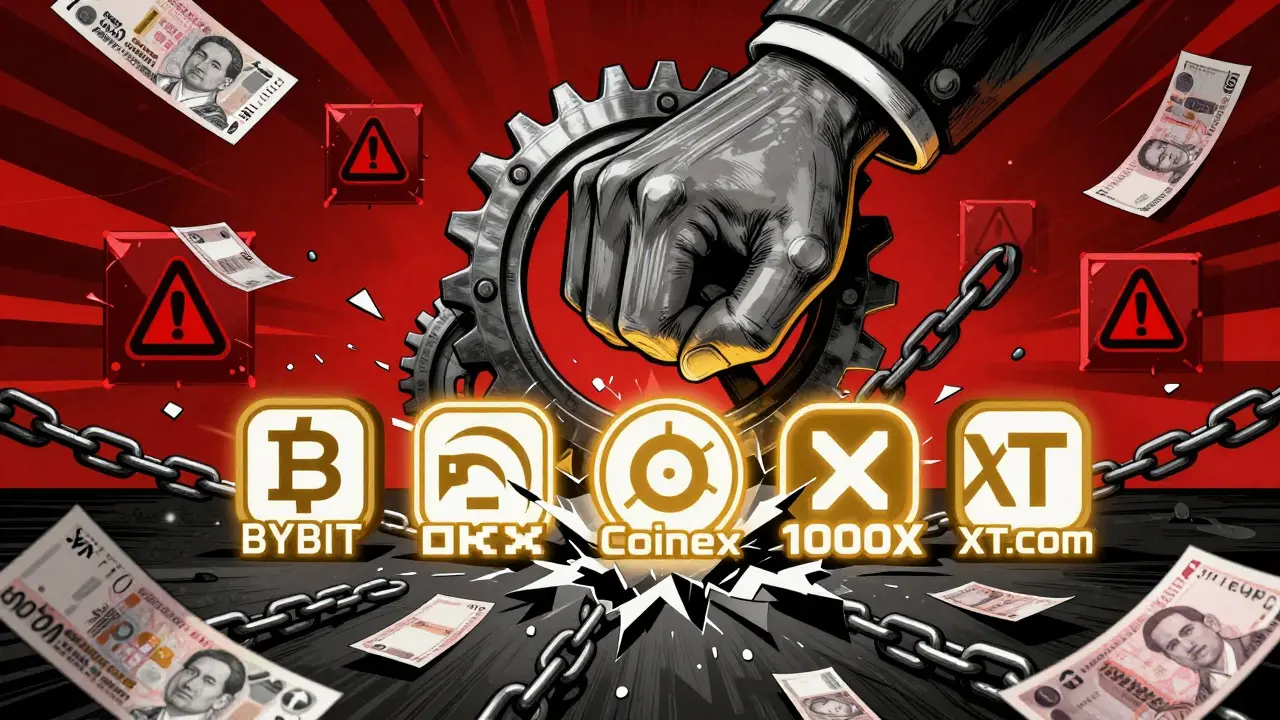
On June 28, 2025, Thailand shut down five major foreign peer-to-peer crypto platforms overnight. Bybit, OKX, CoinEx, 1000X, and XT.COM were all blocked from accessing Thai users. No court order. No warning beyond a one-month notice. Just a government decree and a digital wall slammed shut.
Why Thailand Did This
Thailand didn’t ban crypto. It banned foreign unlicensed platforms that were operating like wild west outposts - no KYC, no AML checks, no accountability. The Thai Securities and Exchange Commission (SEC) found these platforms were being used to move stolen money, run fake investment schemes, and launder cash from scams. In 2024 alone, Thai authorities traced over 12 billion baht ($330 million USD) in suspicious crypto flows tied to unregulated foreign exchanges. The crackdown wasn’t random. It followed two Royal Decrees signed on April 13, 2025. One forced every foreign crypto platform targeting Thai users to get a license from the SEC. The other gave the Ministry of Digital Economy and Society (MDES) the power to block websites without a judge’s approval. That’s not common. Most countries need court orders. Thailand cut the red tape to act fast.Who Got Blocked and Why
The five banned platforms weren’t small players. Bybit and OKX are top 10 exchanges globally. But they didn’t apply for a Thai license. They assumed they could ignore Thai law because they were based overseas. That didn’t fly. The SEC made it clear: if you’re marketing to Thai users, accepting Thai baht, or letting Thai IDs sign up - you’re operating in Thailand. That means you need a license. No exceptions. The platforms that refused to comply were labeled as digital asset exchanges under Thai law - meaning they were breaking the same rules banks have to follow. The ban wasn’t about the tech. It was about control. Thailand wanted to know who was trading, where the money came from, and who was getting ripped off. Foreign platforms didn’t share that data. So they got cut off.What Happened to Users
About 1.2 million Thai crypto users held assets on the banned platforms. The SEC gave them 30 days to withdraw their funds. That sounds like time - until you realize many users had thousands of dollars locked in trading positions, staking rewards, or illiquid tokens. Some couldn’t sell without taking big losses. Others couldn’t even access withdrawal functions as the platforms froze withdrawals to avoid mass outflows. Reddit threads and Thai Facebook groups filled with panic. “I had 15,000 USD in OKX. Now I can’t touch it,” wrote one user. Another said, “They gave us a month, but the platform started delaying withdrawals after the announcement. It felt like a trap.” The SEC didn’t offer compensation. Their message was simple: use licensed exchanges next time. But for many, that meant learning a whole new system - and losing access to the liquidity and lower fees these global platforms offered.
Who Else Got Hit
The ban didn’t stop at exchanges. Banks, telecom companies, and even messaging apps like Line and Telegram were told to stop letting scammers use their services. If a bank account got used to fund a crypto scam and the bank didn’t flag it, the bank could be sued. If a telecom provider didn’t block a scammer’s SIM card linked to a crypto fraud ring, they could face fines. This was a shift. Before, crypto scams were seen as “user error.” Now, the infrastructure providers are legally responsible. It’s a heavy burden, but it forced real change. Banks started rolling out new crypto transaction monitoring tools. Telecom companies began shutting down numbers linked to known scam operators within hours.What’s Still Legal
Crypto isn’t banned in Thailand. It’s just regulated. You can still buy, sell, and trade digital assets - but only through Thai-licensed platforms. As of October 2025, there are 12 licensed exchanges operating in Thailand, including Bitkub, Zipmex, and Coinone Thailand. These platforms must follow strict rules: collect ID documents, report suspicious activity, keep user funds separate from company money, and submit monthly audits. Even more surprising? Thailand is pushing ahead with its own blockchain projects. In May 2025, the government announced plans to issue 5 billion baht ($150 million) in digital tokens called “G Tokens” - backed by government bonds. This isn’t a cryptocurrency. It’s a digital bond, meant to modernize how Thailand borrows money. They’re also testing a blockchain-based stock trading system for local securities firms. So while foreign P2P platforms are blocked, homegrown innovation is being encouraged.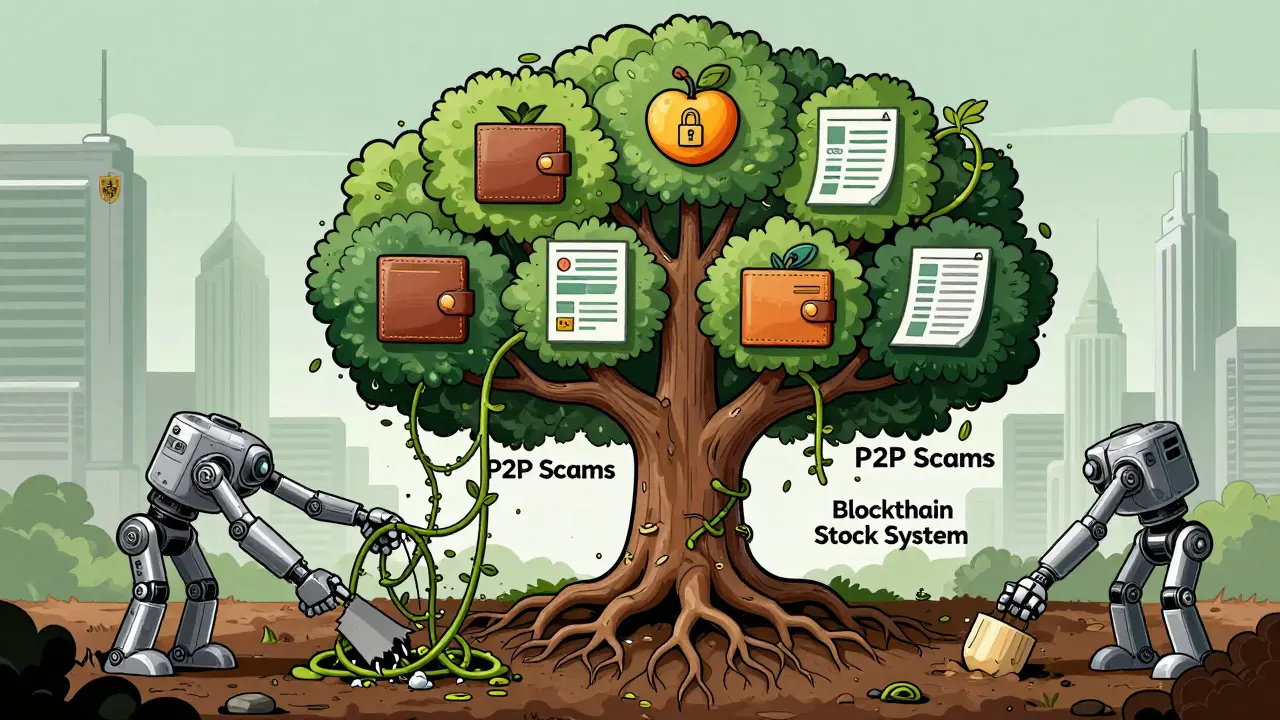
Comments
Andy Simms
Thailand’s move is actually pretty smart if you think about it. Most countries are too slow to react to crypto chaos, but they saw the writing on the wall - foreign platforms were using them as a free pass to run scams. The fact that they gave users 30 days to withdraw? That’s more than most governments do. Yeah, it sucked for people stuck with illiquid assets, but at least they didn’t just vanish overnight like in some other countries.
Also, holding banks and telecoms accountable? Long overdue. Scammers don’t operate in a vacuum. If your bank isn’t flagging $50k transfers to a crypto wallet tied to a fake NFT project, you’re part of the problem. This isn’t overreach - it’s basic hygiene.
And honestly, if you’re running a global exchange and you don’t bother licensing in a country that’s one of the top crypto adopters in SEA, you kinda deserve to get blocked. It’s not about stifling innovation - it’s about not being a lawless outlier.
January 27, 2026 at 22:09
MICHELLE REICHARD
Oh please. This is just authoritarian control dressed up as consumer protection. You think banning Bybit and OKX stops crime? No - it just pushes users to untraceable OTC desks and Telegram groups where there’s zero recourse. The SEC doesn’t want to regulate - they want to monopolize. And now Thai exchanges get to charge 2.5% fees and take 3 days to settle? That’s not safety, that’s rent-seeking.
Meanwhile, the government’s issuing ‘G Tokens’ backed by bonds? Classic. They’re creating their own crypto empire while crushing the competition. This isn’t about protecting citizens - it’s about power. And don’t even get me started on the ‘no court order’ clause. That’s not governance, that’s digital martial law.
January 27, 2026 at 22:33
tim ang
Big props to Thailand for actually doing something instead of just talking. I’ve seen so many countries say ‘we’re gonna crack down on crypto scams’ and then do nothing for years. Thailand? They moved fast, clear rules, gave people time to adjust - even if it hurt.
Yeah, some folks lost money, but honestly? If you were using an offshore platform with no KYC, you were already playing with fire. I get it - lower fees and faster withdrawals are nice. But when your money’s locked because the exchange froze withdrawals after the ban? That’s not the government’s fault, that’s the platform’s greed.
And the part about banks and telecoms getting fined? YES. Scammers need infrastructure to operate. Cut off the pipes, not just the water. This is the future. More countries are gonna have to follow suit. It’s messy, but necessary.
January 29, 2026 at 03:11
Julene Soria Marqués
So let me get this straight - you’re okay with 1.2 million people losing access to their funds because the government decided to play hardball? And you call that ‘responsible’? What about the guy who had his life savings in staking rewards that couldn’t be withdrawn? Or the small business that used USDT to pay suppliers? This isn’t regulation - it’s economic violence.
And now you’re praising Thai exchanges for charging 2.5%? That’s a tax on the poor. Meanwhile, the government’s launching its own digital tokens? Oh wow, how convenient. They’re basically saying: ‘You can trade crypto, but only with our monopoly.’ That’s not innovation. That’s state-sponsored capitalism with a side of hypocrisy.
Also, why are we even pretending this is about ‘scams’? If they really cared, they’d have gone after the local fraud rings first. Instead, they went after the biggest global names because it looked good on the news. Classic.
January 30, 2026 at 13:46
Bonnie Sands
This is all a cover for the Fed and IMF to push their own digital currency. Thailand’s just a pawn. They’ll force everyone onto G Tokens next, then track every single transaction. Welcome to the surveillance state.
January 31, 2026 at 11:32