You’ve probably stumbled across Tegro.Finance while scrolling through Telegram channels or searching for the next big opportunity on the TON Blockchain ecosystem. The promises sound familiar: low fees, easy entry, passive income through staking, and a chance to trade new projects before they hit the mainstream. But here is the hard truth that most marketing materials skip over. If you look at the actual numbers, Tegro.Finance is struggling to stay relevant in a market dominated by giants.
This isn’t just another generic review telling you to "do your own research." We are going to look at the cold, hard data from 2024 through 2026. We will examine why this platform exists, who it actually serves, and whether your money is safe sitting in its liquidity pools. By the end of this article, you’ll know exactly if Tegro.Finance fits your strategy or if it’s a trap for inexperienced traders.
The Core Identity: What Is Tegro.Finance?
To understand if this exchange is right for you, you first need to know what it actually is. Tegro.Finance is a decentralized exchange (DEX) operating primarily on the TON Blockchain, combining Automated Market Maker (AMM) functionality with an NFT marketplace called Libermall. It was launched around 2022 by Tegro LLC, a company that also operates a payment system known as Tegro Money.
Unlike centralized exchanges like Binance or Coinbase, Tegro.Finance does not hold your funds. You connect your wallet directly to the smart contracts. The platform’s main selling point is its focus on "newborn projects" on the TON network. In simple terms, it aims to be the place where brand-new tokens launch and find their first buyers. It also features a native utility token, TGR (Tegro), which is built on the BEP20 standard but interacts with the TON ecosystem.
However, there is a major red flag in its current status. As of late 2025, CoinMarketCap lists Tegro.Finance as an "Untracked Listing." This classification means the platform has insufficient trading volume to meet the criteria for standard tracking. For context, major exchanges process billions in daily volume. Tegro.Finance? Not even close. This status alone should make any serious investor pause.
Tokenomics and Price Reality: The TGR Story
Let’s talk about the money. The health of a decentralized exchange is often reflected in its native token. The TGR token is supposed to serve multiple purposes: governing the protocol, rewarding liquidity providers, and facilitating payments within the Tegro Money system. On paper, that sounds robust. In reality, the price action tells a different story.
| Metric | Value / Data Point | Source Context |
|---|---|---|
| All-Time High (ATH) | $0.2202 | Reached January 19, 2023 |
| Recent Price (May 2024) | $0.01594 - $0.01595 | CoinGecko data |
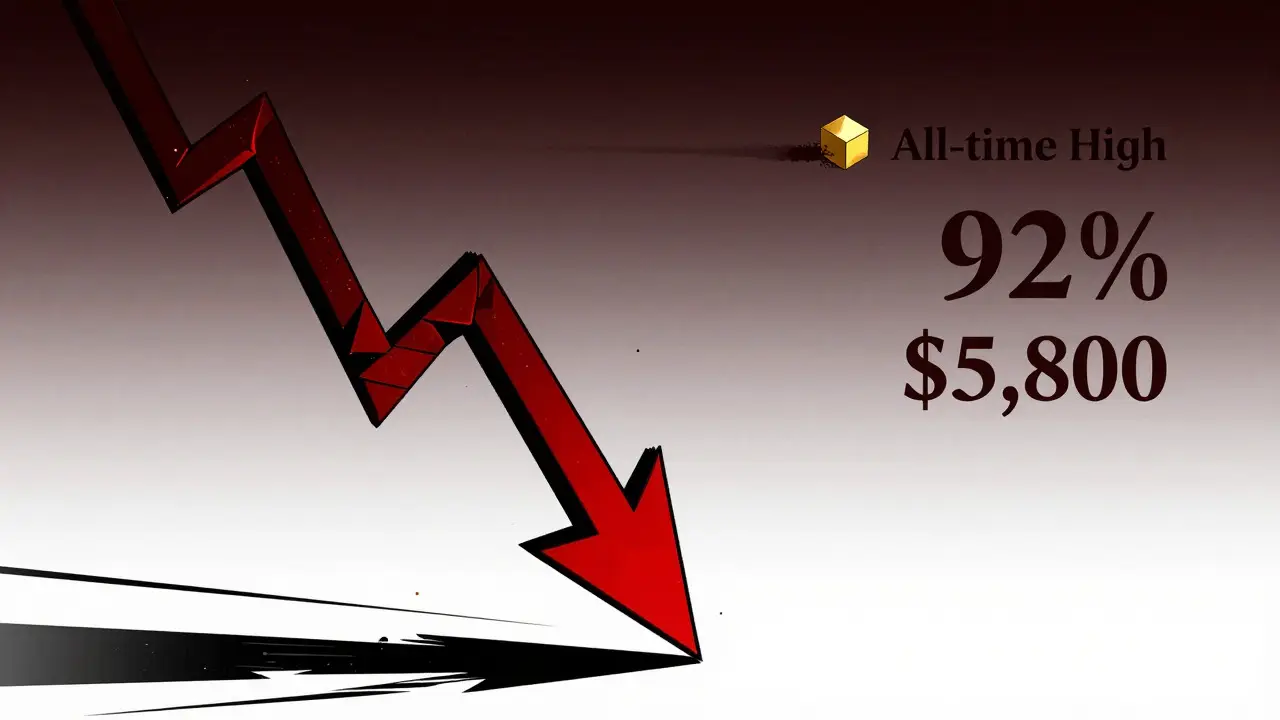
| Decline from ATH | ~92.8% | Significant loss of value |
| 24-Hour Volume | $5,816.60 | Recorded on Tokpie exchange |
| Market Cap | ~$159,400 | Based on 10M circulating supply |
Look at that decline. A 92.8% drop from its peak is catastrophic for any investment. While crypto markets are volatile, a sustained drop of this magnitude usually indicates a loss of confidence among holders. The daily trading volume of roughly $5,800 is tiny. To put that in perspective, top-tier DEXs like Uniswap handle over $1.5 billion in a single day. Even smaller niche exchanges on Solana or Polygon often see millions in daily volume. With Tegro.Finance, you are looking at a market so thin that a single large sell order could crash the price further due to slippage.
Features and User Experience: What Do You Get?
If you decide to ignore the volume issues, what does the platform actually offer? The user experience is designed to be frictionless, which is both a pro and a con.
- No KYC Required: You don’t need to upload your passport or verify your identity. You just connect a compatible cryptocurrency wallet. This appeals to privacy-focused users but offers zero recourse if something goes wrong.
- Integrated NFT Marketplace: Through Libermall, you can trade NFTs alongside tokens. This integration is unique but suffers from the same lack of liquidity as the token side.
- Staking and Farming: Users can stake TGR tokens to earn rewards. The platform promotes "utilitarian farming," where rewards include referral commissions and trading fee cashback. However, if the underlying asset (TGR) is losing value, the percentage yield becomes meaningless because your principal capital is shrinking faster than you earn interest.
- Binary Referral Program: Tegro.Finance uses a two-tier referral system. You earn from direct referrals and from the activities of people below you in the chain. This structure resembles multi-level marketing (MLM), which can attract users looking for passive income but often distracts from the core utility of the exchange.
The interface claims to offer the "lowest fees," but without specific transparency on commission rates, it’s hard to verify. Competitors like 1inch or SushiSwap clearly state their 0.3% base fees. Tegro.Finance’s vagueness here is concerning. Are the fees low, or are they hidden in the spread? Given the low volume, the spread (the difference between buy and sell prices) is likely wide, costing you more than advertised.
Safety and Legitimacy: Is It a Scam?
This is the question everyone asks. Is Tegro.Finance a scam? Based on available data, it is not flagged as a outright fraud by major watchdogs like Cryptolegal.uk. Tegro LLC is a registered company, and the platform has been operational since 2022. Revieweek, a review platform, noted in 2023 that it is "not a scam" and described it as a convenient tool for passive income.
However, "not a scam" doesn’t mean "safe investment." There is a huge difference between a fraudulent site that steals your keys and a legitimate business that fails to generate value. Tegro.Finance falls into the latter category. The risks here are economic, not necessarily criminal.
- Liquidity Risk: With only ~$5,800 in daily volume, getting out of a position quickly without significant price impact is difficult.
- Smart Contract Risk: As a DEX, your funds are locked in smart contracts. If there is a bug in the code, funds can be drained. Unlike centralized exchanges, there is no insurance fund mentioned.
- Regulatory Uncertainty: The platform operates without clear jurisdictional details. If regulators crack down on unregistered DEXs in the future, users have little protection.
- Token Depreciation: The 92% drop in TGR value shows that early investors have largely exited. New entrants are buying at the bottom of a falling knife.
User feedback is sparse. There are almost no discussions on Reddit or Trustpilot. This silence is deafening. In the crypto world, active communities drive adoption. The absence of a vibrant community suggests that most users have moved on to better-performing platforms.
Comparison: Tegro.Finance vs. The Competition
To truly understand where Tegro.Finance stands, we need to compare it to established players in the TON ecosystem and broader DEX market. The gap is staggering.
| Feature | Tegro.Finance | STON.fi (TON Native) | Uniswap (Ethereum) |
|---|---|---|---|
| Daily Volume | ~$5,800 | ~$15.2 Million | ~$1.5 Billion |
| Primary Chain | TON / BEP20 Hybrid | TON | Ethereum / L2s |
| Tracking Status | Untracked (CoinMarketCap) | Tracked & Top Tier | Tracked & Top Tier |
| Community Activity | Minimal / Silent | High / Active | Massive / Global |
| NFT Integration | Yes (Libermall) | Limited / Emerging | Yes (via partners) |
Notice the disparity. STON.fi, another DEX on the TON blockchain, handles millions in daily volume. It has a strong community and is actively tracked by all major data aggregators. Tegro.Finance lags behind by orders of magnitude. Unless you are specifically hunting for a micro-cap token that has *only* launched on Tegro.Finance (which is rare), there is little reason to use it over STON.fi or other established options.

Who Should Use Tegro.Finance? (And Who Should Avoid It)
Not every tool is for everyone. Here is a breakdown of who might find value in this platform and who should steer clear.
Consider Tegro.Finance if:
- You are a developer launching a very small, experimental project on TON and need a quick, low-barrier listing without rigorous audits or high fees.
- You are already deeply invested in the TGR token ecosystem and believe in a long-term recovery despite the current downtrend.
- You want to experiment with NFT trading on TON using the Libermall integration and are comfortable with high risk.
Avoid Tegro.Finance if:
- You are a mainstream trader looking for liquidity and tight spreads. You will lose money on slippage.
- You prioritize security and regulatory compliance. The lack of transparency and tracking is a warning sign.
- You are seeking passive income through staking. The yield may not offset the depreciation of the TGR token.
- You are new to crypto. The complexity of managing wallets and understanding AMM mechanics is better learned on larger, more documented platforms.
Final Verdict: Proceed with Extreme Caution
Tegro.Finance occupies a microscopic niche in the vast ocean of decentralized finance. It is not a scam in the traditional sense-it is a functioning piece of software operated by a registered entity. But it is also a platform that has failed to gain traction. The 92% drop in its native token price, the untracked status on major data sites, and the negligible trading volume paint a picture of stagnation.
In the fast-moving world of crypto, relevance is everything. Without volume, there is no liquidity. Without liquidity, there is no usability. Without usability, there is no future. Unless you have a specific, narrow reason to interact with newborn TON projects exclusively on this platform, the risks outweigh the rewards. Stick to established DEXs with proven track records, transparent fee structures, and active communities. Your capital deserves better than a silent exchange with disappearing value.
Is Tegro.Finance a scam?
Tegro.Finance is not listed as a scam by major watchdogs like Cryptolegal.uk, and it is operated by a registered company, Tegro LLC. However, it is classified as an "Untracked Listing" on CoinMarketCap due to extremely low trading volume, which indicates a lack of market confidence rather than outright fraud.
What is the current price of the TGR token?
As of May 2024, the TGR token was trading around $0.01594, representing a 92.8% decline from its all-time high of $0.2202 in January 2023. Prices fluctuate, but the long-term trend has been significantly downward.
Do I need KYC to use Tegro.Finance?
No, Tegro.Finance does not require Know Your Customer (KYC) verification. Users can connect their cryptocurrency wallets directly to trade, which offers privacy but reduces consumer protection.
How does Tegro.Finance compare to STON.fi?
STON.fi is a much larger and more liquid DEX on the TON blockchain, handling millions in daily volume compared to Tegro.Finance's thousands. STON.fi is fully tracked by major data aggregators and has a more active community, making it a safer choice for most traders.
What is the Libermall Marketplace?
Libermall is the integrated NFT marketplace within the Tegro.Finance ecosystem. It allows users to trade non-fungible tokens alongside cryptocurrencies, though it suffers from the same low liquidity issues as the main exchange.
Can I earn passive income on Tegro.Finance?
Yes, through staking TGR tokens and participating in referral programs. However, given the significant depreciation of the TGR token value, the nominal yield may not result in real profit when accounting for the loss of principal value.
Why is Tegro.Finance considered "Untracked"?
CoinMarketCap labels assets as "Untracked" when they do not meet certain criteria for trading volume, liquidity, or reliability. This status suggests that Tegro.Finance has too little activity to be considered a reliable source of market data.
Comments
Heather Austin
honestly this is just the reality of niche dexes they try to be everything for everyone and end up being nothing for anyone
i used tegro back in 2023 when the tgr token was still somewhat relevant but the liquidity was always thin compared to ston.fi or even just swapping on tonkeeper directly
the article makes a good point about the untracked status on coinmarketcap that is a huge red flag for any serious trader because it means there is no reliable data to base decisions on
if you are looking for passive income through staking you have to look at the real yield not just the apy because if the token drops 90 percent your gains are meaningless
i think most people who are still using it are either deeply entrenched in the referral scheme or just dont know better yet
for new users i would definitely recommend sticking to established platforms unless you are specifically hunting for micro caps that havent launched elsewhere
July 22, 2026 at 00:49
Lisa Chong
it is obvious that the global financial elite wants to suppress these alternative platforms that operate outside their controlled narrative
they call it low volume but i see it as a deliberate suppression by the mainstream media outlets that are owned by the same conglomerates pushing centralized exchanges
the fact that it is untracked is proof of the conspiracy because why would they ignore a platform that gives power back to the people without kyC surveillance
you need to wake up and realize that the 92 percent drop is a manufactured crisis designed to scare away the honest investors while the insiders buy the dip
libermall is not just an nft marketplace it is a resistance tool against the digital hegemony of big tech companies trying to erase our privacy
stop listening to these so called experts who are paid shills for binance and coinbase they want you to stay poor and dependent on their systems
July 22, 2026 at 03:37
Ran Tao
oh please spare me the conspiracy theories lisa 🙄
the reason it is untracked is simple math not some grand evil plot by the illuminati 💀
look at the numbers $5k daily volume is pathetic we are living in 2026 and this platform is operating like it is stuck in 2018
i am a degenerate gambler in crypto and i have seen thousands of projects fail but this one is failing with style because nobody cares about it anymore 😂
ston.fi is eating its lunch and everyone knows it so why are we still pretending tegro is some hidden gem waiting to be discovered
the referral program is basically a pyramid scheme disguised as defi innovation which is cute but ultimately doomed to collapse under its own weight 📉
July 22, 2026 at 16:19
Ella Collinson
the fundamental alpha here is clearly mispriced due to market inefficiencies in the ton ecosystem liquidity provision mechanisms
when we analyze the risk-adjusted returns of the tgr staking protocol we must consider the beta relative to the broader altcoin market cap distribution
the slippage costs associated with the thin order book create a negative carry trade environment for institutional capital allocation strategies
however the asymmetric upside potential remains viable for high-frequency arbitrageurs who can exploit the spread discrepancies between tegro and other secondary markets
the smart contract audit trails suggest a moderate level of technical debt but the governance tokenomics provide sufficient incentives for long-term value accrual if adoption metrics improve
we should also factor in the regulatory tailwinds that may favor decentralized autonomous organizations over traditional centralized exchange models in the near future
July 24, 2026 at 13:58
Ray Arney
i agree with the analysis mostly
July 25, 2026 at 19:10