MurAll canvas: What it is and why crypto users care about digital art platforms
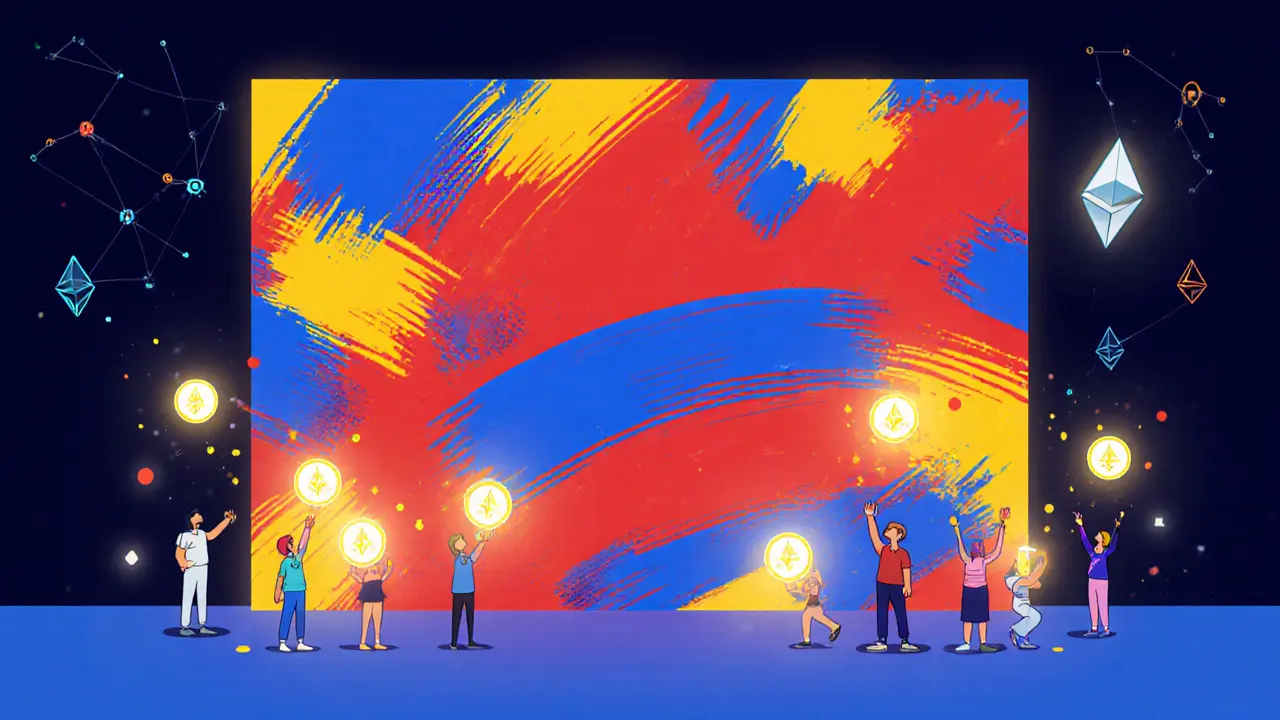
When you hear MurAll canvas, a collaborative digital art platform where users contribute pixel-by-pixel to a shared canvas, often linked to blockchain-based ownership and incentives. Also known as blockchain canvas, it's not just a drawing board—it's a live experiment in decentralized creativity. Unlike traditional art apps, MurAll canvas lets anyone join, place a single pixel, and own that spot as a unique digital asset. This isn’t about making pretty pictures. It’s about proving you were there—on a public, unchangeable record.
That’s where NFTs, non-fungible tokens that represent unique ownership of digital items, often used to verify pixel ownership on MurAll canvas come in. Every pixel you place can be tied to an NFT, giving you real, verifiable control over your contribution. No middleman. No server can erase it. That’s why crypto-native users flock to it—it’s a tiny piece of the blockchain you can literally see and touch. And it’s not just for art collectors. Communities use MurAll canvas to build memes, protest symbols, or even campaign logos—all with permanent, tamper-proof records. It’s a public square, but on-chain.
What makes MurAll canvas different from other digital art tools is how it blends simplicity with deep crypto mechanics. You don’t need to know how smart contracts work to drop a pixel. But if you do? You can track who owned what, when, and how it moved across wallets. Some users treat it like a game—competing to control regions, trading pixels, or building pixel-based economies. Others use it as a social experiment: what happens when 10,000 strangers draw on the same canvas? The answer? Chaos, beauty, and sometimes, surprisingly deep collaboration.
And it’s not just one canvas. There are forks, clones, and themed versions running on different blockchains—some with token rewards, others with voting rights. You’ll find MurAll-style projects tied to Ethereum, Solana, and even smaller chains. Each one adds its own twist: time limits, pixel costs, or rewards for long-term owners. This isn’t a fad. It’s a new kind of digital public space, built by people who trust code more than companies.
Behind every pixel on MurAll canvas is a story—someone’s first NFT, a protest against censorship, a joke that went viral. The platform doesn’t care why you’re there. It just records it. And that’s why crypto users keep coming back. It’s not about the art. It’s about ownership, permanence, and the quiet power of being part of something no one can take away.
Below, you’ll find real-world stories from people who used MurAll canvas to test ideas, build communities, or even make money. Some posts cover how it connects to airdrops. Others show how scams mimic it. And a few reveal why certain pixels became worth thousands. This isn’t theory. It’s what happened when art met blockchain—and stayed there.
Posted by
HELEN Nguyen
5 Comments
The MurAll PAINT airdrop gave NFT artists and collectors free tokens in 2020-2021. At its peak, some received over $3,000 worth. Today, PAINT is worth pennies. Here's how it worked - and why it didn't last.
read more