Crypto Exchange Compliance: Rules, Risks, and Real-World Requirements
When you trade on a crypto exchange, you’re trusting it to follow the law—but crypto exchange compliance, the set of legal rules exchanges must follow to operate legally. Also known as crypto regulatory adherence, it’s what separates legit platforms from scams that vanish overnight. It’s not about fancy reports or marketing buzzwords. It’s about AML penalties, fines and jail time for failing to stop money laundering, crypto licensing, government approval to run a crypto business, and knowing who’s watching you—whether it’s BaFin in Germany, AUSTRAC in Australia, or Nigeria’s SEC.
Every major exchange today has to prove it knows who its users are. That’s KYC—know your customer. But compliance goes deeper. It means tracking every dollar that moves in and out, flagging suspicious activity, and reporting it to regulators. In 2025, failing that means fines up to $500 million, executives going to jail, and entire platforms getting shut down overnight. Look at Saturn Network or RightBTC—both vanished because they skipped compliance. Meanwhile, exchanges in Germany and Australia are spending millions just to meet BaFin crypto regulation, Germany’s strict licensing and AML rules under MiCAR and AUSTRAC crypto regulations, Australia’s mandatory registration and reporting for digital asset businesses. Even in places like Nigeria, where the rules are new, exchanges are scrambling to get licensed before the deadline. And if you’re a trader? Your access depends on it. Some exchanges block users from certain countries because they can’t comply with local laws. Others let you trade freely—but only because they’re operating illegally, and that’s a risk you’re taking with your money.
What you’ll find in these posts isn’t theory. It’s real cases: how Iran’s military runs unlicensed mining, how Tunisia’s traders risk arrest to use crypto, why Pakistan’s adoption exploded despite a ban, and how fake exchanges like Xevenue and UPXIDE disappear without a trace. These aren’t abstract concepts—they’re the consequences of ignoring compliance. Whether you’re running a platform or just holding crypto, understanding these rules isn’t optional. It’s how you protect yourself, your funds, and your future in this space.
Posted by
HELEN Nguyen
5 Comments
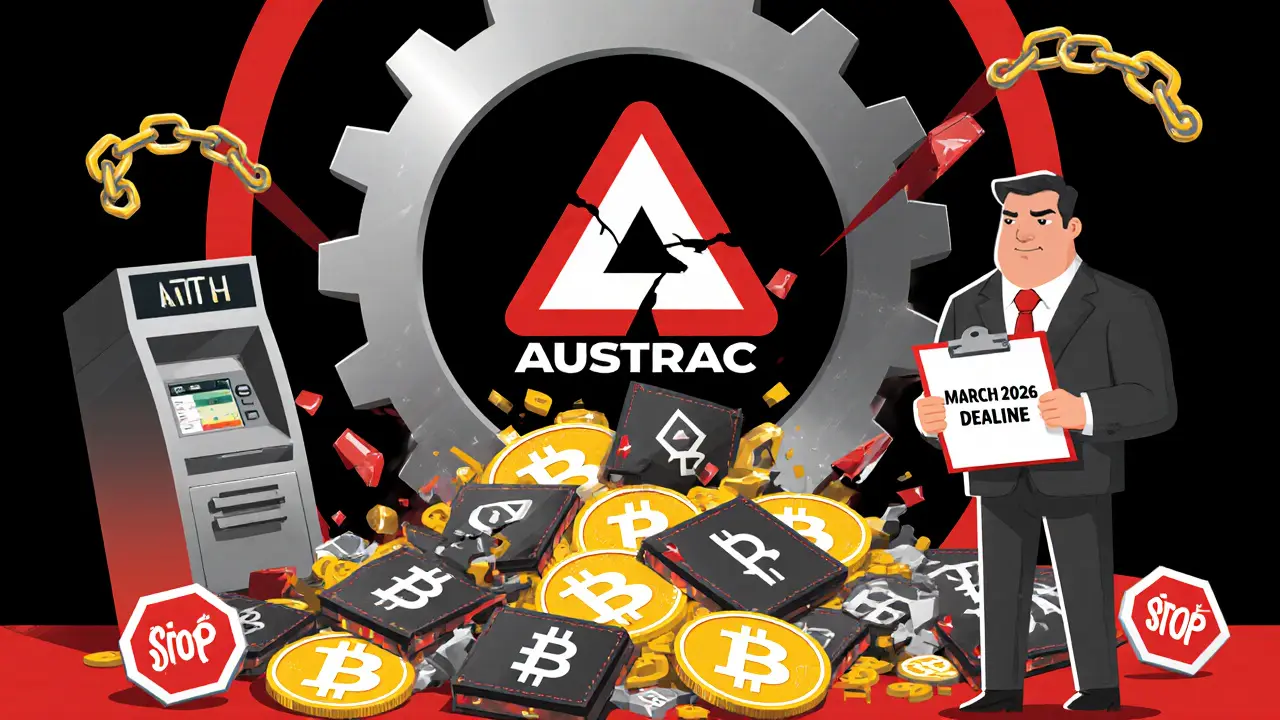
Australia's crypto regulations now require all exchanges, wallets, and token issuers to register with AUSTRAC and comply with strict AML rules by March 2026. Learn what services are covered, the Travel Rule, costs, and how to stay compliant.
read more