Crypto Exchange: What They Are, How They Work, and Which Ones to Avoid
When you buy or trade Bitcoin, Ethereum, or any other coin, you’re likely using a crypto exchange, a platform that lets you swap digital currencies for other coins or fiat money like USD or EUR. Also known as digital asset exchange, it’s the bridge between your wallet and the market—whether you’re trading for profit, holding long-term, or just trying to send money across borders. But not all crypto exchanges are built the same. Some are massive, regulated platforms like Binance or Coinbase. Others are tiny, anonymous, and gone before you can even withdraw your funds.
Behind every crypto exchange is a web of rules, risks, and real-world consequences. Decentralized exchange, a type of crypto exchange that lets you trade directly from your wallet without handing over control of your coins. Also known as DEX, it’s popular in countries where banks block crypto, like Nigeria or Tunisia. But even DEXs aren’t magic—they can freeze, get hacked, or vanish if the team disappears. Meanwhile, crypto exchange regulations, the legal frameworks governments impose to track money, prevent fraud, and force platforms to identify users. Also known as AML/KYC rules, they’re why you can’t trade on some platforms if you live in Australia, Germany, or Iran. In 2025, countries like Australia and Germany are shutting down unlicensed exchanges. In Nigeria, the SEC demands licenses. In the UAE, there’s no tax—but you still need to prove you’re not laundering money.
That’s why the posts here aren’t just reviews—they’re warnings, breakdowns, and real stories. You’ll find deep dives into platforms like Serum DEX and Saturn Network that once looked promising but collapsed after FTX fell. You’ll see how Xevenue and UPXIDE have zero audits, zero users, and zero legitimacy. You’ll learn why the Kimchi Premium makes Bitcoin cost 20% more in South Korea, and how Iran’s military runs illegal mining farms while citizens lose power. Some exchanges are tools. Others are traps. And if you don’t know the difference, you’re already one click away from losing everything.
Below, you’ll find no fluff—just real cases, real risks, and real fixes. Whether you’re trying to avoid a scam, understand why your country blocks certain platforms, or figure out if a new exchange is worth your time, the answers are here. No hype. No promises. Just what actually happened.
Posted by
HELEN Nguyen
6 Comments

NovaExchange is a niche crypto exchange for experienced traders seeking obscure altcoins. With over 400 tokens, no fiat support, and a barebones interface, it's a haven for micro-cap traders - but risky for beginners.
read morePosted by
HELEN Nguyen
0 Comments
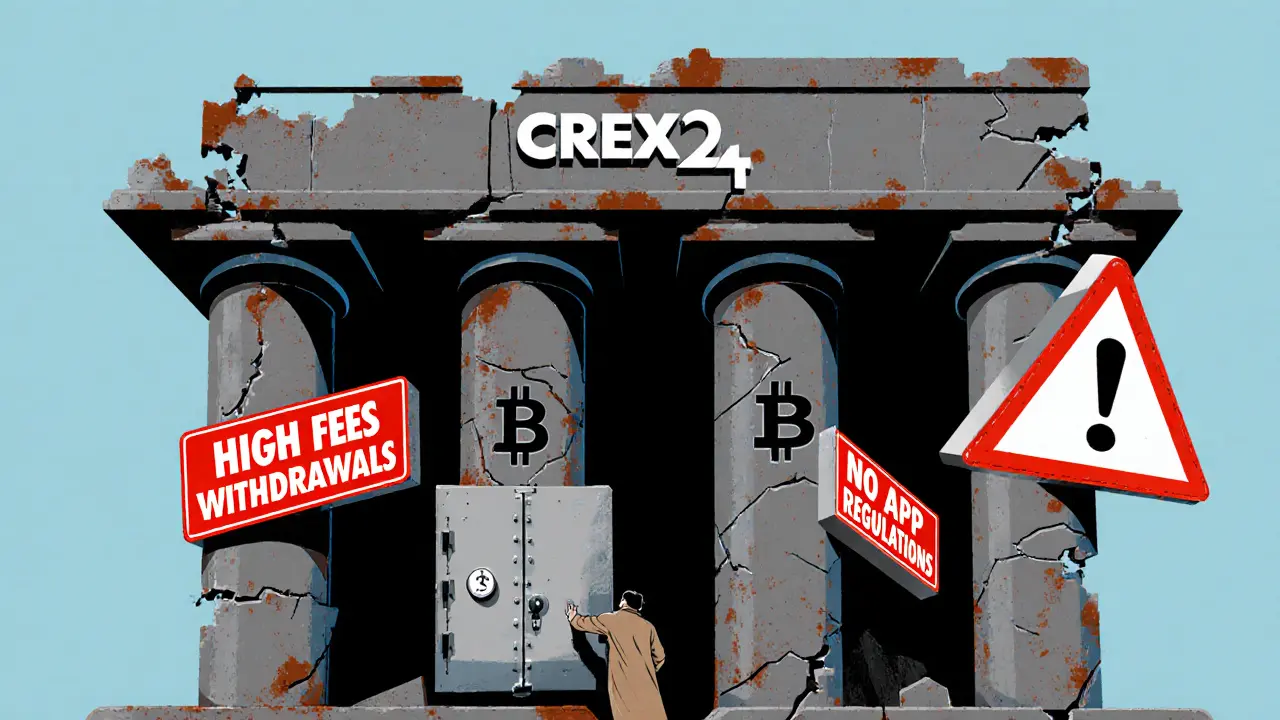
Crex24 claims to be a user-friendly crypto exchange, but serious red flags-including high withdrawal fees, no management transparency, and scam allegations since 2022-make it unsafe. Stick with regulated platforms like Binance or Coinbase instead.
read more