Ripple vs. SEC: The Case That Redefined Crypto Regulation
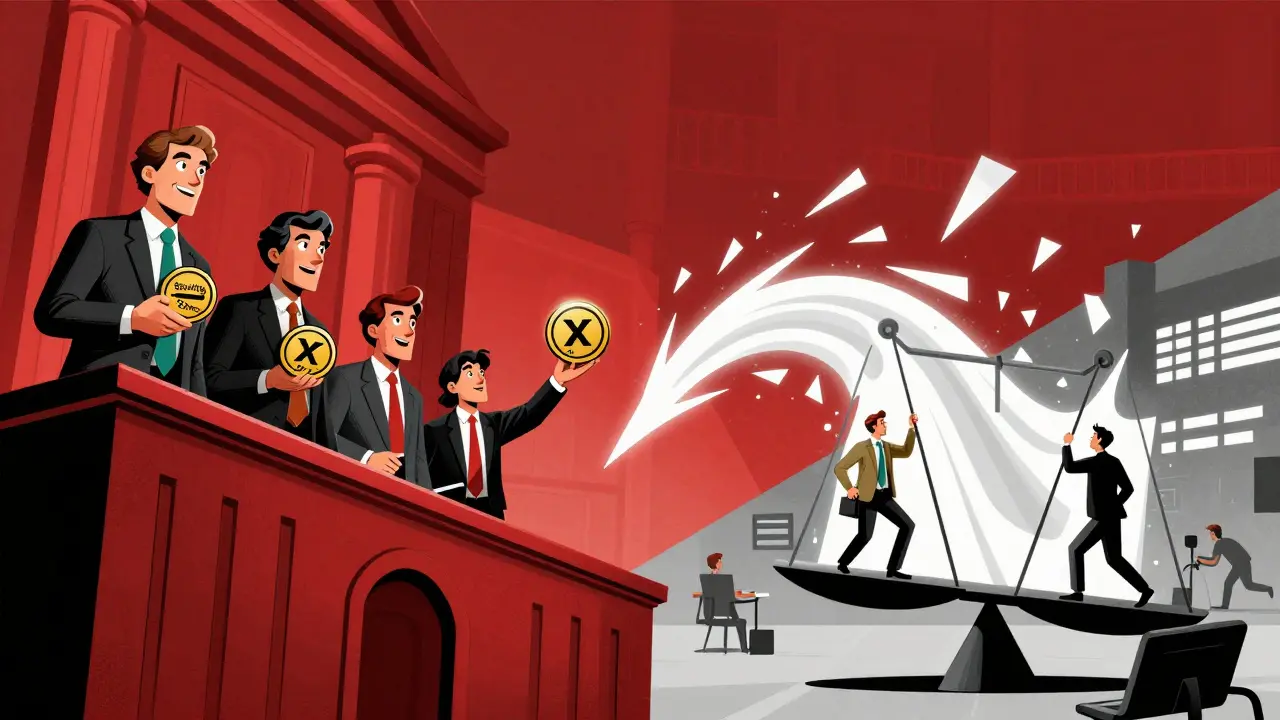
In December 2020, the SEC dropped a bombshell: Ripple Labs, its CEO, and co-founder were being sued for selling $1.3 billion worth of XRP as unregistered securities. For years, the crypto world held its breath. Was XRP a security? Could the entire industry be forced to restructure overnight? The answer, when it finally came in August 2025, wasn’t simple - and that’s exactly why it changed everything.
What the Court Actually Decided (It Wasn’t What You Thought)
Most people thought the case was about whether XRP itself was a security. It wasn’t. Judge Analisa Torres made it crystal clear: assets aren’t securities by default - it’s how you sell them that matters. Her July 2023 ruling split XRP sales into three buckets:
- Institutional sales (Ripple selling XRP directly to big investors like hedge funds) = securities. The court said these sales met the Howey Test - people bought them expecting profit based on Ripple’s efforts.
- Programmatic sales (XRP trading on exchanges like Binance or Coinbase) = not securities. Retail buyers weren’t buying into Ripple’s business; they were trading a digital asset like any other commodity.
- Other distributions (to employees, devs, charity) = mixed, but mostly not securities.
This wasn’t a win or loss - it was a new rulebook. For the first time, a U.S. court said the same token could be a security in one context and not in another. That’s huge. It means the SEC can’t just label a token as a security and call it a day. They have to prove how it was sold.
The Penalty Wasn’t a Punishment - It Was a Settlement
Ripple was fined $125 million. That sounds like a lot - until you compare it to what the SEC originally wanted. They asked for $2 billion. The final penalty was less than 10% of that. And here’s the kicker: Ripple didn’t admit guilt. The settlement was a mutual agreement to end the case. The court didn’t say Ripple broke the law in a sweeping way. It said they messed up on a specific type of sale - direct institutional deals.
That’s why Ripple didn’t collapse. The company didn’t have to shut down XRP trading. It didn’t have to return billions. It just had to stop selling XRP directly to big investors without registering it. That’s a manageable fix. Compare that to Telegram, which had to return $1.2 billion to investors after a similar case. Ripple walked away with its business intact - and its token still tradable on every major exchange.
Why This Case Broke the Mold for Other Crypto Projects
Before Ripple, the SEC went after projects like Kik and Telegram with all-out war. They claimed the token itself was a security. Courts mostly sided with the SEC. But Ripple changed that. Now, other crypto companies have a roadmap.
Coinbase’s case, which is still ongoing, already shifted because of Ripple. Instead of arguing that all tokens on its platform are securities, the SEC now has to prove how each one was sold. Binance’s case is also being handled differently - the focus is on whether the platform operated as an unregistered exchange, not whether Bitcoin or Ethereum are securities.
Even the SEC itself had to adapt. New Chair Paul Atkins launched Project Crypto in early 2025, explicitly saying the Ripple case forced them to create clearer rules. The agency can’t keep using the same hammer for every nail anymore.
What Happened to XRP’s Price? The Market Reacted Fast
While lawyers were arguing in court, the market was watching. After the July 2023 ruling, XRP didn’t explode - it waited. But once the case officially ended in August 2025, the floodgates opened.
In July 2025, XRP hit $3.42 - an all-time high. Trading volume jumped from $4.9 billion in June to $28.7 billion in July. That’s a 480% monthly surge. Why? Because institutional investors finally had legal clarity. They weren’t afraid of getting sued for holding XRP anymore.
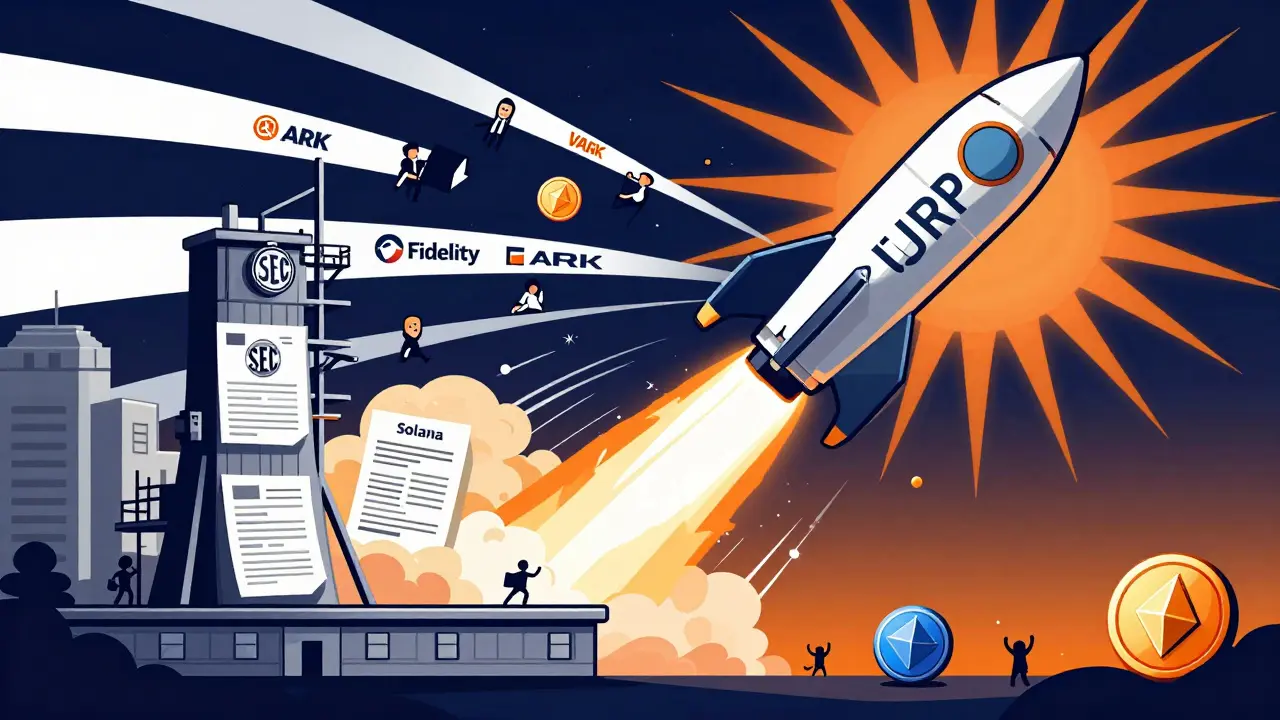
ProShares launched the first SEC-approved XRP ETF (UXRP) in July 2025. It pulled in $427 million in its first month. Fidelity, VanEck, and ARK Invest all filed for their own XRP ETFs by August. Bloomberg Intelligence gave XRP ETF approval a 95% chance by year-end 2025. That’s not speculation - it’s based on the legal precedent Ripple set.
Ripple’s Business Didn’t Stop - It Got Bigger
While everyone was focused on the lawsuit, Ripple quietly built real-world use cases. Their On-Demand Liquidity (ODL) service lets banks move money across borders using XRP as a bridge currency. In Q3 2025, they processed $15.3 billion in payments - up 210% from the previous quarter. They’re now serving 127 financial institutions in 38 countries, up from 42 in 19 countries at the end of 2024.
They didn’t just keep selling XRP. They started locking it up. In October 2025, Ripple transferred over 126 million XRP (worth $305 million) to Evernorth Holdings as part of a merger deal. The tokens aren’t being sold - they’re being exchanged for company shares. That’s not a security offering. It’s a corporate transaction. And it’s legal under the new rules.
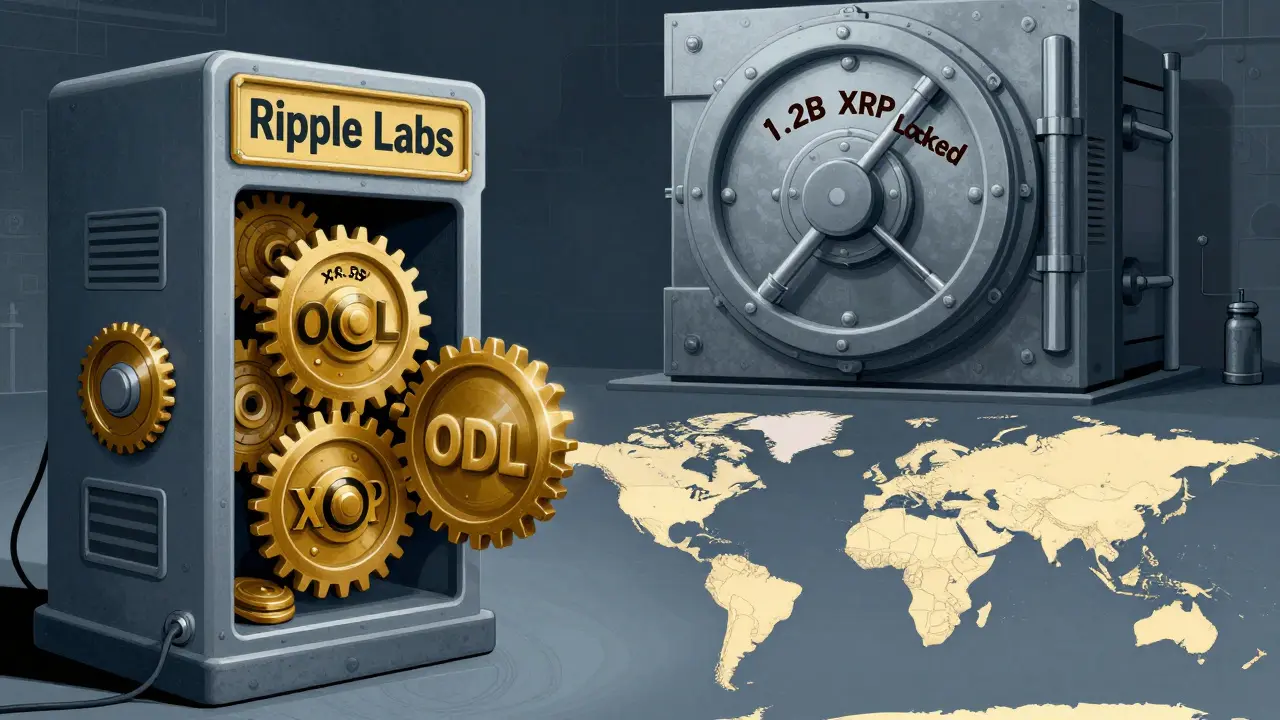
Since January 2025, Ripple has reduced its available XRP supply by 1.2 billion tokens through similar deals. That’s 4.8% of the total supply locked away. If this continues, supply could shrink by 15-20% over the next five years. Less supply + growing demand = potential price pressure.
The Bigger Picture: XRP Isn’t Bitcoin - And That’s Okay
Some in the Bitcoin community still argue XRP is too centralized. They’re right - Ripple controls a big chunk of the supply. But that’s not the point anymore. The legal system doesn’t care if a token is decentralized. It cares about how it’s sold and who benefits.
Bitcoin’s value comes from its decentralization. XRP’s value comes from its speed, low cost, and real-world banking use. The XRP Ledger processes 1,500 transactions per second. Ethereum does 30. Each XRP transaction costs $0.0002. That’s not for speculators - it’s for banks moving billions.
The Flare Network integration, launched in late 2024, added smart contracts to XRP Ledger. Over 142 dApps are now live, processing $2.7 billion in value. XRP isn’t trying to be Bitcoin. It’s trying to be the plumbing of global finance. And now, with legal clarity, it’s finally being treated like it.
What Comes Next? The Ripple Effect
The Ripple case didn’t end with XRP. It ended with a new standard. The SEC now has to prove the context of every token sale. That’s a massive shift. Projects like Solana, Cardano, and Polygon are breathing easier. They don’t have to fear blanket classification anymore.
By 2026, we’ll likely see more token-based ETFs. We’ll see banks using XRP for cross-border payments at scale. We’ll see regulators writing formal guidelines based on this case. Ripple didn’t just win a lawsuit. It gave the entire crypto industry a legal foundation to build on.
Is XRP still considered a security after the lawsuit?
No - not automatically. The court ruled that XRP is not a security when sold on exchanges to retail traders. But it is a security when Ripple sells it directly to institutional investors. The classification depends on how and to whom it’s sold, not the token itself.
Why did the SEC settle for only $125 million?
The SEC initially asked for $2 billion, but the court found that only $728 million in institutional sales violated securities law. The $125 million penalty reflects the scale of those violations, not a full punishment. Ripple didn’t admit guilt, and the settlement avoided years of appeals. It was a pragmatic end to a costly case.
Can I buy an XRP ETF now?
Yes. The ProShares Ultra XRP ETF (ticker: UXRP) launched in July 2025 and is the first SEC-approved XRP investment product. It’s available on major U.S. exchanges. Eleven other asset managers have filed for similar ETFs, and Bloomberg predicts $50 billion in total XRP ETF assets by mid-2026.
Does this mean other crypto tokens are safe now?
It means the SEC can’t just label tokens as securities anymore. They now have to prove how each token was sold. This gives projects like Solana, Cardano, and Polygon more legal breathing room. But it doesn’t guarantee safety - if a project sells tokens like unregistered securities, they’re still at risk. Context matters.
What’s the future of XRP’s price?
With regulatory clarity, institutional demand has surged. XRP’s market cap hit $178 billion in August 2025, making it the 7th largest cryptocurrency. Supply is shrinking as Ripple locks up tokens in corporate deals, and ETF inflows are accelerating. Analysts expect continued growth, especially if more institutional adoption follows. But price is still subject to market sentiment and broader crypto trends.
Comments
Rachel Stone
so xrp isn't a security unless ripple sells it directly... cool. so basically the sec was just mad they didn't get a cut from the institutional deals? i mean, who even buys xrp from ripple anymore? it's all on binance anyway.
also why is everyone acting like this is some revolutionary precedent? the court just said context matters. shocker.
February 4, 2026 at 03:24
Richard Kemp
man i read this whole thing and still dont get why people care so much. xrp is just a token right? like why does it matter if ripple sold it to hedge funds or not?
also i think i misspelled something but whatever. the point is the market didnt crash so its all good lol
February 4, 2026 at 22:10
Gurpreet Singh
from india, we watch this with interest. here, crypto is still gray area but seeing how us court handled this with nuance? impressive.
many of us in fintech think ripple’s on-demand liquidity could be game changer for remittances. $15bn in q3? that’s real use. not speculation.
hope this sets tone for other countries to stop treating all crypto like gambling and start seeing utility. xrp’s speed and cost? perfect for emerging markets. no need for banks to hold 3 currencies. just xrp as bridge. simple.
February 6, 2026 at 03:32
Raymond Pute
Let me just say, as someone who actually reads the court filings (unlike the rabble who just skimmed the headlines), this entire narrative is a grotesque oversimplification. The SEC didn't "settle" - they were forced into a tactical retreat because Judge Torres dismantled their entire legal theory in a 120-page opinion that even their own lawyers couldn't defend without sounding like they were arguing that a bicycle is a car because it has wheels.
And let’s not pretend this is some "new rulebook" - it’s the application of the Howey Test, a 78-year-old precedent that the SEC has been willfully ignoring since 2017. This isn’t innovation. It’s accountability.
Also, calling XRP "plumbing for global finance" is laughable. You know what real plumbing is? SWIFT. SWIFT doesn’t rely on a single private company’s token supply. And yes, I’m aware that you think the Flare Network integration makes it "smart contract enabled" - congratulations, you’ve upgraded from a shovel to a power drill and now you think you’ve invented the industrial revolution. The fact that ProShares launched an ETF doesn’t mean it’s not a speculative asset - it just means Wall Street found a new way to monetize confusion.
February 6, 2026 at 14:29
Tressie Trezza
i think the real win here isn't about xrp or even regulation - it's about recognizing that the same thing can mean different things in different contexts. like how a hammer can be a tool or a weapon, depending on how you use it.
the court didn't say xrp is good or bad, safe or dangerous. they just said: look at the action, not the object.
that’s actually kind of beautiful. it means we don't have to force everything into one box. maybe crypto doesn't need one rule. maybe it needs many - tailored to how each project actually functions.
and honestly? that’s the kind of thinking we need more of. not blanket bans, not crypto evangelism. just... paying attention.
February 8, 2026 at 05:47