
When you're trading cryptocurrency, speed and anonymity matter. A single second can mean the difference between locking in a profit or missing the window entirely. That’s why many traders turn to residential proxies-tools that make your trading bot look like a real person browsing from a home internet connection. But while these proxies can boost your trading efficiency, they also open the door to serious legal and security risks.
How Residential Proxies Work in Crypto Trading
Residential proxies route your internet traffic through real devices-like someone’s home router or smartphone-that have legitimate IP addresses assigned by internet service providers. Unlike datacenter proxies, which come from server farms and are easy for exchanges to flag, residential IPs look exactly like regular users. This makes them ideal for running multiple trading accounts or bots without triggering anti-bot systems. Most crypto traders use these proxies to manage dozens of wallets or trading profiles from one machine. Each account appears to originate from a different location-say, one from Texas, another from Berlin, another from Tokyo. Platforms like Binance, Kraken, and Coinbase have systems that detect suspicious patterns: multiple logins from the same IP, rapid-fire trades, or identical order behavior. Residential proxies bypass these checks by masking your real location and making each request look organic. There are two main types of sessions: sticky and rotating. Sticky sessions keep the same IP for up to 30 minutes, which is useful if you’re doing something that requires continuity-like placing a large order or verifying an account. Rotating sessions change the IP with every request, which helps avoid detection when running high-frequency bots or scraping price data across multiple exchanges.Why Traders Prefer Them Over Datacenter Proxies
Datacenter proxies are cheaper and faster, but they’re also obvious. Their IPs come from cloud providers like AWS, Google Cloud, or OVH-all of which are blacklisted by most crypto exchanges. If your bot uses a datacenter IP, you’ll likely get banned within hours, sometimes minutes. Residential proxies, on the other hand, have a success rate 3-5 times higher for bypassing anti-bot systems. A 2023 study by a cybersecurity firm analyzing 12,000 trading bot attempts found that 87% of residential proxy sessions went undetected, compared to just 18% for datacenter proxies. That’s not just a small advantage-it’s the difference between a profitable strategy and a dead end. For arbitrage traders who buy Bitcoin on one exchange and sell it on another for a 1-3% profit, even a 500-millisecond delay can erase the margin. Residential proxies offer low ping times (often under 80ms) and stable connections, which is why professional traders rely on them for high-volume, low-latency operations.The Dark Side: How Criminals Abuse Residential Proxies
Here’s the uncomfortable truth: the same tools that help honest traders also help fraudsters. Residential proxies are now a staple in cybercrime toolkits. According to Trend Micro, over 60% of credit card stuffing attacks-where criminals test stolen card details on e-commerce sites-use residential IPs. Why? Because banks and payment processors trust these IPs. A transaction coming from a residential IP in suburban Chicago looks more legitimate than one from a datacenter in Amsterdam. In cryptocurrency, this translates to wash trading, market manipulation, and money laundering. A single actor can run 50 fake trading accounts, each with its own residential IP, to create the illusion of high demand for a low-cap altcoin. They buy and sell among themselves, driving the price up, then dump it on unsuspecting retail traders. A 2022 Forbes analysis estimated that 51% of daily Bitcoin trading volume on major exchanges involved suspicious activity, with residential proxies playing a key role. Worse, these proxies help criminals evade KYC (Know Your Customer) rules. Someone in Russia can open 20 Binance accounts using fake IDs, each tied to a different residential IP from the U.S., Canada, and Australia. When authorities trace the transactions, they hit dead ends-each account looks like it belongs to a different person in a different country.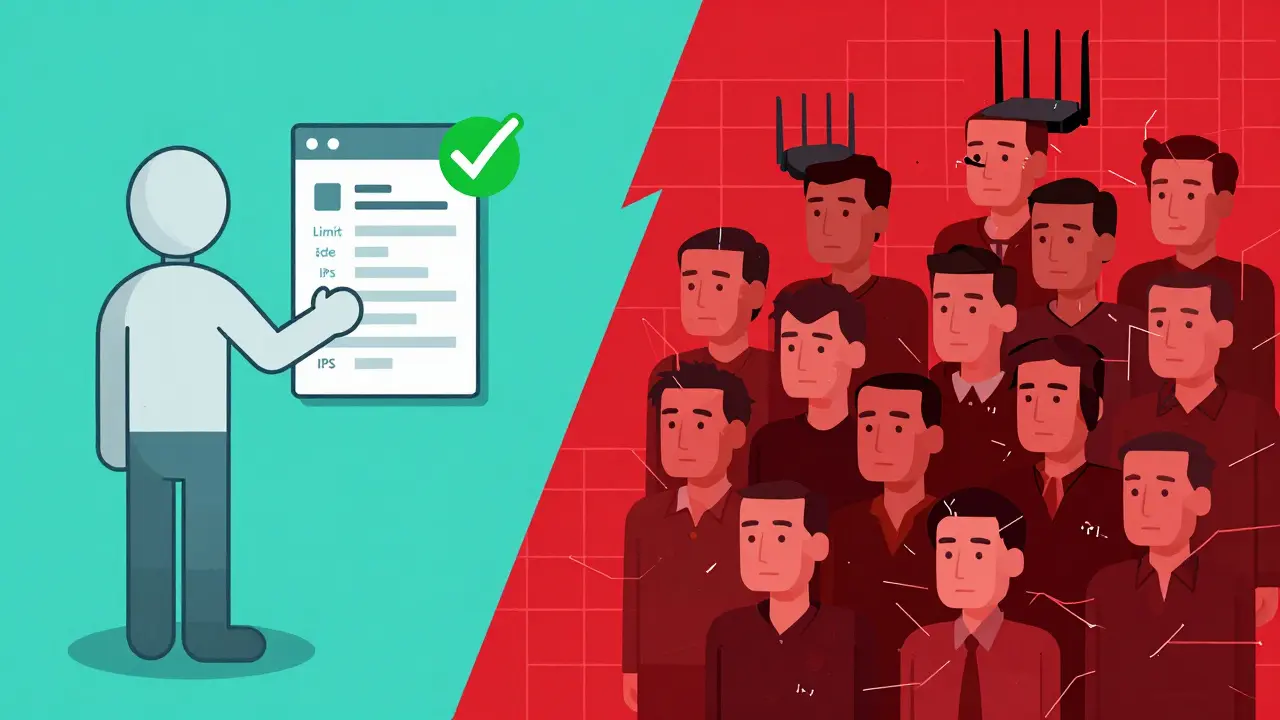
Real User Experiences: Successes and Failures
Reddit threads and crypto forums are full of mixed stories. Some traders swear by residential proxies. One user on r/CryptoCurrency shared how they automated arbitrage across 12 exchanges and made $18,000 in three months using a $600/month proxy service. They used sticky sessions for account verification and rotating IPs for price scraping. But others weren’t so lucky. Another trader spent $1,200 on a premium proxy provider, only to have all five of their accounts banned within two weeks. Why? Because they didn’t adjust their trading patterns. Even with a residential IP, if you place 500 orders per minute, you still look like a bot. Exchanges aren’t just checking IPs-they’re analyzing behavior. The learning curve is steep. Most users take 2-4 weeks just to understand session timing, IP rotation settings, and how to mimic human-like delays. Advanced users spend months fine-tuning their setups to avoid detection. Many give up after their first ban, thinking the proxy failed-when it was actually their own trading behavior that triggered the alarm.Costs and Market Trends
Residential proxies aren’t cheap. For serious traders running multiple bots, monthly costs range from $300 to $1,500. Providers like Bright Data, Oxylabs, and Smartproxy dominate the market, offering tiered plans based on bandwidth, number of IPs, and rotation speed. The global proxy market hit $1.8 billion in 2023 and is expected to grow at 13.5% annually through 2028. Much of that growth comes from crypto traders. But as demand rises, so does scrutiny. In 2024, the Financial Crimes Enforcement Network (FinCEN) began requiring proxy providers to report suspicious activity tied to crypto transactions. Some providers now block users from known darknet markets or require identity verification before selling high-volume plans. This is the new reality: residential proxies are no longer a gray-area tool. They’re under regulatory pressure. What was once a simple workaround is now a compliance risk.Legal and Ethical Boundaries
Using residential proxies isn’t illegal in most countries-but how you use them might be. If you’re running bots to exploit pricing gaps between exchanges, you’re likely fine. But if you’re using them to create fake volume, manipulate prices, or bypass KYC, you’re crossing into illegal territory. Exchanges don’t always ban you for using proxies. They ban you for violating their Terms of Service. Most platforms explicitly prohibit automated trading that mimics multiple users or hides identity to evade restrictions. Violating those terms can lead to account freezes, asset seizures, or even legal action in extreme cases. There’s also the ethical side. When you use a residential proxy, you’re using someone else’s IP address-often without their knowledge. In many cases, these IPs come from compromised home routers or infected devices in botnets. You’re not just bypassing rules-you’re piggybacking on someone else’s compromised security.
What Should You Do?
If you’re a retail trader using a proxy to run a simple arbitrage bot, you might get away with it-for now. But you’re playing with fire. Exchanges are getting smarter. Detection algorithms now combine IP analysis with behavioral AI, device fingerprinting, and transaction pattern recognition. Even the best residential proxy won’t save you if your trading behavior screams “bot.” Here’s what actually works:- Use proxies only for legitimate automation-like monitoring price spreads or executing pre-set limit orders.
- Avoid creating multiple accounts. One verified account with good volume limits is safer than five flagged ones.
- Don’t use rotating IPs for account logins. Stick to sticky sessions if you must use a proxy for access.
- Monitor your trade frequency. Human traders don’t place 100 trades in 30 seconds.
- Consider legal alternatives: API-based trading tools offered by exchanges themselves, like Binance’s Spot Grid Bot or Kraken’s API trading.
The Future of Proxies in Crypto Trading
By 2026, residential proxies will likely be restricted to regulated, compliant use cases. Exchanges are already testing blockchain-based identity verification systems that tie trading activity to verified digital identities-not IP addresses. Proxies that rely on compromised devices will be blocked outright. Legitimate traders who use proxies responsibly may still find a place-but only if they operate transparently. The days of hiding behind fake IPs to manipulate markets are ending. The future belongs to those who trade smart, not those who try to trick the system.Frequently Asked Questions
Are residential proxies legal for crypto trading?
Using residential proxies isn’t illegal by itself, but it often violates the Terms of Service of crypto exchanges. If you use them to manipulate markets, bypass KYC, or run fake accounts, you’re breaking rules that can lead to account bans, asset freezes, or legal consequences. Legitimate use-like automating arbitrage with one verified account-is less risky but still carries compliance exposure.
Can exchanges detect residential proxies?
Yes, increasingly so. While residential IPs are harder to spot than datacenter IPs, exchanges now use behavioral AI to detect patterns: too many trades in seconds, identical order sizes, login times that match bot schedules, or traffic coming from known proxy networks. Even with a real residential IP, suspicious behavior will trigger a ban.
How much do residential proxies cost for crypto trading?
High-volume residential proxy services for crypto trading typically cost $300-$1,500 per month. Prices depend on the number of IPs, bandwidth, session type (sticky vs. rotating), and provider reputation. Cheaper options often use compromised devices or have poor uptime, which increases your risk of detection.
Do I need a residential proxy if I’m just trading manually?
No. If you’re trading manually from one device with one account, you don’t need a proxy at all. Proxies are designed for automation and multi-account management. Using one for simple trading adds unnecessary cost and risk without benefit.
What’s the biggest risk of using residential proxies?
The biggest risk isn’t getting caught-it’s unknowingly using IPs from hacked devices. Many residential proxy networks source IPs from infected home routers or compromised smart devices. By using them, you’re contributing to cybercrime infrastructure. Plus, if the proxy provider gets shut down or blacklisted, all your accounts could be frozen overnight.
Comments
Jordan Leon
There's a quiet irony in how we justify these tools as ‘efficiency enhancers’ while ignoring the invisible infrastructure they depend on. Every residential IP we route through was once someone’s home network-maybe a grandmother’s router, maybe a teenager’s gaming PC-compromised without their knowledge. We call it ‘legitimate arbitrage,’ but we’re still borrowing someone else’s digital life to profit. The real question isn’t whether it’s legal-it’s whether we’re comfortable being the quiet beneficiaries of a broken internet.
Exchanges ban bots, sure. But they don’t ban the proxy providers. And those providers? They don’t care where the IPs come from, as long as the payment clears. It’s a silent pact: we turn a blind eye to the source, and they turn a blind eye to the consequence. Maybe the next regulation won’t target traders-it’ll target the middlemen who profit from our moral laziness.
January 12, 2026 at 03:29
Rahul Sharma
Bro, if you are using proxy for manual trading, you are wasting money 😅
Only bot traders need this. Even then, 90% of people fail because they think proxy = magic bullet. No. Behavior matters more than IP. If you trade like a robot-fast, same sizes, no breaks-you will get banned. Even with the best proxy.
Use API bots from exchange itself. Safe. Legal. Cheaper. 😊
January 13, 2026 at 17:39
Gideon Kavali
Let me be crystal clear: this isn’t ‘gray area’-it’s a full-blown, neon-lit, legally indefensible scam factory dressed up as ‘trading innovation.’
These ‘residential proxies’? They’re not ‘tools’-they’re digital burglary tools. You’re not ‘bypassing detection’-you’re laundering identity. You’re not ‘optimizing arbitrage’-you’re rigging the market with fake volume. And you wonder why regulators are coming for you?
Every time you use one of these, you’re not just violating a TOS-you’re actively enabling fraud on a global scale. And you call yourself a ‘trader’? No. You’re a cybercriminal with a spreadsheet.
And don’t even get me started on the fact that these IPs are stolen from real people’s routers-kids in Ohio, retirees in Florida-whose devices got hijacked while they slept. You’re not just breaking rules-you’re violating the sanctity of someone’s home network. That’s not entrepreneurship. That’s digital theft.
And if you think ‘it’s not illegal,’ you’re either lying to yourself or you’ve never read the RICO statutes. The SEC doesn’t care if your IP came from a ‘residential’ source-they care that you manipulated markets. And they WILL find you.
Stop pretending this is a gray zone. It’s not gray. It’s red. Blood-red. And you’re the one holding the knife.
January 13, 2026 at 20:39
Allen Dometita
Y’all are overcomplicating this 😎
Look-I ran a bot for 6 months with a $400/mo proxy. Made $22k. Then got banned. Didn’t care. I switched to Kraken’s official grid bot. Free. Legal. Zero stress.
Proxies are like cheat codes in a video game-fun until you get banned and lose your progress.
Real traders don’t need to hide. They just trade smart. Use the tools the exchange gives you. Save your cash. Sleep better.
Also-why risk your funds on a proxy that could vanish tomorrow? 💸🧠
January 14, 2026 at 02:19
Brittany Slick
I read this whole thing and just felt… sad. Not angry. Not mad. Sad.
There’s so much ingenuity here-people building bots, optimizing latency, chasing micro-arbitrages-and yet the entire system is built on a foundation of stolen trust. Every IP we use was someone’s quiet, unassuming internet connection. Maybe they didn’t even know their router was part of a global network of deception.
I used to think tech was about progress. Now I wonder if it’s just about finding the quietest way to exploit the system. The real win isn’t the $18,000 profit-it’s waking up without wondering if your next trade is going to get you flagged, frozen, or worse.
Maybe the future isn’t about better proxies.
Maybe it’s about better ethics.
January 14, 2026 at 05:26