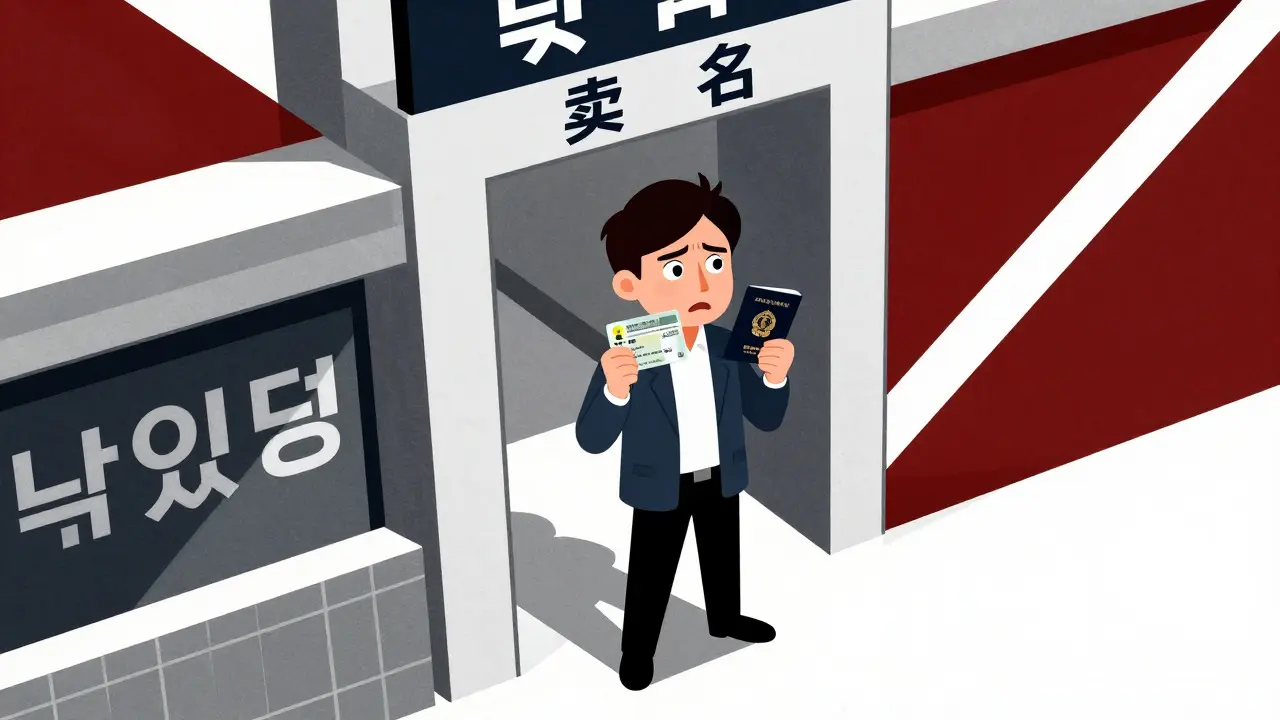
Trying to buy Bitcoin on Upbit or Bithumb but getting stuck at the deposit stage? If you are in South Korea, this is likely because of the strict regulatory requirement mandating that all cryptocurrency trades be tied to verified real-name bank accounts to prevent money laundering and enhance market transparency. This system isn't just a suggestion; it is the law. Since January 2018, every Korean citizen must link their legal identity to a specific local bank before they can trade digital assets. For locals, it adds a layer of security. For foreigners, it can feel like a wall.
This guide breaks down how the real-name bank account system works, which exchanges are currently approved, and what you need to do if you want to participate in one of the world's most active crypto markets. We will also look at the upcoming tax changes in 2027 that will impact everyone holding assets in Korea.
How the Real-Name System Works
The core rule is simple: your bank account name must match your exchange account name exactly. There is no room for error. You cannot use a friend’s account, a corporate account (unless you are a registered business), or an anonymous wallet. The Financial Services Commission (FSC) established this framework to ensure that every won deposited into crypto is traceable back to a verified individual.
Here is the workflow for a standard transaction:
- Verify Identity: You complete Know Your Customer (KYC) checks on the exchange using your Alien Registration Card (ARC) or Resident Registration Number.
- Select Partner Bank: Each major exchange has a designated partner bank. For example, Korbit works with Shinhan Bank, while Coinone partners with Kakao Bank.
- Transfer Funds: You transfer Korean Won (KRW) from your personal checking account at that specific bank to the exchange.
- Verification: The exchange confirms the funds came from the matching real-name account. If the names don’t match, the deposit is rejected or frozen.
This direct link means banks and exchanges share transaction data. If an exchange refuses to provide user data to its partner bank, the bank is expected to halt transactions. This creates a closed loop where anonymity is virtually impossible within the official Korean market.
Approved Exchanges and Bank Partnerships
Not every platform operating in Korea is fully compliant. As of mid-2026, the Financial Intelligence Unit (FIU) has issued full verified status to only a handful of platforms. While 28 Virtual Asset Service Providers (VASPs) have filed for registration, only five hold the coveted "verified" badge that allows seamless real-name banking integration.
| Exchange | Partner Bank | Status | Key Feature |
|---|---|---|---|
| Upbit | K-Bank | Fully Verified | Highest trading volume in Korea |
| Bithumb | Kookmin Bank | Fully Verified | Wide range of altcoins available |
| Korbit | Shinhan Bank | Fully Verified | Strong institutional focus |
| Coinone | Kakao Bank | Fully Verified | User-friendly interface for beginners |
If you are choosing an exchange, pick the one whose partner bank you already use. Opening a new bank account solely for crypto is possible but adds friction. Most users keep their primary salary account at one bank and choose the corresponding exchange to minimize steps.
Challenges for Foreign Residents
For expats living in Seoul or Busan, the process is harder than for citizens. To open a real-name bank account in Korea, you generally need three things: a valid visa, an Alien Registration Card (ARC), and a Korean mobile number. Without these, accessing the local KRW market is nearly impossible.
Many foreigners try to bypass this by using international exchanges like Binance or Kraken. However, these platforms often lack direct KRW deposit options. You might be able to buy crypto with a foreign credit card, but fees are high, and withdrawal back to a Korean bank requires converting to USDT or USD first, then moving it to a local exchange. This multi-step process increases risk and cost.
If you are a long-term resident, it is worth visiting your nearest branch of Shinhan, Kookmin, or K-Bank. Bring your passport, ARC, and proof of address. Once the account is open, linking it to Upbit or Bithumb takes less than 30 minutes. The deposit process itself is fast; funds usually appear in your exchange wallet within half an hour after the bank transfer clears.
Upcoming Tax Changes in 2027
One of the biggest reasons to stay informed about regulatory compliance is the upcoming shift in tax policy. Starting in 2027, income earned by individuals from trading digital assets will be taxed under the amended Income Tax Act. Previously, many traders operated in a gray area, but the real-name system makes enforcement much easier.
Because every transaction is linked to your national ID, the National Tax Service can track your gains accurately. Experts predict that the government may collect up to 24.2% of corporate and local income taxes from exchanges to fund this oversight. For individual traders, this means keeping records of every buy and sell order. The era of unreported profits is ending in Korea.
Foreign corporations earning income from Korean sources will also face domestic source income classification under the Corporate Tax Act. If you run a trading business out of Korea, consult a local accountant now. The rules are tightening, and penalties for non-compliance will be stricter once the systems are fully integrated in 2027.

Practical Tips for Smooth Trading
Navigating the Korean crypto landscape requires attention to detail. Here are some practical tips to avoid common pitfalls:
- Check Name Spelling: Ensure your name on the bank account matches your exchange profile character-for-character. A single space difference can cause a deposit rejection.
- Use Official Channels Only: Avoid peer-to-peer (P2P) transfers unless you are experienced. P2P deals carry counterparty risk and are not covered by the same bank-exchange verification safeguards.
- Monitor FIU Updates: The list of approved VASPs can change. Always verify that your exchange still holds its verified status on the FIU website before making large deposits.
- Keep Digital Records: Save screenshots of your deposits and withdrawals. With 2027 taxes approaching, having a clear audit trail will save you headaches during tax season.
The market is growing fast. Projections suggest over 12 million South Koreans will be using cryptocurrencies by late 2025, with the exchange market revenue reaching USD 635.4 million by 2030. Being compliant ensures you stay part of this growth rather than being locked out by regulatory crackdowns.
Frequently Asked Questions
Can I use a foreign bank account to trade on Upbit?
No. To deposit KRW directly into a Korean exchange like Upbit, you must use a Korean bank account with a matching real name. Foreign bank accounts cannot be linked for direct KRW deposits. You would need to convert funds to stablecoins first and withdraw via other methods, which is less efficient.
What happens if my bank account name doesn't match my exchange name?
The deposit will typically be rejected automatically. In some cases, funds may sit in a pending state until the discrepancy is resolved. It is best to correct your name on either the bank side or the exchange side before attempting the transfer to avoid delays.
Is the real-name system going to be removed?
As of 2026, there are no signs of removal. The Financial Services Commission views this system as essential for preventing money laundering and ensuring market stability. Instead of removing it, regulators are adding more layers, such as the 2027 taxation rules, to increase accountability.
Which exchange is best for beginners in Korea?
Upbit is generally considered the most user-friendly for beginners due to its intuitive interface and high liquidity. However, if you already have an account at Kakao Bank, Coinone might be a smoother option since it shares a parent company ecosystem with the bank.
Do I need to pay tax on crypto held in Korea right now?
Individual capital gains tax on digital assets officially begins in 2027. Until then, you are not required to report annual gains in the same way as stocks, but you should keep records. From 2027 onwards, all realized gains will be subject to income tax, and failure to report could lead to penalties.
Comments
Stephanie Millar
It is fascinating to observe how South Korea has managed to balance the wild, untamed nature of cryptocurrency with such rigid bureaucratic precision; one cannot help but admire the sheer cultural discipline required to make this system work. The requirement for name matching seems incredibly strict from a Western perspective, yet it clearly serves a purpose in maintaining market integrity. I have always believed that transparency is the cornerstone of any healthy financial ecosystem, and this real-name mandate seems to be a very bold step in that direction. It is interesting to note that for foreigners, the barrier to entry is quite high, which might actually protect the local market from speculative foreign capital that could destabilize prices. The integration between banks and exchanges creates a closed loop that feels almost like a digital walled garden, which is both efficient and restrictive. One wonders if other nations will follow suit or if they will continue to struggle with the anonymity that currently plagues the global crypto space. The upcoming tax changes in 2027 are certainly a wake-up call for everyone holding assets there, as the era of gray areas is definitely coming to an end. It is a testament to the Korean government's willingness to regulate rather than ban, which is a much more mature approach than what we see in many other jurisdictions. For those who are long-term residents, the advice to visit a bank branch with all documents in hand is spot on and reflects the personal service culture still prevalent in Korea. This guide is a valuable resource for anyone navigating these waters, and it highlights just how complex the intersection of finance and identity can be in the modern age.
August 21, 2026 at 19:18
Kiran Jayaram
typical korean overregulation you people think you can run a free market with all this red tape? its not about security its about control and now they want to tax your gains too greedy government always wants a cut of everything
August 21, 2026 at 19:44
Uday N M
The regulatory framework in Korea is robust and necessary for market stability. Many critics fail to understand the importance of traceability in preventing illicit flows.
August 23, 2026 at 01:02
Melissa G
While the administrative burden is undeniably heavy, the philosophical underpinning of this system suggests a society that values collective order over individual obscurity. By linking every transaction to a verified identity, the state ensures that the market remains a transparent public square rather than a shadowy bazaar. This approach mirrors the Confucian emphasis on social harmony and accountability, where individual actions are seen as part of a larger, interconnected whole. For the expat community, this presents a unique challenge, forcing them to integrate deeply into the local infrastructure to participate in the economy. However, once integrated, the efficiency of the KRW deposit process is remarkable, offering a level of speed and reliability that decentralized finance often struggles to match. The impending tax reforms further cement this model, signaling a shift from a speculative playground to a regulated asset class within the broader financial system. It is a compelling case study in how technology can be harnessed not just for innovation, but for governance and civic responsibility.
August 24, 2026 at 00:16
Walker Perry
THEY ARE WATCHING YOU EVERY MOVE IS TRACKED NO MORE ANONYMITY JUST THE GOVERNMENT SPYING ON YOUR WALLET BALANCE WHILE THEY PRINT MONEY LIKE ITS NOTHING THE REAL NAME LAW IS JUST A PRETEXT TO STEAL YOUR BITCOIN WHEN THE CRASH COMES TRUST NO ONE NOT THE BANKS NOT THE EXCHANGES JUST THE STATE ALWAYS THE STATE
August 25, 2026 at 09:26
Alexander Scheel
One must appreciate the meticulous attention to detail required by such a system, even if the execution appears somewhat draconian to the uninitiated eye. The synchronization between banking institutions and virtual asset service providers represents a level of institutional coordination that few countries have achieved. It is, admittedly, a tedious process for the average user, requiring precise character-for-character name matching, but necessity often dictates precision. The forthcoming taxation regime will likely serve as the final nail in the coffin for casual, unrecorded trading, compelling all participants to adopt more professional record-keeping habits. From a moral standpoint, the elimination of anonymous transactions reduces the potential for money laundering, thereby fostering a fairer competitive environment for honest traders. While some may lament the loss of privacy, the gain in systemic stability is arguably a worthy trade-off in a maturing market.
August 26, 2026 at 22:08
Sarah Hafner
Hi there! Just wanted to add a quick tip for anyone struggling with the name matching issue - double-check for hidden spaces in your bank account name vs your exchange profile. It happens more often than you'd think! Also, if you're a beginner, Upbit really is the most user-friendly option despite the hype around Bithumb. Good luck with your trading! :)
August 27, 2026 at 01:28