You see the promise of free PureFi Protocol tokens. You hear about an airdrop that could turn into real cash. It sounds too good to be true, doesn't it? In the world of decentralized finance, "free" often comes with a heavy price tag-usually your time or your security. If you are looking for details on the PureFi (UFI) airdrop, you need to separate marketing hype from hard data. The reality is messy. Official documentation is scarce, community sentiment is mixed, and the token's value has taken a significant hit since its launch.
What Is PureFi Protocol?
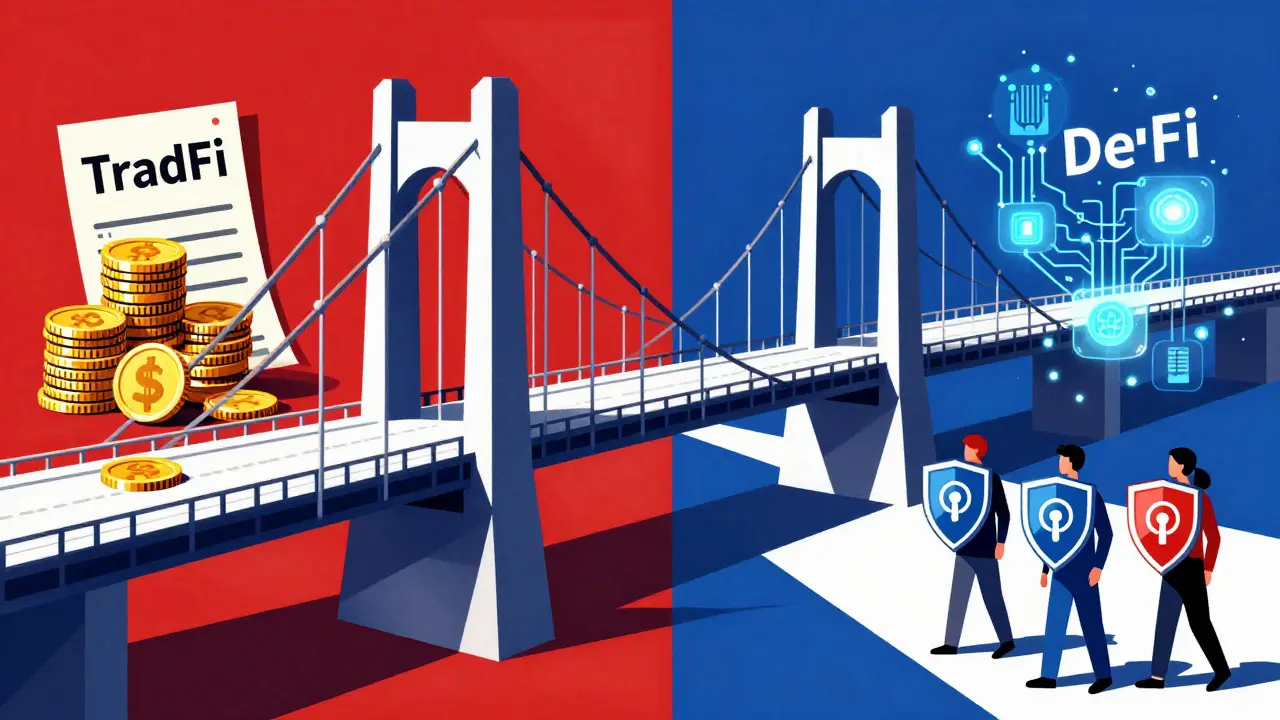
To understand the airdrop, you first need to know what you are getting into. PureFi Protocol is not just another meme coin project. Founded in 2021, it aims to bridge traditional finance (TradFi) and decentralized finance (DeFi). How? By using Zero-Knowledge Proof technology. This allows users to prove they are compliant with laws like Anti-Money Laundering (AML) without revealing their private identity data. They call this "Self-Sovereign Identity."
The idea is solid. Regulators want clean money. Crypto users want privacy. PureFi tries to do both. But does the execution match the vision? That is where things get complicated. The protocol launched its Token Generation Event (TGE) on July 27, 2021. Since then, it has struggled to gain mainstream traction compared to giants like Chainlink or Compound.
The Truth About the UFI Airdrop
Here is the blunt truth: there is no single, massive "click-and-claim" airdrop happening right now. If you found a website asking for your seed phrase to claim UFI tokens, close that tab immediately. It is a scam.
Historically, PureFi has distributed tokens through specific channels rather than open public drops. According to historical data from ICO Drops, early distributions happened via:
- Private Rounds: Allocated 8% (Round A) and 7% (Round B) of the total supply to early investors.
- IDO Platforms: Listings on platforms like BSCPad.
- Community Challenges: Between August 2021 and March 2022, users reported receiving 25-100 UFI tokens after completing Telegram quizzes, following social media accounts, and referring friends.
However, GitHub activity shows no recent commits related to airdrop smart contracts since April 2022. This suggests the active distribution programs are dormant. Current mentions of "airdrops" on Bitget or other aggregators often refer to converting rewards from other promotions into UFI, not direct token drops from the treasury.
Tokenomics: Where Do the Tokens Come From?
If an airdrop happens, where do the coins come from? You need to look at the supply structure. PureFi has a total supply of 1 billion UFI tokens. Here is how they are split:
| Allocation Category | Percentage | Vesting Details |
|---|---|---|
| Ecosystem Development | 33% | Long-term vesting for grants and partnerships |
| Strategic Partnerships | 25% | Cliff periods followed by linear release |
| Team & Advisors | 20% | 5-month cliff, then 10-month vesting |
| Public Sale | 15% | Immediate unlock at TGE |
| Marketing & Airdrops | 7% | Funds potential future campaigns |
Notice the small slice for marketing. Only 7% is explicitly allocated for marketing initiatives, which likely funds any airdrop programs. With a circulating supply already high (around 4.9 billion UFI reported by some trackers, though discrepancies exist due to burned tokens or lost wallets), new airdrops would dilute existing holders significantly if they pull from the ecosystem fund.
Market Reality: Value and Liquidity
Let’s talk numbers. As of late 2023 and moving into 2026, the UFI token has faced severe headwinds. The price dropped from highs of $0.045 in mid-2023 to roughly $0.00695. The market capitalization sits around $721,660. To put that in perspective, many top-tier DeFi projects have market caps in the billions.
Liquidity is another major concern. UFI trades primarily on Uniswap (Ethereum) and PancakeSwap (Binance Smart Chain). There are no listings on major centralized exchanges like Binance or Coinbase. Why does this matter for an airdrop? Because if you receive 1,000 UFI tokens, selling them might require significant slippage on a decentralized exchange. You could lose 10-20% of your value just trying to cash out. CoinMarketCap reported 24-hour trading volumes below $5,000 during peak analysis periods. Low volume means low interest.
Is It Safe? Security and Scam Warnings
Safety is your biggest risk here. PureFi partners with Hacken Foundation for audits, which is a positive sign. However, the lack of official communication creates a vacuum that scammers fill quickly.
Reddit user 'DeFi_Analyst88' noted in September 2023: "Tried three supposed airdrop quests from their Twitter but links were dead - total scam vibes." This is common. Phishing sites mimic the PureFi brand. Always verify URLs. The official site is purefi.io. Any link ending in .com, .net, or random subdomains is suspect.
Furthermore, because PureFi focuses on compliance, legitimate participation might require KYC (Know Your Customer) verification. This is unusual for standard crypto airdrops. If a site asks for ID photos to claim free tokens, weigh the privacy cost against the potential reward. At current prices, 100 UFI tokens are worth less than $1. Is handing over your passport copy worth 60 cents? Probably not.

How to Verify Legitimate Opportunities
If you still want to participate, follow these strict steps. Do not deviate.
- Check Official Channels: Follow only the verified Twitter account (@Purefi_Protocol). Look for blue checkmarks or consistent history.
- Monitor GitHub: Visit github.com/purefiprotocol. If there are no recent commits related to "airdrop" or "distribution," the program is likely inactive.
- Avoid Seed Phrases: No legitimate airdrop will ever ask for your wallet seed phrase. If it does, disconnect your wallet immediately.
- Use a Burner Wallet: If you must interact with a contract, use a fresh MetaMask wallet with minimal funds. Never use your main holding wallet.
Community Sentiment and Future Outlook
The community is skeptical. The r/Purefi subreddit has only 1,287 members. Social engagement metrics from LunarCrush show just 321 daily mentions in Q3 2023, far below the industry average of 12,500 for comparable projects. Dr. Elena Rodriguez from Stanford University noted that while the compliance model is necessary for institutional adoption, it limits retail excitement.
On the flip side, Michael Chen from TokenMetrics criticized the fragmented communication. "Poorly executed distribution strategy," he said. Without clear roadmaps, trust erodes. For 2026, the outlook depends on two factors: regulatory clarity in the US/EU and whether PureFi can secure major institutional partnerships. Their partnership with EU fintech firm RegTech Solutions in October 2023 hints at a pivot toward B2B services rather than retail airdrops.
Conclusion: Should You Wait?
Waiting for a PureFi airdrop is a low-reward, medium-risk strategy. The potential payout is minimal due to low token price and liquidity. The effort required to verify legitimacy is high. If you are a believer in the Zero-Knowledge Compliance thesis, consider buying small amounts on Uniswap directly rather than gambling on an uncertain drop. Save your energy for projects with active development, clear roadmaps, and higher liquidity. In crypto, attention is currency. Don’t spend yours on silence.
Is the PureFi (UFI) airdrop still active in 2026?
There is no evidence of an active, large-scale public airdrop as of 2026. Historical distributions occurred between 2021 and 2022 via quizzes and referrals. Recent GitHub activity shows no updates to airdrop contracts. Monitor official channels for announcements, but expect limited activity.
How much is 1 UFI token worth?
As of late 2023 data, UFI traded around $0.00695. Prices fluctuate based on liquidity on Uniswap and PancakeSwap. Due to low trading volume, slippage can significantly reduce the actual value when selling.
Do I need KYC to claim PureFi tokens?
PureFi’s core mission involves compliance and Self-Sovereign Identity. While past airdrops did not strictly require KYC, future institutional-focused distributions might. Be cautious of any site demanding personal ID documents for small token rewards.
Where can I buy UFI tokens?
UFI is available on decentralized exchanges (DEXs) like Uniswap (Ethereum network) and PancakeSwap (Binance Smart Chain). It is not listed on major centralized exchanges like Binance or Coinbase.
Is PureFi Protocol a scam?
PureFi Protocol itself is a legitimate project with audited code and a clear technical focus on ZK-compliance. However, the *lack* of communication makes it a target for scammers. Many fake websites impersonate PureFi. Always verify URLs and never share seed phrases.