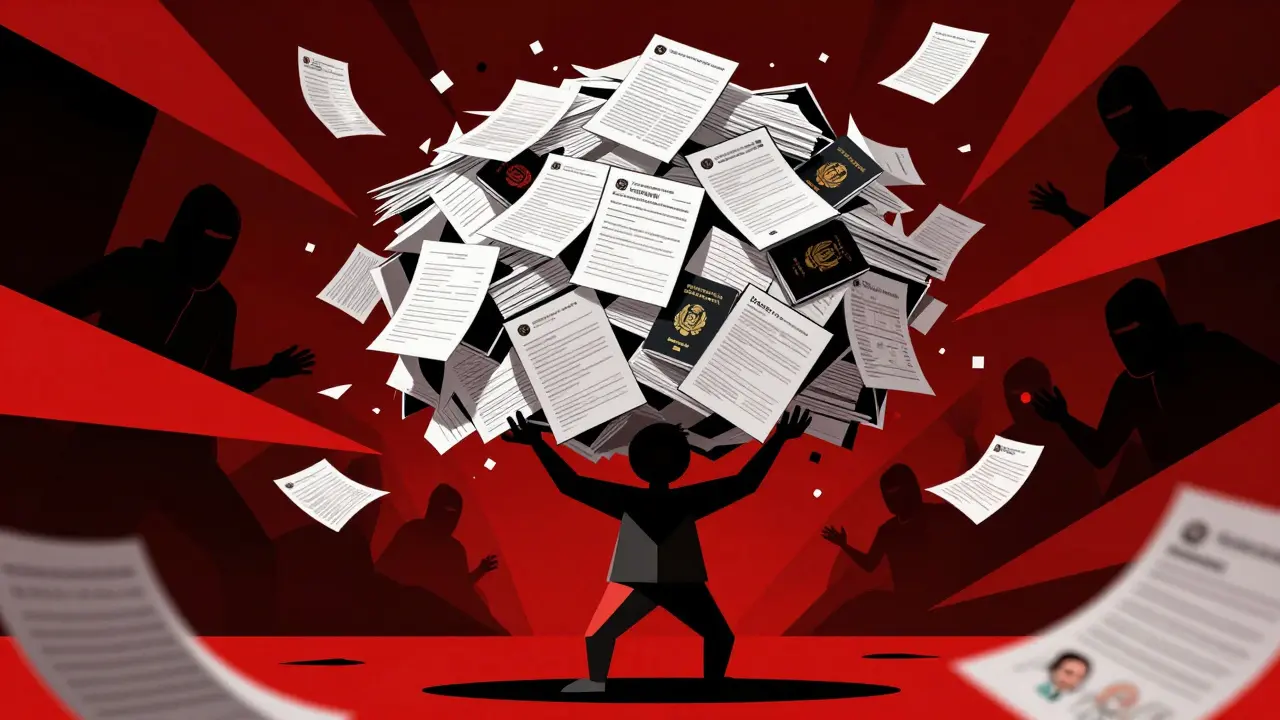
Think about the last time you had to prove your age. Maybe you were buying alcohol online or signing up for a streaming service. What did you do? You probably uploaded a photo of your driver’s license or passport. In that single action, you handed over your full name, home address, date of birth, and license number to a company that likely doesn’t need any of that information except to know if you are over 21.
This is the broken status quo of digital identity. We trade massive amounts of private data just to complete simple verifications. This creates a honeypot for hackers and erodes user trust. Privacy-Preserving Identity Verification is a technological framework that allows individuals to prove specific attributes of their identity without revealing the underlying personal data. It changes the question from 'Who are you?' to 'Can you prove you meet this requirement?'
The Problem with Traditional Identity Checks
Traditional identity verification relies on centralized databases. When you sign up for a bank account, the bank stores your documents in a server. If that server gets hacked, your data is exposed. This happened to millions of people in major breaches over the last decade. The model assumes that storing more data equals better security, but it actually increases risk.
Furthermore, traditional systems force 'over-disclosure.' To verify you are old enough to rent a car, you show a license. The rental agency now has your address and eye color. They don’t need it, but they have it. This violates the principle of data minimization, which is central to modern privacy laws like GDPR in Europe and CCPA in California.
Users also lack control. Once you give your data to a third party, you cannot revoke access or see how it is being used. Privacy-preserving identity verification flips this dynamic. It puts the data back in your pocket-literally-in your digital wallet-and lets you share only what is necessary.
How Zero-Knowledge Proofs Change the Game
The engine behind this shift is cryptography, specifically Zero-Knowledge Proofs (ZKPs) are cryptographic methods that allow one party to prove to another that a statement is true without revealing any information beyond the validity of the statement itself.
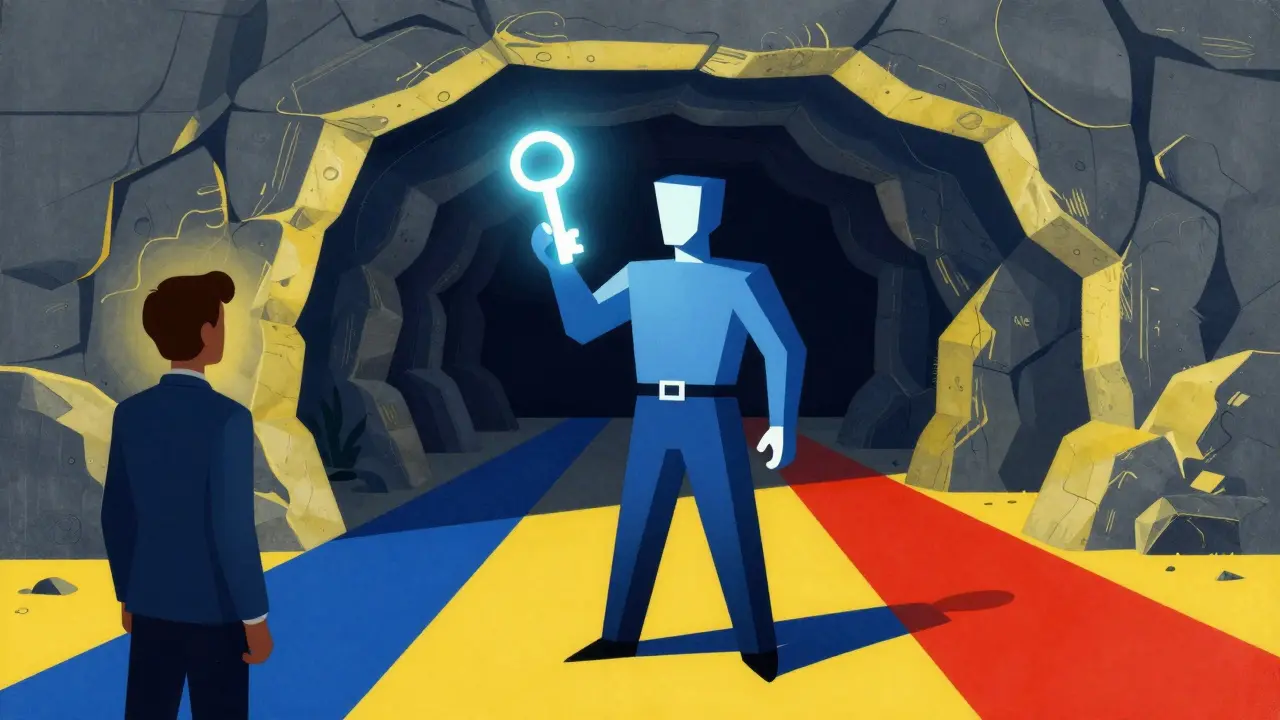
Imagine you want to prove you have a key to a locked cave, but you don’t want to show the key to anyone. In a ZKP scenario, you enter the cave, and someone outside asks you to exit through a specific door. If you can do this repeatedly, they become statistically certain you have the key, even though they never saw it.
In digital identity, this looks like this:
- Claim: "I am over 18 years old."
- Proof: A mathematical token generated by your device.
- Verification: The system checks the token against a trusted issuer (like a government) and confirms the claim is valid.
- Result: The verifier knows you are over 18. They do not know your exact birthdate, name, or address.
This technology eliminates the need to transmit sensitive raw data. Even if a hacker intercepts the transaction, they get nothing useful because no personal data was sent.
Decentralized Identifiers: Owning Your Digital Self
ZKPs handle the proof, but Decentralized Identifiers (DIDs) are a new type of identifier that enables verifiable, decentralized digital identity. Unlike usernames on social media or email addresses tied to providers, DIDs are not issued by any central authority. They are created by the user and stored on a blockchain or distributed ledger.
Here is why DIDs matter:
- Persistence: Your DID remains valid as long as the network exists, regardless of whether a specific company goes out of business.
- Portability: You carry your identity from one service to another. You don’t need to create a new profile for every website.
- Control: You hold the private keys that manage your DID. No company can delete your identity or ban you from existing digitally.
DIDs work in tandem with Verifiable Credentials (VCs) are digital equivalents of physical credentials like degrees, licenses, or IDs, issued by trusted entities and held by users. For example, a university issues a VC for your degree. You store it in your digital wallet linked to your DID. When applying for a job, you present the VC. The employer verifies its authenticity via the blockchain without contacting the university directly.
Selective Disclosure and User Control
One of the most practical features of privacy-preserving systems is selective disclosure. In traditional forms, you fill out everything. In privacy-preserving systems, you choose what to reveal.
Consider a healthcare scenario. You visit a specialist. You need to prove you are insured and who you are. With a privacy-preserving app, you might share:
- Your name (to book the appointment).
- A boolean value: "Is insured? Yes."
You do not share your medical history, your policy number, or your dependents' names. The clinic gets what it needs to treat you and bill insurance, while keeping your broader health data private. This reduces the attack surface for data breaches significantly.
This level of granularity is impossible with paper-based or simple digital uploads. It requires sophisticated cryptographic structures that allow parts of a credential to be revealed independently of others.
Real-World Applications Beyond Crypto
While blockchain enthusiasts love this tech, its real value lies in mainstream industries. Here is how different sectors are adopting these tools in 2026:
| Industry | Current Pain Point | Privacy-Preserving Solution |
|---|---|---|
| Banking & Finance | KYC processes require uploading passports, creating fraud risks. | Prove residency and age via ZKPs without sharing full ID details. |
| Healthcare | Fragmented records and privacy concerns limit data sharing. | Patients grant temporary, limited access to specific records via VCs. |
| Travel | Passports scanned at every checkpoint, increasing theft risk. | Mobile boarding passes linked to verified identities, minimizing data exposure. |
| Gaming | Age verification often requires credit cards or IDs. | Prove age eligibility without linking financial or personal data. |
In banking, Anti-Money Laundering (AML) compliance is huge. Banks currently collect vast amounts of data to satisfy regulators. With privacy-preserving tech, they can prove to regulators that a customer meets criteria without exposing the customer's entire life story to potential leaks.
Challenges to Mass Adoption
Despite the benefits, hurdles remain. First, there is the issue of standardization. Different blockchains and platforms use different formats for DIDs and VCs. If your digital wallet on Ethereum can't talk to a verification system on Solana, the utility drops. Organizations like the W3C are working on standards, but interoperability is still a work in progress.
Second, user experience (UX) is tricky. Cryptography is invisible when it works, but complex when it breaks. If a user loses their private key, they lose their identity. There is no 'forgot password' button in a truly decentralized system. Recovery mechanisms exist, but they must be secure and easy to understand for non-technical users.
Third, regulatory acceptance varies. While GDPR encourages data minimization, some local laws still require companies to retain copies of identification documents. Legal frameworks need to catch up with the technology to fully embrace 'proof without possession.'
The Future of Digital Trust
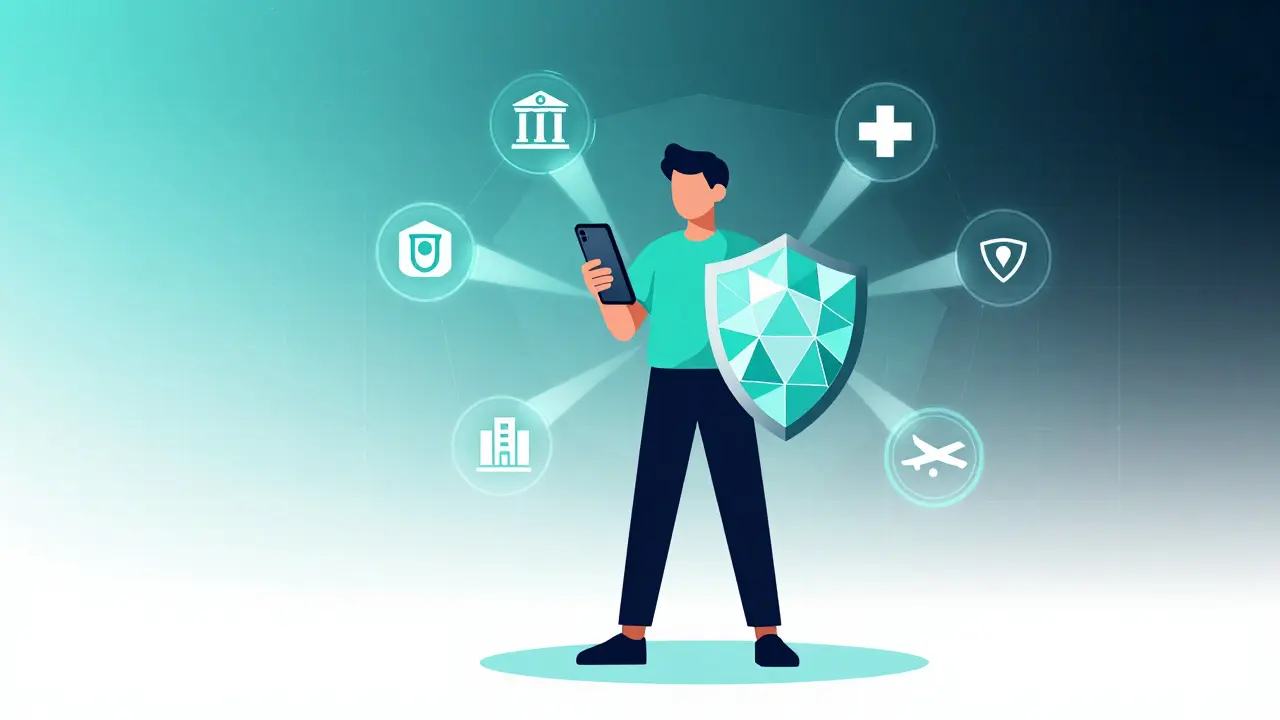
We are moving toward a world where your digital identity is yours alone. Privacy-preserving identity verification is not just a niche crypto feature; it is the foundation of a safer internet. By combining zero-knowledge proofs, decentralized identifiers, and verifiable credentials, we can build systems that respect individual privacy while maintaining high security standards.
For businesses, early adoption means building trust with privacy-conscious consumers. For users, it means reclaiming control over personal data. The technology is maturing rapidly, and as infrastructure improves, we will likely see fewer password fields and more seamless, secure interactions across the web.
What is the difference between privacy-preserving identity and anonymous identity?
Anonymous identity hides who you are completely. Privacy-preserving identity proves specific facts about you (like age or citizenship) without revealing unnecessary details. You are verified, but not fully exposed. It balances accountability with privacy.
Are zero-knowledge proofs secure against quantum computers?
Most current ZKP implementations rely on elliptic curve cryptography, which is vulnerable to quantum attacks. However, researchers are actively developing post-quantum cryptographic algorithms for ZKPs. As quantum computing advances, identity systems will need to upgrade their underlying math to remain secure.
How do I store my decentralized identifiers securely?
You store them in a digital wallet application on your smartphone or hardware device. These wallets hold your private keys locally. Never share your seed phrase or private keys with anyone. Using a reputable, open-source wallet with strong encryption is essential for protecting your identity.
Can governments use privacy-preserving identity verification?
Yes, many countries are piloting digital ID programs using these technologies. Governments can issue verifiable credentials for citizens, allowing them to access services securely. This reduces bureaucracy and protects citizen data from mass surveillance or large-scale breaches.
Is privacy-preserving identity verification expensive to implement?
Initial development costs can be higher due to the complexity of cryptography. However, long-term savings come from reduced liability, lower fraud rates, and decreased costs associated with data breach remediation. As libraries and tools become more standardized, implementation costs are dropping.