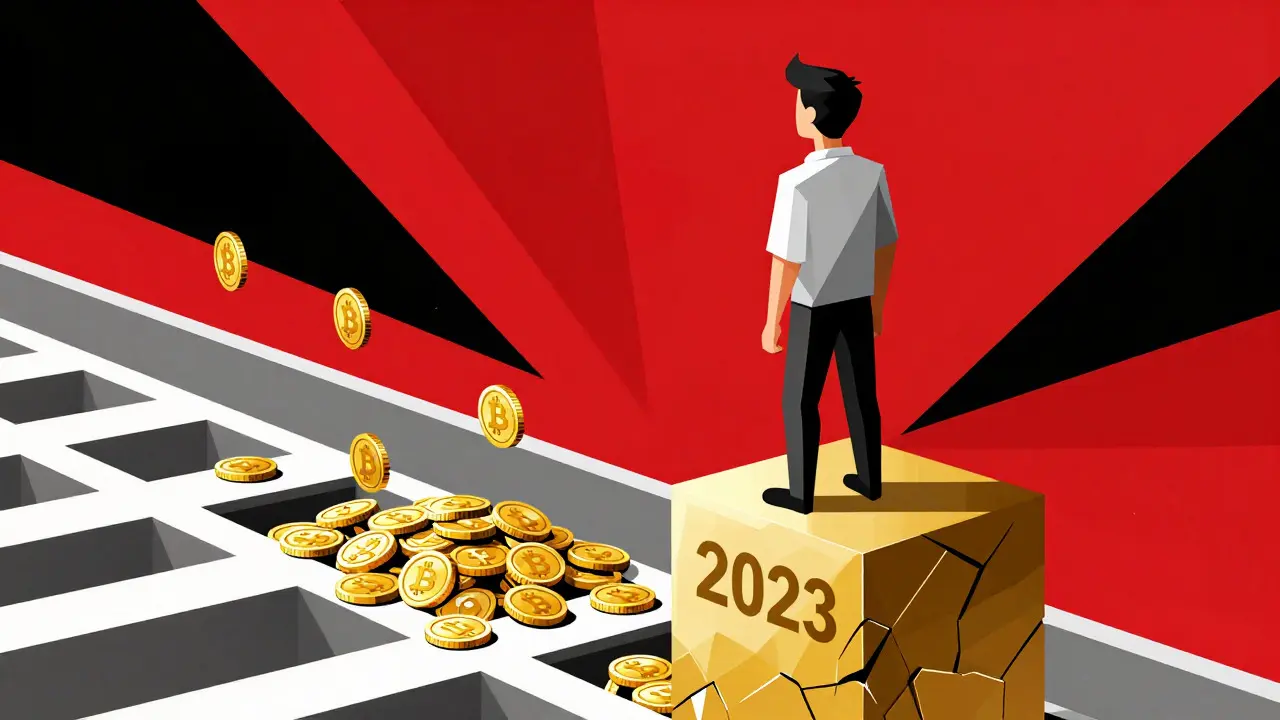
Remember when Portugal was the undisputed king of crypto tax havens? For years, buying Bitcoin in Lisbon meant paying zero tax on your profits. It was a golden era for digital nomads and investors alike. But that party ended in 2023. The government pulled the rug out from under short-term traders, introducing a new tax regime that has left many scratching their heads.
Now, as we settle into mid-2026, the dust has settled enough to see the real picture. The rules are clear, but they are complex. If you are holding crypto in Portugal, you need to know exactly where you stand. Are you a long-term investor enjoying tax-free gains? Or are you an active trader facing a flat 28% rate? And what does the future hold with the European Union tightening its grip on digital assets?
This guide cuts through the noise. We will break down the current three-tier system, explain how to calculate your taxes using the FIFO method, and look at what changes might be coming next. No fluff, just the facts you need to keep more of your money.
The End of the Zero-Tax Era
To understand today’s landscape, you have to look back at the Orçamento de Estado (State Budget) reform of 2023. Before this, Portugal treated capital gains from cryptocurrencies as non-taxable events if they weren't part of a professional activity. It was a simple rule: buy, hold, sell, pay nothing.
That simplicity vanished with the 2023 update. The Portuguese government decided it needed revenue and wanted to align closer with global standards. The result was a shift from a "tax haven" status to a "crypto-friendly" jurisdiction. This is a crucial distinction. You still get benefits, but you also have obligations. The core change introduced a time-based distinction for capital gains. Now, how long you hold your assets determines your tax bill.
If you sold crypto before 2023, those old rules generally applied. But for any transaction happening now, in 2026, the clock started ticking on January 1, 2023. Understanding this timeline is vital because it affects your cost basis and holding period calculations.
How the Three-Tier System Works
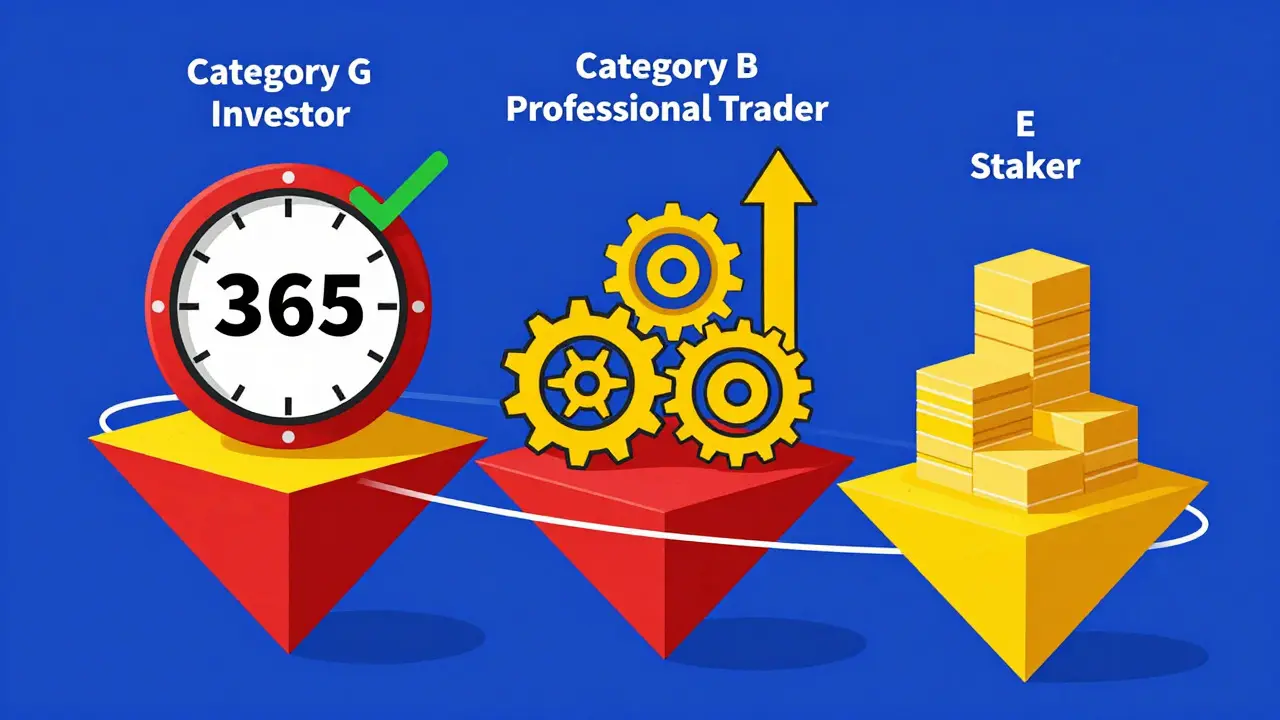
The current framework divides crypto activities into three distinct categories under the Personal Income Tax Code (PIT Code). Your tax rate depends entirely on which bucket your activity falls into. Let's look at each one.
Category G: Capital Gains (The Investor)
This is the most common category for individual investors. Here, the rule is simple: time is money. Specifically, 365 days is the magic number.
- Short-term holdings (less than 365 days): If you sell or swap your crypto for fiat currency within a year, you pay a flat 28% tax on the profit.
- Long-term holdings (more than 365 days): If you hold your asset for over a year, the gain is completely tax-free.
There is a catch, though. The tax exemption for long-term holdings only applies if the taxpayer or the paying agent is based in an EU or EEA country, or in a jurisdiction with a Double Tax Treaty or Tax Information Exchange Agreement with Portugal. Most major exchanges like Coinbase or Binance fit this criteria, so most users are safe. However, if you use obscure offshore platforms, check their treaty status first.
Category B: Professional Activities (The Trader)
If you trade frequently, the tax authority might classify you as a professional. This moves you from Category G to Category B. How do you know if you're a professional? There isn't a strict legal definition, but red flags include high trading volume, frequent transactions, and using sophisticated strategies like arbitrage or day trading.
Under Category B, your income is taxed progressively, ranging from 14.5% to 53%, depending on your total annual income. However, there is a simplified regime for professionals with gross income under €200,000 per year:
- Mining income: Taxed on 95% of gross receipts (due to energy consumption concerns).
- Other professional activities: Taxed on only 15% of gross income. This taxable amount then goes through the progressive PIT rates.
This means even if you are a high-volume trader, you might not face the full 53% rate on your entire profit, thanks to this deduction mechanism. Still, it is significantly more expensive than the 28% flat rate for casual short-term sellers.
Category E: Passive Income (The Staker)
Staking rewards, lending interest, and yield farming profits fall under Category E. These are considered passive income and are taxed at a flat 28% rate.
Here is a pro tip: When you receive staking rewards in crypto, you don't pay tax immediately. The tax event triggers only when you convert those rewards into fiat currency. This allows you to compound your rewards without immediate tax drag. However, you must track the value of these rewards at the moment of conversion. Many people forget this step and end up owing back-taxes during an audit.
| Activity Type | Tax Category | Holding Period / Condition | Tax Rate |
|---|---|---|---|
| Buying & Selling (Investor) | Category G | < 365 days | 28% Flat |
| Buying & Selling (Investor) | Category G | > 365 days | 0% (Tax-Free) |
| Professional Trading | Category B | N/A | 14.5% - 53% Progressive |
| Mining | Category B | N/A | Progressive on 95% of Gross |
| Staking / Lending | Category E | N/A | 28% Flat |
Calculating Your Taxes: The FIFO Rule
You cannot just guess your profit. The Portuguese tax authority requires you to use the First In, First Out (FIFO) method. This means when you sell some of your Bitcoin, the system assumes you are selling the oldest coins you bought first.
Why does this matter? Because it directly impacts your holding period. Imagine you bought 1 BTC in January 2024 and another in June 2024. If you sell 1 BTC in July 2024, FIFO says you sold the January coin. Since it held for less than 365 days, you owe 28% tax. If you could choose Last In, First Out (LIFO), you would have sold the June coin, which also hasn't hit 365 days yet, but in other scenarios, this choice can flip a taxable gain into a tax-free one.
In Portugal, you don't get to choose. It's strictly FIFO. This makes record-keeping essential. You need to track every purchase date and price. Using software like CoinTracking or Koinly is highly recommended. These tools automate the FIFO calculation and generate reports compatible with Portuguese tax forms. Without them, manual spreadsheet tracking is error-prone and risky.
Portugal vs. Europe: Where Do We Stand?
Is Portugal still competitive? Yes, but the gap is closing. Let's compare it to neighbors.
Germany offers a similar long-term exemption. If you hold crypto for over one year, it's tax-free. However, short-term gains are taxed at progressive income rates up to 45%, which is higher than Portugal's flat 28%. So, for short-term traders, Portugal wins.
France is tougher. They charge a flat 30% tax on all crypto gains, including social contributions. There is no long-term exemption for individuals in the same way. Portugal's 28% short-term rate and 0% long-term rate make it clearly superior for investors.
The United Kingdom applies Capital Gains Tax (CGT) at 10% or 20%, plus a small allowance (£3,000 in 2025/2026). While the base rate looks lower, the lack of a complete long-term exemption and the complexity of allowances often make it less attractive for pure holders compared to Portugal's clean 0% after one year.
Portugal's strategy is clear: encourage long-term investment while taxing speculation. This balances revenue needs with attractiveness to digital nomads who prefer stability over quick flips.
Future Changes: What Comes After 2026?
You asked about future changes. The biggest elephant in the room is the Markets in Cryptoassets Regulation (MiCAR). This EU-wide regulation aims to harmonize crypto rules across member states. While MiCAR focuses heavily on consumer protection and issuer licensing, it indirectly pressures national tax authorities to improve data sharing.
Currently, the Autoridade Tributária e Aduaneira (Portuguese Tax Authority) lacks robust infrastructure to automatically track every wallet transaction. However, this is changing. Global trends show tax agencies building better APIs to connect with exchanges. Expect increased enforcement capabilities in the coming years. The assumption is shifting from "hope you declare" to "we can see what you hide."
Will the 28% rate change? Unlikely in the short term. The government sees this rate as a stable revenue stream. Will the 365-day rule change? Also unlikely. It serves as a strong incentive for capital retention in the country. Any change here would risk driving investors to Germany or Switzerland.
However, watch out for refinements in defining "professional activity." As trading bots and algorithmic trading become more accessible, the line between hobbyist and professional blurs. Tax authorities may tighten the criteria for Category B classification, potentially pulling more active retail traders into the progressive tax bracket.

Compliance Checklist for 2026
To stay safe and compliant, follow these steps:
- Track Every Transaction: Use FIFO-compatible software. Export data from all exchanges annually.
- Separate Wallets: Consider keeping long-term holdings in separate wallets from active trading funds. This simplifies accounting and proves intent.
- Report Staking Rewards: Log the date and value of staking rewards when converted to fiat. Don't ignore them.
- Check Treaty Status: Ensure your exchanges operate in jurisdictions with tax treaties with Portugal to qualify for the long-term exemption.
- Consult a Pro: If your annual turnover exceeds €50,000 or you engage in mining/staking, hire a local accountant familiar with crypto. The savings from avoiding errors far outweigh the fees.
Final Thoughts on the Policy Review
Portugal is no longer a free-for-all tax haven, but it remains one of the best places in Europe to hold crypto. The key is patience. If you can wait 365 days, you win big. If you trade daily, you pay a fair market rate. The future looks stable, with minor tweaks expected rather than radical overhauls. Stay informed, keep good records, and let your assets work for you.
Is crypto tax-free in Portugal in 2026?
It depends on how long you hold. Capital gains from crypto held for more than 365 days are tax-free. Gains from assets held for less than 365 days are taxed at a flat 28% rate.
How is staking income taxed in Portugal?
Staking rewards are classified as passive income (Category E) and taxed at a flat 28% rate. The tax is due when the rewards are converted into fiat currency, not when they are received.
What happens if I trade crypto professionally?
Professional trading falls under Category B. Income is taxed progressively between 14.5% and 53%. However, a simplified regime allows taxing only 15% of gross income for activities under €200,000, which is then subject to progressive rates.
Does Portugal use FIFO for crypto tax calculations?
Yes. The Portuguese tax authority mandates the First In, First Out (FIFO) method to determine the cost basis and holding period for crypto assets.
Will crypto taxes change in Portugal due to MiCAR?
MiCAR primarily regulates issuers and service providers, not individual taxes. However, it may lead to better data sharing between exchanges and tax authorities, increasing enforcement. The core tax rates and 365-day rule are likely to remain stable.