
China banned cryptocurrency exchanges in September 2021. Banks were told to cut off crypto-related transactions. Mining rigs were shut down. Yet, peer-to-peer crypto trading didn’t disappear. It adapted. It went quieter. It got smarter. And it’s still moving billions.
Why the ban didn’t kill crypto trading
The Chinese government didn’t ban owning crypto. It banned exchanges. It banned banks from processing crypto payments. It banned mining. But it never said you couldn’t hold Bitcoin or USDT in your wallet. That tiny legal gap became the lifeline for millions. Chinese courts had already ruled in 2018 that crypto is virtual property. That means if you buy Bitcoin, even secretly, the law recognizes it as something you own - even if you can’t sell it on Binance or OKX anymore. So people kept their coins. And they found ways to trade them without touching a centralized platform. The real driver? Capital flight. Between 2019 and 2020, over $50 billion left China through crypto channels. People wanted to move money out - for business, family, or just to protect savings from currency devaluation. The ban didn’t stop that. It just made it harder, riskier, and more expensive.How people trade crypto in China today
You won’t find a crypto app on your phone’s home screen. No Coinbase, no Kraken. Instead, traders use encrypted apps like Telegram and WeChat. Groups operate under names like "Green Mountain Finance" or "River Transfer Network." You need an invite. You need trust. Most trades happen using USDT (Tether). Why? Because it’s stable. One USDT = one U.S. dollar. No wild swings like Bitcoin. And since it’s built on blockchains like TRON or Ethereum, it moves fast and can’t be easily frozen by a bank. Here’s how a typical trade works:- You find a buyer on a Telegram group. They want to buy USDT with RMB.
- You agree on price - usually 1-3% above market rate because of risk.
- You send the USDT from your wallet to their wallet.
- They send RMB to your bank account using Alipay or WeChat Pay.
- You confirm receipt. Trade complete.
The tools they use
You can’t access LocalBitcoins or Paxful directly in China. The Great Firewall blocks them. So traders use VPNs - NordVPN and ExpressVPN are the most common. You install it, connect to a server in Singapore or the U.S., then log in. Wallets have to be non-Chinese. Trust Wallet, MetaMask, or Exodus. No Chinese-language interfaces. No KYC. You generate your own keys. Lose them? You lose everything. No customer service. No recovery. Many traders use burner phones - cheap Android devices bought with cash. One for crypto. One for real life. They never link the two.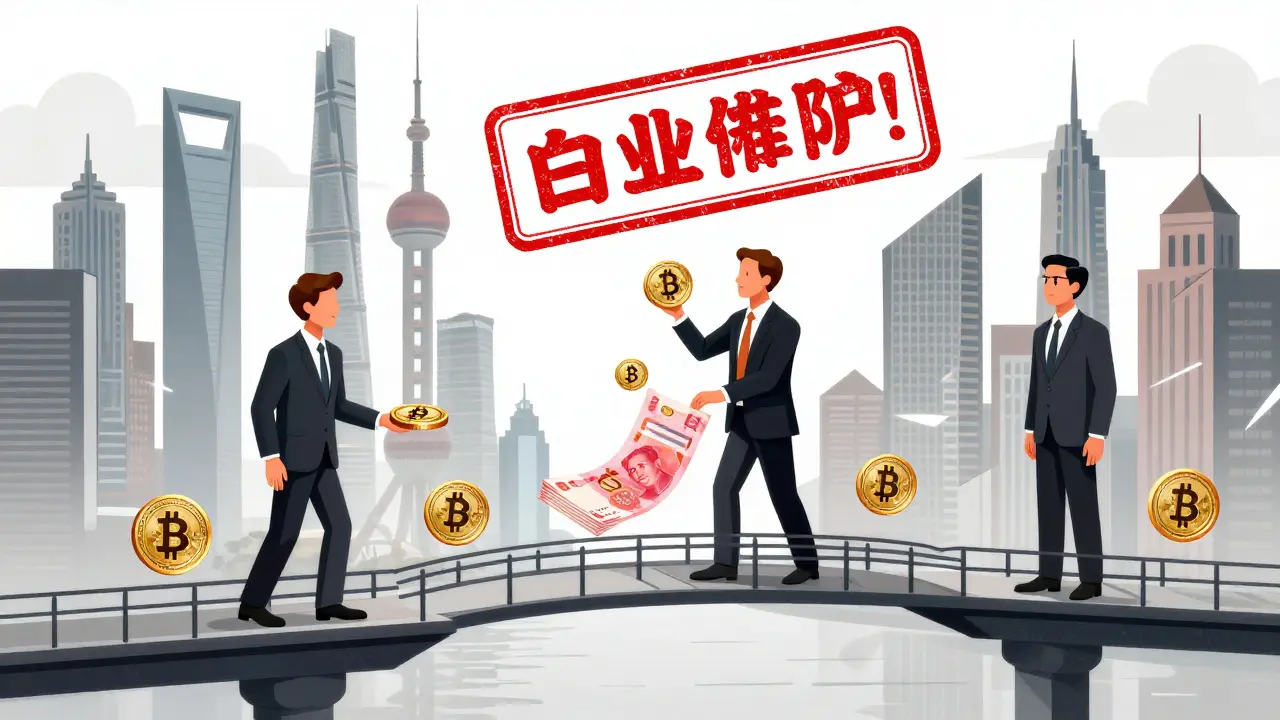
The risks are real
This isn’t a game. People lose money. A lot of it. In 2022, a user on Reddit named "BeijingCryptoLoser" lost $25,000 when a seller sent fake bank screenshots. The money never arrived. The seller vanished. No recourse. No chargeback. No police help - because the trade was illegal. Bank accounts get frozen. In 38.7% of transactions, according to a 2022 survey, the buyer’s account was locked within 48 hours. The bank says "suspicious activity." The trader has to prove the money came from a legitimate source - which is impossible if it came from crypto. Scams are common. One called "flash freezing" works like this: the scammer sends you a fake payment screenshot. You send the crypto. They immediately report the transaction as fraud to their bank. The bank freezes your account. You lose both the crypto and access to your money. Trustpilot ratings for Paxful dropped from 4.3 stars in 2021 to 2.7 in 2022. Most complaints came from Chinese users who got scammed or had funds seized.Why it’s still growing
Despite the risks, trading volume rose 300% in early 2022, according to Chainalysis. Why? Because demand didn’t vanish. It just changed shape. Urban professionals, ages 25 to 45, with international ties - business owners, students abroad, expats - are the core users. They need to move money. They need access to global markets. Crypto is the only tool left. Transaction fees jumped from 0.5% to 3-5%. That’s the cost of risk. But for someone trying to send $100,000 overseas, paying 5% ($5,000) is better than the $15,000+ they’d pay through traditional underground banks. Even the government admits it’s hard to stop. In 2022, China’s State Administration of Foreign Exchange investigated 1,247 crypto cases and fined people over 1 billion RMB ($151 million). But convictions? Only 895. That’s less than 72% of cases. And the trading continues.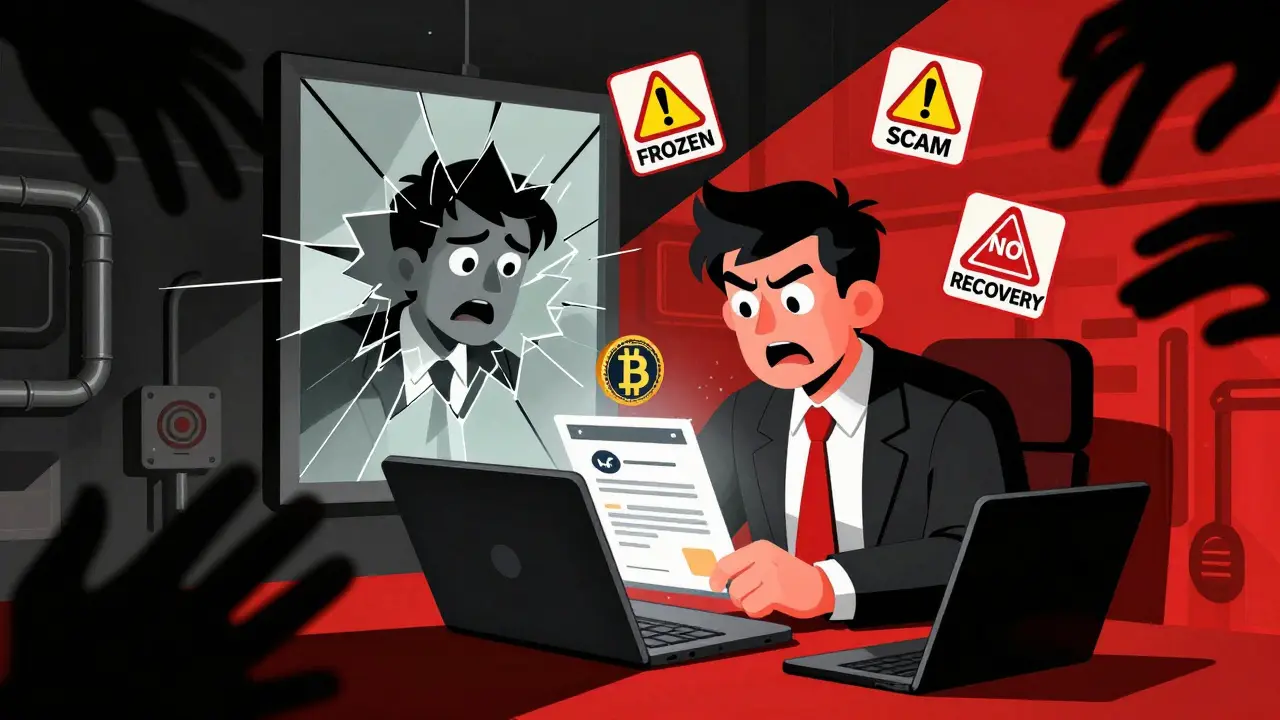
New tricks: NFTs, barter, and bridges
Traders aren’t sitting still. They’re innovating. Some now trade crypto for physical goods. Buy a Rolex with Bitcoin? Sell it in Hong Kong? That’s crypto barter - no bank involved, no digital trail. Others use NFTs as value carriers. Buy an NFT with USDT. Send the NFT to a friend. They sell it for cash. The NFT itself becomes a digital IOU. A new tactic called "transaction bridges" uses trusted middlemen. You send crypto to a third party. They hold it. Then they send RMB to your account. You pay them a fee. They take the risk. If they’re reliable, you sleep better.What’s next?
China’s central bank issued new rules in January 2023 targeting "any form of decentralized transaction." That means even private Telegram trades could be illegal. But history shows bans don’t kill crypto. They just make it more underground. Binance Research predicts P2P trading in China will stay at 3-5% of global volume through 2025. HSBC says the cat’s out of the bag - you can’t shut it down without crippling the economy. The truth? China didn’t ban crypto. It banned convenience. And people found a way. The system is fragile. It’s dangerous. It’s expensive. But for those who need it, it works. And until the government finds a way to control decentralized networks without crushing its own citizens’ financial freedom, this underground market will keep running.Is it legal to trade crypto peer-to-peer in China?
No, it’s not legal. The People’s Bank of China banned all crypto trading platforms and financial institutions from handling crypto transactions in 2021. While owning crypto isn’t explicitly illegal, any trade - even private P2P - violates financial regulations. Authorities can freeze bank accounts, fine users, or even press criminal charges for large-scale activity.
Can I use Binance or Coinbase in China?
No. Binance, Coinbase, and all other major exchanges are blocked by China’s Great Firewall. Even if you use a VPN, your account may be flagged. Binance stopped serving Chinese users entirely in 2021. Any platform claiming to serve China is likely a scam or a front for fraud.
Why do people use USDT instead of Bitcoin for P2P trades?
USDT is pegged to the U.S. dollar, so its value stays stable. Bitcoin can swing 10% in a day - too risky for someone trading RMB. USDT acts like digital cash. You can send it instantly, and the recipient knows exactly how much RMB they’ll get. It’s the closest thing to real money in the underground crypto system.
How do traders avoid getting caught by banks?
They split large transfers into smaller ones under 50,000 RMB, use Alipay’s "friend transfer" feature, avoid sending to known crypto-related keywords, and sometimes use third-party bank accounts. They also wait days between trades and avoid using the same phone or IP address repeatedly. But even then, 38.7% of users report account freezes.
What happens if I get caught trading crypto in China?
If you’re caught, your bank account may be frozen. You could be fined up to 1 million RMB ($140,000). In serious cases - especially if you’re running a group or moving large sums - you could face criminal charges for "illegal fund transfer" or "money laundering." Most individuals get warnings or fines. Repeat offenders or large-scale traders face jail time.
Is it safe to trade crypto in China using P2P platforms?
No, it’s not safe. There’s no dispute system. No insurance. No customer support. Scams are common. Fake payment screenshots, flash freezes, and burner accounts are standard tactics. Even experienced traders lose money. The only way to reduce risk is to trade with people you know personally, use small amounts, and never send crypto before you see real RMB in your account.
How much crypto is still being traded in China?
Chainalysis estimates China still accounts for 4.2% of global cryptocurrency transaction volume in 2022 - down from 23% in 2020, but still significant. Most of this is P2P. The volume peaked in early 2022 with a 300% year-over-year increase. It’s stabilized since, but doesn’t appear to be declining.
Can the Chinese government shut down P2P crypto trading completely?
Not without extreme measures. To stop P2P trading, they’d need to monitor every bank transfer, track every Telegram group, and arrest anyone who owns a crypto wallet. That would require mass surveillance of ordinary citizens and damage to legitimate business. The IMF and HSBC both say it’s not feasible without harming the economy. The ban worked on exchanges - but not on decentralized networks.
Comments
Natalie Kershaw
This is wild but makes total sense. People aren't gonna stop wanting access to global finance just because a government says so. USDT is the unsung hero here - stable, fast, and hard to freeze. The fact that traders are using Alipay's friend transfer feature? Pure hustle. I'm impressed by how adaptive this underground system is. It's not just crypto - it's financial resilience in action.
January 9, 2026 at 02:05
Jacob Clark
Wait - so you're telling me people are literally using Telegram groups to move billions? And no one's getting caught? That's insane. I mean, come ON. The government is literally watching every bank transaction, and yet people are splitting payments under 50k RMB like it's a video game cheat code? And don't even get me started on the NFTs-as-IOUs - that's not innovation, that's sci-fi becoming real. Someone's gonna get arrested for this, and it's gonna be epic.
January 9, 2026 at 08:38
Mujibur Rahman
The structural ingenuity here is textbook. China banned centralized exchanges but left the underlying property rights intact - a legal loophole that became an economic artery. USDT on TRON is the de facto settlement layer because it's non-custodial, low-fee, and bypasses SWIFT-style surveillance. The real innovation isn't the tech - it's the social trust networks. Telegram groups as clearinghouses, burner phones as operational isolation, friend transfers as obfuscation vectors. This is decentralized finance not as a vision - but as a survival protocol.
January 10, 2026 at 06:00
Becky Chenier
It’s fascinating how human behavior adapts to restrictions. The fact that people are still finding ways to move value - even at great personal risk - says more about economic need than any policy document ever could. The use of physical goods as crypto intermediaries? That’s barter reimagined for the digital age. It’s not just about money. It’s about autonomy.
January 11, 2026 at 07:00
Staci Armezzani
Let’s be real - if you’re a professional in Shanghai with family overseas, what are you supposed to do? Wire money through traditional channels and pay 15% in fees? Or use USDT and pay 5% with a risk you can manage? This isn’t rebellion - it’s rational economics. And the fact that banks freeze accounts 38.7% of the time? That’s the cost of doing business when the system doesn’t work for you. I’ve seen people lose everything - but I’ve also seen them rebuild. This isn’t crypto. It’s survival.
And the NFT-as-IOU trick? Genius. You’re not trading crypto - you’re trading trust. One person holds the asset, another holds the promise. No blockchain needed for the final step. Just a handshake and a phone call. That’s how real economies function - not through banks, but through relationships.
January 11, 2026 at 07:23
sathish kumar
It is noteworthy that despite stringent regulatory enforcement, the persistence of peer-to-peer cryptocurrency transactions underscores the fundamental principle of monetary sovereignty at the individual level. The Chinese government's prohibition targets intermediaries, not the underlying property rights, thereby inadvertently reinforcing the decentralized nature of digital assets. The utilization of stablecoins, coupled with operational obfuscation techniques, exemplifies emergent market resilience. However, the legal ambiguity surrounding such activities remains a critical concern for participants.
January 13, 2026 at 06:27