When PandaSwap launched its airdrop campaign in late 2024, it promised free tokens to anyone willing to follow a few simple steps. For many, it looked like an easy way to get crypto without spending a dime. But by early 2026, the story took a sharp turn. What started as a community-driven token giveaway turned into a confusing mess of mismatched tokens, zero trading volume, and unclear futures. Here’s what actually happened with the PandaSwap (PND) airdrop - and why you should be careful if you're thinking about joining similar campaigns.
What Was the PandaSwap (PND) Airdrop?
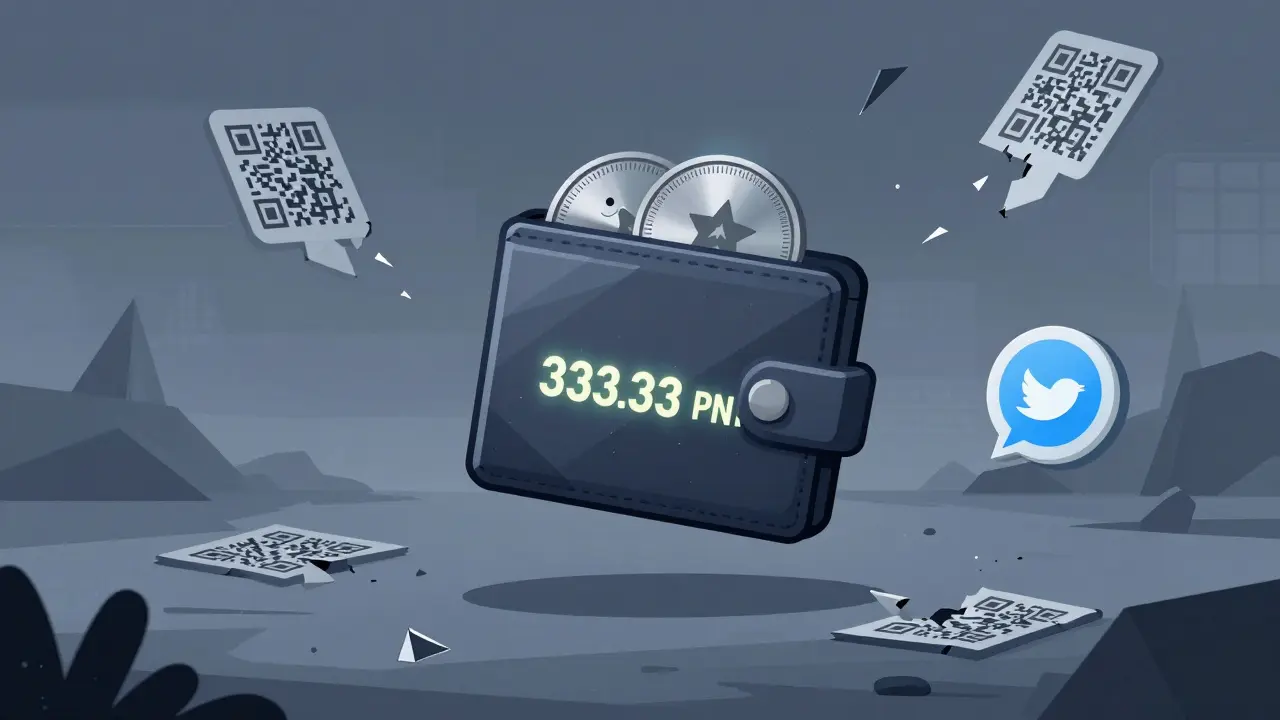
The PandaSwap airdrop was hosted through CoinMarketCap and distributed 666,666 PND tokens to 2,000 winners. Each winner got up to 333.33 PND, totaling $20,000 in value at the time of the campaign. That might not sound like much, but for a new decentralized exchange, it was a serious investment in user growth. The goal wasn’t just to hand out tokens. PandaSwap wanted to build a community. That’s why the rules weren’t about holding crypto or staking - they were about engagement. To qualify, you had to:- Add PandaSwap to your CoinMarketCap watchlist
- Follow @pandaswap_okex on Twitter
- Join the official Telegram group: t.me/pandaswapen
- Subscribe to the Telegram announcement channel: t.me/pandaswapann
- Retweet PandaSwap’s pinned tweet
How PandaSwap Worked (Technically)
PandaSwap was built on the OKEx Chain as an automated market maker (AMM) - the same type of system Uniswap uses on Ethereum. It let users swap tokens directly from their wallets without needing a middleman. The platform also offered yield farming and staking, where users could lock up tokens to earn more. The smart contract address for PandaSwap (PND) was 0x8eac...d5745c. That’s the code that ran the exchange and distributed tokens. But here’s the problem: even though the contract existed, the token itself didn’t seem to have any value. By February 2026, CoinMarketCap listed PND with:- Price: $0
- 24-hour trading volume: $0
- Total supply: 0 PND
- Circulating supply: 0 PND
The Confusion: PND vs. PANDA
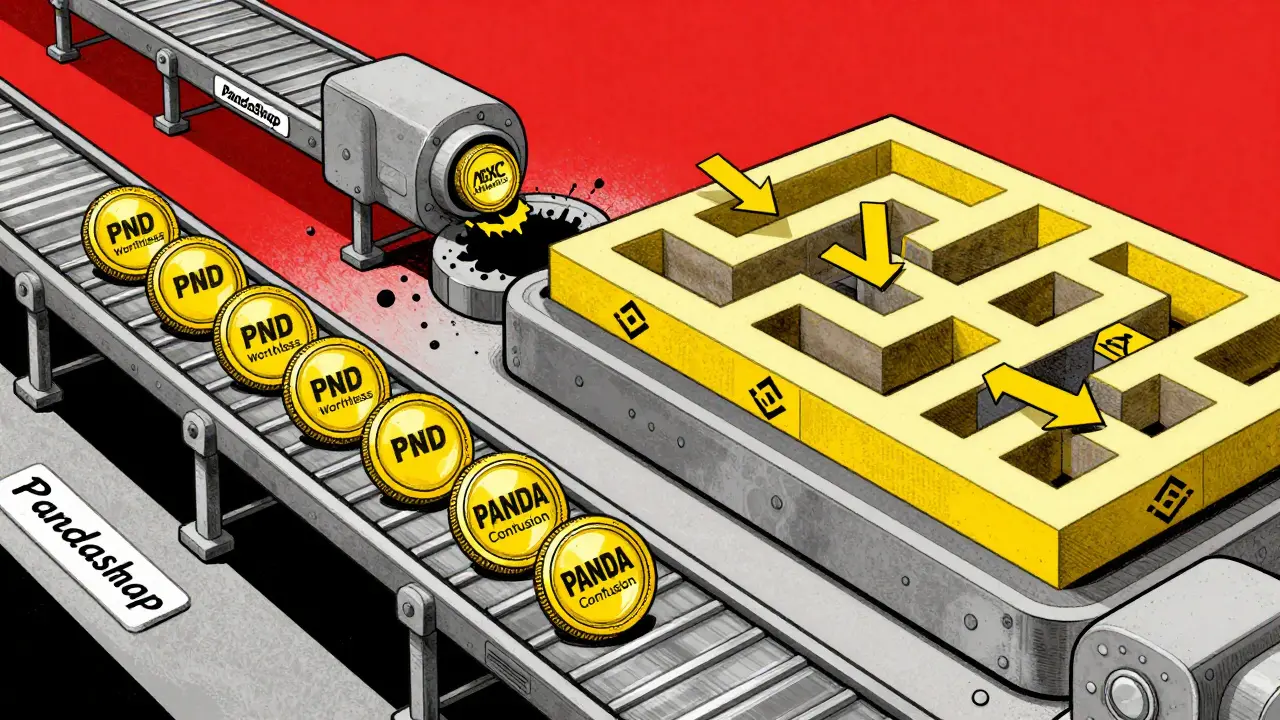
This is where things got messy. While PandaSwap’s official token was called PND, another token - Panda Swap (PANDA) - started appearing on exchanges like MEXC and Binance. CoinGecko showed PANDA trading at $0.001633 with a $828.99 daily volume. That’s not nothing. But it wasn’t the same token. In July 2025, MEXC announced a major contract swap. They were replacing the old PANDA token with a new one. The conversion rate? Four old tokens for one new token. That’s a 75% reduction in supply. MEXC shut down deposits and trading for a full day to make the switch. They warned users: "Do not deposit PANDA tokens after the cutoff. We will not swap them." So now, there are two possibilities:- You won PND - but it’s worthless and untradeable.
- You hold PANDA - but it’s a completely different token that replaced something else.
Why This Happened
Airdrops like this are common in crypto. Projects use them to bootstrap user bases. But PandaSwap’s approach had a flaw: it prioritized marketing over infrastructure. They spent $20,000 on social media tasks - but did they spend enough on audits, liquidity, or exchange listings? The answer seems to be no. If a token’s supply is zero and trading volume is zero, it means no one is using it. No one is trading it. No one believes in it. Compare that to projects like Uniswap or PancakeSwap. They launched airdrops too - but they had working DEXs, real trading volume, and clear tokenomics. PandaSwap didn’t. The airdrop felt like a marketing stunt with no product to back it up.What Happened to the Winners?
If you won the airdrop, you likely received PND tokens in your wallet. But unless you had access to a platform that listed PND - and there weren’t any - you couldn’t sell, trade, or use them. Some winners tried to move their tokens to MEXC or Binance. But those exchanges didn’t support PND. They only supported PANDA. And even then, MEXC made it clear: they were swapping their own version of PANDA, not PandaSwap’s PND. So for most people who completed the tasks, the result was simple: a wallet full of tokens that can’t be spent, sold, or exchanged. And since the project vanished from public updates after mid-2025, there’s no hope of recovery.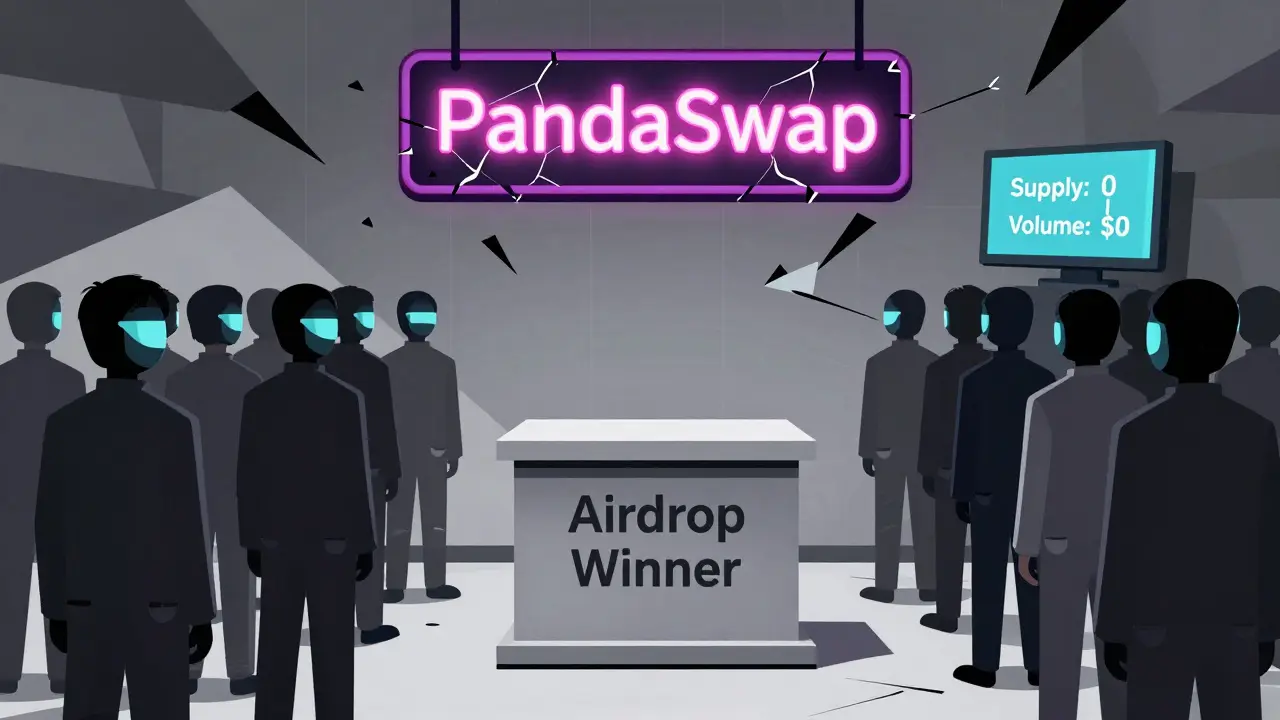
Should You Join Future PandaSwap Airdrops?
The short answer: no. Even if another PandaSwap airdrop pops up, the track record is clear. The token has no value. The team is silent. The platform is inactive. And the community is left guessing. Here’s what to check before joining any airdrop:- Is the token listed on at least one major exchange? If not, it’s likely dead.
- Is there real trading volume? Zero volume = zero liquidity.
- Is the project updating its website or social media? Silence after a campaign is a red flag.
- Is there a clear contract address? If the token’s contract is hidden or unverified, walk away.
What’s Next for PandaSwap?
Nobody knows. There’s no official roadmap. No team announcement. No technical update since July 2025. The CoinMarketCap page still exists - but it’s labeled as a "preview," meaning it doesn’t meet listing standards. The Universal Crypto ID (UCID 9347) is just a number. It doesn’t mean anything. Some speculate the team abandoned the project and moved on to something else. Others think the PANDA token on MEXC is the new version - but even that has barely any trading activity. The truth? PandaSwap is dead. The airdrop is over. And the tokens are worthless.Was the PandaSwap (PND) airdrop real?
Yes, the airdrop was real in the sense that it was officially hosted by CoinMarketCap and tokens were distributed to winners. However, the PND token never gained any market value, and the project stopped updating. So while you received tokens, they have no practical use or trading value.
Can I still claim PandaSwap PND tokens?
No. The airdrop campaign ended in early 2025. The claiming period is long closed. Even if you missed it, there’s no way to retroactively claim tokens because the project no longer operates or supports the PND token.
Is Panda Swap (PANDA) the same as PandaSwap (PND)?
No. PandaSwap (PND) was the original token from the OKEx Chain-based DEX. Panda Swap (PANDA) is a separate token that appeared on MEXC and other exchanges after a contract migration in July 2025. They are not interchangeable. Tokens from one cannot be swapped for the other unless explicitly stated by the exchange - and even then, only under specific conditions.
Why does CoinMarketCap show PND at $0 with zero supply?
Because no one is trading PND. The smart contract exists, but no liquidity pools were funded, no exchanges listed it, and no one is holding it in active wallets. Without buyers or sellers, the price drops to zero. The supply shows as zero because the token isn’t circulating - it’s stuck in wallets with no way to move it.
Should I invest in Panda Swap (PANDA) now?
Proceed with extreme caution. While PANDA has a small trading volume, it’s unclear if it’s the same project as the original PandaSwap. The team behind PANDA hasn’t confirmed any connection to the PND airdrop. There’s no whitepaper, no roadmap, and no transparency. Treat it like any low-volume, low-liquidity token - high risk, low reward.
Comments
Sean Logue
Man, I remember when I got my PND tokens. Thought I hit the lottery. Turned out I just got a fancy screenshot of a wallet address. Zero trading volume? That’s not a bug - that’s a tombstone. Crypto’s full of these ghost airdrops where they hype you up with free shit and vanish before the first trade.
Don’t even get me started on the PANDA confusion. MEXC just slapped a new name on an old corpse and called it a day. If you’re still holding either, congrats - you’ve got digital confetti.
February 23, 2026 at 08:01
Carl Gaard
OMG I CANT BELIEVE I DID ALL THOSE STEPS 😭 I FOLLOWED, RETWEETED, JOINED 2 TG CHATS, AND EVEN SUBBED TO THE ANNOUNCEMENTS… AND NOW I GOT A WORTHLESS TOKEN?? I EVEN SAVED THE SCREENSHOT OF MY WALLET WITH THE 333 PND IN IT LIKE A TREASURE 😭😭😭
WHY DIDNT THEY JUST SAY ‘THIS IS A MARKETING STUNT’ INSTEAD OF MAKING US THINK WE WON SOMETHING?? I FEEL SO USED 😭
February 24, 2026 at 08:09
bella gonzales
Ugh. I read the whole thing. Boring. Token’s dead. Move on.
February 24, 2026 at 16:43
Paul Reinhart
There’s something deeply tragic about how these projects operate. They’re not even trying to build something sustainable - they’re running a one-time social media play, cashing in on FOMO, and then vanishing into the ether like a mirage. The fact that they used CoinMarketCap - a platform that still holds some semblance of legitimacy - to distribute tokens that never even made it to liquidity is a betrayal of trust.
It’s not just about the $20,000 spent on the airdrop. It’s about the thousands of hours people spent doing these tasks, thinking they were contributing to a movement. And then… silence. No roadmap. No explanation. No even a ‘thanks for playing.’
This isn’t crypto innovation. It’s psychological manipulation dressed up as opportunity. And honestly? It’s making the whole space look worse.
February 25, 2026 at 16:07
Samantha Stultz
Let’s cut through the noise. The real issue here isn’t the tokenomics - it’s the lack of on-chain verification. The PND contract was deployed, sure, but if there’s no liquidity pool, no DEX pairing, no wallet-to-exchange interoperability, then it’s not a token - it’s a placeholder. And the PANDA token on MEXC? That’s a rebranding gambit. They didn’t ‘swap’ anything - they just created a new contract, migrated a sliver of volume, and called it a day.
What’s worse? The fact that users didn’t even check the contract address. They just trusted the name. That’s not ignorance - it’s willful suspension of disbelief. And now we’re all paying for it with our time, trust, and dignity.
February 26, 2026 at 09:06
Mae Young
Oh wow. A project that actually DIDN’T work? How… quaint.
Did you all forget that crypto is supposed to be a wild west? This isn’t a failure - it’s a feature. If you thought you were ‘winning’ something, you were never meant to understand how this works. The real winners? The devs who cashed out before the airdrop even dropped.
And now you’re mad because your digital coupons expired? Honey, the only thing more predictable than a dead token is someone crying about it.
February 26, 2026 at 20:41
Trenton White
It’s sad, really. Projects like this used to be about community. Now they’re about metrics: followers, retweets, watchlist adds. The human element got stripped away. I don’t blame the users who joined - they were told this was a way to help build something. But the team never showed up to build with them.
I still have the PND in my wallet. Not because I think it’ll rise. But because I keep it as a reminder: if you’re going to ask people to invest their time, you owe them more than silence.
February 28, 2026 at 00:57
Cheryl Fenner Brown
ok so like i just checked and PANDA is trading at like 0.0016?? maybe its the same?? i mean mmm maybe?? i think i should just send my pnd to mexc and see what happens?? 🤔 maybe they’ll swap it?? or maybe not?? idk but i cant just leave it sitting there 😅
March 1, 2026 at 16:33