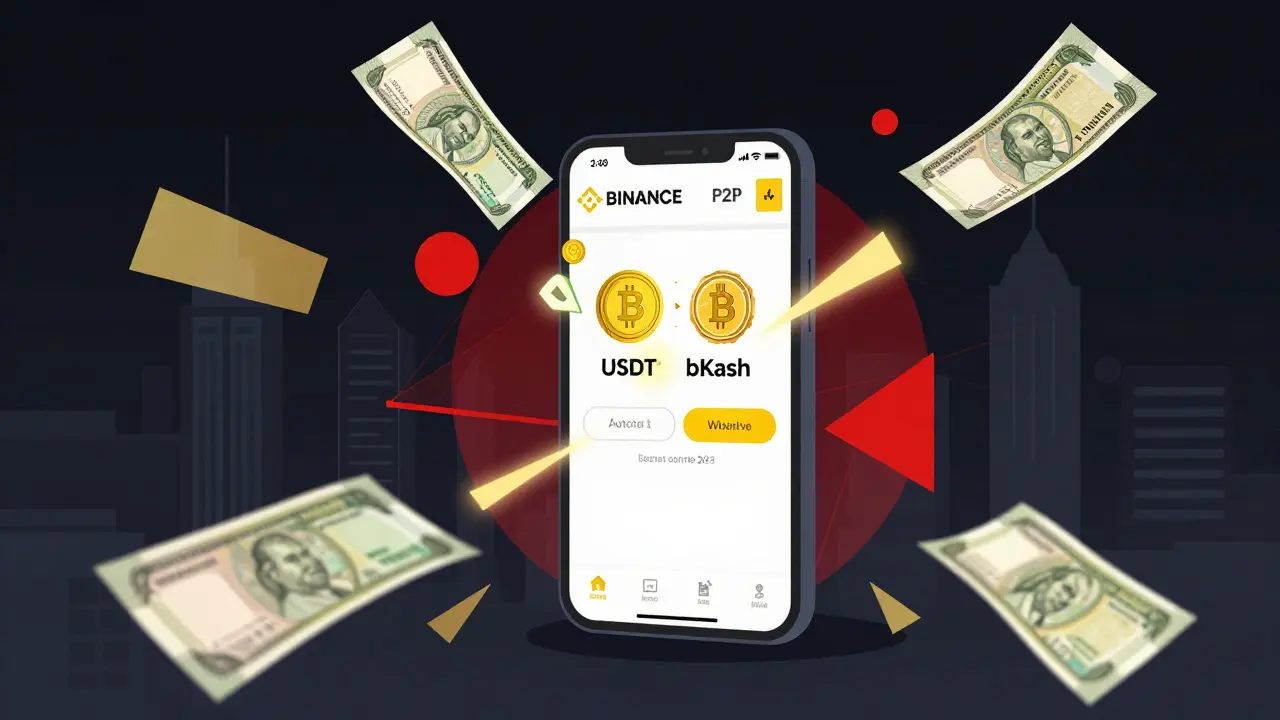
It’s 2025, and you can’t legally buy Bitcoin in Bangladesh. The central bank says it’s against the law. Banks won’t touch it. Mobile money apps like bKash and Nagad are supposed to block crypto payments. But here’s the truth: over 3.5 million people in Bangladesh are trading crypto every day - mostly through peer-to-peer (P2P) methods. They’re not breaking the law because they want to gamble. They’re doing it because it’s the only way to send money home, pay for tools, or protect savings from inflation.
How P2P Crypto Trading Actually Works in Bangladesh
You don’t need a bank account to trade crypto in Bangladesh. You need a smartphone, a mobile money app, and a platform like Binance. The process is simple: you find a seller offering USDT (Tether) for BDT (Bangladeshi Taka). You pay them through bKash or Nagad. They lock the crypto in an escrow system. Once you send the money, they release the crypto. It takes less than 10 minutes. That’s it.
This isn’t some underground black market. It’s built into the biggest crypto exchange in the world. Binance’s P2P platform handles over 1.2 million trades per month from Bangladesh alone. And 61% of those trades use bKash. That’s not a glitch - it’s the system working exactly as designed for this market.
Why Binance? Because it’s the only one that lets you pay with mobile money. Other exchanges like Coinbase or Kraken block Bangladeshi users entirely. Binance built local payment options because it saw the demand. They didn’t wait for permission. They saw millions of people sending money overseas and gave them a faster, cheaper way.
The Three Ways People Trade Crypto in Bangladesh
There are three main methods, and they’re not equally safe.
- Exchange-based P2P (Binance, Bybit, KuCoin) - This is the safest option. Your trade is held in escrow. If the other person doesn’t deliver, the platform steps in. Binance handles 73% of all P2P trades in Bangladesh. It’s not perfect - disputes can take hours - but you have recourse.
- Informal agents - These are people you meet in person or chat with on Facebook or Telegram. They take your bKash payment and give you crypto. Sounds easy? It’s risky. In 2023, over 12,000 of these agents were operating in Dhaka alone. But 63% of fraud reports come from this group. One trader lost ৳250,000 ($2,300) when an agent reversed his bKash payment after getting the crypto. No one to call. No platform to complain to.
- Decentralized exchanges (DEX) like PancakeSwap - These let you trade directly on the blockchain using MetaMask. No KYC. No escrow. You send crypto, they send you BDT. But if something goes wrong? You’re on your own. Only 8% of traders use this method because it’s complicated. You need to understand gas fees, wallet addresses, and Binance Smart Chain. One wrong digit and your money is gone forever.
Most people stick with Binance. It’s not because they love the company. It’s because it’s the only one that works reliably.
Why People Use Crypto Instead of Banks
Bangladesh gets $21.5 billion in remittances every year. That’s money sent home by workers in the Middle East, Malaysia, and the U.S. Traditional services like Western Union charge 5-8% in fees. With crypto, you pay 0.5-2%.
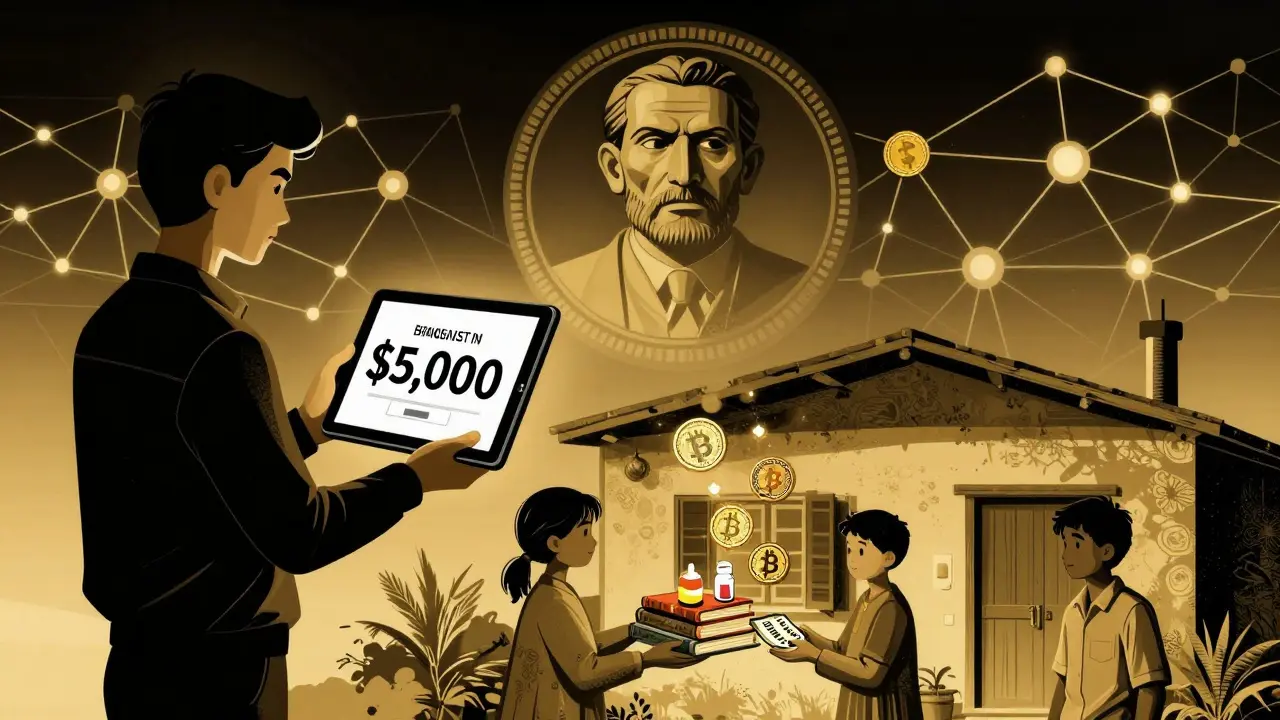
Take a worker in Dubai sending $5,000 home. With Western Union, that’s $400 in fees. With Binance P2P, it’s $50. That’s $350 saved. That’s a month’s rent. That’s school fees. That’s why people risk it.
And it’s not just remittances. Many young people in Dhaka and Chittagong use crypto to buy software, pay for online courses, or invest in global projects. Banks won’t let them send money abroad. Crypto does.
The Hidden Costs and Risks
It’s not all smooth sailing. There are real dangers.
Mobile money limits - Nagad blocks transactions over ৳50,000 ($460) if they detect “suspicious activity.” That’s common. Users report being locked out for days. bKash is more reliable, but even it rejects payments if you use the wrong option. You must select “Send Money,” not “Cash In.” Many new users lose money because they pick the wrong button.
Transaction delays - During Eid or holidays, mobile money systems crash. Average trade time jumps from 8 minutes to 47 minutes. You can’t rush someone who’s trying to send money to their family.
Legal risk - In 2022, 17 traders in Dhaka were arrested under Section 411 of the Penal Code - “possessing stolen property.” Their crime? Owning Bitcoin. No one was charged with trading. Just owning it. Bangladesh Bank has raided crypto trading hubs, seized laptops, and frozen bank accounts linked to mobile money transfers above ৳50,000. In Q4 2024 alone, 1,842 accounts were frozen.
There’s no law saying “crypto is illegal.” But the central bank says any transaction converting BDT to foreign currency without approval breaks the Foreign Exchange Regulation Act. So every P2P trade is technically illegal. You’re not breaking a specific crypto law - you’re breaking a 78-year-old foreign exchange rule.
How to Get Started (If You Must)
If you’re determined to try, here’s how to do it safely.
- Download Binance - Not from the Play Store. Download the APK directly from binance.com. The app is blocked in Bangladesh, but you can still install it.
- Complete KYC - You need ID verification. Use your national ID card. If you’re under 18, you can’t do it. The system won’t let you.
- Link bKash or Nagad - Go to P2P, click “Buy,” choose USDT, and select bKash as your payment method. Follow the prompts. Verification takes about 2.3 hours on average.
- Start small - First trade? Do ৳7,500 ($69). That’s less than the cost of a phone recharge. Test the system. See how fast the crypto arrives.
- Use trusted sellers - Look for sellers with 99%+ positive feedback. Avoid new accounts. Check their trade history. If they’ve done 500+ trades, they’re likely legit.
And never, ever trade with someone you meet on Facebook. Use only Binance’s built-in P2P platform. The escrow system is your only protection.
What’s Next? The Government Is Watching
Bangladesh Bank isn’t ignoring this. In February 2025, they formed a 12-member Crypto Asset Task Force. Their goal? To recommend regulations by December 2025.
Some experts think this could lead to legal P2P trading. Others warn it could mean total crackdown. The central bank is also testing a digital currency - a central bank digital currency (CBDC) - with 500,000 users. If that works, they might shut down crypto entirely, saying, “We’ve got our own digital money now.”
But here’s the catch: the CBDC won’t help overseas workers send money home. It won’t let you buy Ethereum from a U.S. developer. It won’t give you lower fees. It’s controlled by the government. Crypto is not.
For now, P2P trading in Bangladesh is a quiet revolution. It’s not about speculation. It’s about survival. It’s about people finding a way to connect with the global economy when the system says they can’t.
Will it last? No one knows. But as long as remittances matter and banks stay closed, people will keep trading.
What to Watch in 2025-2026
- December 2025 - The Crypto Asset Task Force releases its recommendations. Will they legalize P2P? Ban it? Or create a licensing system?
- Q3 2025 - Results from Bangladesh Bank’s CBDC pilot. If it’s successful, crypto could be pushed out. If it fails, the government may have no choice but to regulate.
- 2026 - P2P volume could hit $1.2 billion if things stay stable. Or collapse by 80% if enforcement ramps up.
One thing’s certain: the people won’t stop. They’ve already found a way. The question is whether the government will finally catch up - or keep chasing shadows.
Comments
christopher charles
This is wild. I never realized how much people in Bangladesh are using crypto just to survive. I mean, $350 saved on a $5,000 remittance? That’s a rent payment. A meal for a family. A kid’s school supplies. And they’re doing it with bKash, of which I’ve never heard until now. It’s not gambling-it’s necessity. Binance didn’t build this for profit-they built it because people were already doing it, and they saw the need. No government, no bank, no regulation stopped them. Just pure human ingenuity. I’m not even mad at the central bank for being scared; I’m just impressed that people found a way anyway.
December 27, 2025 at 21:19
Johnny Delirious
It is imperative to recognize that the utilization of peer-to-peer cryptocurrency platforms in contravention of established foreign exchange regulations constitutes a material breach of statutory law. The central bank's authority is not to be undermined, and the normalization of such conduct, even under the auspices of economic necessity, erodes the foundational integrity of financial governance. While the pragmatic benefits are undeniably compelling, they do not supersede the imperative of legal compliance. One cannot justify systemic circumvention on the basis of individual utility; the rule of law must prevail.
December 28, 2025 at 04:51
Bianca Martins
Y’all know the most terrifying part? It’s not the arrests or the frozen accounts-it’s that the government’s own CBDC won’t fix the real problem. 😔 People aren’t using crypto because they want to ‘invest.’ They’re using it because their brother in Dubai needs to send money home and Western Union takes a 7% cut. That’s not speculation. That’s love. And Binance? They didn’t ‘hijack’ the system-they just let people breathe. Also, if you’re new to this: ALWAYS use ‘Send Money’ on bKash. I lost $120 once because I picked ‘Cash In.’ Don’t be me. 🙃
December 28, 2025 at 12:53
alvin mislang
These people are criminals. 😤 They’re laundering money under the guise of ‘remittances.’ You think the government doesn’t know this? Of course they do. That’s why they’re freezing accounts. You don’t get to bypass national financial laws because you’re ‘poor’ or ‘desperate.’ That’s how societies collapse. And Binance? They’re profiting off chaos. They don’t care about Bangladesh-they care about volume. This isn’t a revolution. It’s a scam. And you’re all justifying it like it’s noble. Wake up.
December 29, 2025 at 04:50
Monty Burn
The law says one thing. The people do another. The system is broken. The people adapted. That’s not defiance. That’s evolution. The central bank fears what it cannot control. But control is an illusion. Money flows like water. You can build walls. You can ban apps. You can arrest laptops. But you can’t stop a mother from feeding her child. You can’t stop a son from paying for his sister’s surgery. You can’t stop a man from sending home the only thing he has left. Crypto isn’t the problem. The problem is a system that says ‘no’ to survival. And in the end? No law lasts longer than human need.
December 30, 2025 at 08:48